Entering 2026, the key word in the embodied AI industry has shifted from “showing off technology” to “implementation.”
Two years ago, a video of a backflip or dancing could ignite the investment community; today, investors and industry are asking: What can your robot actually do? Whoever truly sells their products and deploys them in real-world scenarios will be the winner through the economic cycle.
According to data from Humanoid Robot Scene Application Alliance (HRAA), global shipments of humanoid robots reached nearly 20,000 units in 2025 and are projected to exceed 50,000 units in 2026. Among the many embodied AI companies, who has truly succeeded in commercializing their products in real-world scenarios?
Industrial Scenarios: The Golden Track with the Highest Barriers and the Most Solid Orders
UBTECH – The First Listed Humanoid Robot Company
UBTECH is listed on the Stock Exchange of Hong Kong with a market capitalization of approximately RMB 53 billion. Its products have entered the automotive, 3C, and logistics industries in batches. Its advantages lie in its listing, deployment, and large-scale orders. While its hardware self-development capabilities lag behind those of full-stack self-developing companies, its competitive advantage lies in its early-mover advantage in distribution channels and brand accumulation.
Scenario Value: Covering multiple industrial sub-sectors, it is currently the most accessible humanoid robot investment target in the publicly traded market.
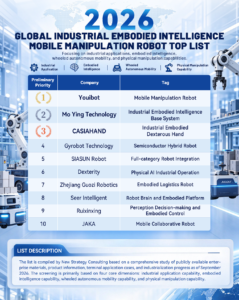
YOUIBOT– A Global Leader in Mobile Miniplators
YOUIBOT deeply cultivates industrial scenarios, leveraging its highly generalized Mobile AI Comprehension to achieve integrated “mobile + manipulation” delivery in high-precision fields such as semiconductors and energy chemicals. Currently, YOUIBOT’ products have been deployed in over 400 companies globally, with revenue increasing from RMB 108 million in 2023 to RMB 340 million in 2025, achieving a gross profit margin of 36.5%. It has also created several benchmark projects among leading domestic substrate, photomask, and packaging testing companies, holding the second-largest market share globally and the largest in China in the semiconductor industry. Currently, YOUIBOT has submitted its listing application to the HKEX, aiming to become the first listed company in the mobile manipulator sector.
Scenario Value: Industrial customers exhibit extremely high stickiness; once they enter, it’s a long-term business—YOUIBOT is one of the few “order-supported” companies.
Commercial Services and Special Operations: Diversified Tracks in Parallel Development
Unitree—Leading in Locomotion, Accelerating Industrial Applications
According to Unitree’s prospectus, in 2025, Unitree’s revenue reached RMB 1.708 billion, a year-on-year increase of 335%, with humanoid robot shipments exceeding 5,500 units, accounting for 32.4% of the global market; net profit excluding non-recurring items was RMB 591 million, with a gross profit margin of 60.13%. Its technological barrier lies in its fully self-developed locomotion system: joint modules and direct-drive motors enable it to lead the world in running and somersaulting capabilities. 73.6% of revenue comes from scientific research and education customers, while industrial applications account for 9%. The IPO aims to raise RMB 4.2 billion, with nearly 50% invested in AI model R&D.
Scenario Value: Having established a dominant position in the scientific research and education sector, Unitree is accelerating its penetration into industrial scenarios through IPO funds.
Deep Robotics– A Pioneer in Quadruped Robotic Applications
Deep Robotics is renowned for its quadruped robots, having accumulated real-world deployment experience in high-risk inspections and security patrols. It has initiated its IPO and is valued at over RMB 10 billion. Its core competitive advantage lies in its autonomous movement and perception capabilities in unstructured environments, which is now extending to humanoid products.
Scenario Value: Specialized operations demand extremely high reliability and environmental adaptability. Deep Robotics’ quadruped products have become benchmark cases in multiple vertical industries, and its humanoid products are expected to replicate this path.
EngineAI– Breaking Through with a Power-Based Approach
EngineAI focuses on power-based scenarios such as industrial material handling and heavy-duty operations. In April 2026, it completed a $200 million Series B financing round, co-led by Henan Investment Group and Luxshare ICT, valuing the company at over RMB 10 billion. Its differentiated advantage lies in its specialized design for heavy-duty needs.
Scenario Value: Industrial scenarios involve numerous tasks requiring high loads and high durability. EngineAI’s power-based approach has established a unique position in this niche market. While commercialization is still in its early stages, its direction is clear.
The “Brain” Route: Long-Term Strategic Layout of Technology and Data
GALBOT– A Nationally Backed Exploration of General-Purpose Intelligence
GALBOT has raised over RMB 6.8 billion in total funding, completing a RMB 2.5 billion Series A+ financing round in March 2026. Investors include the National Artificial Intelligence Industry Investment Fund and Sinopec, valuing the company at approximately RMB 21 billion. Its technological route focuses on building the “AstraBrain,” an end-to-end embodied large-scale model with generalization capabilities. Currently, shipments have not yet generated significant revenue.
Scenario Value: The value of this route lies in its potential to cover universal tasks across all scenarios, from industry to homes, once a breakthrough is achieved. The core task at this stage is to complete technology verification and find large-scale application scenarios.
AGIBOT – A Pioneer in Mass Production of Hardware and Software Collaboration
AGIBOT positions itself as a “embodied AI foundation model company,” with a technical architecture of “brain + cerebellum + body.” It will release the general-purpose embodied base foundation model GO-1 in March 2025 and the next-generation VLA base foundation model GO-2 in April 2026. Meanwhile, in 2025, revenue exceeded RMB 1 billion and shipments surpassed 5,000 units. In March 2026, the company achieved a production run of 10,000 units, with a valuation of approximately RMB 18 billion.
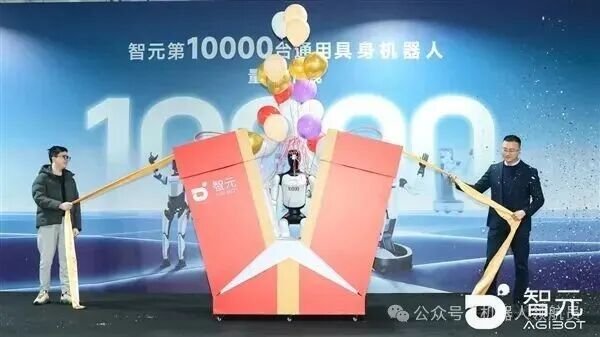
Scenario Value: AGIBOT is currently the only company among the “brain-based” companies to simultaneously achieve foundation model development and mass production of tens of thousands of units. Its logic is to acquire real-world scenario data through large-scale body deployment, feeding back into model iteration to form a data closed loop. This already covers scientific research, commercial services, and some industrial scenarios.
Conclusion:
The Chinese robotics industry in 2026 is undergoing a true divergence. Some companies continue to bet on “brains”—like GALBOT and AGIBOT—believing the final battle will be a competition of general-purpose intelligence. Other companies are rooted in real-world scenarios and orders—like YOUIBOT, Unitree, UBTECH, and Deep Robotics—having secured their entry with verifiable commercial data.
The capital market has given a clear signal: in 2025, investment institutions were still willing to pay for technology demonstrations; in 2026, they will definitely ask “where are the orders?” The implementation of application scenarios will no longer be optional, but will determine whether a company can survive the cycle.
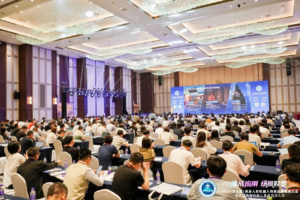
On June 25, the “3rd Embodied Humanoid Robot Scenario Application Expansion Conference 2026” will be held in Hangzhou, bringing together hundreds of humanoid robot integrators and showcase more than 50 real-world application cases of humanoid robots, helping the industry quickly identify scenario needs and business opportunities, and promoting the transformation of the industry from technological exploration to practical application.
At the event, Xiangang Lu, General Manager of Industrial Systems Division & Vice President, Great China, AGIBOT, will join us and deliver a speech themed “Embodied AI Ushers in a New Era of Industrial Productivity”.
For agenda and registration, please click https://luma.com/qgx5g1em.