In the evening of August 10, CiDi released its first interim financial report following its listing on the Stock Exchange of Hong Kong (HKEX).
Financially, in the first half of 2026, CiDi achieved total revenue of RMB 804 million, a year-on-year increase of 97.0%, approaching the full-year revenue level of RMB 885 million recorded in 2025. Gross profit stood at RMB 212 million, up 204% year-on-year, with the gross profit margin jumping from 17.1% to 26.4%. Adjusted net loss narrowed by 82% year-on-year to just RMB 19.68 million, improving the adjusted net profit margin to -2.4%; under IFRS standards, the loss for the period was RMB 113 million, a significant reduction from the RMB 455 million recorded in the same period last year.
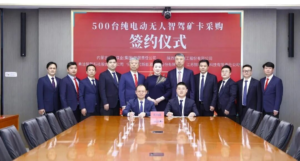
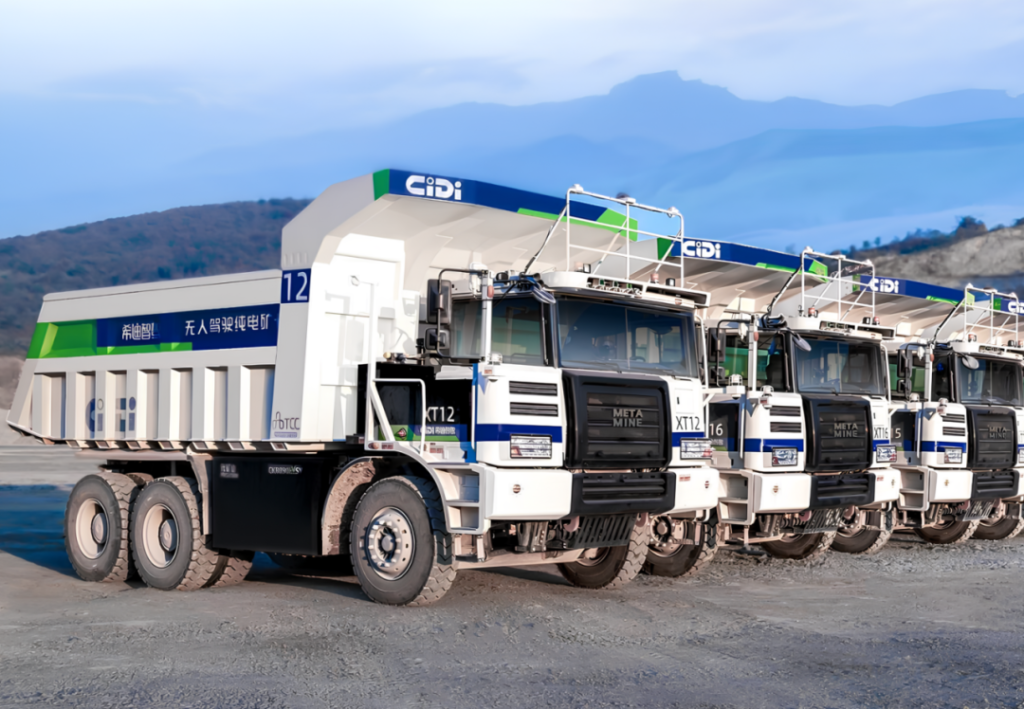
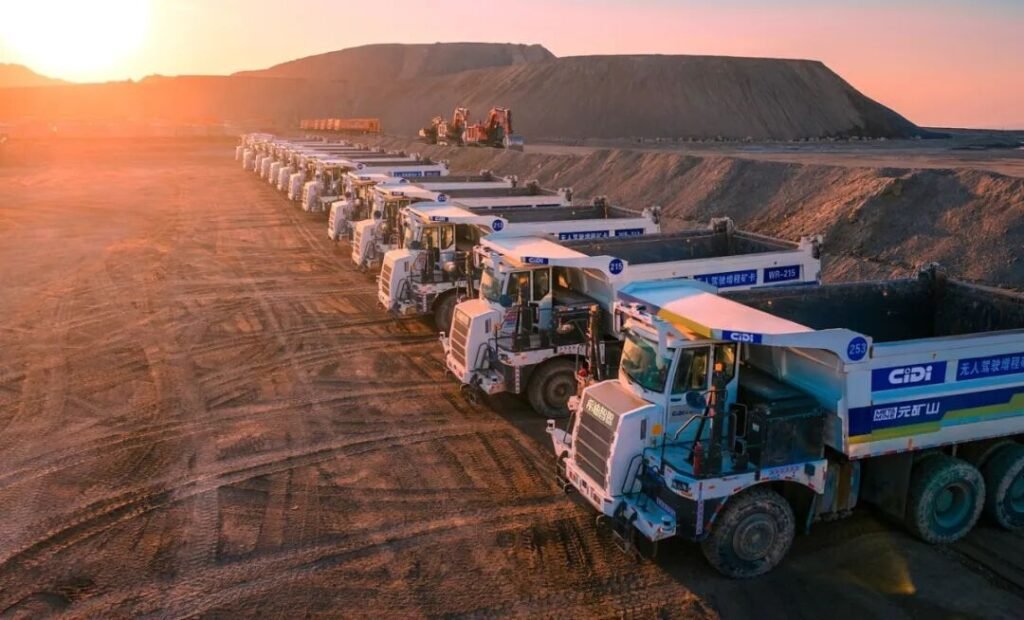
Operationally, the autonomous driving drove revenue growth, generating RMB 784 million (up 107.3% year-on-year) and accounting for 97.6% of total revenue; the company delivered (or has pending delivery for) over 3,400 vehicles and shipped a cumulative total of 23,000 intelligent products. Notably, cumulative shipments of unmanned mining trucks exceeded 1,900 units across nearly 40 mines globally, with first-half shipments rising 213.57% year-on-year; seven individual mines saw regular operations involving over 100 trucks each, with the largest deployment exceeding 220 units.
The task robots generated RMB 3.082 million in revenue, marking a breakthrough from zero to one; unmanned excavation and automatic charging robots have been deployed, while rock drilling and explosive-loading robots have either rolled off the production line or are currently under manufacture.
The intelligent hardware and services achieved breakthroughs across multiple fronts: over 2,000 units of V2X hardware were shipped; the industry’s first portable V2X terminal (TAG) for personnel and an integrated V2X+ open-pit mining solution were launched; and the commercial vehicle safety solution secured orders for over 10,000 units, with deployments across more than 20 provinces and cities and partnerships established with over 100 transport enterprises. Additionally, the autonomous train perception system was implemented across nine provinces and cities, covering five types of rail transit systems.
CIDI stated that the implementation of its heavy-duty embodied AI strategy was accelerated for the first half of 2026. The company has established itself as the only physical AI enterprise in the industry to secure large-scale orders across multiple heavy-duty scenarios, including resource extraction and transport, logistics, major infrastructure, and transportation engineering.
Looking ahead to the second half of the year and beyond, the company plans to deepen its focus on mining scenarios, continuously investing to drive the large-scale deployment of various embodied AI products such as those for extraction, rock drilling, and charging, thereby extending its capabilities from transport robots to operational robots. Horizontally, it will expand into diverse scenarios, gradually extending the collaborative capabilities of its multi-category robots to bulk logistics, large-scale infrastructure, and transportation engineering, while accelerating the penetration of unmanned heavy-duty trucks from closed environments into trunk-line logistics. Simultaneously, guided by a “Product-Scenario-Global Expansion” framework, CIDI will launch operations in resource-rich nations like Australia, Brazil, and Indonesia, subsequently expanding deeper into Africa, Central Asia, and the Middle East, aiming to translate its technological and cost competitiveness in heavy-duty embodied AI into a leading global market position.
Conclusion:
As a representative enterprise in autonomous mining, CIDI’s inaugural interim report clearly demonstrates that the autonomous mining sector has moved beyond the “demonstration pilot” phase and entered a cycle of large-scale commercialization, characterized by normalized operations involving hundreds of units per mine and the securing of orders for thousands of units. With revenue nearly doubling, gross margin surging by 9.3 percentage points, adjusted net loss narrowing by 82%, and the autonomous driving business serving as the primary growth engine, these figures undoubtedly instill confidence across both the autonomous mining sector and the broader low-speed autonomous driving industry.
More importantly, this interim report outlines a clear implementation paradigm for low-speed autonomous driving in heavy industrial settings; this “vertical closed-loop in mining + horizontal expansion into heavy-duty scenarios” pathway provides a commercialization benchmark for industry peers.
Of course, the scale and gross margin reflected in financial reports are merely footnotes to the first half of the journey. The industry’s core concerns such as the coordinated scheduling of thousand-unit fleets, model generalization under harsh conditions (like heavy dust or extreme cold), and the engineering intricacies of transitioning from transport robots to specialized operational robots (for extraction, drilling, and charging) require further exploration and refinement within more focused operational scenarios.
Against this backdrop, the 2nd Conference on the Promotion of Engineering Application of Unmanned Mining Trucks & the Conference on the Technological Development of Specialized Mining Robots 2026 will be held on September 3 at Shanxi Xiaohe International Convention and Exhibition Center, serving as an excellent vantage point for observing this trend.
Register here: https://luma.com/ichxmpcc
Centered on the theme “Intelligent Connectivity in Mining Operations,” the event will not only showcase the latest practices in the large-scale, routine operation of autonomous mining trucks but also expand the discussion beyond mere “transport automation” to encompass specialized mining robots and whole-industry-chain collaboration. Stay tuned!