ABB Launched the Flexley Stack AMR F712
ABB Robotics recently launched the Flexley Stack AMR F712, a new-generation autonomous forklift featuring Visual SLAM navigation technology, further advancing the integration of industrial vehicles and robotics.
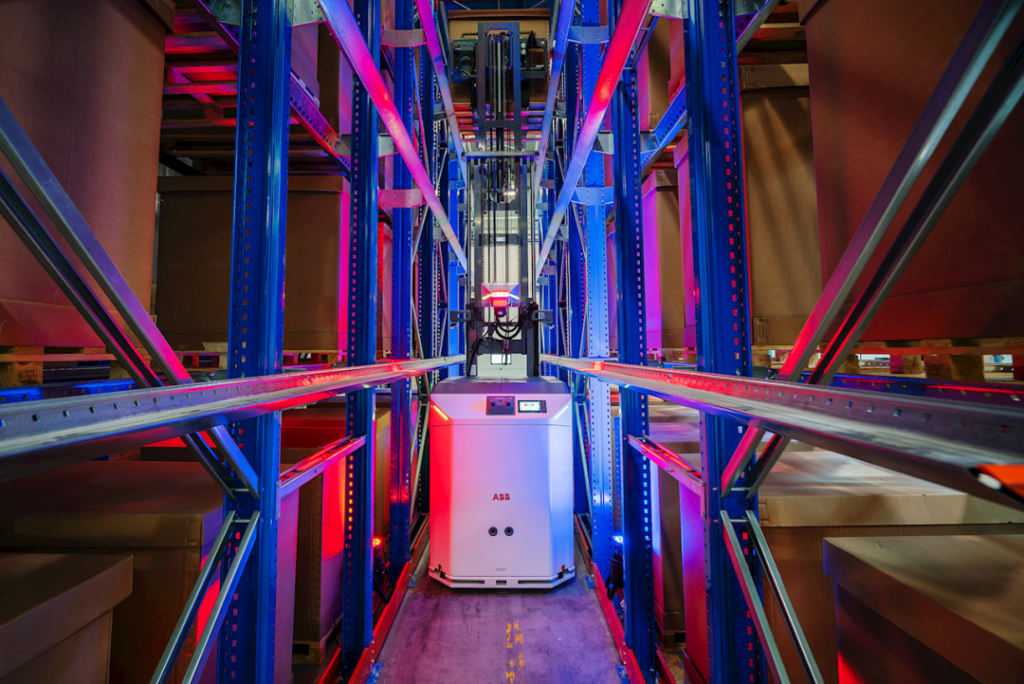
The F712 is a next-generation autonomous forklift robot designed by ABB for industrial logistics. Featuring a counterbalanced forklift design, it boasts a maximum load capacity of 2,000 kg and a maximum lifting height of 8.5 meters, making it suitable for typical industrial applications such as pallet handling, warehouse storage and retrieval, and production line delivery. Unlike traditional fixed-route AGVs, the F712’s standout feature is its AI-based Visual SLAM navigation technology; it performs autonomous positioning and path planning in dynamic environments without relying on additional infrastructure like magnetic strips, reflectors, or QR codes.
Apptronik Unveiled Apollo 2
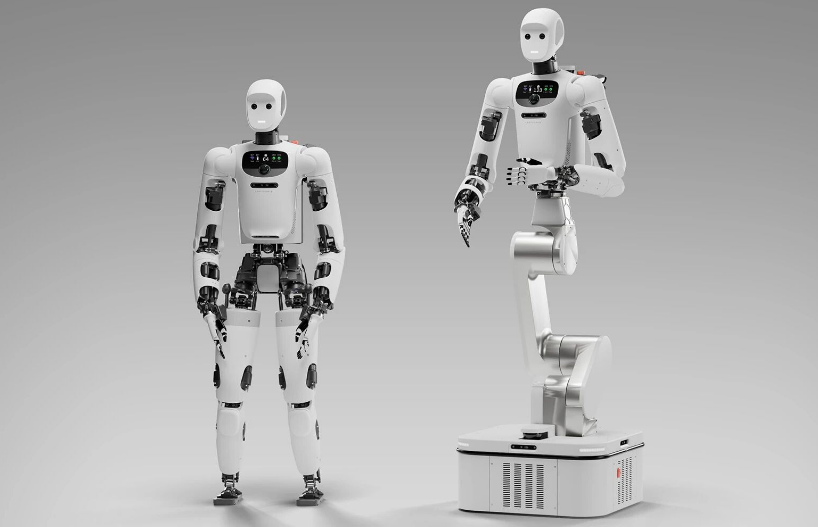
On July 1, Apptronik launched Apollo 2, an upgraded version of its humanoid robot. Additionally, the company completed the expansion and activation of “Robot Park,” its flagship humanoid robot data collection and training facility in Austin, Texas.
Apollo 2 is available in both bipedal and wheeled base configurations. Apptronik states that the robot was designed to learn real-world tasks through large-scale data collection, enabling the company to gather diverse data across a wide range of tasks and environments.
Weave Robotics Released the Wheeled Humanoid Robot for the Home
On July 1, Weave Robotics released Isaac 1, a humanoid service robot designed for home environments. Priced at $7,999, it targets the high-end residential markets in Europe and North America.
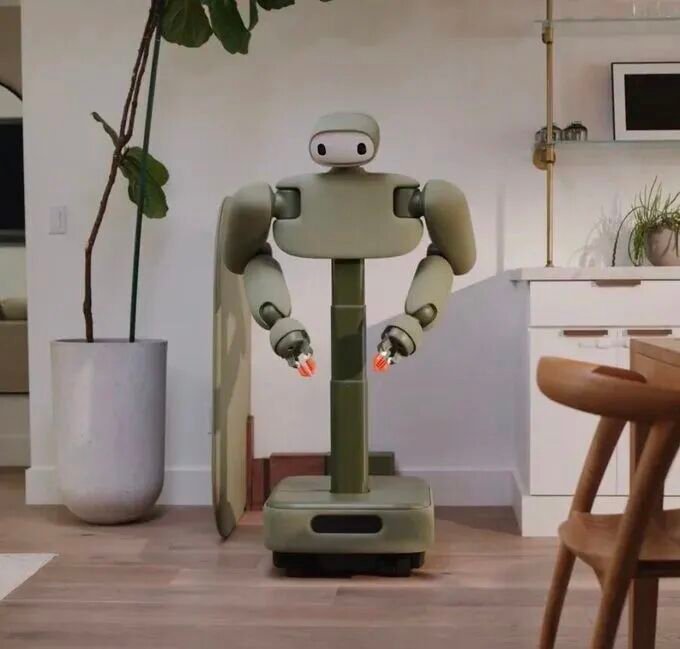
The product integrates capabilities such as autonomous navigation, object manipulation for chores, environmental perception, and multimodal voice interaction. It supports daily tasks like whole-house cleaning, tidying up, and companionship for the elderly. Equipped with a lightweight local world model, it can make basic autonomous decisions without relying on the cloud, positioning it as a representative mass-produced, affordable product in the consumer humanoid robot sector.
Lumixplore Launched the Mobile Intelligent Raman Detection Robot
Lumixplore recently released a mobile intelligent Raman detection robot, which features a wheeled chassis combined with a multi-axis robotic arm. The mobile chassis allows the system to move between workstations, while the multi-axis arm positions the Raman detection head at the optimal angle and location. A long-range Raman probe performs the actual spectral acquisition, and an industrial touch terminal integrates tasks, visuals, spectral data, and analysis into a single interface.
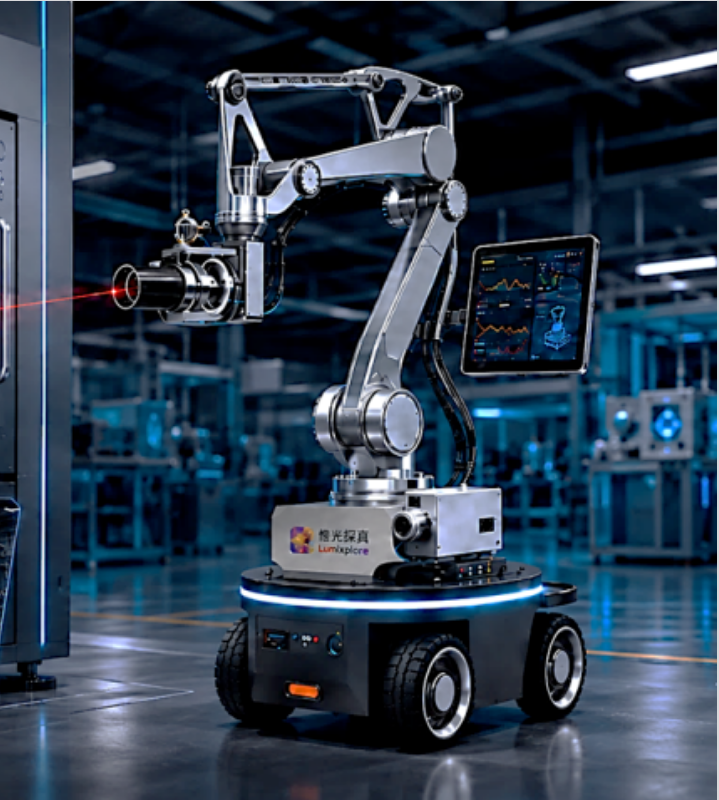
As a mobile spectroscopic inspection platform, the Raman inspection robot integrates “legs, arms, eyes, and interface” into a unified system designed to “move to the equipment and capture stable readings.” For large-scale equipment, reaction chambers, tensile testing machines, CVD systems, or complex structural components, the system can approach the target and flexibly find the ideal inspection posture. Locations that previously required temporary scaffolding or repeated manual adjustments such as side panels, low-level areas, curved surfaces, or observation windows can now be incorporated into a standardized inspection workflow. Furthermore, the robot is not locked into a single configuration.
ExRobotics Unveiled the Explosion-Proof Inspection Robot
Recently, the Dutch industrial robotics company ExRobotics launched the UL-certified ExR-2.5 autonomous inspection robot. It is one of the first products in the North American market to achieve UL certification for robots operating in hazardous locations, establishing a new safety standard for deploying robots in explosive industrial environments.
The key technical breakthrough of the newly released ExR-2.5 inspection robot is its UL 6260 certification. It utilizes a tracked mobility system capable of navigating complex industrial terrain and is equipped with various sensors and inspection tools to perform remote inspection tasks.
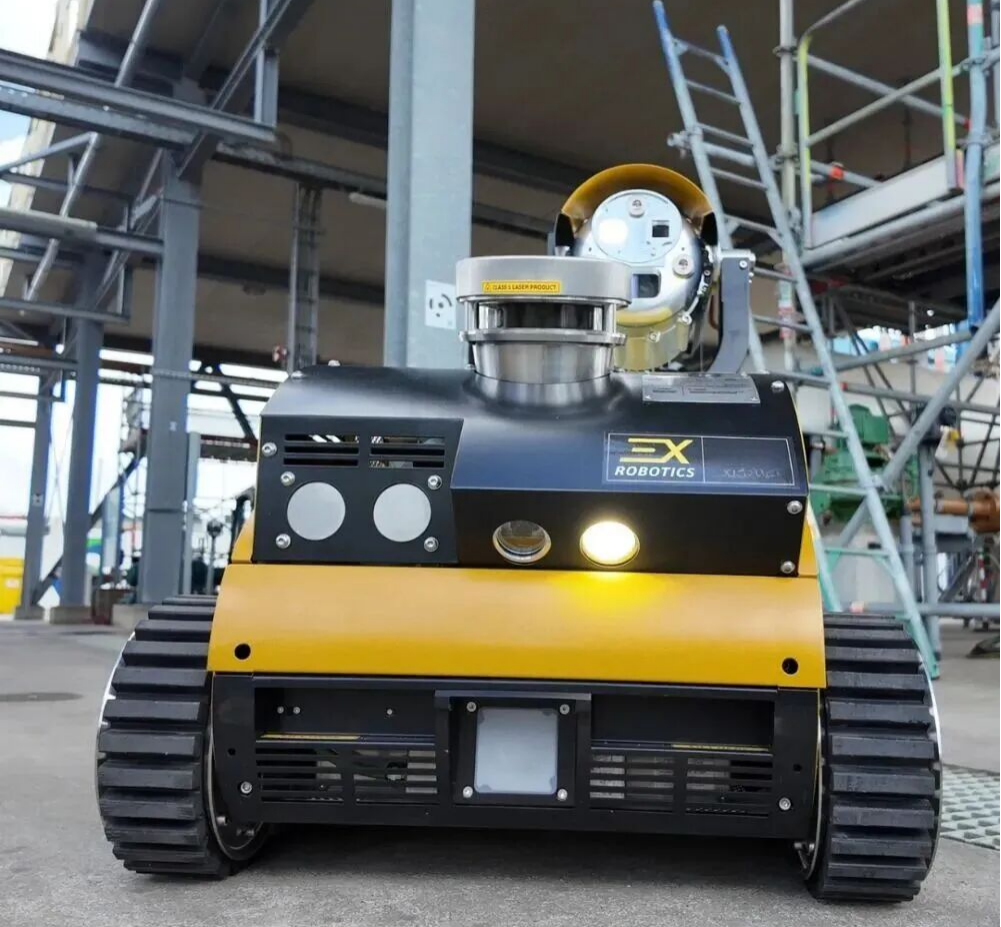
ExRobotics specializes in robotic solutions for extreme industrial environments and is headquartered in Delft, the Netherlands. The company focuses on explosion-proof robotics technology, providing remote and autonomous inspection equipment for industrial zones at risk of explosive gases, vapors, or dust. Its products target the oil and gas, chemical, and energy sectors, as well as other high-risk industrial facilities, with the goal of replacing some manual inspection tasks with robots to enhance safety and operational efficiency.
TETRABOT Released the Development Edition of T4-C Wheeled Humanoid Robot
Recently, TETRABOT launched the development edition of its T4-C wheeled humanoid robot, priced at just RMB 23,900. The robot features a dual-arm, wheeled design and supports both stationary and mobile base configurations; it can also be equipped with either 5-DOF or 7-DOF robotic arms. It features a 3kg payload per arm and a 740mm reach; powered by a high-performance computing module, it delivers robust processing capabilities.
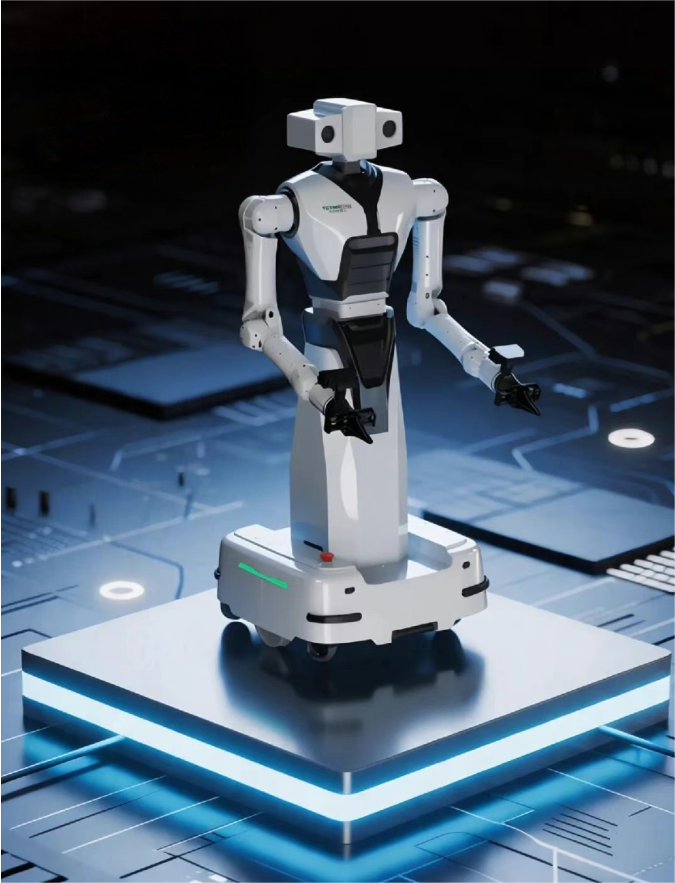
In terms of perception, the unit is equipped with binocular global-shutter vision and a wrist-mounted depth camera, enabling high-precision recognition across both near and far ranges. The end-effector includes a two-finger gripper and an adjustable lifting mechanism, allowing it to adapt to workstations at varying heights. The mobile base utilizes a two-wheel differential drive design to meet flexible mobility needs across diverse scenarios. The product is primarily targeted at applications such as scientific research, education, and factory material handling.
AGIBOT and JDL Jointly Launched the “Genie G2 Max”
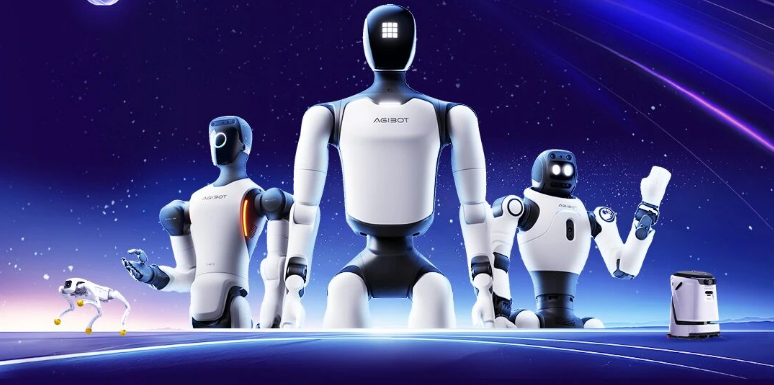
At WAIC 2026, Agibot unveiled several new products, spanning commercial, developer, industrial, and core component sectors.
Notably, the Spirit G2 Max jointly developed by Agibot and JDL is a safety-certified, heavy-duty robot, which boasts a dual-arm payload of 38kg (peak 50kg), 7-DOF force control, and sub-millimeter precision. Coupled with a powerful waist-pitch joint, it enhances depalletizing and palletizing efficiency. Capable of 24/7 continuous operation, it balances heavy-load handling with delicate manipulation tasks.
Hangcha Unveiled Five Forklift Robot Models
On July 22, Hangcha Group launched five major series of forklift robots, covering flat-transport forklifts, stacker robots, large reach trucks, three-wheel counterbalanced forklifts, and four-wheel counterbalanced forklifts, comprehensively spanning Class I, II, and III industrial vehicles.
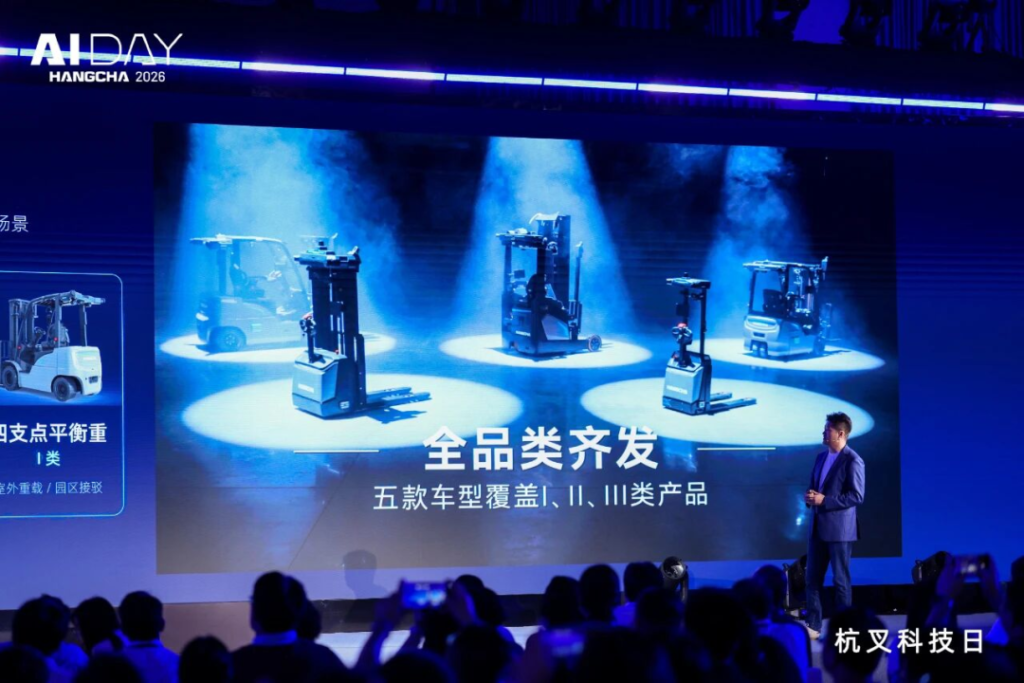
Leveraging this full-category product lineup, the new models bridge five core operational scenarios: indoor-outdoor transitions, flat-surface vs. high-level operations, and material handling vs. loading/unloading. They are widely adaptable to diverse needs such as horizontal transport, high-level stacking, and cargo loading, enabling full-scenario deployment and the restructuring of end-to-end operations.
Underpinning this new operational model are five core “Physical AI” capabilities integrated into the forklift robots: environmental perception, task comprehension, pick-and-place execution, safety protection, and ease of use/maintenance. Marking a fundamental leap for unmanned forklifts in the era of Physical AI, the launch of this series transforms them from mere “material handling tools that execute commands” into “intelligent agents capable of active perception and autonomous decision-making.”
Goat Robotics Launched GT-L Latent Lift AMR
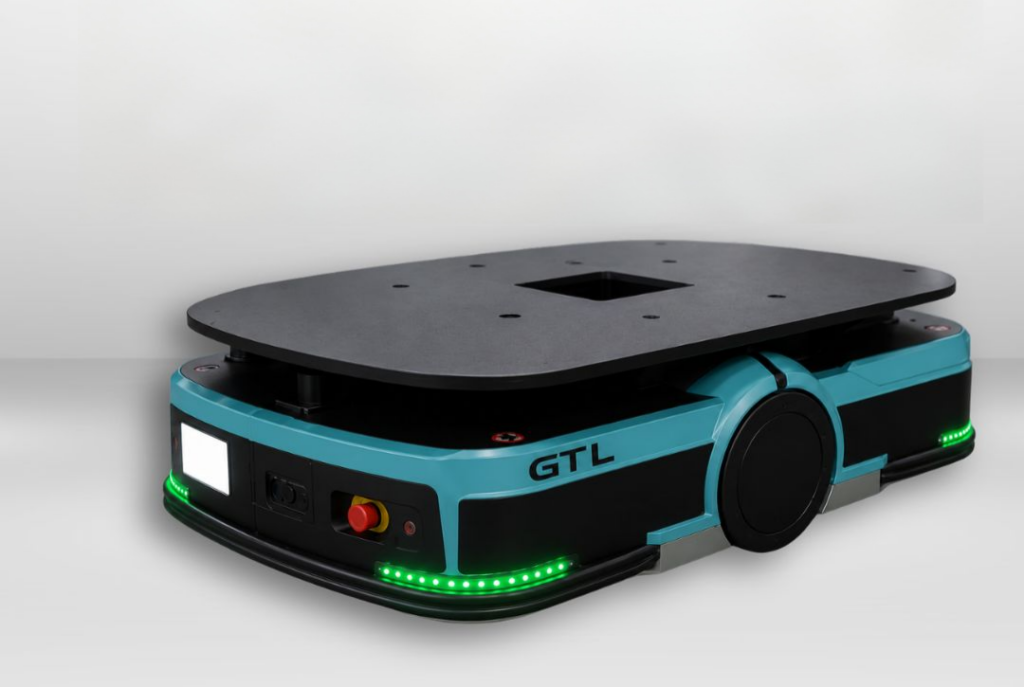
Goat Robotics, an Indian company, recently launched the GT-L, an latent lift AMR. This latest innovation aims to revolutionize internal logistics and material transport within modern manufacturing environments.
The GT-L series features a flexible design suited for demanding industrial applications; it can autonomously transport racks, carts, shelves, pallets, and production fixtures, with payload capacities ranging from 600 kg to 2,000 kg. Whether for compact intralogistics operations or heavy industrial settings, the GT-L is designed to be more flexible, intelligent, and safe.
Fourier DebutedWheeled Dual-Arm Assistive Interactive Robot
At the WAIC 2026, Fourier debuted the GRW, a wheeled dual-arm assistive interactive robot, demonstrating its capabilities in heavy-load assistive tasks such as material handling.
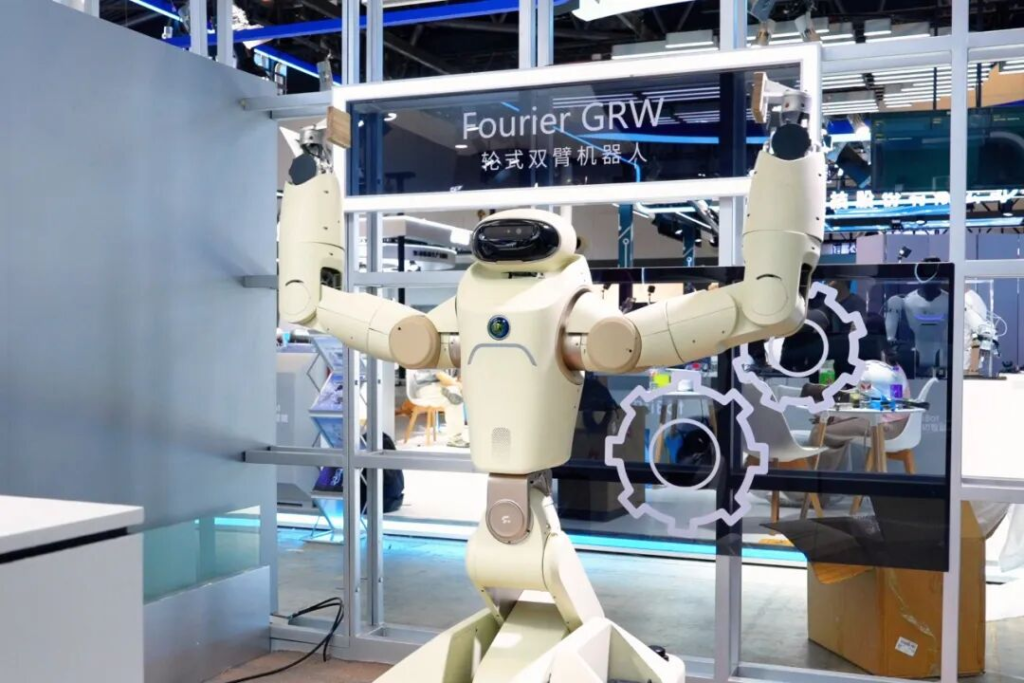
The GRW boasts 29 degrees of freedom (excluding swappable end-effectors), high-torque joints delivering up to 500 N·m of torque, a stable long-term payload capacity of up to 16 kg, and a repeatability of ±0.1 mm. A 16 kg payload meets nearly 80% of weight requirements in typical industrial scenarios such as automotive manufacturing, 3C electronics, and logistics warehousing while the ±0.1 mm precision enables more intricate tasks like precision assembly and machine loading/unloading.
The GRW’s form factor is optimized for workstation operations. It features a “long-arm, narrow-shoulder” design; a shoulder width of approximately 585 mm allows easy access to production line aisles and narrow workstations, while a 1,970 mm dual-arm span extends the reachable workspace both horizontally and vertically, accommodating various operational radii such as tabletop assembly, machine tool loading/unloading, and wide-range material handling across workstations.
Regarding autonomous mobility, the GRW integrates multi-source sensing capabilities, including LiDAR, depth vision, and ultrasonic sensors, to build an autonomous navigation system covering environmental perception, localization and mapping, and motion planning.
Zhongyan Forklift and Lingong Intelligent Jointly Launched Two Unmanned Forklifts
On July 30, Jiangsu Zhongyan Forklift Manufacturing Co., Ltd. and Lingong Intelligent Technology (Taizhou) Co., Ltd. jointly launched two new pieces of intelligent logistics equipment. Both new products are powered by a suite of fully in-house developed technologies, including 3D laser SLAM perception, dynamic path planning, real-time obstacle avoidance, and multi-robot collaborative scheduling. These innovations eliminate the operational bottlenecks associated with traditional automated forklifts that rely on auxiliary positioning aids like magnetic strips or QR codes, enabling truly marker-free autonomous navigation across all operational scenarios.
The first new product is an AGV intelligent transporter. It features 3D laser SLAM fusion positioning, 3D vision-based pallet recognition, and adaptive motion control technologies, allowing it to adapt to dynamic factory environments and handle various pallet specifications. It supports rapid deployment via lightweight manual teaching and is designed for future upgrades, including intelligent obstacle avoidance, automatic loading/unloading, and WCS cluster scheduling capabilities.
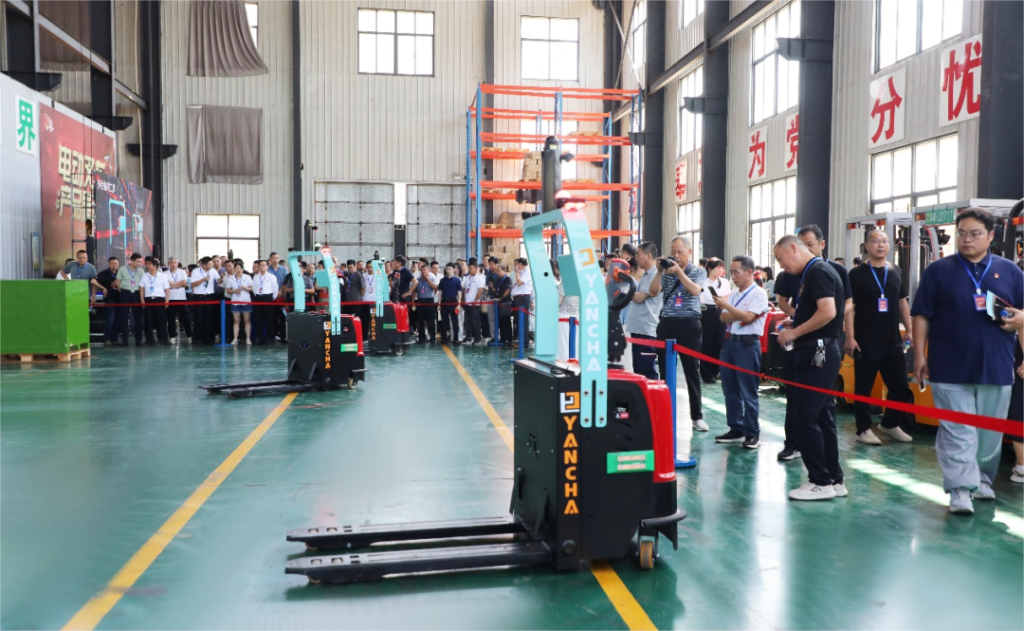
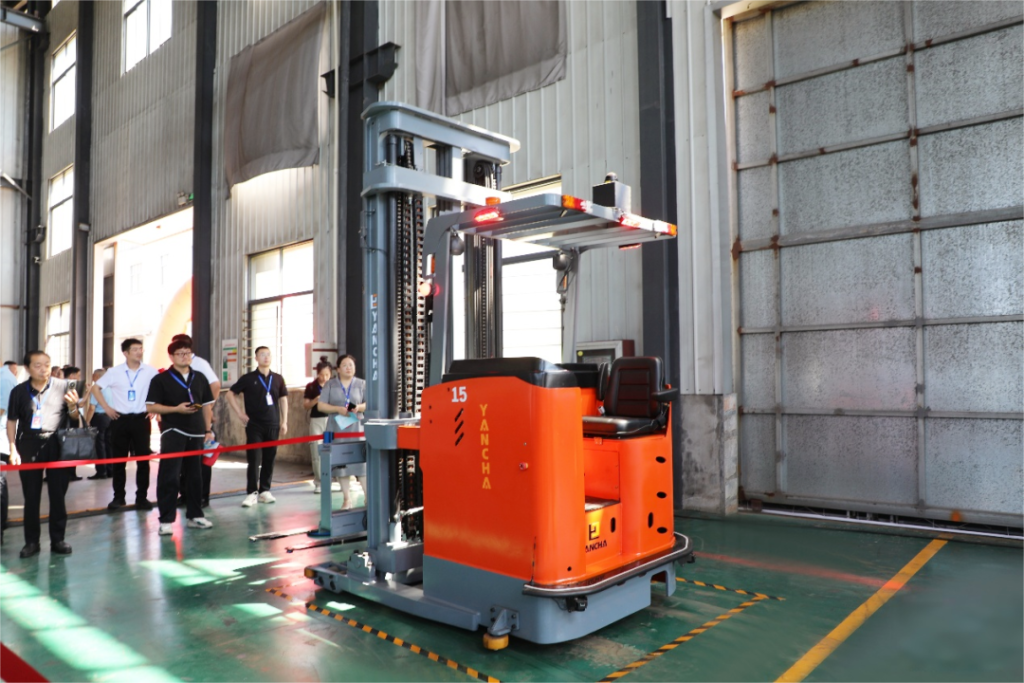
The second new product is an AMR three-way stacker. Equipped with 3D laser SLAM positioning, adaptive motion control, and WCS global scheduling capabilities, it is designed for high-density, narrow-aisle warehouses and supports multi-robot collaboration. Leveraging a three-way handling structure and high-tolerance visual alignment technology, it offers superior space utilization and operational stability, making it ideal for high-frequency operations in premium warehousing facilities.
Yangzi Unveiled the Intelligent Transport Robot L300
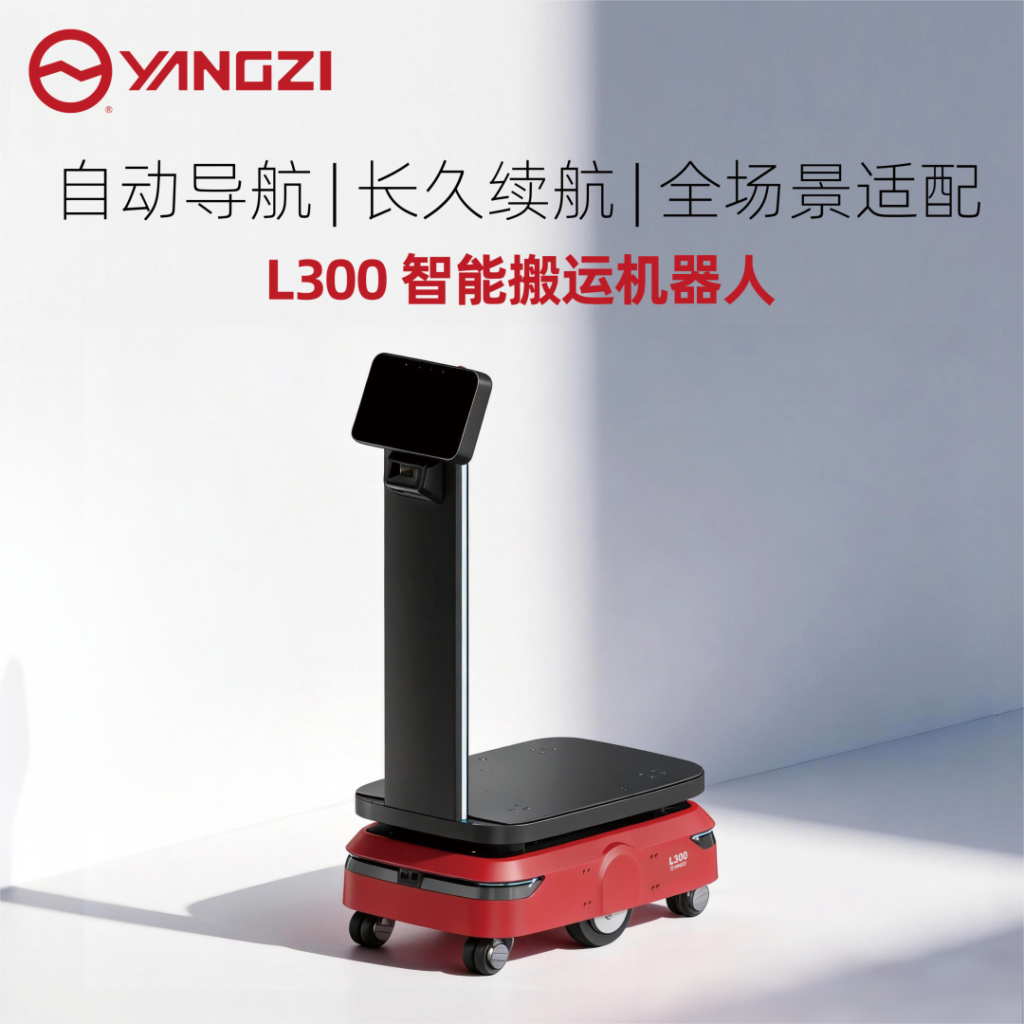
On July 29, Yangzi launched the intelligent transport robot L300. Weighing 78 kg, the unit boasts a rated load capacity of up to 300 kg. Its lightweight design delivers handling efficiency far superior to similar models of the same size, thereby reducing the need for costly floor-load capacity modifications. It features a lifting height of 50 mm and a lifting speed of 5 mm/s. It comes standard with a 660×700×325 mm rack (customizable) and handles various cargo types, including cartons, material bins, and small pallets while offering flexible integration with production line material flows.
Combining high load capacity with a compact structure, the L300 easily navigates restricted factory spaces. With dimensions of 740×500×1240 mm and a minimum passage width requirement of just 70 cm, it moves smoothly through elevators, access gates, narrow aisles, densely packed workstations, and tight storage gaps.
Bowintec Released the New-Generation Industrial-Grade Wheeled Dual-Arm Embodied AI Robot
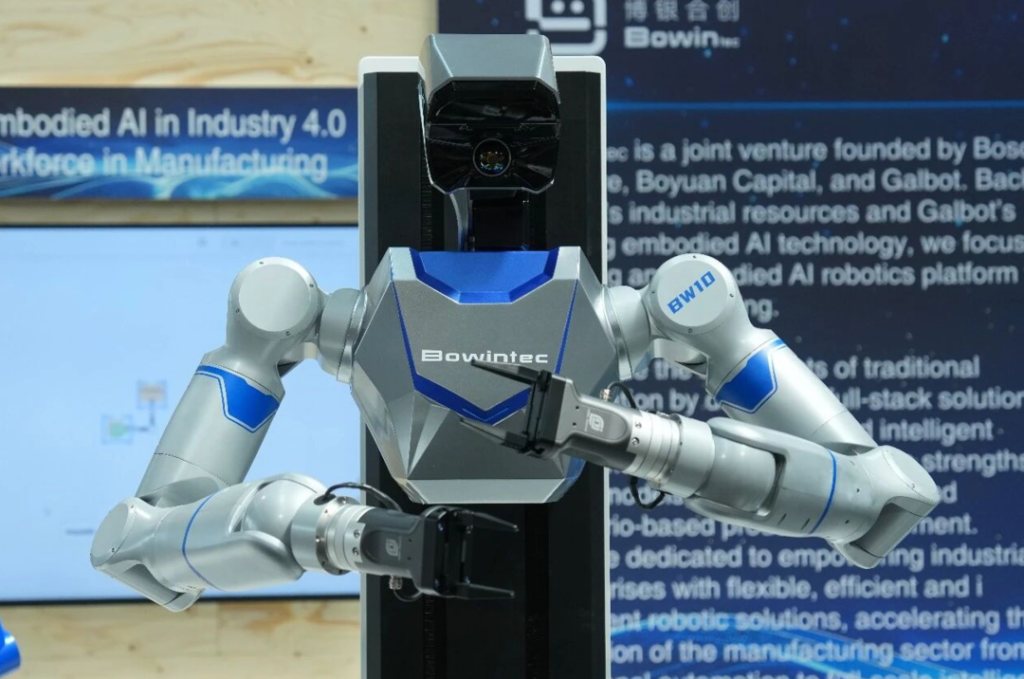
On July 30, at the World Intelligence Expo 2026, Bowintec unveiled the BW10, a new-generation industrial-grade wheeled dual-arm embodied AI robot marking its domestic debut.
Standing 1,730 mm tall, the BW10 is equipped with dual 7-degree-of-freedom (DoF) robotic arms, offering a maximum payload of 15 kg per arm and a combined dual-arm payload of 35 kg. It features a maximum operating speed of 2 m/s, a horizontal working range of 0–2,200 mm, a vertical working range of 0–2,300 mm, and a repeatability of ±0.05 mm. The robot boasts a battery life of at least 8 hours on a full charge and supports dual-battery hot-swapping and autonomous battery replacement (taking approximately 4 minutes), making it designed for continuous 24/7 operation.
Nanjing Qijing Intelligent Technology Co., Ltd. Launched the Humanoid Dual-Arm Robot
The (WAIC 2026 was recently held, featuring the debut of an industrial-grade mobile humanoid dual-arm robot developed by Nanjing Qijing Intelligent Technology Co., Ltd. Derived from the open-source 7-DoF humanoid robotic arm project “OpenArm,” this robot represents the culmination of the company’s continuous optimization and iteration for real-world industrial applications.

Realman Unveiled Two Wheeled Humanoid Robots
At the WAIC, Realman debuted two wheeled humanoid robots: the RealBot-S2 and RealBot-L2. Designed from the outset for long-duration, continuous operation, these new models address seasonal labor shortages by replacing repetitive manual tasks, thereby significantly reducing risks to production line efficiency caused by personnel turnover and lowering overall labor costs.
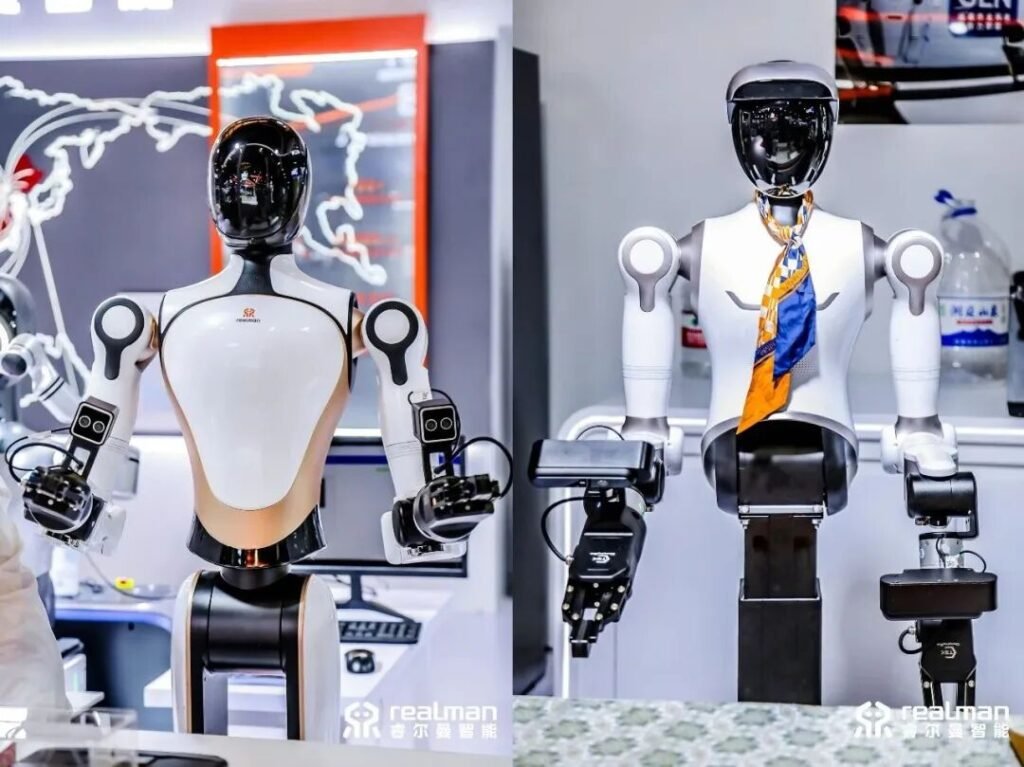
Both models share a unified technical foundation, comprising fully in-house developed joint modules, the GLN platform service network, and a real-world scenario data closed-loop system. They complement each other to enhance the robot’s spatial adaptability for performing actual work tasks, focusing on the dimensions of “folding” and “lifting,” respectively.
The RealBot-S2 features 90° lateral movement and an ultra-small turning radius of 413 mm; it can fold its legs to squat and pick up items from the ground. The RealBot-L2 offers a vertical working range reaching 2.1 meters and a lifting load capacity of ≥60 kg. With a payload of 9 kg per arm and over 15 kg for the dual-arm configuration, the robot leverages the GLN remote operation network for immediate deployment and productivity, ensuring rapid setup while keeping costs aligned with a viable return on investment (ROI).
JAKA Launched Heavy-Duty Dual-Arm Humanoid Robot
At the WAIC 2026, JAKA Robotics debuted the JAKA K1-25, a heavy-duty dual-arm humanoid robot. Each arm weighs less than 30 kg yet boasts a payload capacity of up to 30 kg, enabling a combined payload of 50 kg for collaborative dual-arm operations.
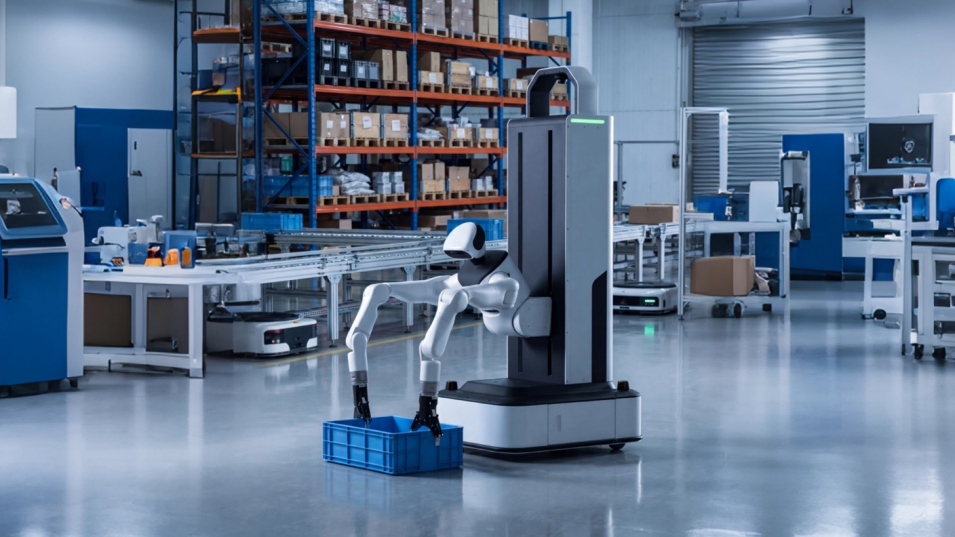
A key breakthrough lies in the proprietary APEX series high-torque planetary joints, which ensure full, independent control over the drive, force control, and communication systems. The robot can be mounted on a micron-level positioning chassis to form the “Kargo” wheeled humanoid robot. In the “Modern Era” exhibition zone, it collaborated with HASCO E-DRIVE to set up a cooperative assembly system for new energy vehicle motors, capable of high-precision fastening of screws with fine 0.5mm threads in just 10 seconds.