The “2026 Embodied Loading and Unloading Robot Market Insight and Industry Trends Report” released
On November 4, at the 2026 Embodied Picking and Loading/Unloading Robot Industry Forum, the “2026 Embodied Loading and Unloading Robot Market Insight and Industry Trends Report” was officially released. The forum was jointly hosted by the Mobile Robot Industry Alliance and the Humanoid Robot Scenario Application Alliance, and organized by New Strategy Mobile Robot Media.
Held at the Shanghai New International Expo Centre under the theme “Embodied Intelligence Empowers Intelligent Loading and Unloading,” the forum brought together upstream and downstream companies, technology experts, and industry professionals to discuss technological innovation, solutions, and commercialization of embodied intelligence in logistics picking, loading/unloading, and warehousing scenarios.
Based on statistics from the Mobile Robot Industry Alliance and the New Strategy Mobile Robot Research Institute, the report focuses on the embodied loading and unloading robot segment and systematically reviews the industry landscape, technology evolution, demand structure, and future trends. Below are the core data from the report.
Key Takeaways
- The global embodied loading and unloading robot market is forecast at USD 636 million in 2026, or approximately RMB 4.273 billion, up from USD 500 million in 2025.
- The market is projected to reach USD 1.665 billion by 2030, with a 2025–2030 CAGR of 27.2%.
- Growth is fast, but absolute market size remains small. The industry is still in an early commercialization stage.
- The real bottleneck is not demand, but delivery capability and stable operation.
- Chinese companies account for 69%of global related companies; overseas companies account for 31%.
- Stable handling of boxed and bagged non-standard cargois critical to entering 65% of core scenarios.
01. Overview of the Embodied Loading and Unloading Robot Industry
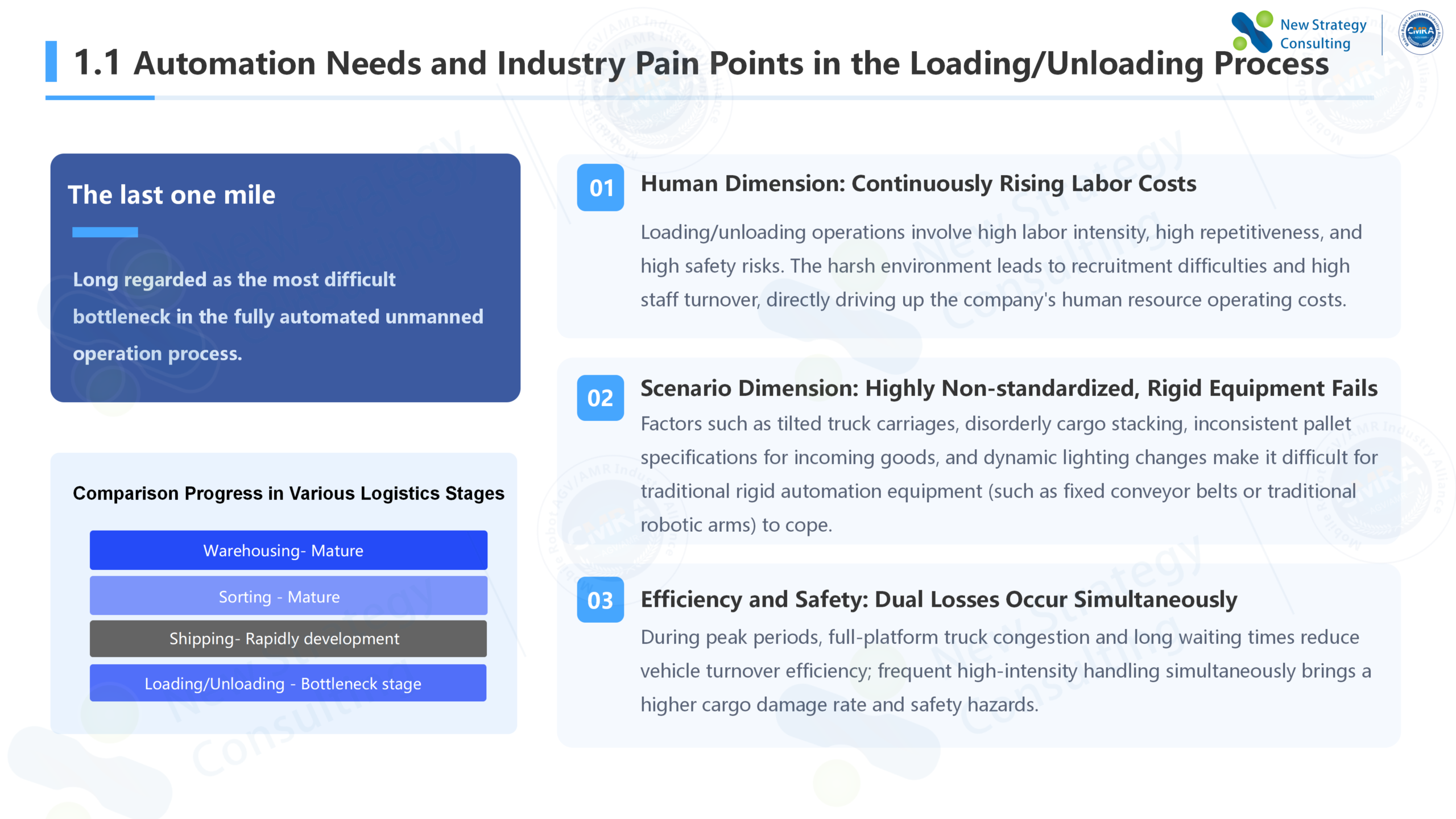
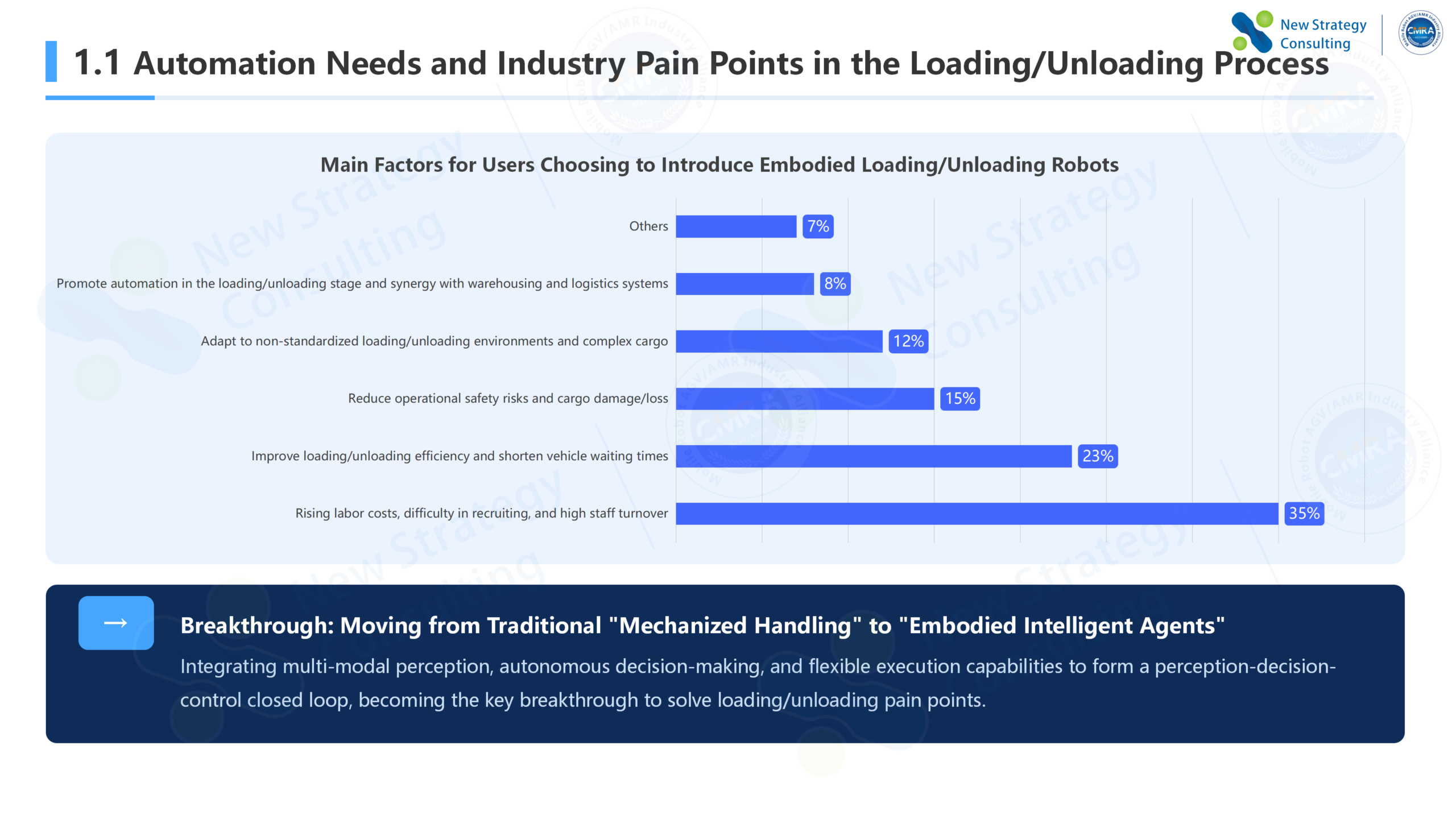
Unmanned progress across logistics links is uneven. Warehousing and sorting automation have matured, transportation is developing rapidly, and loading/unloading has become the bottleneck in end-to-end unmanned logistics.
Report Definition
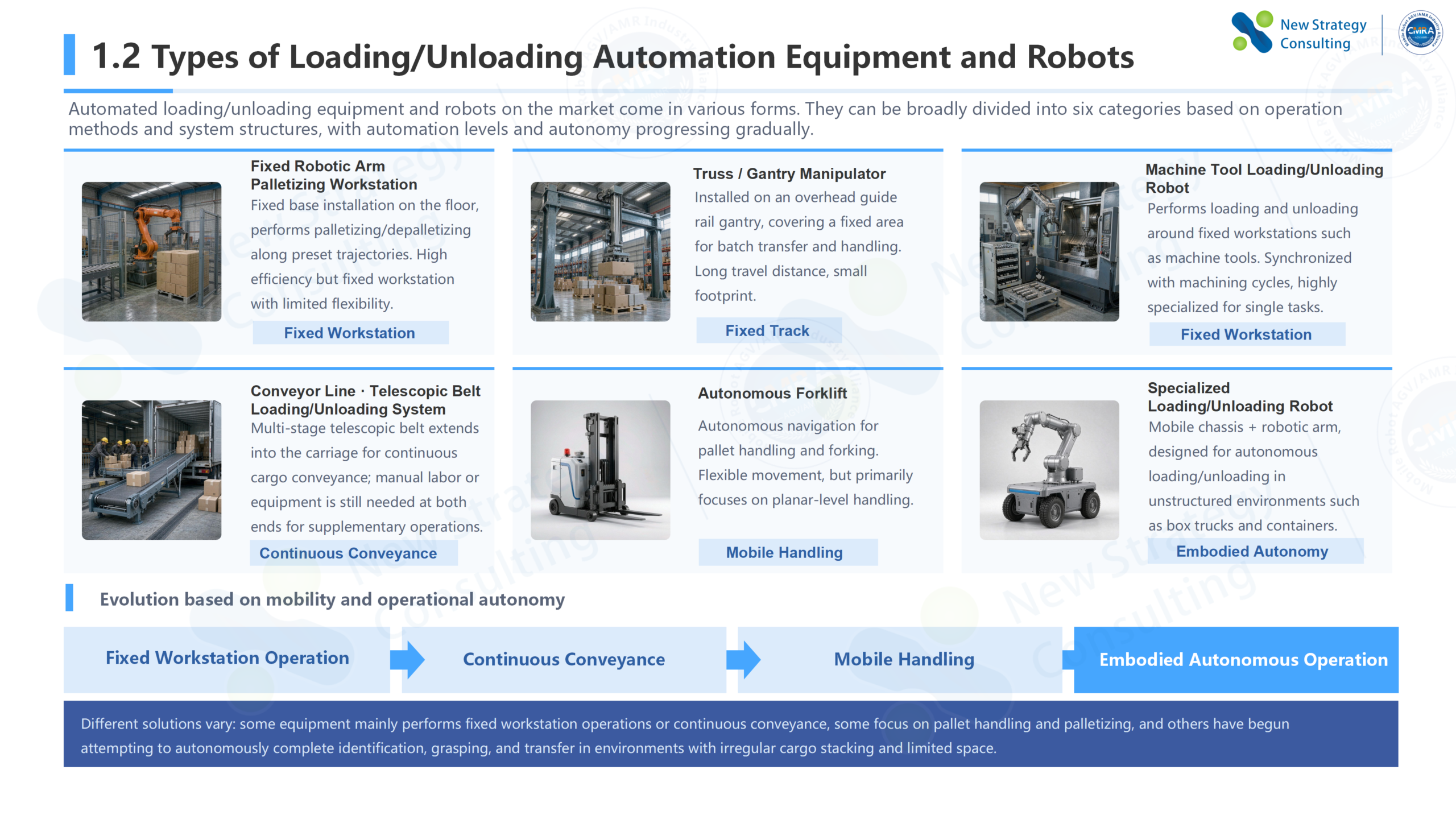
An embodied loading and unloading robot is a mobile operation equipment that has a physical entity body, is equipped with an autonomous mobile chassis, integrates multimodal sensors and end effectors, and—in semi-structured or unstructured spaces such as truck cabins, containers, loading docks, or production-line workstations—relies on its own perception, decision-making, and execution to autonomously identify goods, approach the carrier, pick and place or fork, and stack or unload.
Two Core Forms
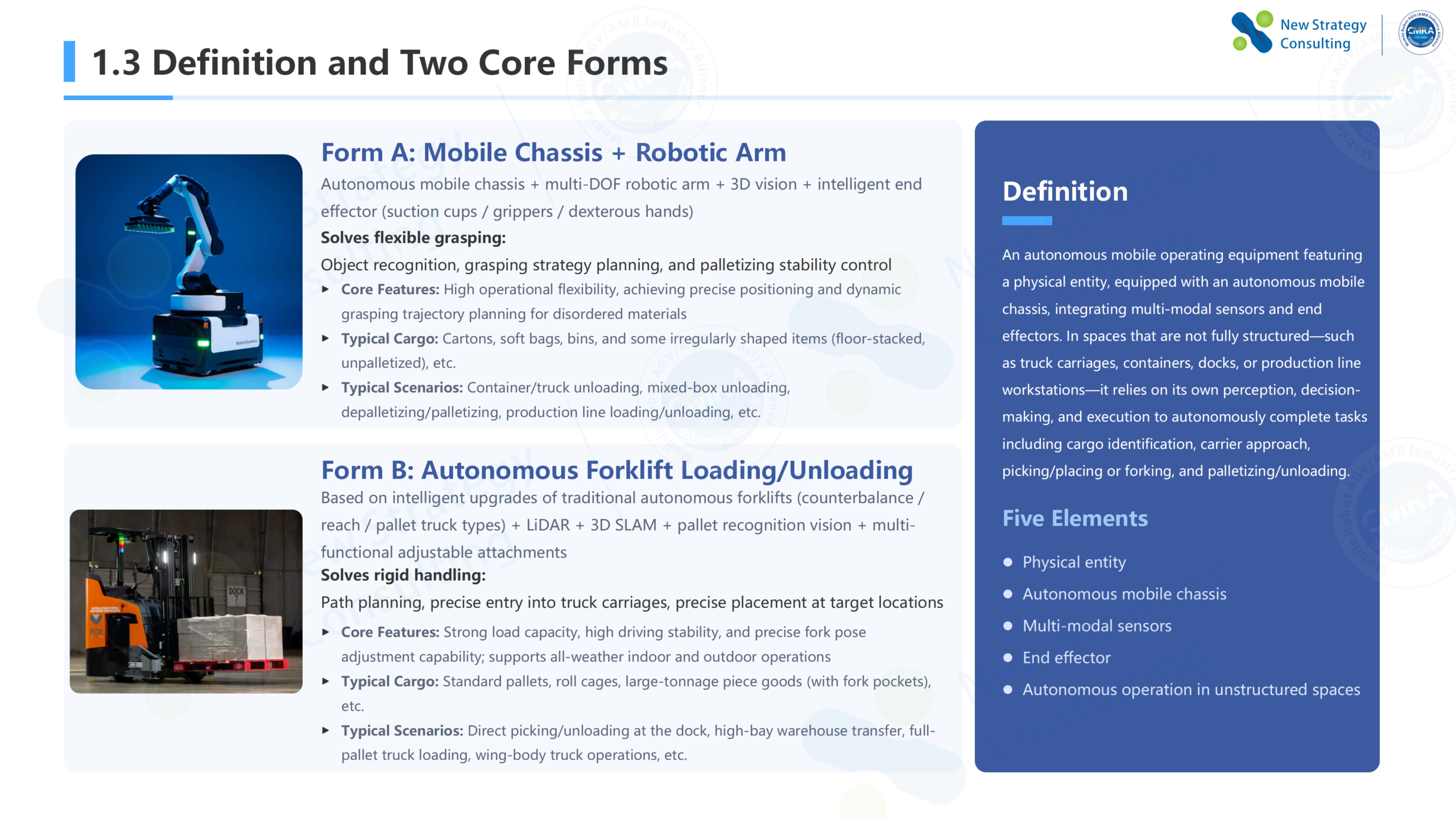
The two technology routes complement each other for different material forms rather than replacing each other. The bottleneck of the robotic arm route is “whether it can grasp the object and hold it stably.” The bottleneck of the forklift route is “whether it can enter the space and align accurately.”
02. Industry Evolution Logic and Development Stages
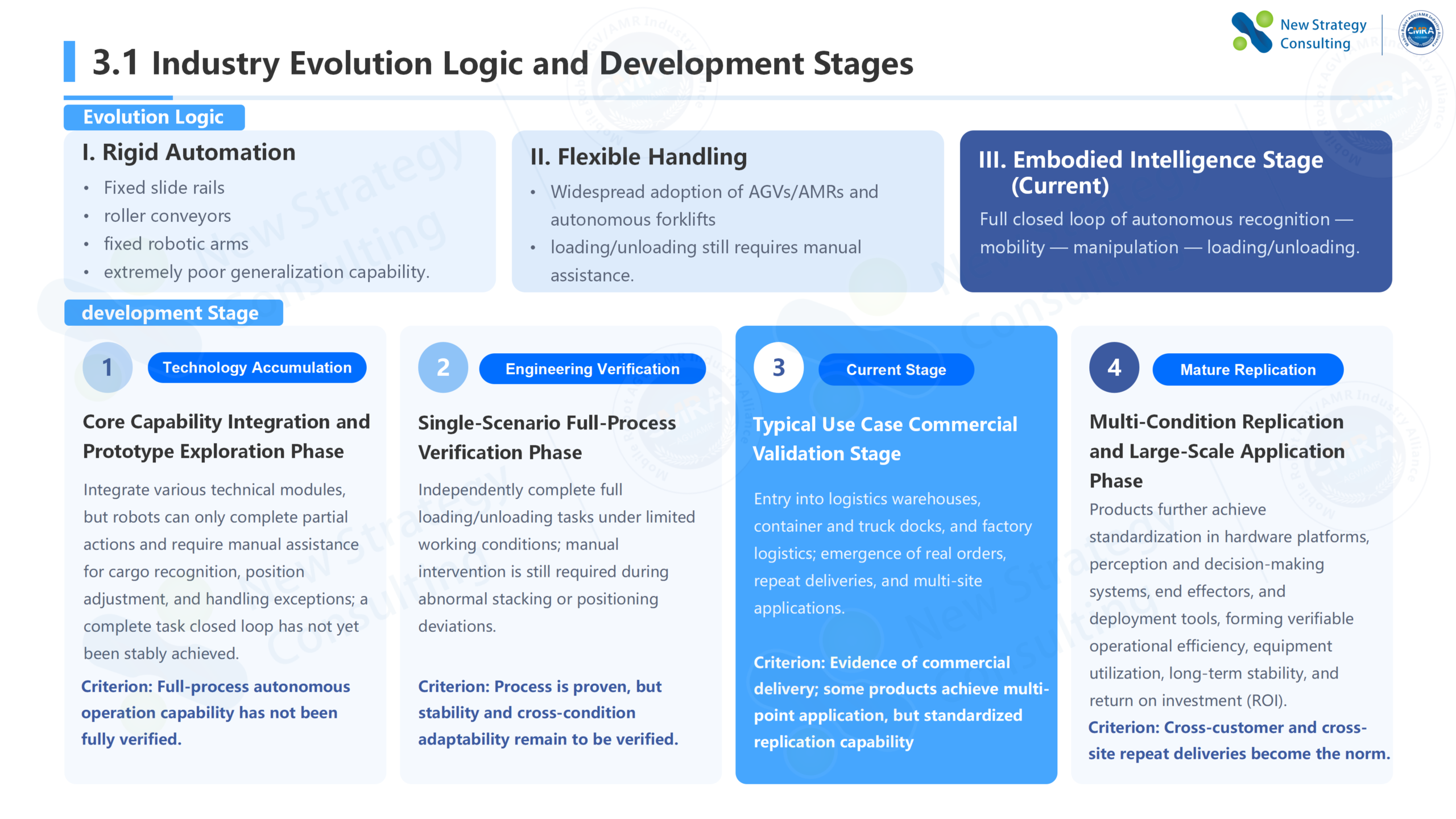
Competitive focus has shifted from “whether a single loading/unloading task can be completed” to “stable operation under complex conditions, continuous delivery, and a closed economic viability loop.” A successful single-point demonstration is no longer a barrier. Continuous operation and customer repeat purchases are the real validation.
03. Global Market Size and Growth Forecast
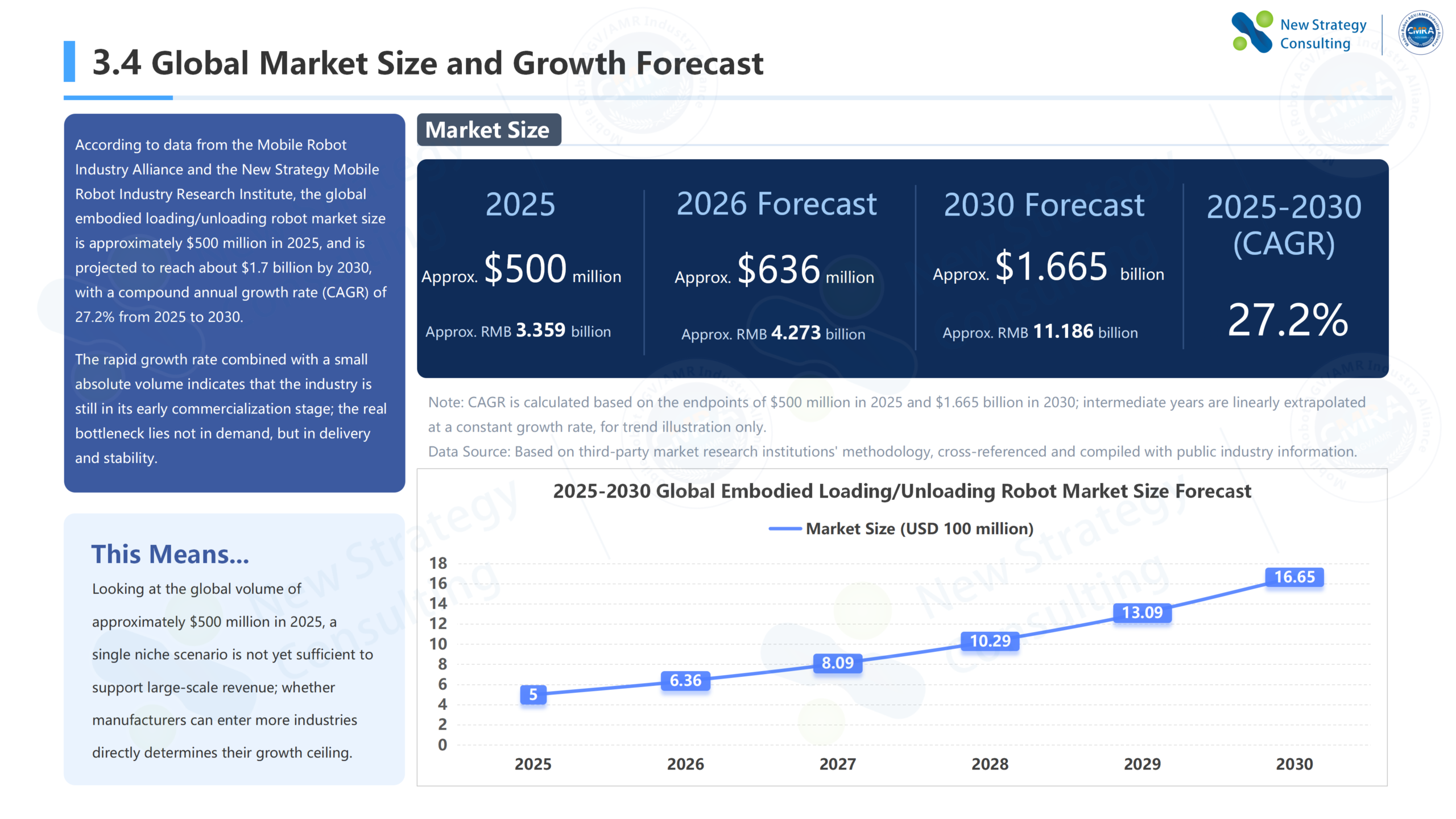
Unit: USD 100 million. Source: Mobile Robot Industry Alliance; New Strategy Mobile Robot Research Institute. The report notes that CAGR is calculated from the 2025 and 2030 endpoints, and interim years are linearly interpolated at a constant rate for trend illustration only.
What This Means
Growth is fast, but absolute volume is still small. The industry remains in an early commercialization stage. At roughly USD 500 million in 2025, a single segmented scenario is not yet enough to support large-scale revenue. The real bottleneck is not demand, but delivery and stability.
04. Demand Structure and Four Scenario Dimensions
The four dimensions are each independently based on 100% and cannot be added across dimensions. The cargo-type figures represent demand structure share, not unit sales share.
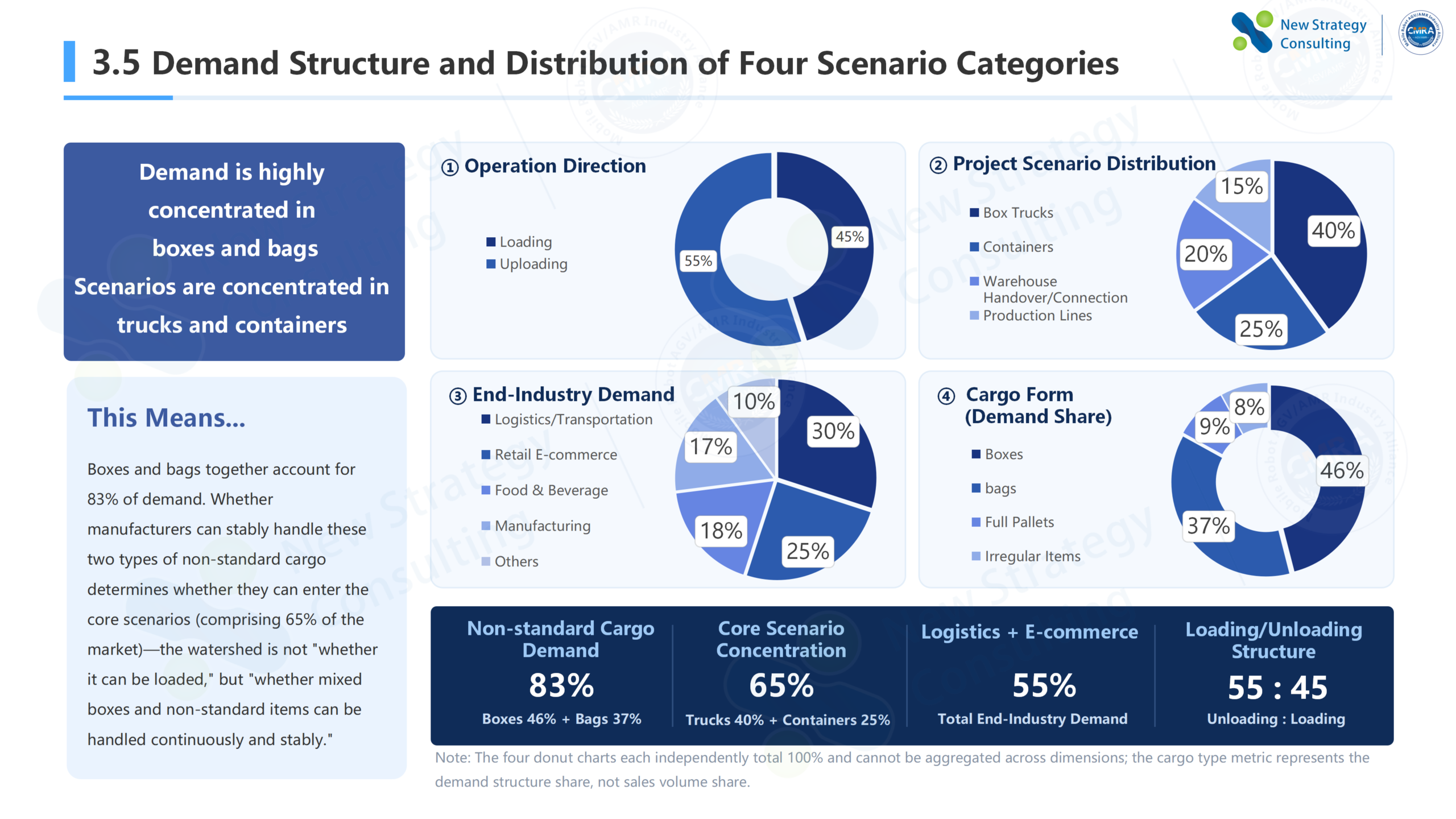
Whether a vendor can stably handle boxed and bagged non-standard cargo determines whether it can enter 65% of core scenarios. The dividing line is not “whether it can load,” but “whether mixed boxes and non-standard cargo can be handled continuously and stably.”
05. Market Landscape: Chinese Companies Account for 69%
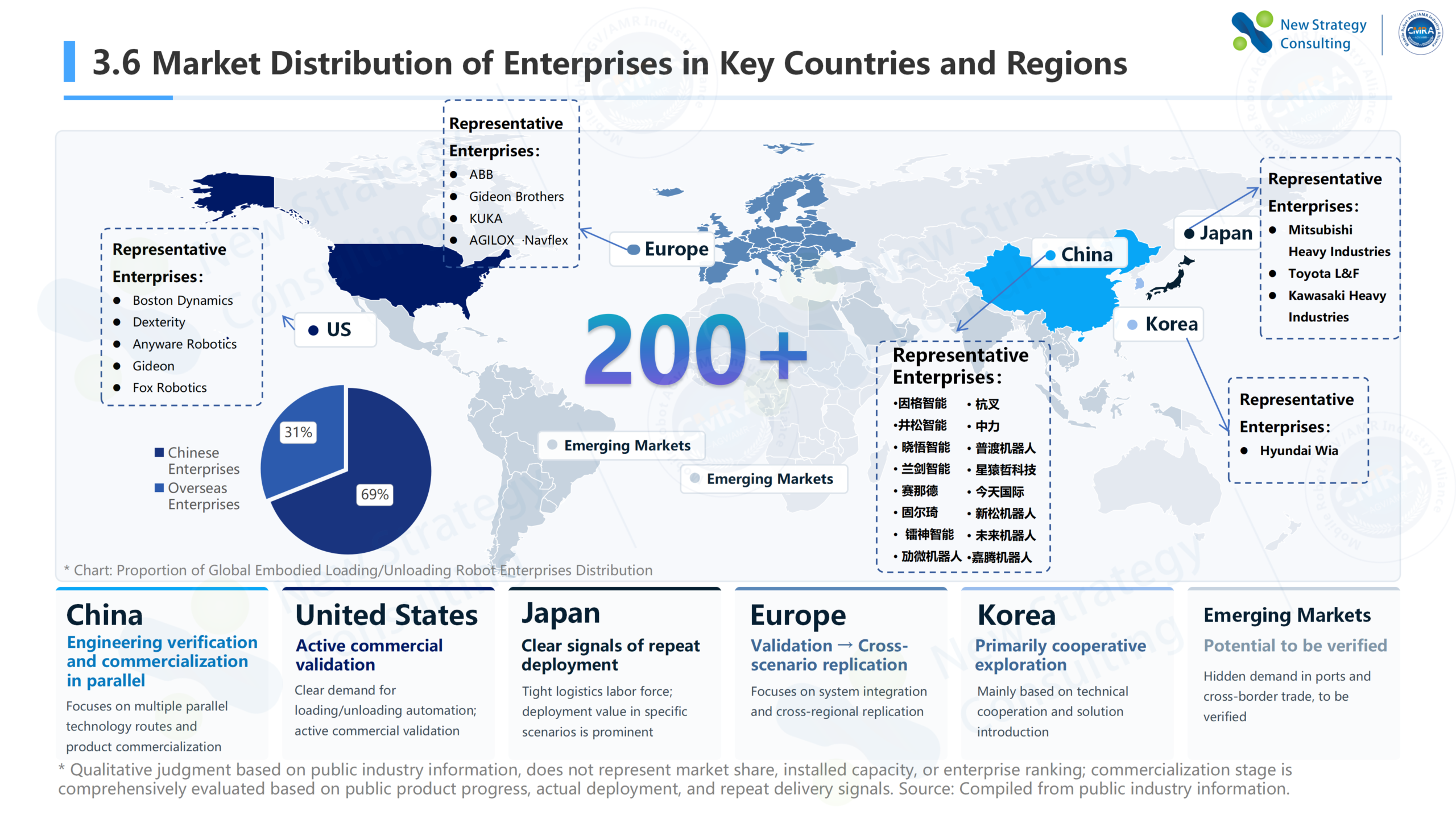
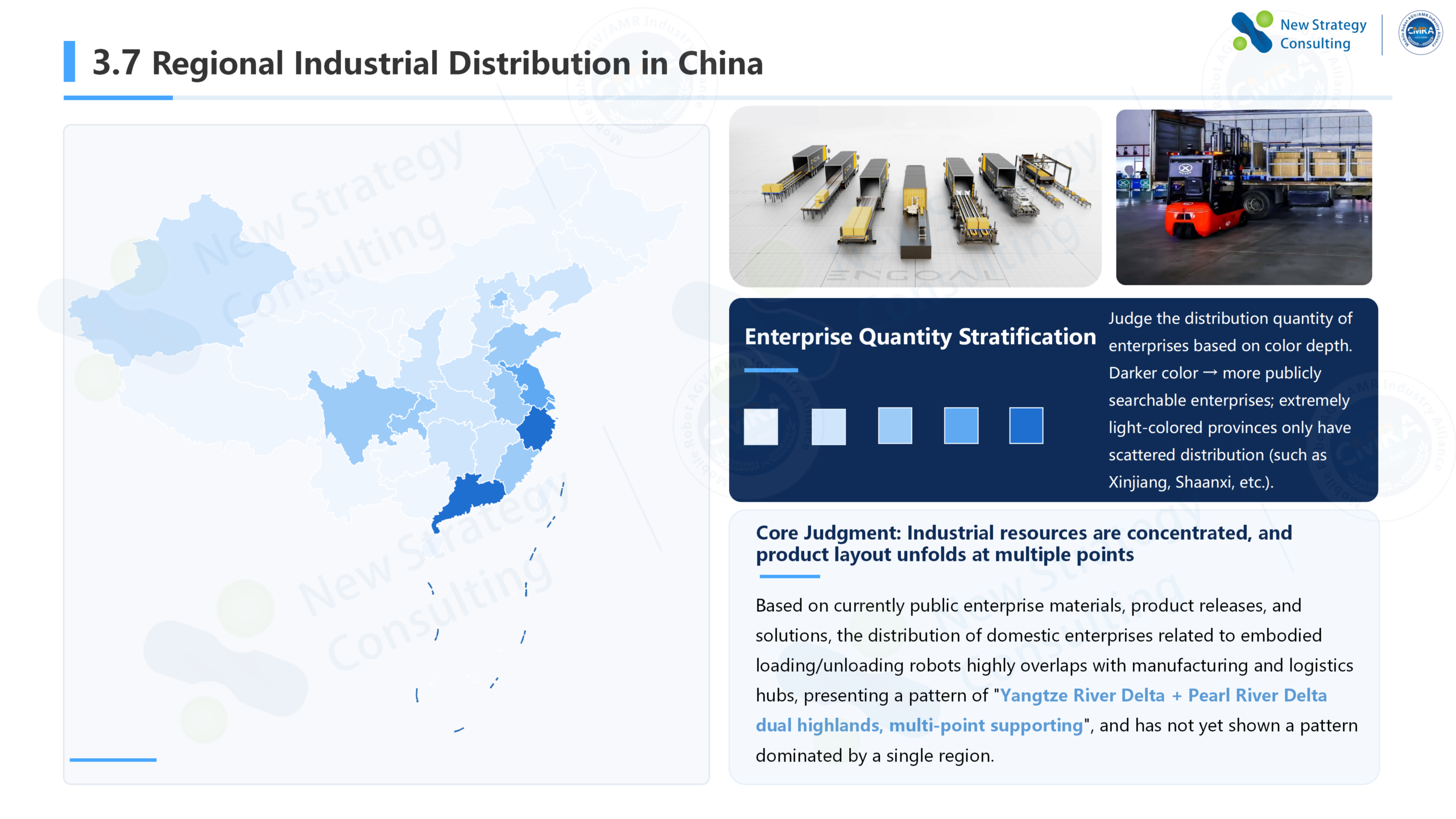
Note: Qualitative judgments based on public industry information; they do not represent market share, installed base, or company rankings.
06. Capital Landscape: Concentration at the Top, Valuations Still Opaque
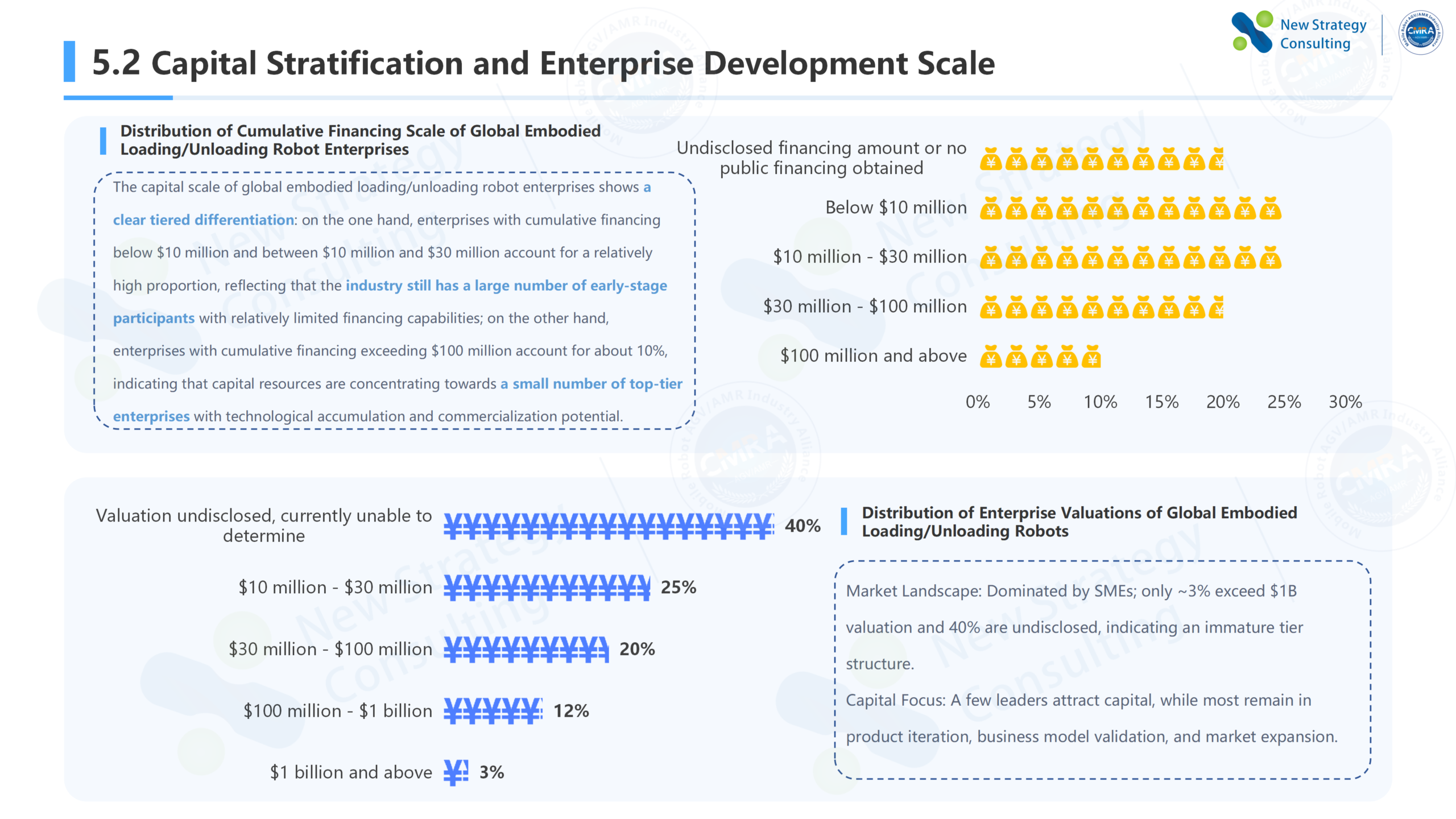
- About 10%of companies have raised USD 100 million or more in cumulative funding.
- About 3%of companies are valued at USD 1 billion or more.
- 40%of companies have undisclosed valuations and cannot yet be assessed.
- Many companies have raised under USD 10 millionor USD 10–30 million, indicating a large number of early-stage participants.
- Capital resources are concentrating in a small number of leading companies with technical accumulation and commercialization potential. The competitive landscape has not yet taken shape.
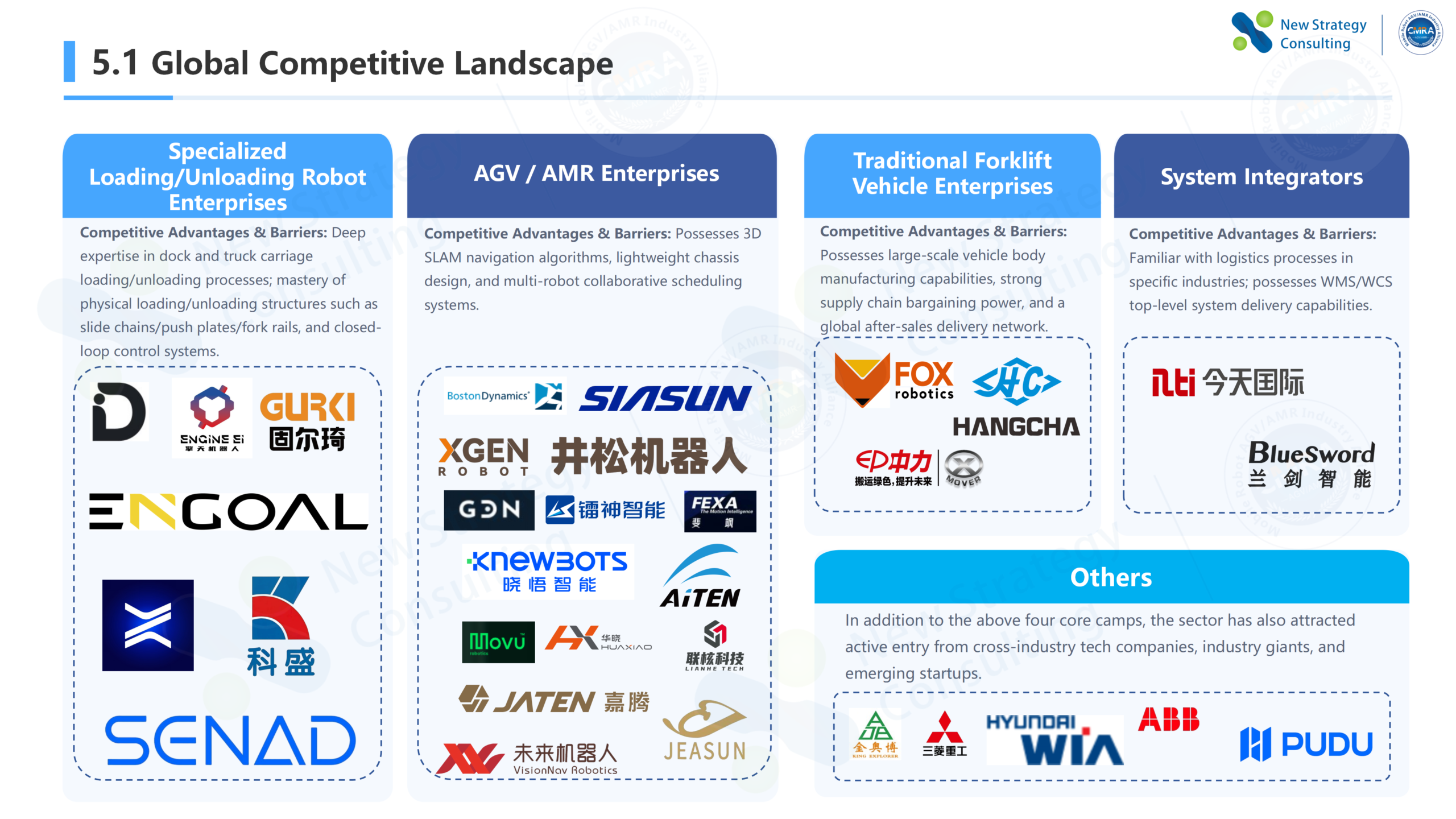
07. Global Competitive Landscape and Representative Companies
Representative companies and key indicators of benchmark cases are cited in the corresponding chapters of the full report.
08 Future Trends and Forward-Looking Forecasts
In the short term, the key is not only technological breakthroughs, but whether companies can prove economic viability in real business environments. The industry is more likely to break through scenario by scenario rather than with a single product covering all tasks.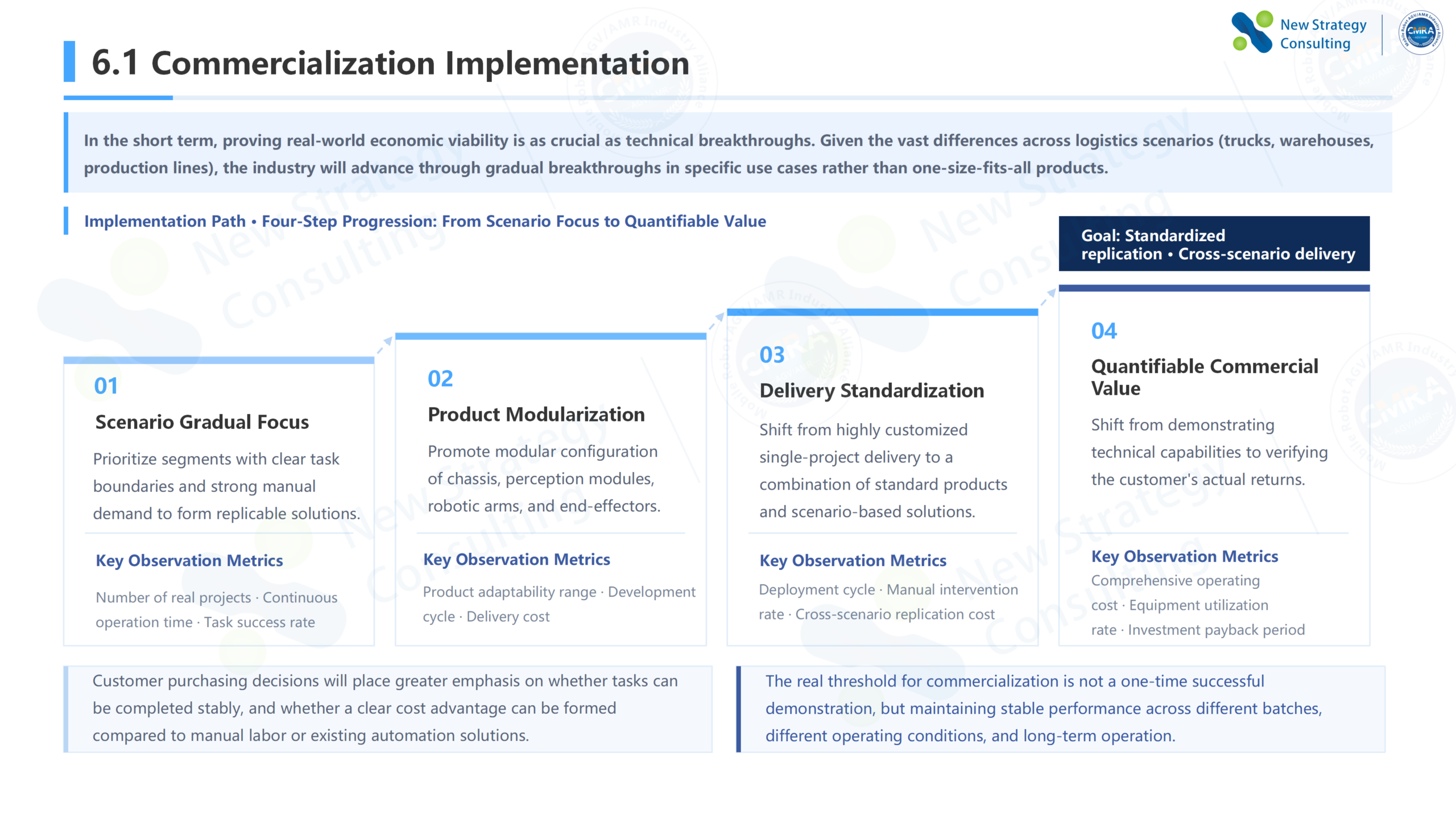
Long-Term Judgment
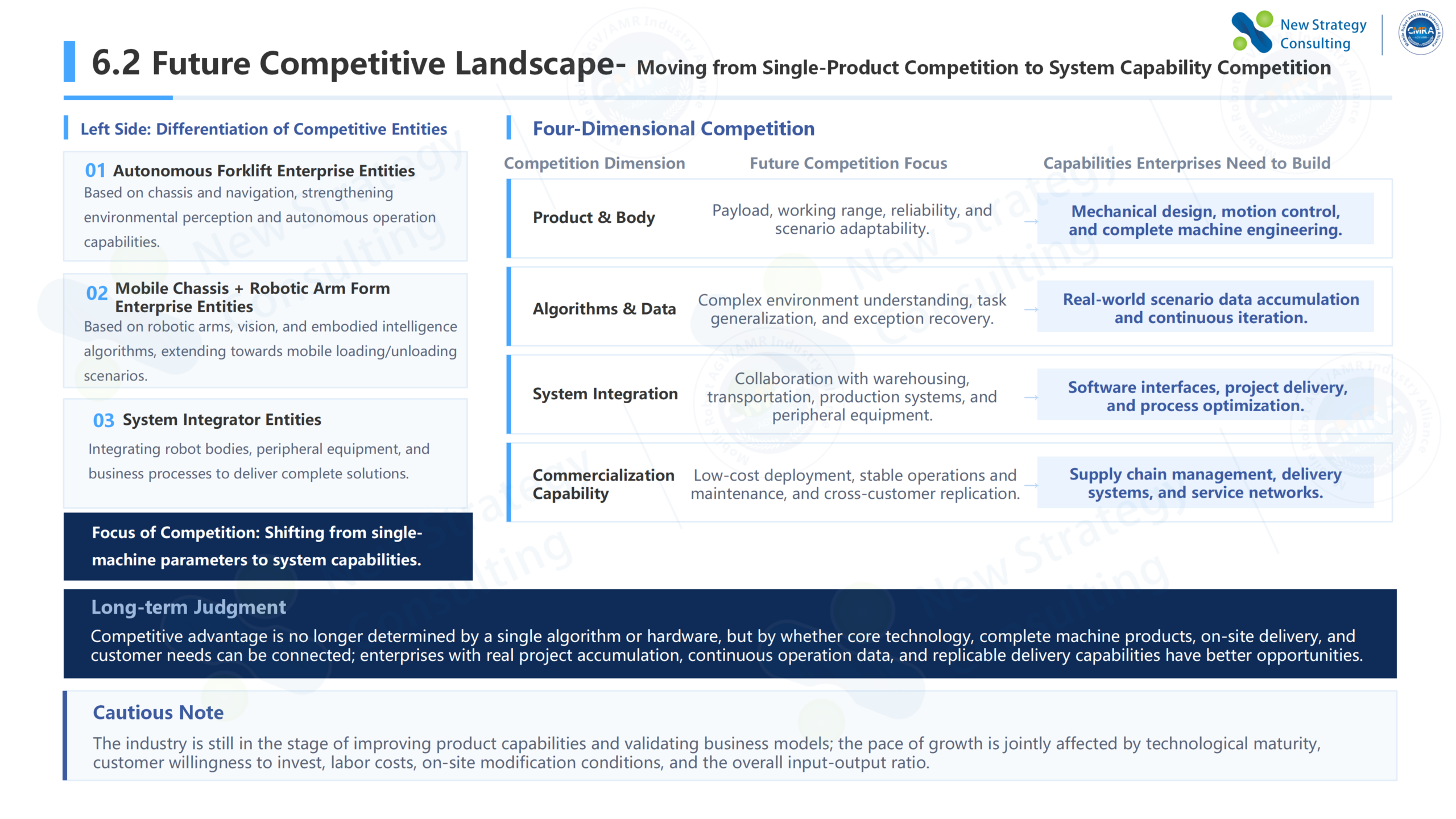
Competitive advantage will no longer be determined by a single algorithm or hardware component. It will depend on whether a company can connect core technology, complete-machine products, on-site delivery, and customer needs. Companies with real project experience, continuous operating data, and replicable delivery capabilities are more likely to succeed. Competition is shifting from standalone products to system-level capability.
What the Full Report Covers
Chapter
01 Overview of the Embodied Loading and Unloading Robot Industry
02 Technology Routes and Full Industry Chain
03 Global Market Dynamics and Demand Structure
04 Typical Application Scenarios
05 Competitive Landscape and Representative Companies
06 Future Trends and Forward-Looking Forecasts
The six chapters cover product definition and two core forms, six key technologies, the industry-chain smile curve, adaptability of four typical scenarios, global representative companies’ product lines and benchmark cases, and judgments on the future competitive landscape.
For the full report, follow CMRA’s upcoming releases on cnmra.com.
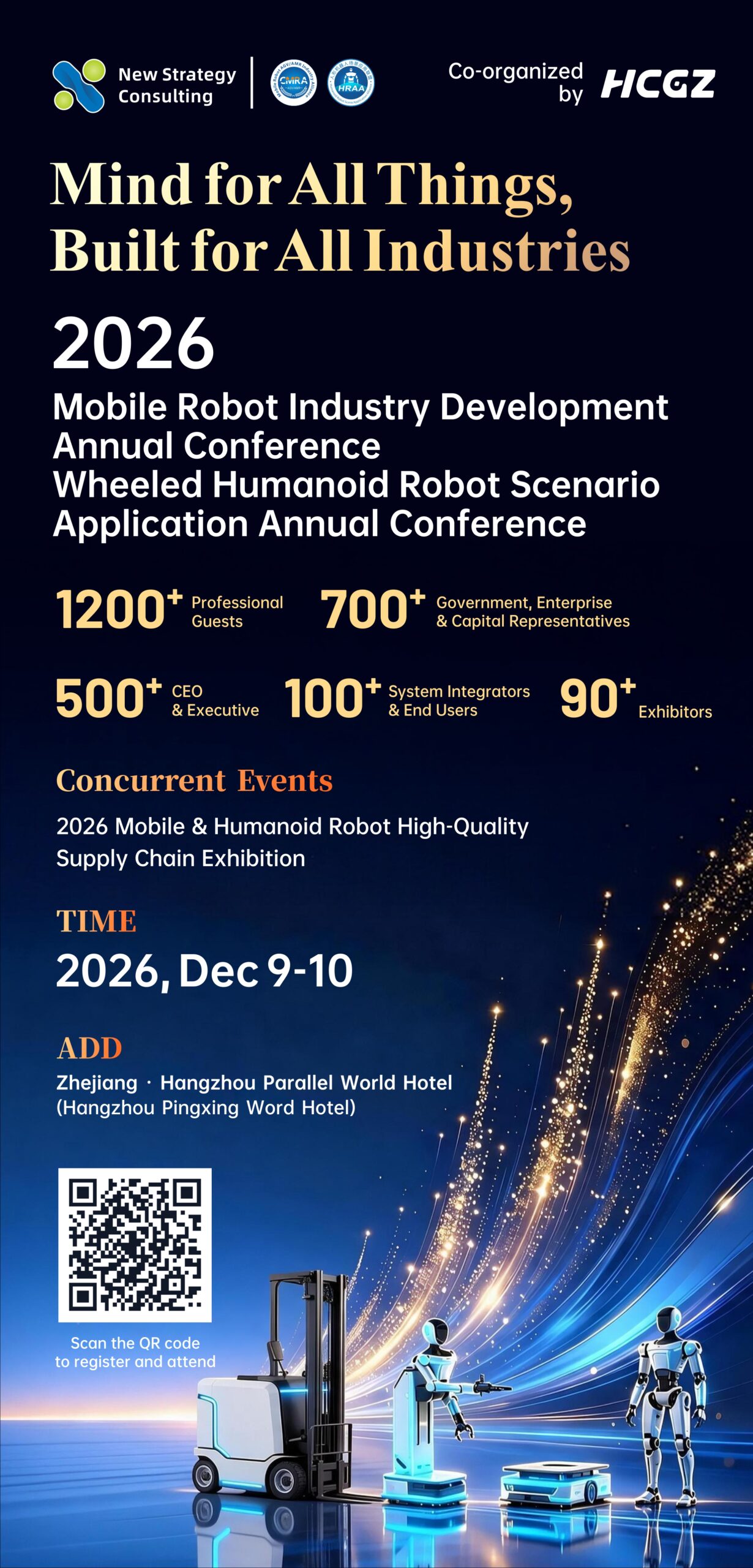
2026 The 9th Annual Conference on Mobile Robot Industry Development and the 4th Annual Conference on Scenario Applicationsof Wheeled Humanoid Robot will be held on December 9–10 at the Parallel World Hotel in Hangzhou.
The conference will focus on industrial embodied intelligence deployment, motion control, chassis technology, manufacturing applications, and data collection and annotation, promoting the industry’s shift from product exploration to deep scenario deployment.