
According to forecasts by the Humanoid Robot Scene Application Alliance (HRAA), 2026 will mark a pivotal moment for the large-scale mass production and commercialization of humanoid robots. Driven by continuous breakthroughs in core technologies, falling production costs, and an improving policy environment, the industry is set to accelerate its transition from laboratory R&D and scenario validation to large-scale application.
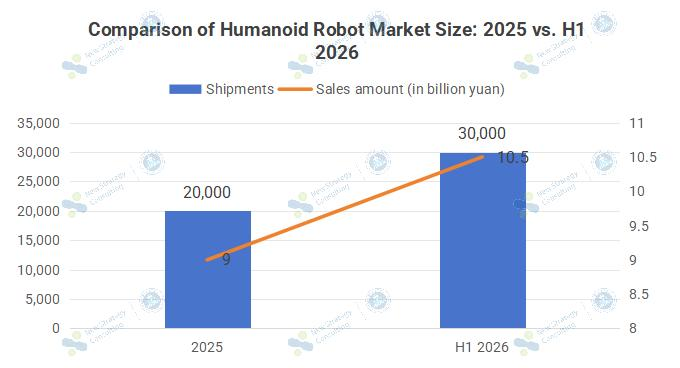
In terms of market size, the shipments of humanoid robots in China are projected to exceed 30,000 in the first half of 2026, surpassing the total shipments of approximately 20,000 units for the entire year of 2025. During this period, total sales revenue (including software) is expected to exceed 10.5 billion yuan, with an average price of approximately 350,000 yuan per unit.
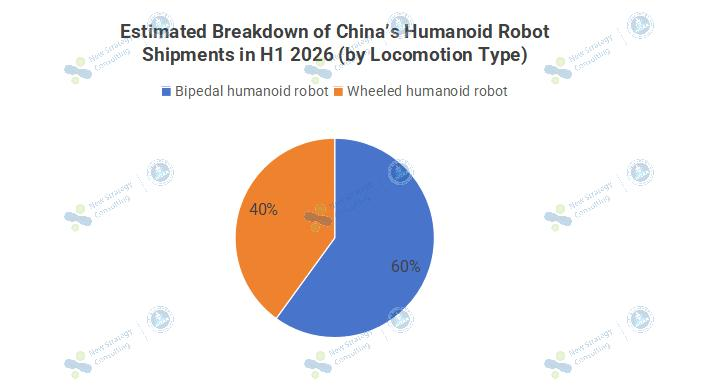
Specifically, the shipments of bipedal humanoid robots are expected to exceed 18,000 units (accounting for about 60% of the total), while those of wheeled humanoid robots are projected to exceed 12,000 units (about 40%); both technical approaches are driving market growth.
Looking at the year as a whole, HRAA predicts that China’s mass production capacity for humanoid robots will exceed 100,000 units in 2026, with annual shipments likely to surpass 85,000 units. Industry development will be characterized by three major trends:
First, accelerated capacity expansion on the supply side. As leading companies increase R&D investment, refine production systems, and mature their supply chains, production capacity will rise rapidly, ensuring the ability to deliver products at scale.
Second, accelerated release of demand. With the continuous expansion of application scenarios such as industrial manufacturing, scientific research and education, and commercial services, demand is shifting from technology demonstrations and pilot validations toward actual deployment, driving continued market growth.
Third, the industry is entering a critical stage of commercialization. Improvements in technological maturity, cost reductions, and the maturation of the application ecosystem will propel humanoid robots from isolated applications to large-scale deployment; 2026 is poised to be a pivotal turning point for the industry’s transition from technological breakthroughs to commercial application.
Overall, driven by supply expansion, growing demand, and the commercialization of technology, the humanoid robot industry chain is maturing rapidly, setting the stage for a period of accelerated growth characterized by mass production and commercial deployment.