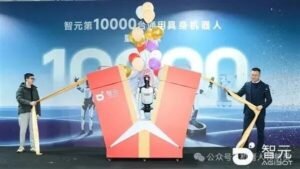
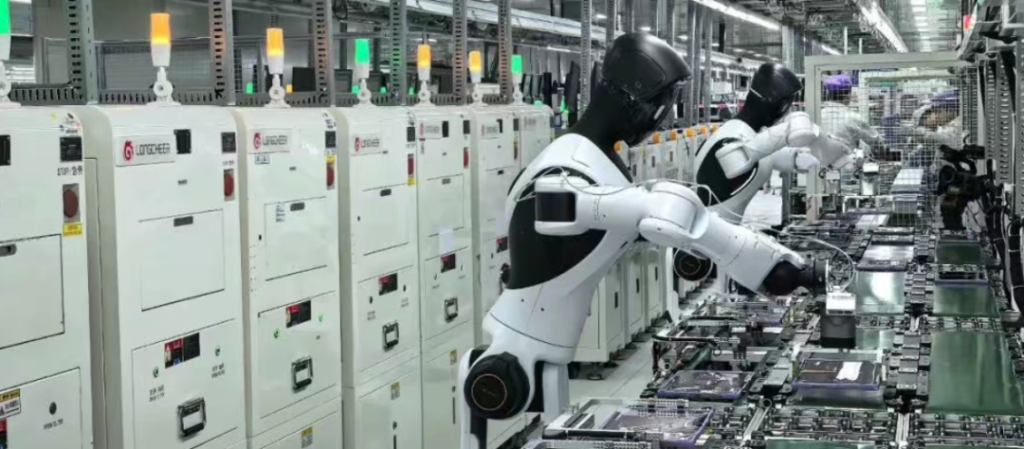
On June 23, multiple units of AGIBOT G2 robots arrived at Longcheer mass-production plant in Nanchang, Jiangxi, to begin a six-day, fully transparent livestreamed operation on a tablet production line.
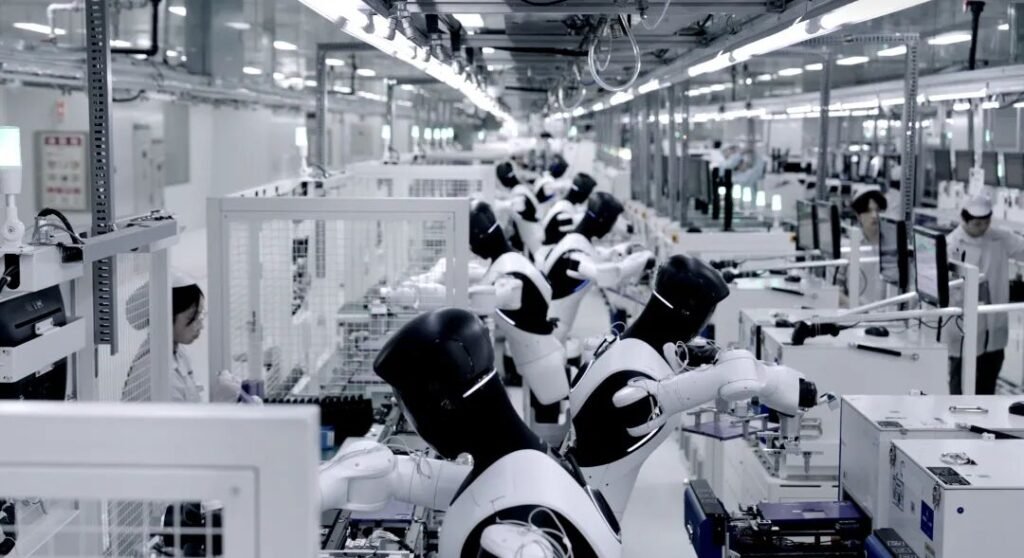
The livestream runs daily from 8:00 AM to 7:00 PM (June 23–28), synchronized with the standard operating schedule of the plant. The AGIBOT G2 robots cover the entire quality inspection stage of tablet mass production, strictly adhering to the plant’s production cadence and working continuously alongside human workers.
This scene inevitably brings to mind another high-profile livestream from earlier this year. Previously, the US company Figure demonstrated a humanoid robot operating continuously for 200 hours in a logistics setting, showcasing its sustained performance in warehouse sorting tasks.
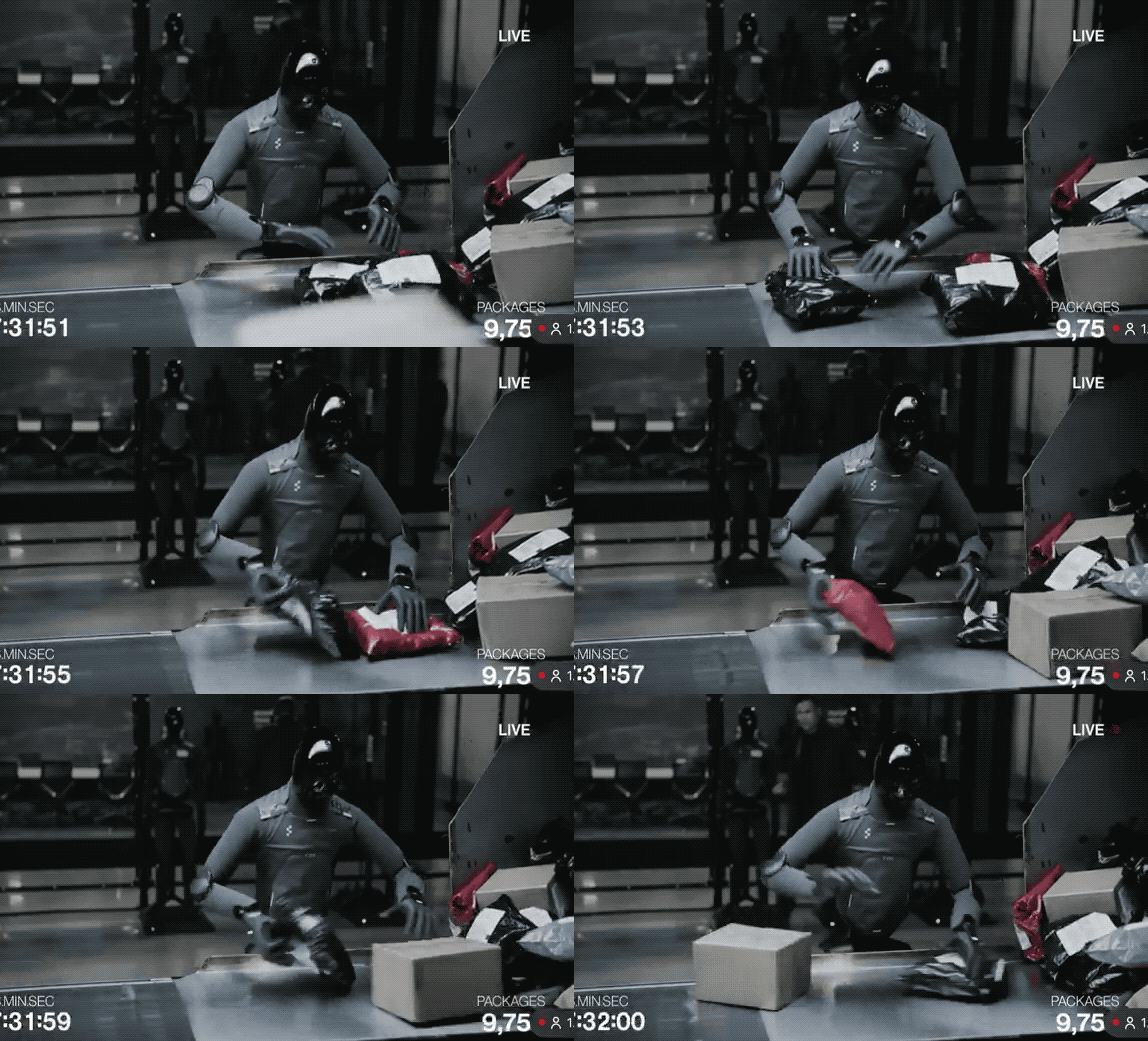
Although the settings differ, both livestreams point to the same industry trend: humanoid robots are moving from laboratories into real-world production environments, shifting from mere capability demonstrations to value validation.
Industrial manufacturing is becoming the primary battleground for humanoid robots
For the past few years, the humanoid robot industry has been grappling with a key question: which environments should these robots enter first?
The answer is now becoming clear. In terms of product form, humanoid robots are diverging into two distinct development paths. One path targets scenarios such as showroom reception, guided tours, and interactive entertainment, emphasizing interaction capabilities, human-like experiences, and emotional expression. The other path focuses on production environments like industrial manufacturing and logistics warehousing, prioritizing efficiency, stability, and return on investment.
Current progress shows that the latter is the direction where leading global companies are concentrating their efforts. Whether it is Figure entering logistics sorting or AGIBOT entering 3C electronics manufacturing, the underlying goal is to identify application markets where scalable demand can most easily be generated.
Industrial manufacturing has emerged as a breakthrough point primarily due to its highly standardized workflows. Tasks ranging from inspection and assembly to material handling often involve clearly defined operating procedures and quality standards, creating ideal conditions for robots to learn and replicate these actions.
At the same time, the manufacturing sector faces long-standing challenges such as rising labor costs, high staff turnover, and a growing need for flexible production. Compared to traditional automation equipment, humanoid robots can directly adapt to existing production line environments without requiring extensive factory retrofitting, thereby offering greater versatility across different scenarios.
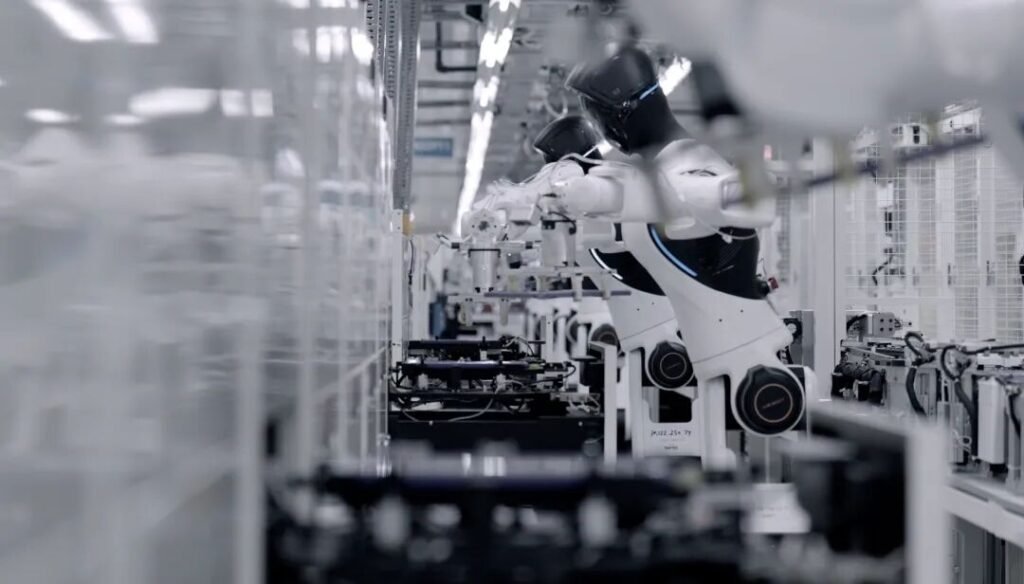
Moreover, quality inspection represents a crucial breakthrough point for the commercialization of industrial robots.
In electronics manufacturing, quality inspection often relies heavily on manual labor. Workers must repeatedly perform tasks such as screen checks, button testing, and audio inspections over long periods, demanding exceptionally high levels of focus and consistency. For enterprises, these roles present challenges regarding recruitment, as well as issues with maintaining efficiency and consistent quality.
The testing processes covered by AGIBOT G2—including multimedia interface testing, audio testing, and radiation testing—are essentially typical quality inspection tasks found in industrial settings. If the robot can operate reliably while meeting factory standards for accuracy and cycle times, its commercial value will far surpass that of a mere technical demonstration.
The competition in humanoid robotics is shifting from “showcasing technology” to “delivering value”
In fact, across the industry, humanoid robot companies are collectively pivoting toward industrial applications.
From UBTECH entering automotive plants and Zhejiang Humanoid Robot entering the chemical industry to AGIBOT delving into 3C electronics manufacturing, an increasing number of companies are targeting mass-production manufacturing as the key path to commercialization.
This trend reflects a significant shift in the industry’s evolution: the competition among humanoid robots is moving from “capabilities” to “value.”
In the past, the industry focused on how fast a robot could run, how high it could jump, or how agile its movements were; today, companies are more concerned with whether a robot can create tangible value—specifically, how much manual labor it can replace, how much cost it can save, and how much efficiency it can boost.
For manufacturing clients, the need is not for a robot that can perform backflips, but for a production tool capable of working reliably day in and day out while consistently generating returns.
Consequently, the key factors determining the industry landscape in the future will likely not be individual technical specifications, but rather capabilities regarding large-scale deployment, application adaptability across scenarios, and sustained operational performance.
This is precisely where the value of AGIBOT’s case study lies.
It demonstrates not just a single high-difficulty maneuver, but a comprehensive solution capable of entering real factories, adhering to actual production rhythms, and participating in genuine manufacturing processes. If such use cases can be successfully replicated across more production lines, factories, and industries, the commercialization of humanoid robots could reach a pivotal turning point.
Of course, the industry still has a long way to go before achieving widespread adoption. Challenges regarding cost, reliability, data accumulation, and hardware-software integration continue to require breakthroughs. However, the transition from laboratory to factory floor, from standalone demonstrations to mass deployment, and from technical validation to value validation is already underway.
On June 25, the “3rd Embodied Humanoid Robot Scenario Application Expansion Conference 2026” will be held in Hangzhou, bringing together hundreds of humanoid robot integrators and showcase more than 50 real-world application cases of humanoid robots, helping the industry quickly identify scenario needs and business opportunities, and promoting the transformation of the industry from technological exploration to practical application.
At the event, Xiangang Lu, General Manager of Industrial Systems Division & Vice President, Great China, AGIBOT, will join us and deliver a speech themed “Embodied AI Ushers in a New Era of Industrial Productivity”. Stay tuned!