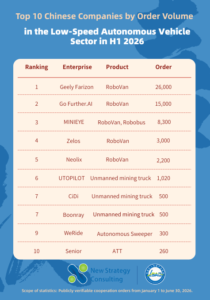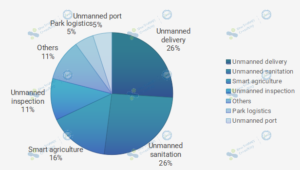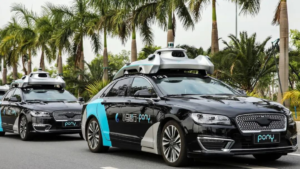
On July 24, 2026, the “6th Low-Speed Autonomous Driving Scenario Ecosystem Co-construction and Expansion Conference 2026,” hosted by the Low-Speed Automated Driving Industry Alliance (LSAD), was held in Hefei. Centered on the theme “Safety as the Foundation, Compliance as the Guide,” the conference brought together nearly a thousand industry representatives, including government authorities, research institutions, vehicle manufacturers, solution providers, core component suppliers, end-users, and investment firms to discuss development trends within the low-speed unmanned driving industry ecosystem.
During the event, the Bluebook on the Development of Chinese Port Autonomous Driving Industry 2026 (Chinese Version) (hereinafter referred to as the “Bluebook”) was officially released. Exclusively sponsored by TITAN DRIVERLESS, the Bluebook was co-edited by LSAD and the New Strategy Low-Speed Automated Driving Industry Research Institute. It involved contributions from Fabu.AI, GREATOX, ELANDER, and China Waterborne Transport Research Institute, with additional support from industry chain enterprises such as SENIOR and STARS.
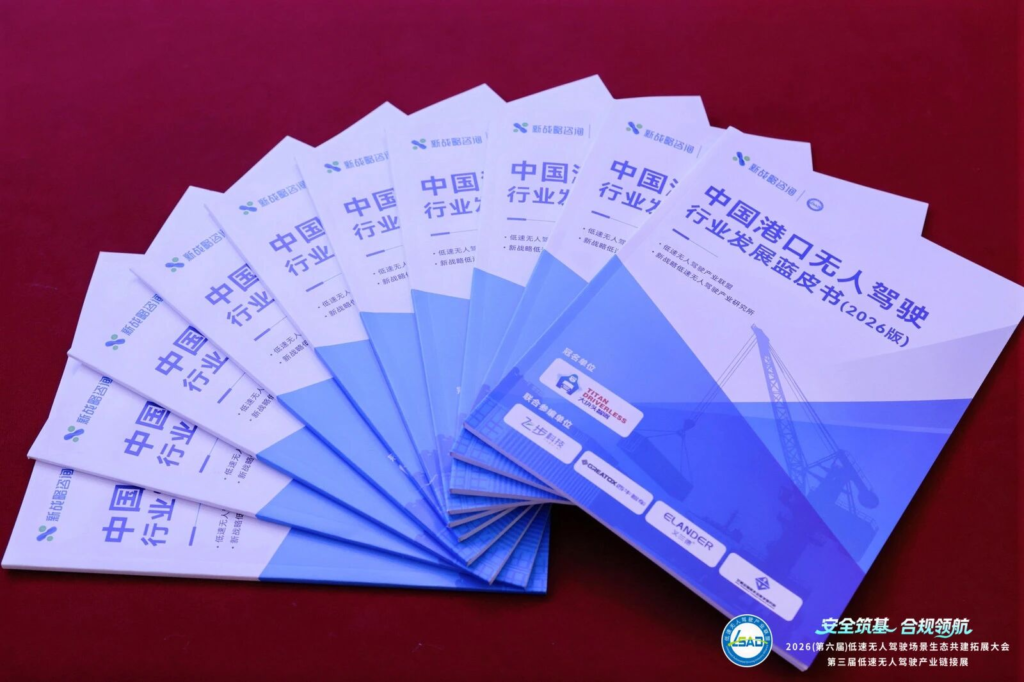
The Bluebook highlights that ports characterized by enclosed environments, low operating speeds, standardized workflows, and clearly defined operational boundaries represent one of the most mature scenarios for the large-scale application and commercialization of autonomous driving technology.
This study covers over 40 domestic and international enterprises involved in port unmanned driving. Focusing on autonomous horizontal transportation equipment for ports, it analyzes the application of unmanned vehicles and wheeled mobile equipment across scenarios such as container, dry bulk, and break-bulk cargo transport. It also systematically assesses the current status, technical challenges, and future development trends of China’s port unmanned driving industry.
According to data from LASD and statistics from the New Strategy Low-Speed Automated Driving Industry Research Institute, the cumulative shipments of unmanned horizontal transportation vehicles for ports by Chinese enterprises reached approximately 2,700 units (rather than the number of vehicles currently in operation) by the end of June 2026; approximately 85% of these were delivered to domestic ports.
In terms of application scenarios, the vast majority of these vehicles are deployed at seaports (including coastal and estuary ports), with container ports serving as the primary application environment.
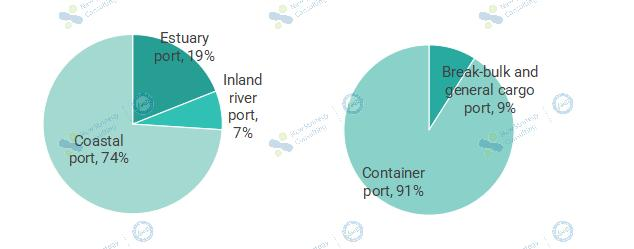
In terms of deployment scale, nearly 40 port areas in China have implemented the batch deployment (10 units or more) of unmanned transportation vehicles, with 15 of these areas achieving large-scale deployment (50 units or more).
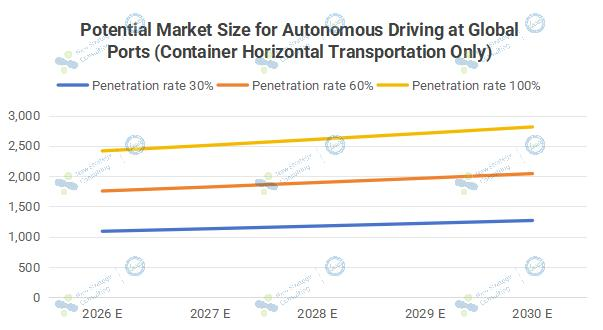
Estimates by the New Strategy Low-Speed Automated Driving Industry Research Institute indicate that, focusing solely on the market for horizontal container transport within ports, the global potential market size stands at approximately RMB 38 billion if the penetration rate of unmanned equipment (measured by the proportion of transport volume handled) reaches 30%; this figure would exceed RMB 54 billion should the penetration rate rise to 60%. When factoring in the primary intermodal transport market outside the port area, the global potential market size could reach as high as RMB 280 billion by 2030, assuming full penetration of unmanned equipment in operations.