On July 23, 2026, Zhijingzhe Urban Sanitation Robot Technology Evaluation and Access Competition 2026, the first specialized technical evaluation for urban operational capabilities of sanitation robot in China, was successfully held in Hefei. Organized by the Low-Speed Automated Driving Industry Alliance (LSAD), the event aimed to establish unified technical evaluation standards for sanitation robots, address issues such as inconsistent product performance and misalignment with actual operational requirements, and provide objective, quantifiable criteria for selection decisions for urban management authorities and related operators.
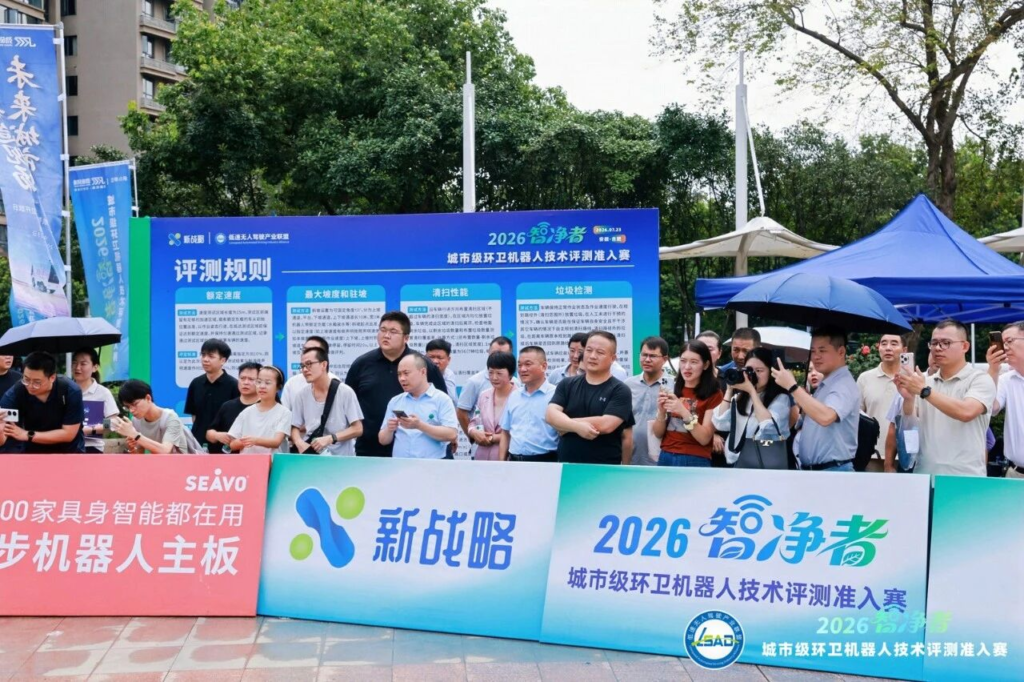
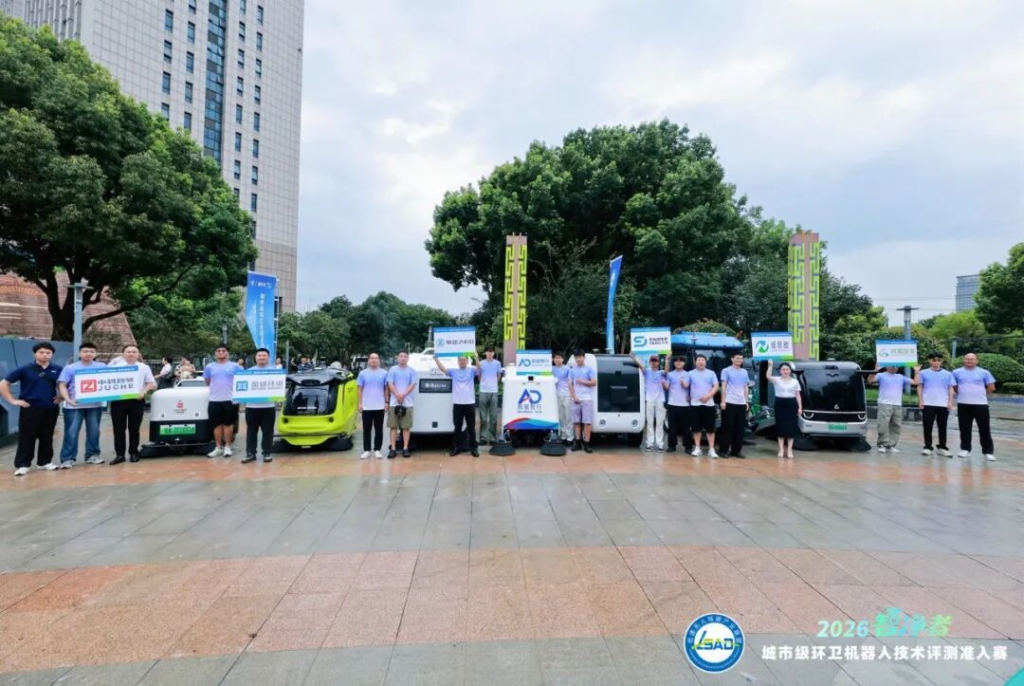
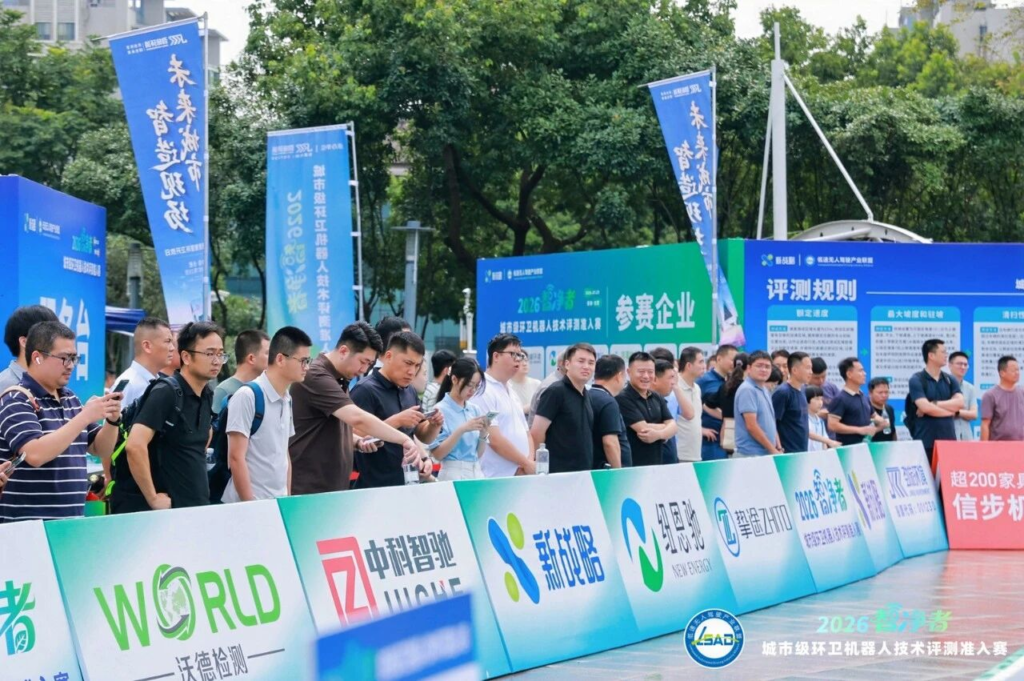
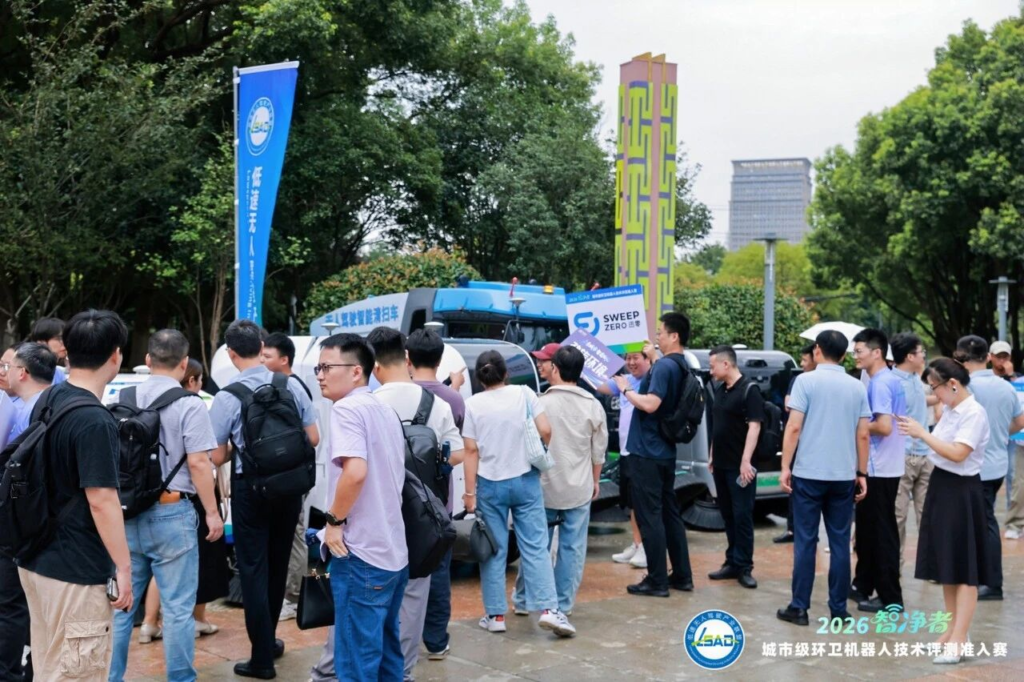
This evaluation competition features eight key assessment categories: hill-climbing performance at maximum gradient, rated speed testing, obstacle-crossing capability, obstacle recognition and response, pedestrian detection and braking, debris detection, cleaning performance, and safety protection level inspection. All participating devices must complete all field operation tests in a single run without any human intervention throughout the entire process.
The competition judge panel is headed by Bin Zhang, Chief Engineer at Research & Development Institute of Northwesetern Polytechnical University in Shenzhen and Rotating Chairman of LSAD. World Testing (Guangdong) Co., Ltd. serves as the exclusive technical support provider, responsible for adjudication implementation and standard assessment. The panel members include experts from testing institutions, securities firms, and leading environmental sanitation service providers.
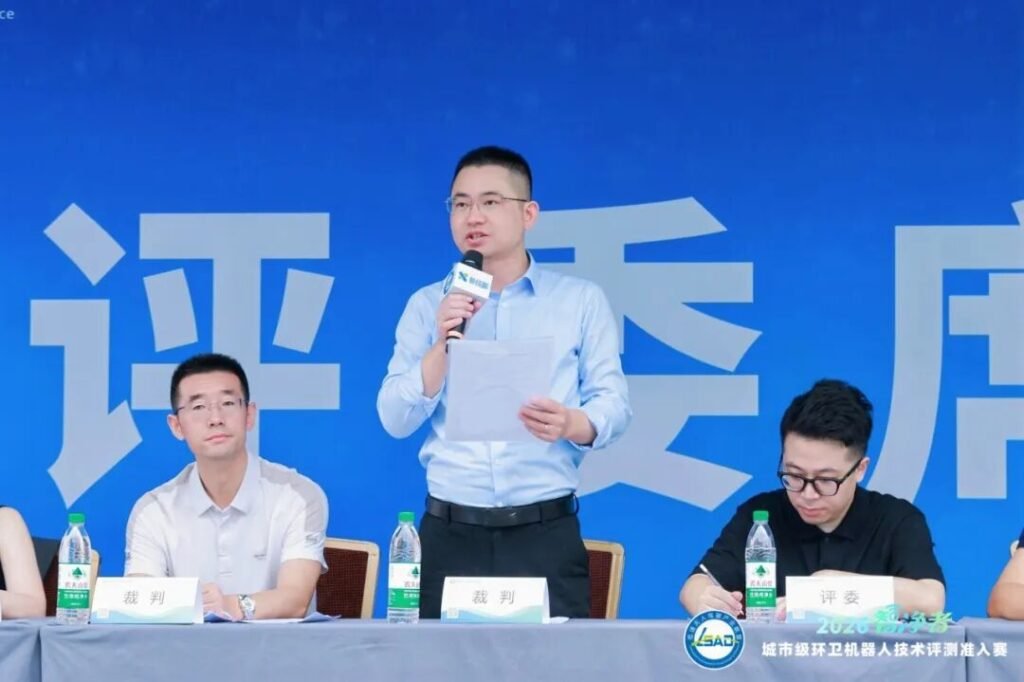
Bin Zhang, Chief Engineer at Research & Development Institute of Northwesetern Polytechnical University in Shenzhen and Rotating Chairman of LSAD
At the opening of the competition, Bin Zhang delivered a speech on behalf of the judging committee. He emphasized that this event, as the first real-world evaluation activity for sanitation robots in China’s low-speed autonomous driving industry, bears the mission of driving the sector’s advancement. The committee will adhere to its six core principles, “promoting research through competition, enhancing practical application, nurturing talent, establishing standards, fostering industrial development, and facilitating integration”,while maintaining rigorous standards for real-world evaluations. He highlighted that the competition serves as a showcase for innovations, a competitive arena for capabilities, and a benchmark for products entering the market.
Following rigorous evaluation, products from seven companies,including SWEEP ZERO, Infore Enviro, New Energy, JUCHE, ZHITO, AERODRIVE TECH, and Hongguan Technology, have successfully passed the assessment and been officially awarded the “Zhijingzhe·2026 Skills Competition Grade A Evaluation” certification.
The following are the products from enterprises that have received the “Zhijingzhe·2026 Skills Competition Grade A Evaluation” certification (in no particular order):
Pure Electric Unmanned Street Sweeper XL15SZTBR
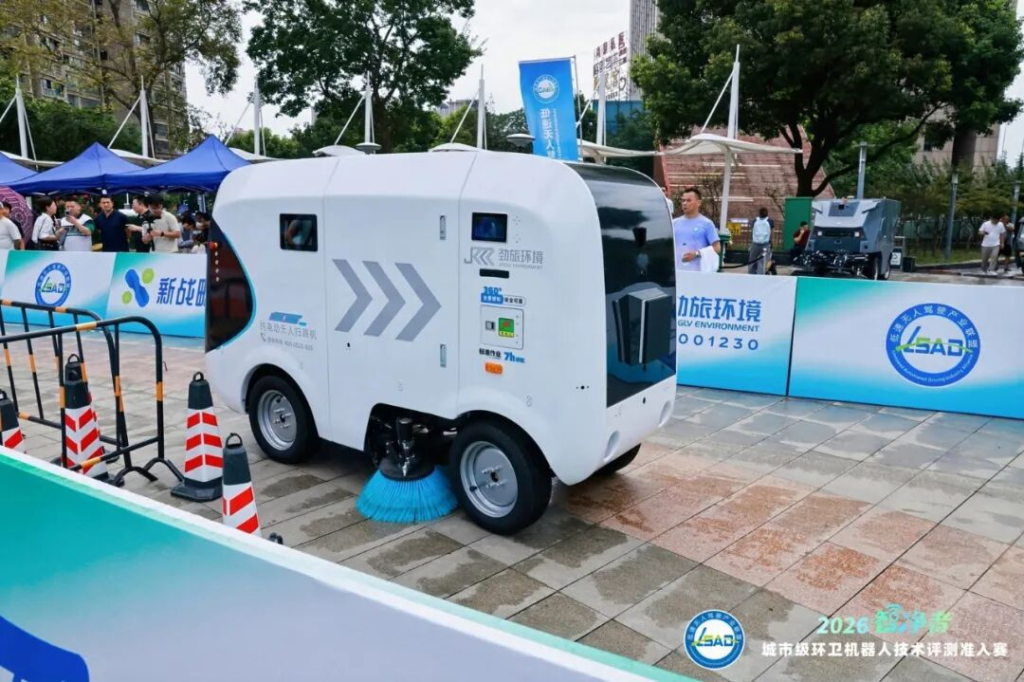
Company: SWEEP ZERO
Product description: Equipped with a high-speed, low-noise dedicated fan identical to that used in 18-ton cleaning vehicles, achieving a cleaning efficiency of over 98%; featuring a 192-line high-precision LiDAR system paired with an 8-megapixel camera; comprising a 120L waste bin and a 370L large water tank, providing a runtime of 6 hours per unit and enabling a cleaning coverage of 7,500 square meters per hour per unit.
Intelligent Street Cleaning Robot [Little Bee] YFSLR14
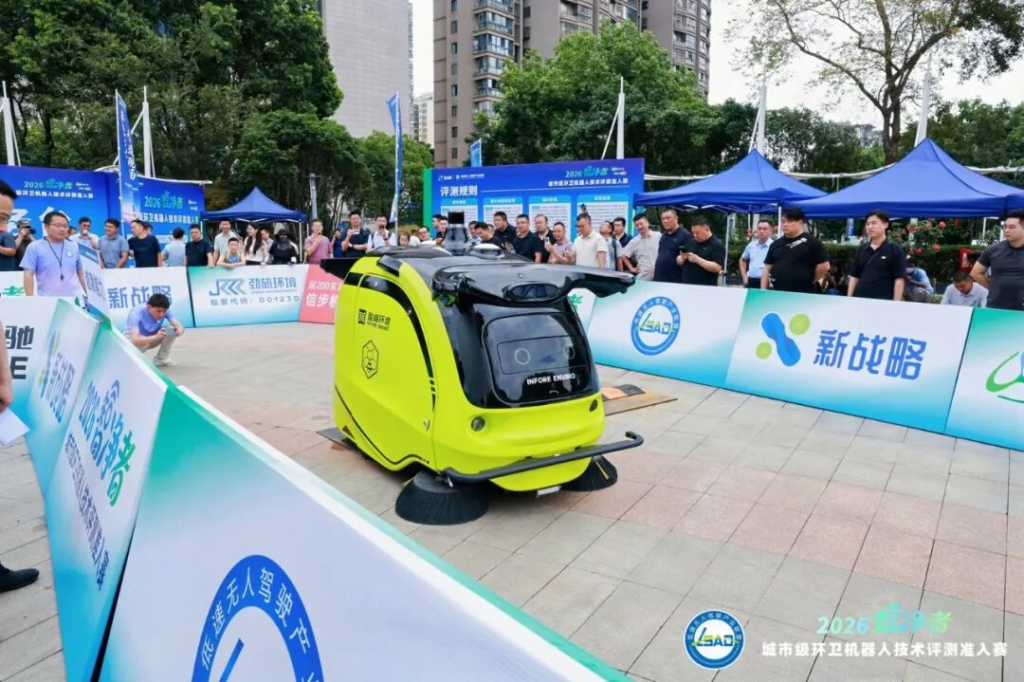
Company: Infore Enviro
Product description: Specifically designed for scenarios such as industrial parks, public parks, and high-speed rail stations, it achieves 95% scenario compatibility, meeting the vast majority of outdoor cleaning requirements. Equipped with 20 standard automated functions, it handles the entire process from sweeping and water/charge replenishment to waste disposal without human intervention. Featuring 360° comprehensive sensing hardware and a vehicle-grade chassis, it has been deployed in large-scale operations across multiple locations.
Autonomous Intelligent Cleaning Robot SHZ22BECV
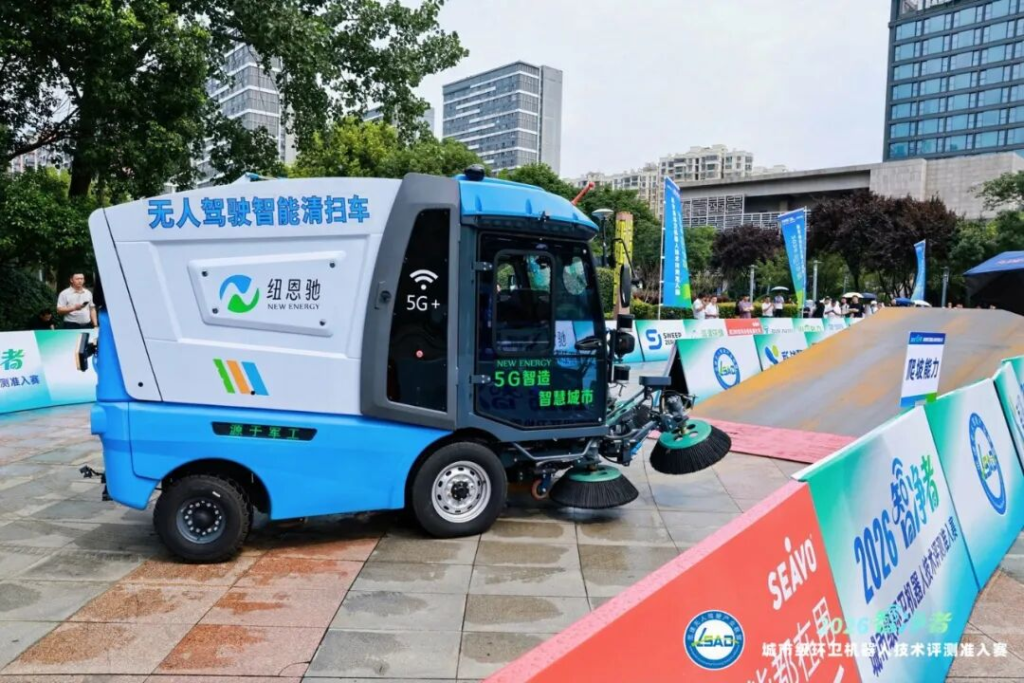
Company: New Energy
Product description: Equipped with Beidou high-precision positioning technology achieving centimeter-level accuracy, this is China’s first autonomous cleaning system deployed in real-world sanitation operations. Featuring a 2.2-meter sweeping width and a 40Ah lithium iron phosphate battery, it combines dual sensing capabilities of 3D LiDAR and millimeter-wave radar, enabling flexible mode switching for versatile applications.
Unmanned Cleaning Vehicle C01P
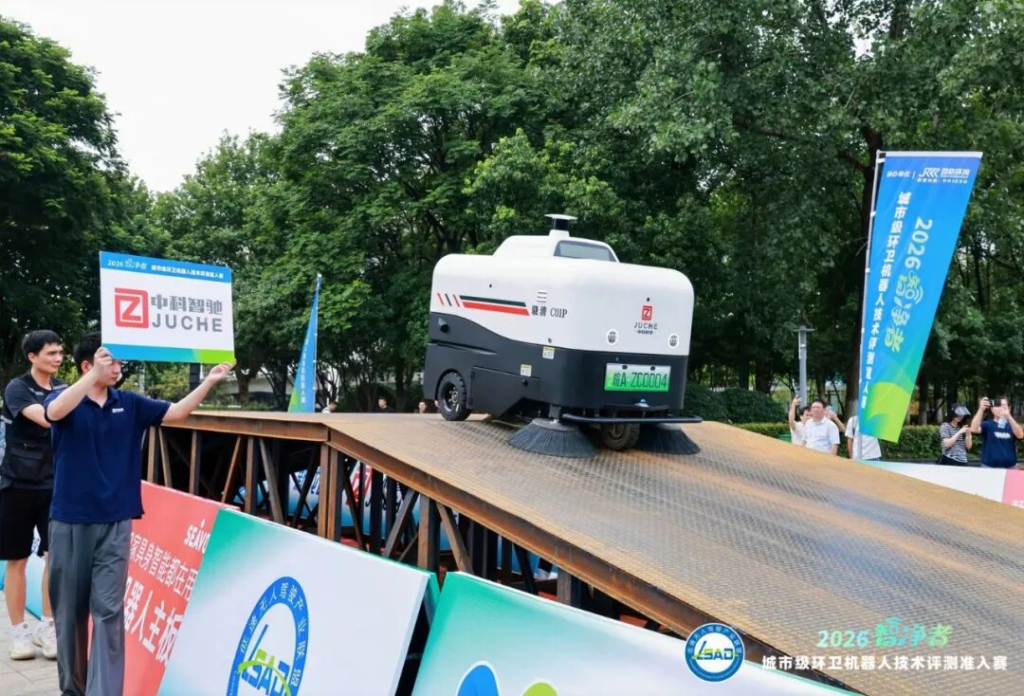
Company: JUCHE
Product description: Integrated with a high-precision positioning and navigation module, LiDAR, and visual fusion perception algorithms, this system features comprehensive path planning, active obstacle avoidance, precise edge-sweeping, and intelligent waste recognition and sorting capabilities. It supports automatic charging, automatic water replenishment, and automatic return operation upon low battery or dust accumulation, with each unit capable of cleaning over 5,000 square meters per hour.
Autonomous Road Sweeper ZT240
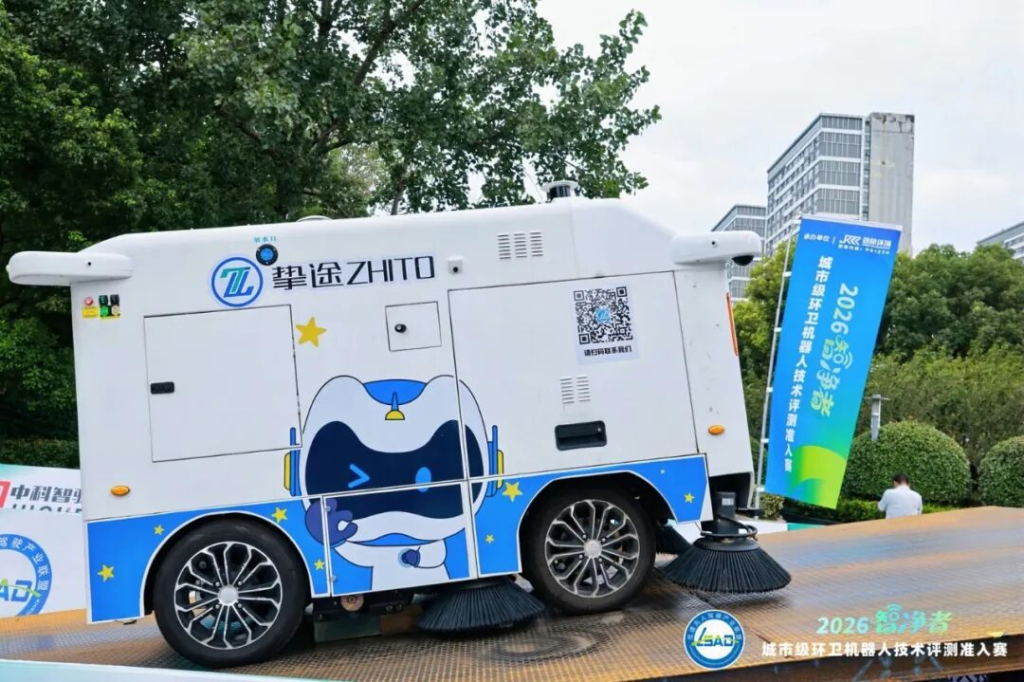
Company: ZHITO
Product description: Utilizing an advanced edge-cleaning path planning algorithm combined with GPS and laser SLAM fusion positioning, it achieves high-precision edge cleaning within 5 cm. Multiple sensors integrate to dynamically detect static and moving obstacles, enabling autonomous parking avoidance or flexible detours. The system accurately identifies traffic signals and automatically adjusts speed, integrating suction, sweeping, and spraying functions for all-weather intelligent operation.
Small Unmanned Cleaning Vehicle S1
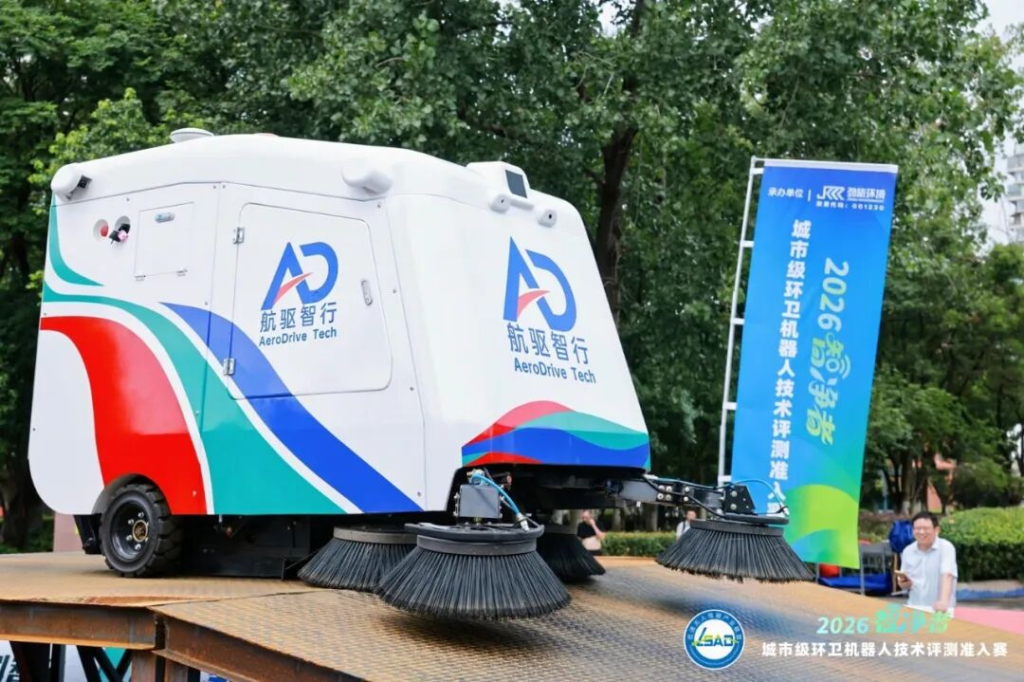
Company: AERODRIVE TECH
Product description: Eliminating the need for high-precision maps, this system achieves rapid deployment in new scenarios within days through deep integration of laser, visual, and inertial navigation technologies. Leveraging BEV-based unified spatial perception and Occupancy-based environmental modeling, it enables autonomous decision-making even under dynamic conditions such as construction activities or illegal parking violations. The system supports continuous evolution via a closed-loop data mechanism.
Hongmeet G150
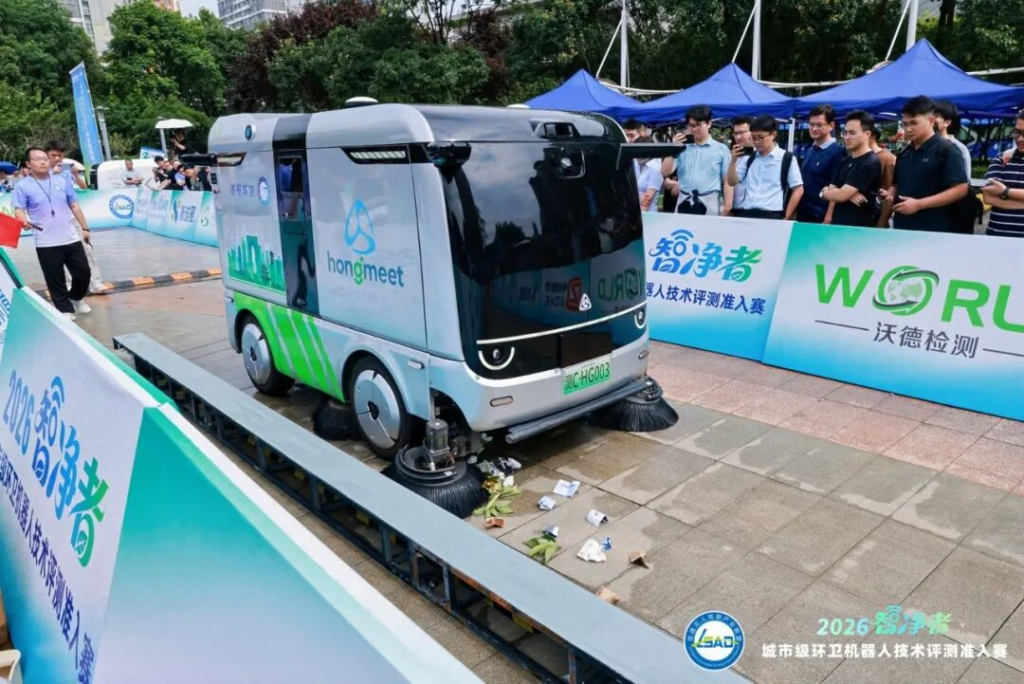
Company: Hongguan Technology
Product description: Featuring a compact and lightweight design, this vehicle effortlessly navigates complex micro-spaces such as urban non-motorized lanes, back alleys, and industrial parks. It is equipped with 360° comprehensive perception, centimeter-level edge-cleaning capability, continuous scanning after interruptions, automatic waste disposal, and automated water/charge replenishment functions, achieving a single-unit operational efficiency of up to 13,000 square meters per hour.
Based on the actual performance evaluations of all participating teams, Minghan Liu, head of the competition judging panel and General Manager of World Testing (Guangdong) Co., Ltd., noted that domestic unmanned sanitation robots have moved beyond the demonstration prototype phase and entered a transitional period toward commercial deployment. Most companies have achieved considerable maturity in key technologies, including mapping, autonomous navigation, cleaning capabilities, obstacle recognition, obstacle-crossing ability, and slope-climbing performance, enabling them to meet basic operational requirements for industrial parks, public parks, squares, and enclosed roads. However, achieving large-scale practical application requires focused breakthroughs in three areas: adaptive capabilities in complex environments, dynamic intelligent perception and flexible decision-making abilities, and standardization of overall system safety frameworks.
Zidong Zhang, member of the judge panel, Chief Artificial Intelligence Officer at Qiaoyin Company Limited, and CEO of Qiaoyin Smart Technology, stated that the competition uses real-world testing to evaluate products ‘true capabilities, providing operators with a reliable basis for comparative selection. He emphasized that Qiaoyin’s assessment of autonomous driving products focuses on three key dimensions, such as economic viability, technological advancement, and system stability, and favors the “robot as a service” model.
The competition was complemented by a supply-demand matchmaking event, attended by sanitation service providers including Capital Group, Clean Pro, C&D, and Country Garden Services. They engaged in collaborative discussions with participating companies on scenario applications and technological R&D, facilitating the swift establishment of a comprehensive closed-loop system spanning from technology development to market entry and commercial operation implementation.
Jinke Li, Secretary-General of LSAD, stated, “As the inaugural city-level evaluation competition for sanitation robots, this event not only assessed the practical implementation capabilities of domestic sanitation robots and established a unified benchmark for the industry, but also bridged the trust gap between technological development and real-world applications, ensuring that high-quality products have clear standards to follow and effective solutions for specific scenarios. Moving forward, LSAD will continue refining the evaluation framework, facilitate the integration of more premium products with real-world applications, and accelerate the transition of unmanned sanitation systems from pilot demonstrations to large-scale commercial deployment.”
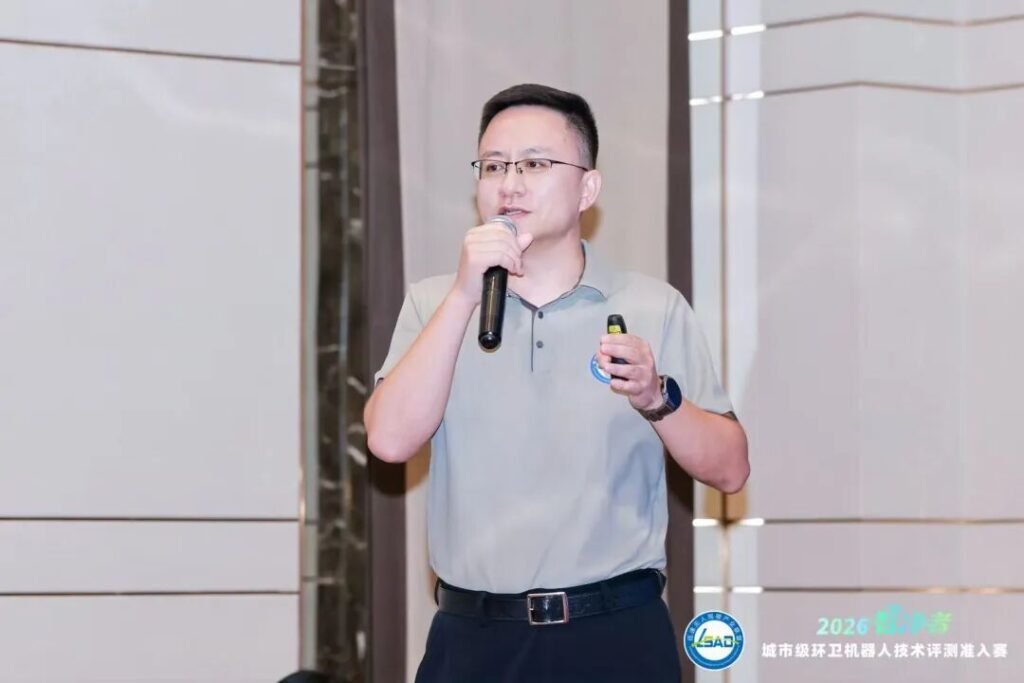
Jinke Li, Secretary-General of LSAD and Director, New Strategy Low-Speed Automated Driving Industry Research Institute
1-100x100.png)