Lead: Half real shortcoming, half narrative inertia. Unitree Robotics Founder Wang xingxing recently stated: “For Unitree, manufacturing and deploying thousands of robots to collect data is not the most difficult task. How to fully utilize this data to train AI models is the immediate problem to solve.” This statement directly pierces the false “data scarcity” narrative that has trapped the humanoid robot industry.
1. The Misunderstood "Data Scarcity" and Layered Anxiety
In recent years, the humanoid robot industry has frequently complained about a “lack of data,” leading to increasingly heavy investments.
Data shows that over 100 embodied AI data collection centers have been built or are under construction across the country, with capital heavily flowing into AI data companies to industrialize “collection” and “annotation.”
However, Unitree’s statement tears through the illusion: when top-tier companies can already mass-produce, deploy, and receive data from robots, the bottleneck is no longer “collecting” but “utilizing.”
The more pressing issue is the idling and low reuse rate of collected data.
Yet, a layer of reality must be added: “collection is not difficult” is a premise only top-tier companies can afford. For small and medium-sized enterprises (SMEs), building a data center costs tens of millions of yuan, and teleoperation is billed by the hour. They are still struggling to get their “first bucket” of real-machine data. Therefore, industry anxiety is layered: leaders are thinking about conversion efficiency, while SMEs are still worrying about data sources.
2. Why the Industry Borrows from Autonomous Driving
Looking outward, humanoid robotics first targets autonomous driving.
Over the past decade, autonomous driving has accumulated massive multi-sensor data and established a closed-loop system of “collection-annotation-training-reinjection.” Its deep appeal lies in the transferability of mobility capabilities.
The core task of humanoid robots is moving from point A to point B, and autonomous driving has the richest data on mobile scenarios (multi-camera vision, BEV perception, trajectory prediction, etc.). Additionally, the safety closed-loop mechanisms honed by autonomous driving over billions of kilometers offer a valuable reference. Capital markets have validated this preference, with data collaboration between embodied AI and autonomous driving accelerating significantly in the first three quarters of 2026.
3. Learning to "Walk" vs. Learning to "Handle"
However, autonomous driving data is not “plug-and-play.” The boundary between reusable and non-reusable data is clear:
- Highly Reusable (Physical World Cognition & Mobility):Perception data and multi-sensor fusion algorithms from open roads can be directly transferred to humanoid robots for bipedal walking and indoor/outdoor navigation.
- Non-Reusable (Physical Interaction & Fine Manipulation):Autonomous driving lacks robotic hands and causal interaction samples. Humanoid robots require high-dimensional tensors involving full-body degrees of freedom, object physical properties, and task timing (e.g., controlling force to grab a cup, sensing thread feedback to twist a cap). Even trained on massive road data, a model will learn “don’t crash” rather than “how to touch.” Furthermore, the latency and fault tolerance requirements differ vastly between the two.
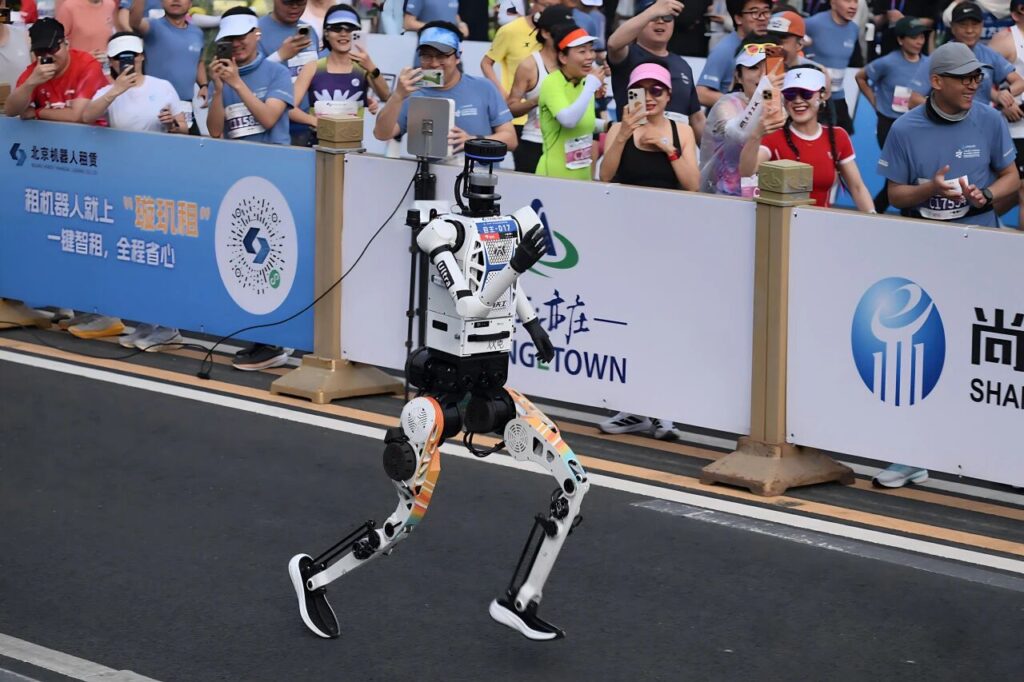
In short, autonomous driving data is a “good foundation,” not a “complete house.” It solves “walking” but not “fine physical interaction.”
4. Conclusion: From "Piling Data" to "Emphasizing Conversion"
Borrowing from autonomous driving is a pragmatic engineering choice—using mature assets to solve “walking” and saving limited resources for the scarcest “handling” tasks.
What Unitree has debunked is not the value of data, but an overly simplistic narrative. The next phase of competition will no longer be about who has more robots or thicker data, but who can first translate data into model capabilities. This industry shift from “piling data” to “emphasizing conversion” will be the core dividing line in future competition.
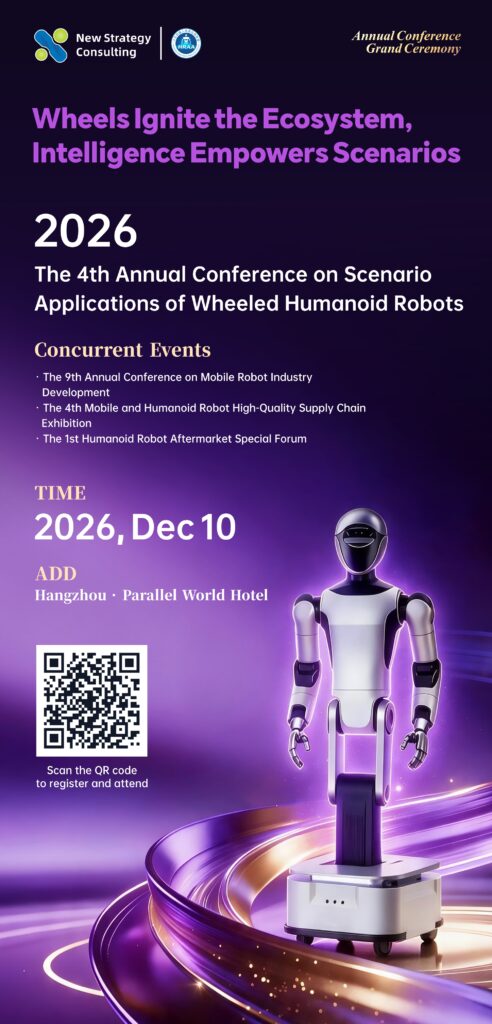
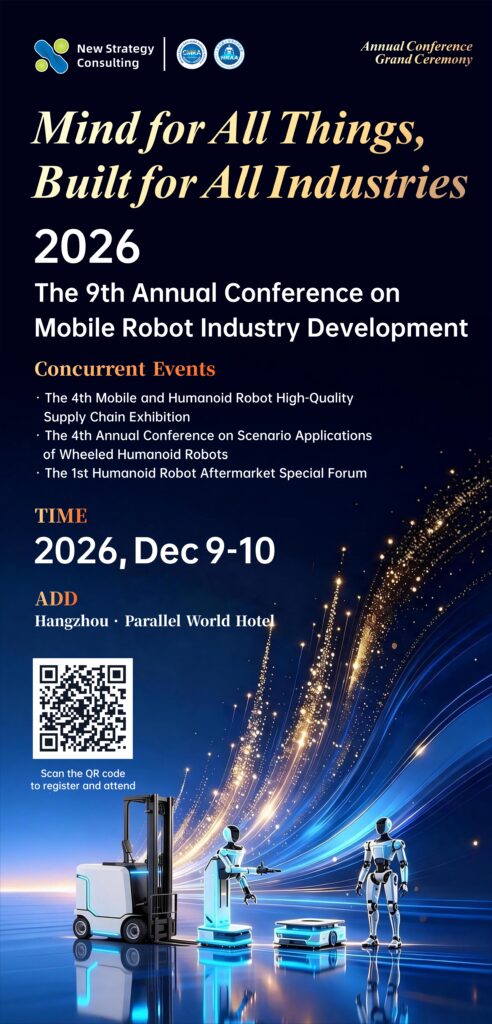
2026 The 9th Annual Conference on Mobile Robot Industry Development and the 4th Annual Conference on Scenario Applicationsof Wheeled Humanoid Robot will be held on December 9–10 at the Parallel World Hotel in Hangzhou.
The conference will focus on industrial embodied intelligence deployment, motion control, chassis technology, manufacturing applications, and data collection and annotation, promoting the industry’s shift from product exploration to deep scenario deployment.