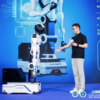
On May 21, at the “Unmanned Forklift and Wheeled Humanoid Robot Industry Development Forum & the 15th Intelligent Manufacturing Logistics and Warehousing Engineering Conference 2026” held in Hangzhou, RobotPhoenix officially released its first ODM chassis for wheeled humanoid robots: a dual-mode, four-wheel omnidirectional, battery-swappable autonomous mobile chassis. Built on the core concepts of modularity, high compatibility, and rapid mass-production readiness, this product marks a significant strategic move by the industrial robotics company—which recently made its capital market debut as the “strongest oversubscription king” in Hong Kong stock history—from the realm of industrial automation into the sector of embodied AI.
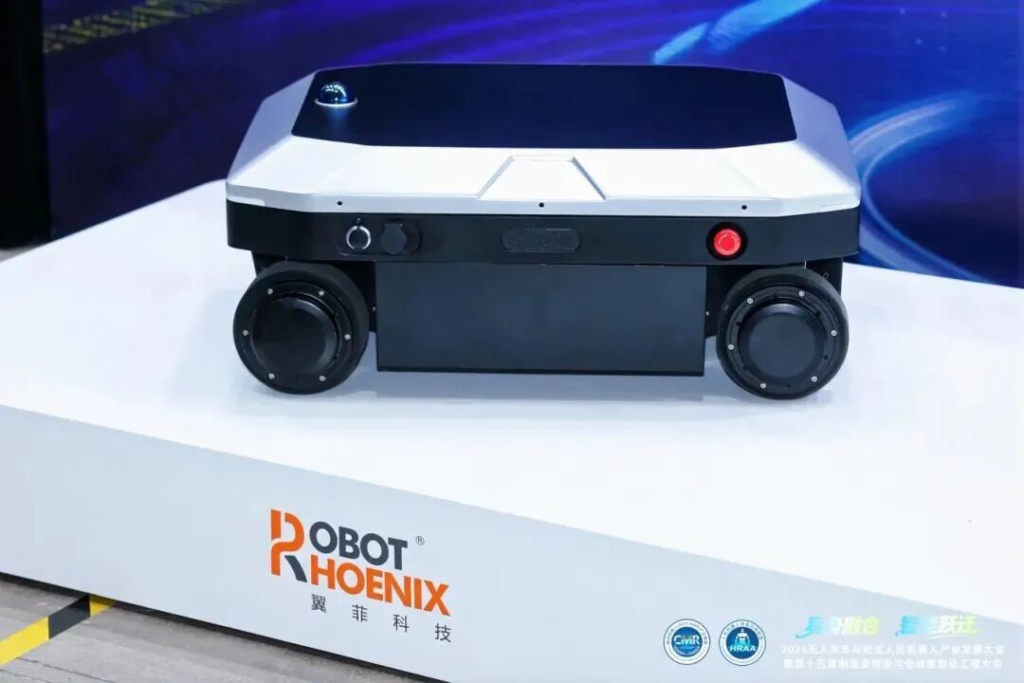
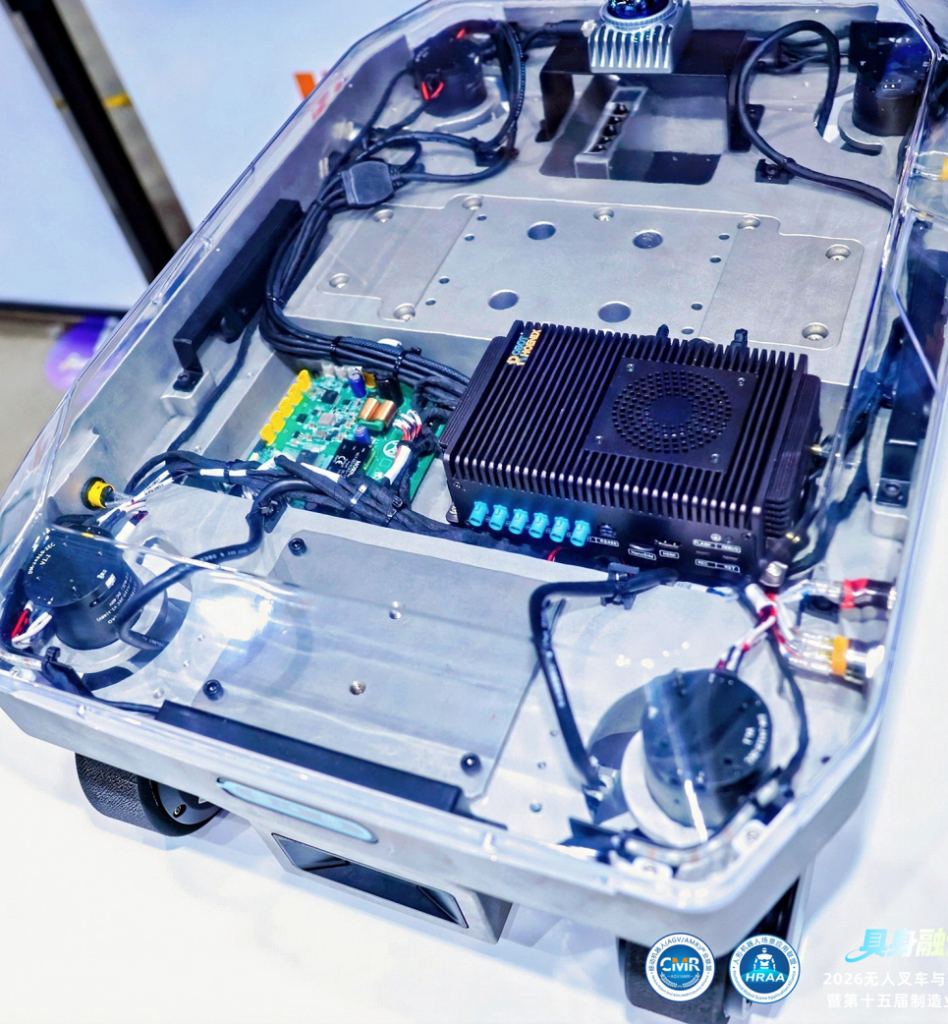
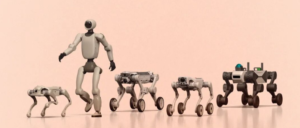
Over the past two years, the humanoid robot sector has evolved rapidly, moving from an explosion of concepts to the frequent unveiling of prototypes. While manufacturers worldwide have introduced humanoid robots in various forms—including bipedal, wheeled, and wheel-legged models—the industry has long faced fragmentation regarding the fundamental dimension of “mobility.” Most startups concentrate their resources on mastering dexterous upper-body manipulation and perception-decision algorithms, often relying on non-standard customization or ad-hoc modifications for the lower-body chassis; this results in long development cycles, high costs, and insufficient stability.
Meanwhile, demand for wheeled humanoid robots in industrial and commercial settings is becoming increasingly clear. Compared to bipedal designs, wheeled solutions offer superior energy efficiency, load-bearing capacity, and operational stability on flat surfaces (such as factories, warehouses, supermarkets, and hospitals), making them easier to deploy at scale. However, the market has lacked a universal, mass-production-ready mobile chassis specifically designed to support humanoid robot upper bodies—a gap that RobotPhoenix aims to fill with this new release.
Industrial-Grade Standards, 1,000+ Configuration Combinations
Xu Zhang, CEO of Mobile Robotics Division, RobotPhoenix, explained that the newly released ODM chassis features a modular design. It utilizes a comprehensive wiring harness and includes pre-configured interfaces, allowing developers to flexibly configure controllers, wheels, navigation and obstacle-avoidance systems, and upper-body modules according to their specific needs.
Multi-Controller Compatibility: Supports five controller models from three major brands. Modular Chassis Structure: Enables over 1,000 configuration combinations, utilizes full wiring harness connectivity, and includes pre-reserved interfaces for all connections.
Flexible Energy Replenishment (Charging & Swapping): Supports both charging and battery-swapping modes to meet energy needs across various operational scenarios.
Wheel Compatibility: Compatible with industrial-grade 5–6 inch AGV wheels, supporting load capacities of 100–200 kg.
Diverse Navigation & Obstacle Avoidance: Supports dual-head LiDAR, single-head multi-line LiDAR, and pure-vision solutions.
Omnidirectional Mobility: Capable of forward/backward, lateral, and diagonal movement, as well as Ackermann steering and in-place rotation; features a maximum no-load speed of 2 m/s and an 8° climbing capability.
Versatile Payload Compatibility: Supports various upper-body modules—such as column-style or foldable humanoid robots—to cater to diverse application scenarios.
Another key feature of this product is its ODM mold. By utilizing custom molding processes, RobotPhoenix ensures industrial-grade manufacturing precision while achieving cost-effective mass production consistency, offering industry partners a standardized, “ready-to-use” mobile base. This ODM model allows downstream enterprises to rapidly integrate and deploy complete humanoid robot systems without the need for in-house chassis development from scratch, significantly shortening the time-to-market.
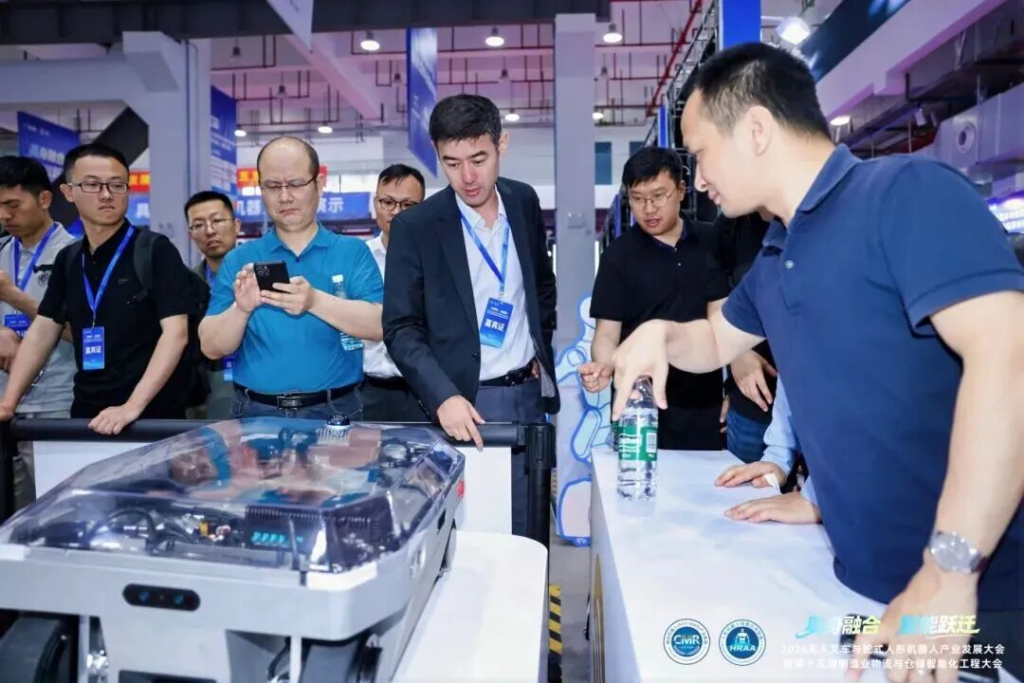
From Industrial Robots to Embodied AI: RobotPhoenix’s Dual-Track Strategy
If this chassis launch represents RobotPhoenix’s latest achievement in the realm of robotic mobility (the “legs” or locomotion aspect), a review of the company’s activities over the past six months reveals a clear path of industrial expansion.
In November 2025, RobotPhoenix launched “Hogene,” its first wheeled humanoid robot, marking a successful initial transition from industrial robots to complete humanoid robot systems. In early May 2026, RobotPhoenix officially listed on the HKEX; the public offering was oversubscribed by nearly 14,900 times—setting a record in Hong Kong stock market history and earning the title of “Oversubscription King.” This reflects the capital market’s high expectations for a company deeply rooted in the light-industry robotics sector, with a client base that includes industry giants such as BYD, CATL, Foxconn, and Unilever.
With the launch of this custom-molded wheeled chassis for humanoid robots, RobotPhoenix’s strategic intent becomes clear: leveraging the motion control, system integration, and supply chain management capabilities honed in the industrial robotics sector as a foundation, the company is expanding into both core components (mobile chassis) and complete units (humanoid robots) for the era of embodied AI, while simultaneously scaling up through capital investment and a global footprint.
Outlook: Can an open chassis become the “universal interface” for the embodied AI ecosystem?
The next phase in the industrialization of humanoid robots will inevitably shift from showcasing the capabilities of complete units to the standardization of core components and open, collaborative supply chains. As the “feet” of the robot, the mobile chassis determines the unit’s stability, load capacity, deployment efficiency, and cost structure. RobotPhoenix’s newly launched ODM chassis—characterized by industrial-grade standards, modular configuration, and high compatibility—aims to serve as a “universal interface” at this critical juncture.
For the industry, this means small and medium-sized robotics companies can focus more on upper-body manipulation, perception and interaction, and application scenarios, without having to “reinvent the wheel” regarding mobile bases. For RobotPhoenix itself, the chassis product represents both a natural extension of its existing mobile manipulator technology and a pivotal link in its humanoid robot strategy—bridging the gap from chassis to the “Hogene” platform, and from industrial settings to embodied AI. RobotPhoenix is crafting a narrative centered on comprehensive mobile capabilities across all product categories.
Naturally, challenges remain: the humanoid robot industry is still in its infancy, and real-world deployment scenarios, volume orders, and viable business models are still being validated. Yet, one thing is certain: as embodied AI transitions from concept to engineering reality, the player capable of providing stable, low-cost, and mass-producible solutions in the fundamental dimension of “mobility” is best positioned to become a cornerstone supplier in the industry’s next phase. RobotPhoenix is placing its bet on exactly that.
On June 25, the “3rd Embodied Humanoid Robot Scenario Application Expansion Conference 2026” will be held in Hangzhou, bringing together hundreds of humanoid robot integrators and showcase more than 50 real-world application cases of humanoid robots, helping the industry quickly identify scenario needs and business opportunities, and promoting the transformation of the industry from technological exploration to practical application.
At the event, Xu Zhang, CEO of Mobile Robotics Division, RobotPhoenix, will deliver a speech themed “The Core of the ODM Humanoid Chassis: Flexibility, Compatibility, and Universality“.