
On June 25, during the “3rd Embodied Humanoid Robot Scenario Application Expansion Conference & the First 100-Person Meeting for Embodied Humanoid Robot Integrators 2026,” a roundtable discussion was held regarding the implementation pathways for humanoid robots.
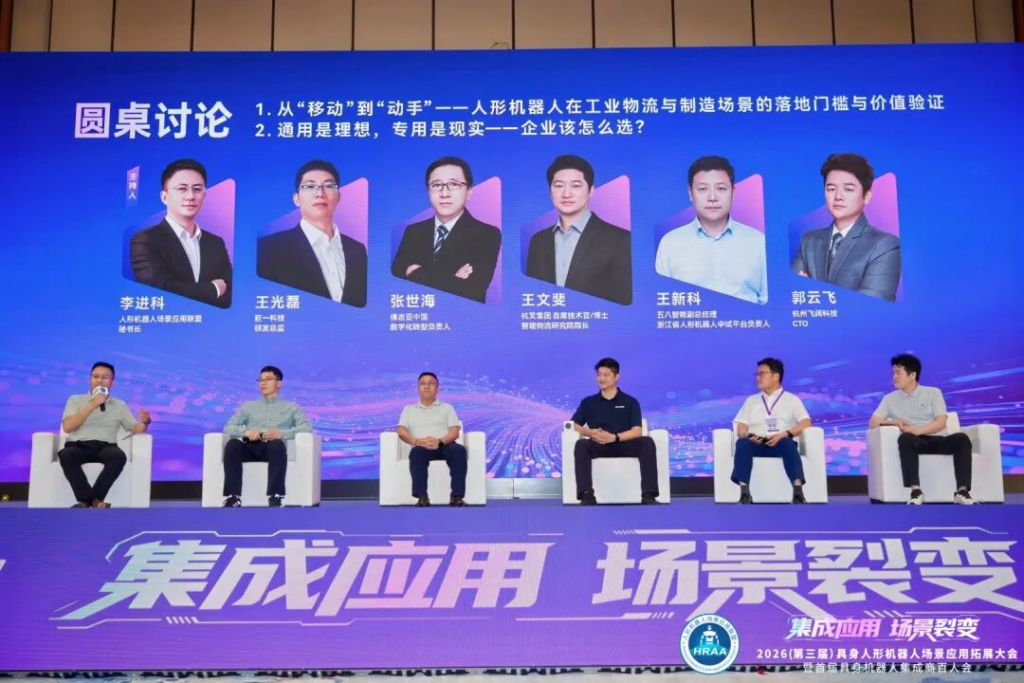
The discussion focused on two core issues:
- identifying the actual barriers to deploying humanoid robots in industrial logistics and manufacturing scenarios as they transition from “mobility” to “manipulation”;
- determining how enterprises should balance and choose between “general-purpose” and “special-purpose” robots while technical pathways have yet to fully converge.
The roundtable was moderated by Jinke Li, Secretary-General of the Humanoid Robot Scene Application Alliance (HRAA). Participants included Dr. Wenfei Wang, CTO/Director of Intelligent Logistics Research Institute, Hangcha Group, Shihai Zhang, Digital Transformation Leader, FORVIA FAURECIA, Guanglei Wang, R&D Director, JEE, Xinke Wang, Deputy General Manager of Wuba Intelligent Tech and Head of Pilot Production Platform, Zhejiang Humanoid Robot Innovation Center, and Yunfei Guo, CTO of Flykor.
From PoC to Production Line: Stability is the First Hurdle
Addressing the barriers to deploying humanoid robots in industrial logistics and manufacturing, Guanglei Wang, R&D Director, JEE, began by drawing on his experience with industrial robot applications.
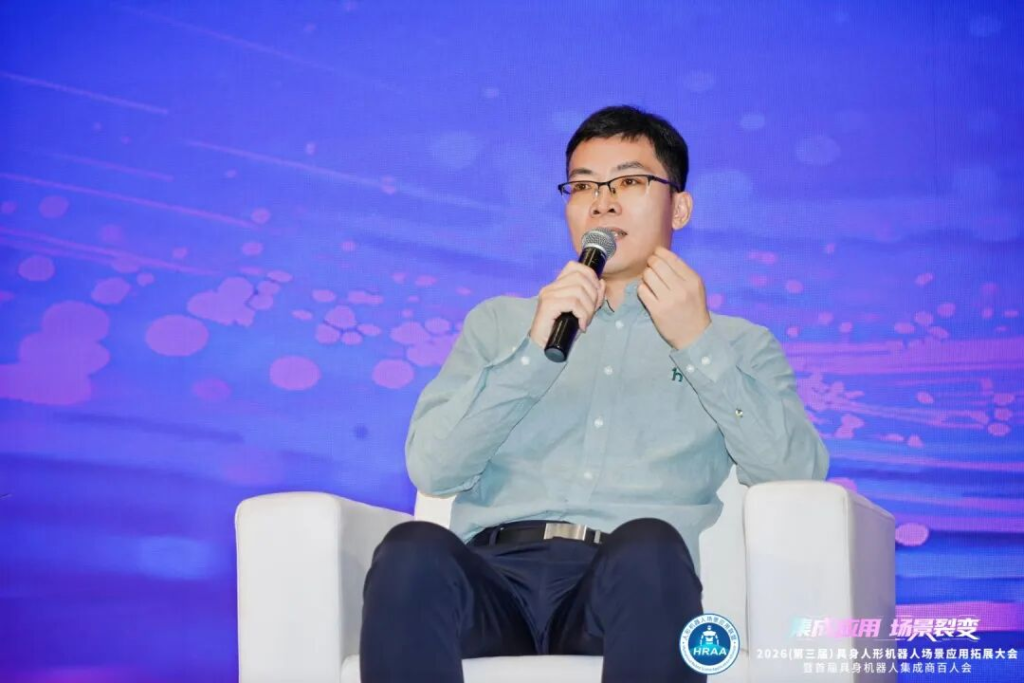
Guanglei Wang, R&D Director, JEE
As a production line integrator serving the automotive and parts manufacturing sectors for years, JEE deploys over 6,000 industrial robots annually. Precisely because of this deep grounding in industrial environments, Wang believes that when humanoid robots enter factories, one cannot simply look at demonstration results; instead, their stability, success rates, and application value must be validated on actual production lines.
In his view, the industry’s focus has shifted over the past year or so. While discussions in late 2024 centered largely on “general-purpose humanoid robots,” the value of “special-purpose humanoid robots” has gained recognition among more enterprises since the start of 2026. This reflects a practical reality: there remains a significant gap between a demonstration and actual implementation.
Wang noted that while it is not difficult for humanoid robots to complete specific action tests in a laboratory or Proof-of-Concept (PoC) stage, the factory floor presents far more complex challenges regarding lighting, spatial constraints, production cycle times, and the coordination of personnel and equipment. “The hardware’s stability, perception accuracy, and dynamic control capabilities still require continuous refinement,” he said.
For manufacturing users, the value of implementation is ultimately measured by the return on investment. After a period of exploration, a consensus has emerged within the industry: in the short term, while some efficiency trade-offs may be acceptable for humanoid robots, success rates and stability must be prioritized.
Regarding the implementation roadmap, Wang does not believe humanoid robots must tackle highly complex tasks from the outset. On the contrary, starting with simple or standardized scenarios is equally valuable. Even at workstations where traditional industrial robots are already mature, humanoid robots can participate in preliminary validation and comparative testing; this allows them to build on-site adaptability and gradually accelerate deployment. “Moving from simple to complex is likely the more realistic path at present.”
Demands from end-user factories have made this issue more concrete. Shihai Zhang, Digital Transformation Leader, FORVIA FAURECIA, noted that the company has identified humanoid robots as a key focus for smart manufacturing this year and is conducting tests and deployment preparations across multiple scenarios. However, significant practical challenges remain before final adoption decisions can be made.

Shihai Zhang, Digital Transformation Leader, FORVIA FAURECIA
Zhang believes the critical step in transitioning from mere “mobility” to “manipulation” lies not just in whether a robot can reach a specific location or execute a grasping motion, but in whether it can “move while carrying out a task and perform operations stably during that movement.” For instance, a robot might need to carry a box while monitoring environmental changes and then complete a task in sync with the production line’s cycle time upon arrival; this places higher demands on perception, navigation, manipulation, and task planning capabilities.
“Stability is a primary concern for factories. Industrial robots can already operate continuously on production lines for long periods; for humanoid robots to enter the same production ecosystem, they must undergo validation that meets near-industrial standards. Factories care less about whether a robot can complete a single task and more about whether it can do so consistently, stably, and predictably. Cycle time requirements also need to be backed by on-site data, whereas many current test results serve only as rough references,” Zhang said.
Beyond the technology itself, safety, data, and service support are major concerns for end-users adopting humanoid robots. Zhang noted the current lack of unified safety standards for humanoid robot applications in factories. Clearer regulations are needed regarding liability in the event of collisions, tipping, or malfunctions, as well as protocols for personnel protection and safe intervention by maintenance staff. As humanoid robots enter production lines, they will interact with vast amounts of data regarding the factory environment, manufacturing processes, and specific tasks. For manufacturing enterprises, this data represents both a production asset and a crucial foundation for future intelligent upgrades; consequently, data ownership and security boundaries must be clearly defined from the outset.
Shihai Zhang also highlighted the issue of after-sales service. Currently, many robot manufacturers focus heavily on product sales but are ill-prepared for the operations and maintenance (O&M) requirements once the robots are deployed in factories. Manufacturing environments are highly sensitive to downtime; factors such as the manufacturer’s response speed, local repair capabilities, spare parts availability, and the ability of factory staff to perform basic maintenance directly influence a company’s decision to adopt the technology.
From Single Product to System Delivery: B2B Applications Prioritize a Value Closed-Loop
Dr. Wenfei Wang, CTO/Director of Intelligent Logistics Research Institute, Hangcha Group, believes that for humanoid robots to enter industrial and logistics settings, one must first understand the fundamental dynamics of B2B operations. To manufacturing clients, a robot is not merely a standalone product but part of a comprehensive system solution that requires stable delivery, continuous operation, and proven value.

Dr. Wenfei Wang, CTO/Director of Intelligent Logistics Research Institute, Hangcha Group
Wang noted that domestic B2B projects have long tended to follow a “turnkey” model. Suppliers must not only meet explicitly stated requirements but also proactively address issues such as safety, stability, O&M, and future scalability. In contrast, the application of humanoid robots in industrial and logistics sectors remains in its infancy, with the market yet to reach the stage of large-scale deployment.
After recently visiting clients, robot manufacturers, and intelligent technology firms, Wang observed that while the industry can generally execute PoC demonstrations in controlled settings, there remains a gap between these displays and stable operation in real-world environments. Whether for factory operations, package handling, or logistics sorting, robots struggle to function immediately in unprepared environments; success requires extensive scenario adaptation, task training, and system debugging.
However, he emphasized that the entry of humanoid robots into industrial and logistics sectors is an inevitable trend. “It is reasonable for humanoid robots to currently target sectors like education, showrooms, and commercial services; however, in the long run, industrial production and logistics are unavoidable frontiers—it is simply a process that takes time. The true turning point may well stem from breakthroughs in data, models, and application paradigms,” Wang said. Xinke Wang, Deputy General Manager of Wuba Intelligent Tech and Head of Pilot Production Platform, Zhejiang Humanoid Robot Innovation Center, highlighted the perspective of technical integration, noting that humanoid robots combine two capabilities within a ground-based mobility system: traversability and manipulability. While quadruped robots have made rapid progress in navigating complex terrain, humanoid robots also have the potential to match human-level mobility in similar environments. Regarding manipulability, the industry has been validating increasingly versatile operational capabilities—evolving from industrial robots and cobots to composite robots.

Xinke Wang, Deputy General Manager of Wuba Intelligent Tech and Head of Pilot Production Platform, Zhejiang Humanoid Robot Innovation Center
However, a humanoid robot is not merely a simple combination of “walking” and “manipulating.” Wang argued that it represents a high-level fusion of mobility, perception, manipulation, control, and task comprehension, resulting in a system of vastly greater complexity. Currently, most application scenarios do not face insurmountable technical bottlenecks; the real challenge lies in striking a balance between functionality, reliability, and cost-effectiveness. Greater functionality drives up costs and system complexity; higher reliability requirements necessitate increased investment in testing, redundancy, and safety; yet, ultimately, manufacturing and logistics applications must prioritize economic viability.
Wang also cautioned that embodied AI technology is evolving rapidly, and industry standards and mature operational models have not yet fully crystallized. Companies investing in application deployment need to maintain a forward-looking and open mindset. Committing too early to a specific technical path risks creating sunk costs, while waiting for technology to fully mature could mean missing the window for early validation and capability building.
Yunfei Guo, CTO of Flykor, discussed deployment experiences based on scenarios that saw earlier commercialization. Flykor initially focused on applications such as robotic tour guides, reception services, entertainment performances, and education. These scenarios offered a degree of replicability and made it easier to establish an early commercial closed loop. However, during actual delivery, the core issues companies faced shifted beyond isolated technical challenges to the practicalities of truly deploying robots into customer environments and ensuring their continuous operation.

Yunfei Guo, CTO of Flykor
Guo noted that over the past year, humanoid robots have made significant strides in locomotion and performance capabilities, leading to the first batch of deliverable solutions in sectors like entertainment, exhibitions, and education. Yet, as robots transition from “mobile displays” to “task execution,” system complexity increases substantially. Whether for logistics transshipment, simple material handling, or other operational tasks, robots require a more refined ability to break down complex tasks into actionable steps.
In his view, task decomposition is the key to transitioning humanoid robots from showcase pieces to functional tools capable of performing actual work. Robots must not only comprehend tasks but also break complex assignments down into executable steps and maintain a closed-loop process during execution. This requires the combined support of modeling, perception, locomotion, and scenario adaptation capabilities. For humanoid robot companies, while technological breakthroughs are crucial, the ability to translate technology into stable delivery and sustained operational capabilities is what ultimately determines the progress of commercialization.
General-purpose Capability Is the Long-term Direction, While Specialized Application Is the Practical Entry Point
Addressing the question of “General-purpose Solutions Represent the Ideal, While Specialized Solutions Reflect the Reality—How Should Enterprises Choose?”, the panelists largely agreed: while general-purpose capability represents the long-term direction, companies should currently start with specific scenarios to validate specialized solutions that are feasible to deploy, deliverable, and offer a calculable return on investment.
Yunfei Guo believes companies must first determine what form of robot their specific scenarios actually require. Not all tasks necessitate a humanoid robot; existing automation equipment may suffice. For Flykor, a more realistic path involves building a general-purpose foundation while simultaneously validating applications in specialized scenarios. In other words, while underlying capabilities can be platformized as much as possible, commercial deployment must ultimately address specific scenarios, tasks, and customer needs.
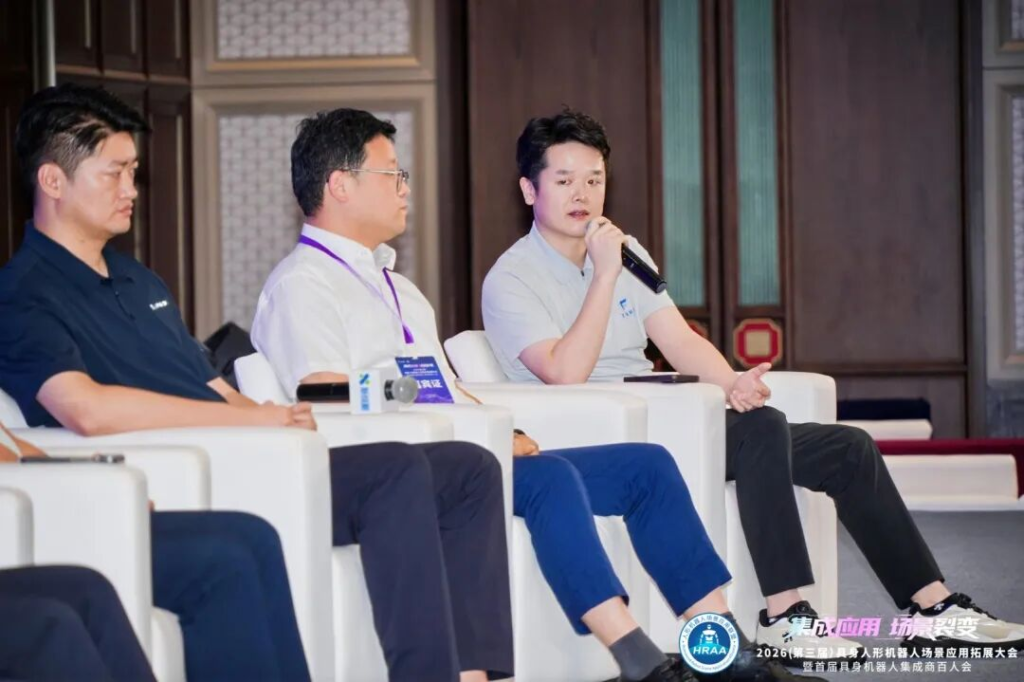
Xinke Wang also holds that the choice between general-purpose and specialized robots is not a simple binary one. A more rational division of labor might involve robot manufacturers developing the general-purpose platform, while system integrators handle configuration and secondary development for specialized scenarios, creating synergy at different levels. This model preserves the scalability of the general-purpose platform while allowing robots to adapt more quickly to the demands of real-world environments.
Wenfei Wang further distinguished between approaches based on scenario characteristics. He believes that general-purpose forms are more effective in scenarios involving minimal environmental interaction and limited variability—such as guided tours, crowd simulation, or exhibitions. Conversely, in environments like factories or logistics centers—where frequent interaction with materials, equipment, and personnel is required—specialized solutions are often the first to deliver tangible value.
Shihai Zhang offered a more specific decision-making logic from the end-user’s perspective. He noted that during the pilot phase, manufacturing enterprises tend to favor specialized solutions because pilots must address clearly defined problems and yield measurable results. However, from a medium- to long-term perspective, these enterprises also desire a degree of general-purpose capability in the underlying technology to facilitate future replication and expansion. In other words, the application layer requires specialization, while the technical layer should be platform-based to the greatest extent possible.
In the view of Guanglei Wang, the reason industrial and logistics sectors have become focal points for humanoid robots is that the tasks involved are relatively clear-cut and frequent, the logic for replacing human labor is compelling, and the return on investment (ROI) is easier to calculate. For commercialization, the long-term viability of an application scenario ultimately depends on whether it possesses a clear value-creation loop. For users, a more feasible approach is to combine “specialized robots with general-purpose technologies”—first ensuring the robot operates successfully in a specific scenario, and then gradually enabling the reuse of those capabilities.
Thus, general-purpose and specialized approaches are not mutually exclusive paths. In the short term, specialized scenarios serve as the entry point for humanoid robots into industrial and logistics systems; in the medium to long term, general-purpose platforms, models, data interfaces, and O&M systems will determine whether enterprises can scale up from isolated pilot projects to widespread replication. For companies across the industry chain, the most worthwhile investment lies in accumulating reusable capabilities within specialized scenarios and gradually transforming these capabilities into a general foundation applicable to a wider range of use cases.
This implies that the key to commercializing humanoid robots lies not in striving to “do everything” from the outset, but in successfully and reliably executing a single task characterized by high frequency, essential demand, and clear ROI. Only through the continuous accumulation of data, experience, and system capabilities within specialized scenarios can the goal of general-purpose application evolve from a distant vision into a verifiable industrial pathway.
Conclusion:
Finally, Jinke Li, Secretary-General of HRAA, summarized the situation: while industrial settings remain the most certain avenue for the deployment of humanoid robots, a significant gap persists between being merely “usable” and being “easy to use.” Mature mobility is merely the starting point; the true determinants of large-scale adoption are stable operational capabilities in complex working environments, sustained operational efficiency, and the degree of integration with existing production systems.
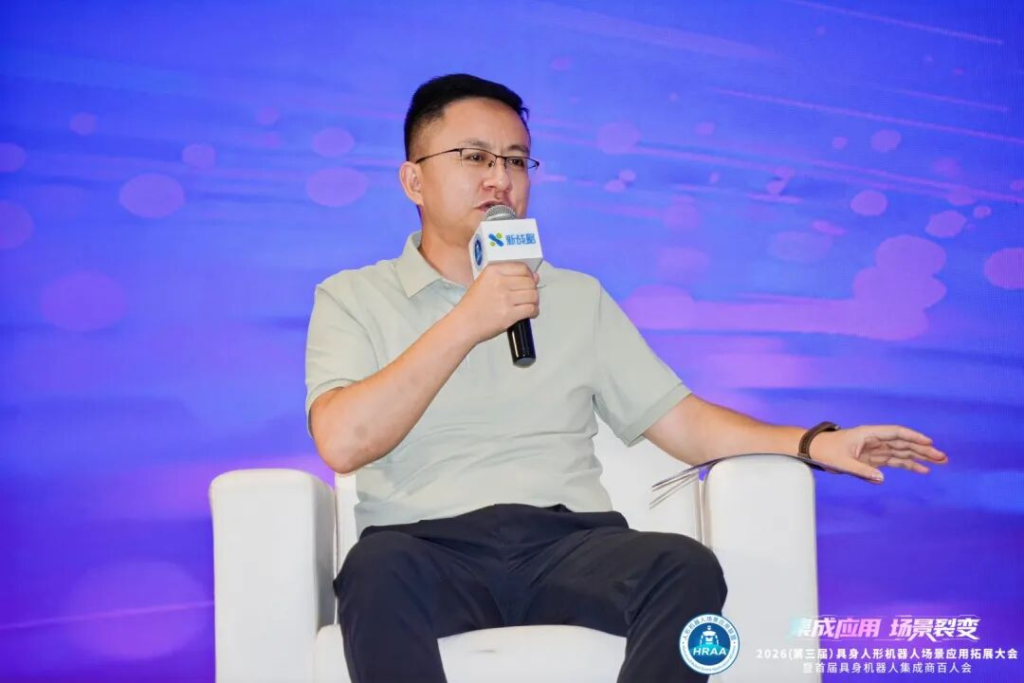
Jinke Li, Secretary-General of HRAA
Meanwhile, general-purpose capabilities continue to evolve, yet in the short term, specialized solutions tailored to specific workstations and processes are becoming the preferred path for validation by most enterprises. The ability to successfully complete closed-loop validation on actual production lines will determine whether this wave of technological enthusiasm can translate into a pivotal moment for industry-scale application.




1-300x168.png)