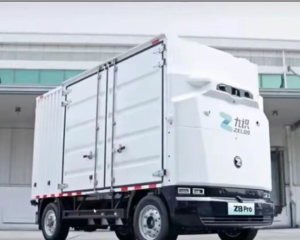
According to data from the Low-Speed Automated Driving Industry Alliance (LSAD) and statistics from New Strategy Low-Speed Automated Driving Industry Research Institute, China’s unmanned delivery industry shipped approximately 42,000 units of low-speed autonomous driving equipment (including outdoor unmanned delivery vehicles and wheeled delivery robots) in 2025, representing a year-on-year increase of 536.4%; the sales volume reached approximately 4.95 billion yuan, up 289.8% year-on-year.
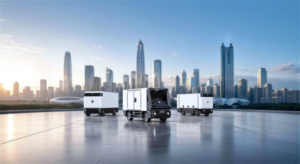
Among the deployed vehicle models, midsize unmanned delivery vehicles (with a capacity of 5–8 m³) dominate the market, accounting for 77% of sales volume and serving as the cornerstone for large-scale commercial deployment in both the express delivery and wholesale-retail sectors.
Why have mid-size unmanned delivery vehicles become market hit?
It’s no coincidence that midsize unmanned delivery vehicles (5–8 m³) have become market hits.
In recent years, driven by three key factors – sustained policy incentives, rising labor costs, and surging demand for instant delivery services – midsize delivery vehicles have found an optimal balance.
These models effectively meet cargo requirements for urban commercial areas and community-based last-mile deliveries while effortlessly navigating complex environments such as narrow streets, industrial park corridors, and underground parking facilities, catering to diverse operational needs from courier hubs to community service stations, supermarkets, and industrial zones across the “last mile” logistics chain. Their design also supports modifications for various temperature conditions (cold chain or ambient temperature), naturally adapting to the delivery requirements of high-value products like fresh produce and pharmaceuticals.
From a commercial perspective, their popularity stems from superior cost-effectiveness: compared to small unmanned vehicles, midsize models deliver higher single-trip volumes, significantly reducing travel frequency and lowering charging and maintenance costs; while offering lower acquisition barriers than large unmanned trucks, they excel in flexible operations within urban micro-environments. This versatility has made them the preferred choice for procurement decisions across industries including express delivery, retail, fresh food distribution, and pharmaceuticals, driving widespread adoption of unmanned logistics solutions among end-users.
What are the characteristics of these representative products?
At the product level, the market has already seen a range of representative products that feature mature technologies and distinct differentiation.
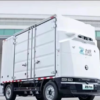
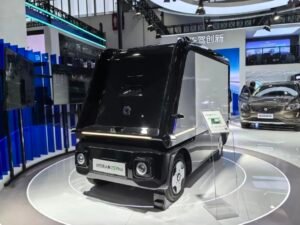
List of Several Representative New Midsize (5–8 m³) Unmanned Delivery Vehicles Since 2025
For instance, NEOLIX X6 features an end-to-end autonomous driving architecture and efficient energy management system, balancing long-distance delivery capabilities with adaptability to complex road conditions. Go Further.AI P6 is equipped with a 275 TOPS high-performance domain controller and a multi-source integrated perception system, enabling precise obstacle recognition and stable operation even in challenging community environments. The Desay SV Chuanxing Zhiyuan S6 meets diverse application requirements—including industrial components and supermarket cold chain logistics—through its dual-domain control redundancy design and modular mounting configuration.
Overall, while different manufacturers focus on distinct technical approaches, all emphasize “high versatility” and “scenario adaptability,” forming comprehensive product portfolios.
LSAD has identified four common characteristics among these midsize unmanned delivery vehicles:
- Advanced automotive-grade standards: Increasing models adopt chassis systems and electrical architectures compliant with both passenger and commercial vehicle specifications, with rigorous validation processes ensuring safety and durability under high-frequency, high-intensity operations.
- Multimodal perception: Widespread adoption of integrated LiDAR sensor, millimeter-wave radar, and high-definition cameras enables comprehensive environmental awareness across all scenarios.
- Intelligent decision-making: Most utilize end-to-end autonomous driving models and multimodal fusion algorithms for centimeter-level path planning, along with human-like decision-making and risk assessment in complex intersections and mixed traffic environments, significantly reducing manual intervention needs.
- Specialized chassis design:Most products feature independent beams and multi-link suspension systems developed based on commercial vehicle standards, paired with EMB electronic brake control and high-performance tires that ensure driving stability under heavy loads while maintaining excellent performance on uneven surfaces, speed bumps, and underground garage ramps.
Conclusion:
Overall, the market competition for midsize unmanned delivery vehicles fundamentally involves a dual challenge of technological cost reduction and scenario adoption rates. As technology evolves toward vision-free operation, vehicles exhibit enhanced adaptability, significantly reducing deployment costs and timelines.
At the market level, competition is shifting from hardware sales to performance efficiency in logistics operations. Future winners will not only compete on vehicle cost-effectiveness but also on providing more efficient scheduling systems and flexible business models that effectively reduce “last-mile” costs for customers.
Only when both technical barriers and commercial viability are overcome can unmanned delivery vehicles truly integrate into daily life.