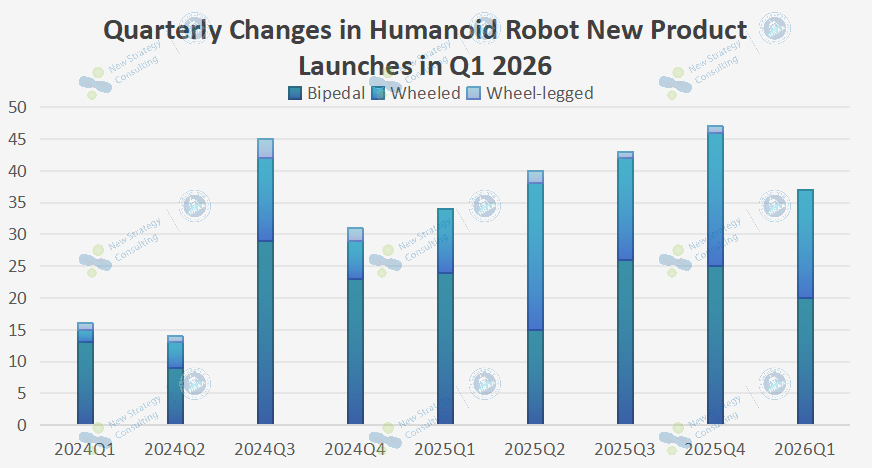
According to statistics from China Humanoid Robot Scene Application Alliance (HRAA), over 37 new humanoid robot products were released globally in Q1 2026. This number is slightly lower than in the fourth quarter of 2025, but roughly the same as in the first quarter of 2025, indicating that after the concentrated surge in 2025, the industry is entering a relatively stable phase in new product releases.
A Review of New Humanoid Robots in Q1 2026 (Compiled from publicly available online information; if there is any omission, please point it out.)
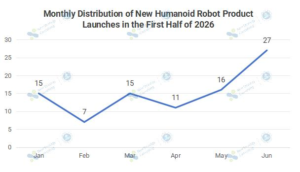
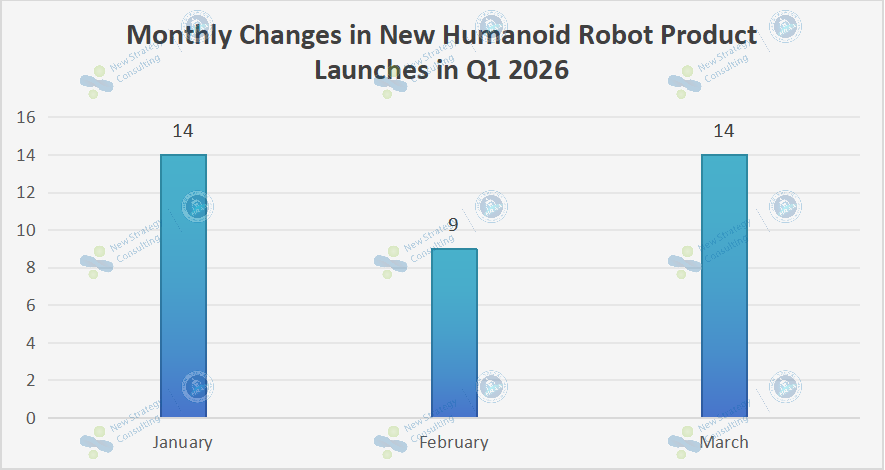
From a monthly perspective, new product releases in Q1 2026 exhibited a typical trend of high releases at the beginning and end, followed by a lower release in the middle. January and March were the peak release periods, while February was relatively quiet. This rhythm is related to the Spring Festival, adjustments in company release schedules, and the arrangement of industry activities in the first quarter, also indicating that new product supply still has strong nodal characteristics.
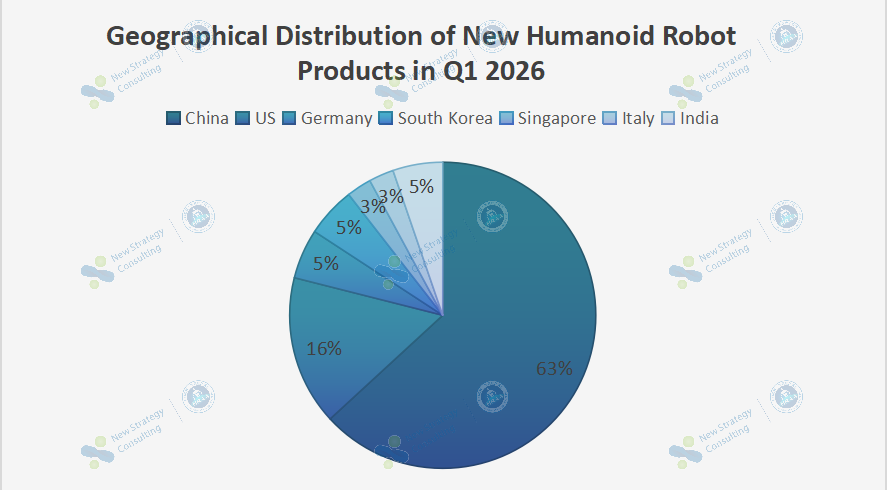
From a regional perspective, China remains the core source of this round of new humanoid robot supply. In the first quarter of 2026, China launched over 24 new humanoid robots, accounting for approximately 65% of the global total. This means that for every three new humanoid robot products launched globally, two are from China. Whether startups, complete machine manufacturers, or players extending from component suppliers, automation companies, and service robots, Chinese manufacturers continue to drive product iteration and participate in this round of industry competition at an even higher frequency.
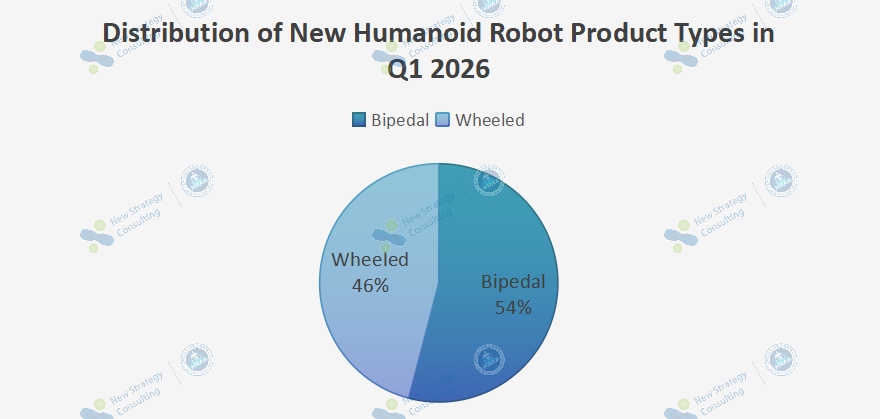
Looking further at product forms, the new humanoid robots launched in the first quarter of 2026 exhibited a more distinct dual-track characteristic. On one hand, bipedal robots remain the mainstream approach, with 20 models launched in the first quarter, accounting for 54%; on the other hand, wheeled robots reached 17 models, accounting for 46%, further narrowing the gap with bipedal robots. This ratio itself indicates that wheeled humanoids are no longer just a marginal experiment, but are becoming an important branch of the industry.
This change is even more pronounced when viewed from a longer-term perspective. In 2024, legged products still dominated, while wheeled products were relatively limited. Entering 2025, wheeled robots began to increase significantly, with some quarters even seeing more wheeled robots released than legged ones. By the first quarter of 2026, although bipedal robots still held a slight advantage, wheeled robots had firmly established themselves in nearly half the market.
This shift in the industry’s product structure reflects companies’ reassessment of their deployment paths. As robots truly enter real-world environments such as warehousing, logistics, and manufacturing, the industry’s focus has shifted from “can it be made?” to “can it work stably in the scenario?” In this process, the combination of mobility and operational capabilities exhibited by wheeled humanoid robots provides a new path for robot deployment.

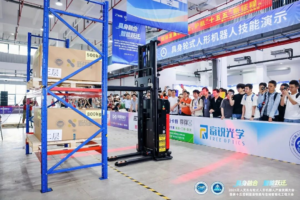
To further explore the application potential of this form factor in real-world scenarios, the First Material Handling and Sorting Challenge for Embodied Wheeled Humanoid Robots 2026 will be held on May 21-22, 2026. The First Embodied Wheeled Humanoid Robot Scenario Application Ecosystem Summit 2026 will also be held concurrently, and The Bluebook on the Development of the Wheeled Humanoid Robot Industry will be released.