Skild AI has acquired the robotics division of Zebra Technologies, formerly known as Fetch Robotics, in a move that signals growing convergence between robotics hardware ecosystems and foundation-model-based AI systems in warehouse automation.
While financial terms were not disclosed, the deal positions Skild AI to integrate an established warehouse orchestration stack with its emerging general-purpose robotics intelligence model.
A Shift Beyond Conventional Robotics Consolidation
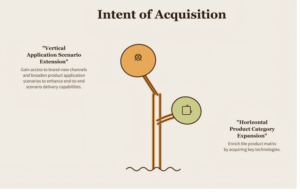
The acquisition is not primarily about expanding robot fleets or hardware capabilities. Instead, it reflects a broader industry trend: the attempt to unify fragmented automation systems under a single intelligence layer.
Warehouse automation today remains highly segmented. Mobile robots, robotic arms, and human-operated workflows are typically coordinated through warehouse management systems (WMS) or execution platforms (WES), with limited cross-system autonomy or adaptive reasoning.
Skild AI is positioning this fragmentation as the core inefficiency it aims to address.
Skild’s Approach: A Cross-Embodiment Foundation Model
At the center of Skild AI’s strategy is its “Skild Brain” concept, a robotics foundation model designed to operate across multiple hardware embodiments.
According to the company’s positioning, the system is intended to:
- Generalize across robot types, including mobile robots, manipulators, and humanoid platforms
- Reduce dependence on task-specific programming or retraining for new hardware
- Enable more adaptive, real-time decision-making in dynamic environments
If realized at scale, this approach would shift robotics software architecture from device-specific control systems to a shared intelligence layer spanning heterogeneous fleets.
Zebra Robotics: A Production-Grade Execution Layer
The acquired robotics business from Zebra Technologies brings established logistics infrastructure rather than frontier AI capabilities.
Its key asset is Symmetry Fulfillment, a warehouse orchestration system deployed in production environments. The platform coordinates robot fleets, integrates human workflows, and connects warehouse execution with operational data systems, including wearable devices.
Industry analysts note that such systems are difficult to replicate due to their deep integration into real-world warehouse operations and long deployment cycles.
In this context, Zebra’s robotics stack provides Skild with an operational layer capable of grounding AI-driven decision-making in physical environments.
Toward a Unified Robotics Stack
The combined architecture suggested by the acquisition reflects a three-layer model:
- Intelligence layer: Skild AI’s foundation model for perception, planning, and task reasoning
- Orchestration layer: Zebra’s warehouse execution and coordination systems
- Physical layer: Mixed fleets of mobile robots, manipulators, and other automation hardware
This structure moves orchestration systems closer to AI-driven reasoning rather than rule-based task scheduling, although practical implementation challenges remain significant.
Industry Context: Rising Interest in Robotics Foundation Models
The deal comes amid growing investment in “embodied AI” and robotics foundation models, where companies are attempting to extend large-model capabilities into physical systems.
Several trends are converging:
- Increased demand for flexible automation in e-commerce and third-party logistics (3PL)
- Rapid expansion of heterogeneous robot fleets in large warehouses
- Growing interest in general-purpose AI systems capable of controlling multiple robotic modalities
However, industry adoption remains early-stage, with most deployments still reliant on narrowly optimized systems rather than generalizable models.
Outlook
If Skild AI can successfully integrate its model-based approach with Zebra’s deployed warehouse infrastructure, the combined system could serve as a testbed for next-generation logistics automation—one in which software-defined intelligence increasingly dictates robot behavior across heterogeneous environments.
However, significant technical hurdles remain, particularly in reliability, safety certification, and real-time performance in large-scale industrial settings.
For now, the acquisition represents a bet on a longer-term transition: from fragmented robotics systems toward unified, model-driven warehouse intelligence.