On September 29, NavInfo announced its official investment in Phigent Robotics Limited, the parent company of Phigent Robotics, through a combination of cash and asset injections. Following the transaction, NavInfo will hold a 39.14% stake in Phigent Robotics Limited, becoming its largest shareholder. This investment, utilizing a “cash increase + asset injection” model, totaled 1.8 billion yuan, making it one of the largest M&A deals in the A-share market in the intelligent driving sector.
After the transaction, NavInfo will integrate the resources of both parties to create a new intelligent driving business platform encompassing both Horizon Robotics and Qualcomm platforms, encompassing a full range of low-end, mid-end, and high-end product lines, further enhancing its competitiveness in the intelligent driving sector.
Prior to this, the global autonomous driving industry has also been experiencing an unprecedented wave of capital consolidation. Whether it’s the upstream and downstream integration of Tier 1 companies and algorithm companies, or the entry of cross-industry giants into the autonomous driving system field, industry capital is reshaping the technological landscape and industry structure at an accelerated pace.
We’ve compiled over ten typical acquisitions in the autonomous driving and related fields over the past year to examine the logic and trends behind this “autonomous driving industry M&A wave.”
John Deere Acquired GUSS Automation
On August 27, John Deere, the global agricultural equipment giant acquired California-based GUSS Automation, further strengthening its presence in autonomous agricultural robotics.
GUSS is a developer specializing in crop autonomy. Its autonomous sprayers enable remote monitoring, allowing a single operator to manage up to eight machines simultaneously. Since its founding in 2018, GUSS has deployed over 250 machines worldwide, spraying a cumulative 2.6 million acres (approximately 1.6 million acres) and achieving over 500,000 hours of autonomous operation.

This acquisition is not the first collaboration between John Deere and GUSS. The two parties established a joint venture in 2022. Following the acquisition, GUSS will retain its brand, employees, and manufacturing facility in Kingsburg, while John Deere will leverage this opportunity to expand its manufacturing footprint in the high-value crop production market in the United States.
John Deere has been active in agricultural automation in recent years. In 2017, John Deere acquired Blue River Technology for $305 million; in 2021, it acquired Bear Flag Robotics for $250 million; in 2023, it acquired SparkAI for an undisclosed amount. These acquisitions helped John Deere expand its automation capabilities, while SparkAI strengthened its human-machine collaboration capabilities.
Zeekr was fully integrated into Qianli Technology.
In early August, media reported that Geely had begun integrating its intelligent driving capabilities. The Geely Automobile Research Institute, the Zeekr Intelligent Driving team, and Mach-Drive were merged into a joint venture, Chongqing Qianli Intelligent Driving, with a total staff of 3,000. Wang Jun, Co-president of Qianli Technology, will serve as CEO of Qianli Intelligent Driving, and Chen Qi, Former Vice President of Zeekr Intelligent Driving, will serve as Co-CEO.
As early as July 30, Zeekr Intelligent Driving team announced a restructuring plan at a general meeting. All members will sign directly with Qianli Technology without the need for re-interviews, and their work locations and salaries will remain unchanged.
Qianli Technology, formerly Lifan Technology, introduced strategic investors including Geely and the Chongqing Liangjiang New Area after undergoing judicial reorganization in 2021. In 2022, it established Ruilan Auto with Geely, focusing on the B-end customized mobility market. Following this integration, Qianli Technology will undertake the core R&D of Geely’s “Qianli Haohan” advanced intelligent driving system.
Cheetah Mobile Acquired UFACTORY
On July 28, a controlling subsidiary of Cheetah Mobile signed a formal agreement to acquire a 60.8% stake in Shenzhen UFACTORY Technology Co., Ltd. (hereinafter referred to as “UFACTORY”), a supplier of lightweight robotic arms, for a total consideration of 99.46 million yuan.
Prior to the transaction, another wholly-owned subsidiary of Cheetah Mobile already held a 19.2% stake in UFACTORY. Upon completion of the transaction, the two subsidiaries will hold a combined 80% stake in UFACTORY, increasing Cheetah Mobile’s final stake to 75.8%, achieving a controlling stake.
Since Cheetah Mobile launched its “All in AI” strategy in 2016, it has expanded into the robotics sector through its controlling subsidiary, OrionStar. It has launched reception service robots, delivery service robots, industrial distribution robots, and new retail service robots, covering a variety of scenarios, including restaurants, hotels, and factories.
Bonsai Acquired Agricultural Robotics Company Farm-ng
On July 24, Bonsai Robotics, a company specializing in autonomous vision software, announced the acquisition of modular electric robot manufacturer Farm-ng for an undisclosed amount. John Teeple, former technical director of John Deere, serves as COO of the new company, while Gary Bradski, a pioneer in computer vision and founder of OpenCV, serves as Chief Science Officer.
Bonsai’s agricultural automation technology excels in that its patented AI model, without the need for GPS or cellular networks, can autonomously navigate in challenging conditions such as dust, darkness, altitude changes, and vibration. The system can be retrofitted to existing equipment or integrated into new machines, providing manufacturers with a high degree of flexibility.

Farm-ng fills a crucial gap in hardware innovation. Founded in 2020, this company’s flagship Amiga platform focuses on serving small and medium-sized farms, enabling a variety of tasks from land preparation to harvesting.
Pronto.ai Completed the Acquisition of Its Competitor SafeAI
On July 16, US autonomous driving startup Pronto.ai recently completed the acquisition of its competitor SafeAI, a move aimed at securing scarce talent across the “AI, autonomous driving, and mining” sectors. The company, which specializes in autonomous driving systems for off-highway vehicles such as mining trucks, reportedly acquired the competitor’s team.
While specific acquisition terms were not disclosed, the CEO stated that the core of the acquisition is the integration of talent and technology, including the integration of all 12 SafeAI engineers and intellectual property into Pronto. “We are essentially the only two companies left in the autonomous mining sector, and we should integrate resources to accelerate expansion,” the CEO explained, since their respective technical approaches are different.

Founded in 2018, Pronto uses sensor arrays and AI systems to enable autonomous truck operations in mining operations. Its innovative peer-to-peer open-source mobile network, Pollen Mobile (launched in 2022), enables high-speed, anonymous data transmission in areas without internet access. The current team consists of approximately 40 people, and the acquisition will accelerate the expansion of its global customer base.
Qualcomm Acquired V2X Solution Provider Autotalks
On June 5, Qualcomm announced that its subsidiary, Qualcomm Technologies, had completed the acquisition of Israeli startup Autotalks. Founded in 2008, Autotalks is a fabless semiconductor company specializing in V2X communications and pioneered the industry’s first dedicated V2X chipset.

5G-V2X technology is revolutionizing how vehicles communicate with their surroundings. As cities embrace smart infrastructure and autonomous driving, 5G-based V2X technology is leading this transformation. Following the acquisition, Qualcomm integrated Autotalks’ products into the Snapdragon Digital Chassis portfolio, significantly strengthening the platform’s connectivity capabilities and enabling Qualcomm to provide automakers with a full-stack V2X solution, from in-vehicle terminals to roadside units.
iMotion Acquired Artiarm Robotics
On May 12, iMotion announced that its wholly-owned subsidiary, iMotion Robotics, signed a framework agreement for an equity transfer with Suzhou Artiarm Robotics Co., Ltd. (hereinafter referred to as “Artiarm Robotics”). Aimoxing will acquire a majority stake in Artiarm Robotics, achieving a controlling stake. This transaction will further enhance iMotion’s control over core components in the robotics industry chain and synergize with its capabilities in artificial intelligence and automation systems.

Public information indicates that Artiarm Robotics is a national high-tech enterprise in Suzhou in the robotics field. Its core products are intelligent integrated joints and customized robotic arms. It possesses the design and development capabilities for key components such as motors, reducers, and drives, and has obtained over 60 related intellectual property rights.
iMotion Robotics, a company officially established by iMotion in March of this year, focuses on embodied intelligence. iMotion Robotics aims to leverage the technical commonality between robotics and autonomous driving systems in visual perception and multimodal interaction. It focuses on the full robotics technology chain, from R&D to commercialization, and explores the cross-industry integration of “AI+automotive+robotics.”
EIT Acquired Candela Intelligent Technology
In the evening of April 27, EIT announced that it would complete the acquisition of the remaining 65.35% stake in Candela Intelligent Technology through its wholly-owned subsidiary, EIT Smart Technology. Following the acquisition, Candela Intelligent Technology will become a wholly-owned subsidiary of EIT. Previously, EIT and Candela Intelligent Technology signed an equity transfer agreement in August 2023, acquiring a 34.65% stake in Candela Intelligent Technology for 80 million yuan.

Candela Intelligent Technology, established in 2021 and formerly a subsidiary of Candela Intelligent Technology, is legally represented by He Zhiwei. Driven by technological innovation and leveraging autonomous driving technology, the company is the world’s first integrated indoor and outdoor intelligent service provider, offering comprehensive intelligent delivery solutions for a variety of scenarios. Its products, such as the Sunshine series of next-generation unmanned logistics vehicles, the Candlelight series of building delivery robots, and the Starlight series of hotel service robots, are widely used in various scenarios.
LG Acquired Majority Stake in Bear Robotics
On January 22, LG Electronics exercised its call option to invest an additional 70-80 billion won in Bear Robotics, a US autonomous service robot startup, for a 30% stake, bringing its total holding to 51%, becoming the controlling shareholder.
LG previously invested $60 million in Bear Robotics in March 2024 for a 21% stake, with call options to acquire an additional 30% stake.
Hexagon Acquired Septentrio
On January 9, Hexagon announced the completion of its acquisition of Septentrio NV, a manufacturer of GPS/GNSS positioning technology for autonomous and mission-critical applications.
The acquisition of Septentrio strengthens Hexagon’s position as a leader in the resilient positioning solutions market and provides customers with higher-precision positioning technology through a size, mass, and power optimized platform. The combined product portfolio will accelerate the adoption of autonomous systems in existing markets and address emerging high-growth sectors such as robotics, drones, autonomous, and other mission-critical applications.
It’s obvious that industry mergers and acquisitions/consolidation are moving in three directions:
Transit from being professional and specialized into being platform-oriented. Many acquisitions combine “algorithms/software + sensors/hardware” or “AI capabilities + scalable platforms,” such as Hexagon + Septentrio, Bonsai + farm-ng, NavInfo, and Jianzhi Robotics, indicating an accelerated shift in the industry chain toward a combination of software and hardware, and platform-based integration.
Horizontal expansion and vertical integration are occurring simultaneously. LG’s acquisition of Bear Robotics and Pronto’s acquisition of Safe AI represent both horizontal entry into new businesses (delivery robots and autonomous mining) and vertical integration (from chips/sensors to algorithms and then to complete vehicles/systems).
The domestic market is highly active and undergoing local integration. Chinese companies such as EIT, iMotion, NavInfo, Cheetah Mobile, and Geely frequently announced acquisitions, capital injections, and organizational mergers in the first three quarters of 2025, focusing on scaling and rapidly implementing technological and product capabilities.
——————————————————————————————————————————————————————————————————————————————
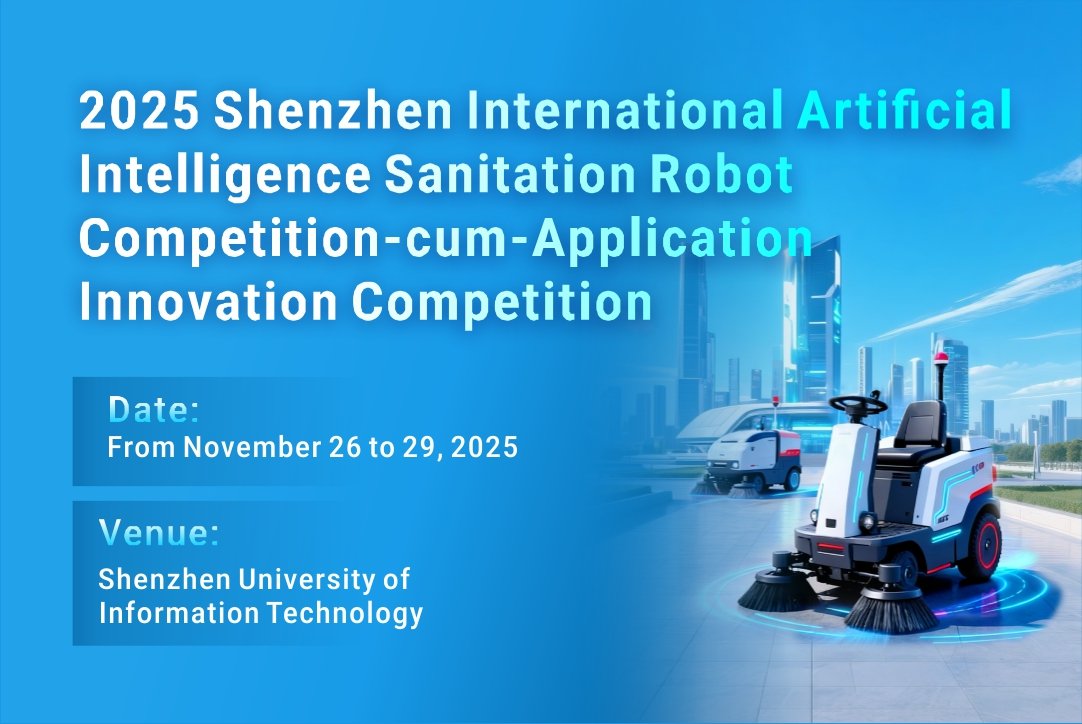
2025 Shenzhen International Artificial Intelligence Sanitation Robot Competition-cum-Application Innovation Competition will be held at Shenzhen University of Information Technology from November 26 to 29, 2025.
For details, please click https://cnmra.com/shenzhen-international-artificial-intelligence-sanitation-robot-competition-2025-will-be-held-in-shenzhen-from-november-26-to-29-2025/.