The embodied intelligence industry continues to heat up, but another undercurrent is becoming increasingly apparent: the turnover rate of personnel is accelerating.
For those working in this industry, “being at one company today and at another tomorrow” is no longer a novelty.
This change is particularly evident in the first quarter of this year. Core algorithm leaders have left, co-founders have departed, senior management has undergone frequent changes, and even the founding teams themselves are beginning to show signs of loosening.
We have compiled a brief overview of several representative recent executive departures in China’s embodied intelligence industry to try and see what is actually happening within this hot sector, beyond the narratives of financing, valuation, and mass production.
- Frequent Leadership Changes at Billion-YuanUnicorns
Spirit AI: Junyuan Jie, Head of Embodied Algorithms, Departed and Former Microsoft Research Asia Expert Took His Place
Spirit AI, founded in January 2024, is a technology company focused on the research and development of embodied intelligence and general humanoid robot technologies. Within two years of its founding, it completed seven rounds of financing, raising over 4 billion yuan in total, with a valuation exceeding 20 billion yuan.
The company was co-founded by robotics industry expert Fengtao Han and AI scientist Yang Gao. Fengtao Han was formerly the Co-founder and CTO of ROKAE, possessing over ten years of experience in industrial robot R&D and mass production; Yang Gao is an assistant professor at the Institute for Interdisciplinary Information Sciences, Tsinghua University, specializing in visual language models and cross-modal interaction research.
Junyuan Jie once played a key role in the core team. He graduated with a bachelor’s degree from the University of Science and Technology of China and a doctorate from the University of Washington. He previously worked at Amazon on the MXNet framework and later joined ByteDance AI Lab as its technical lead. Junyuan Xie joined Spirit AI in March 2025 as Vice President and General Manager of the Embodied Intelligence Business Unit, responsible for the overall development of the Spirit VLA large-scale model.

However, this position lasted only about a year. In March 2026, Junyuan Xie left Spirit AI. Business registration information shows that he has withdrawn his 15% stake in the company’s subsidiary, “Wanjing Qianxun”.
According to reports, after Junyuan Xie’s departure, his responsibilities were taken over by Junliang Guo who joined Spirit AI last year, serving as the head of embodied models and pre-training. Before joining Spirit AI, Junliang Guo was a senior researcher in the Machine Learning Group at Microsoft Research Asia (MSRA), specializing in world models, embodied large-scale models, and learning algorithms.
Galaxea AI: Huazhe Xu, Co-founder and Chief Scientist, Resigned to Found PoKe Robot
Galaxea AI, founded in September 2023, is an innovative company focusing on the field of embodied intelligence, dedicated to creating “one brain, multiple forms” embodied intelligent robots. Within two years of its founding, Galaxea AI completed eight rounds of financing, raising over 5 billion yuan in total, with a valuation exceeding 20 billion yuan.
Galaxea AI was co-founded by Jiyang Gao, Hang Zhao, Huazhe Xu, and Tianwei Li. Jiyang Gao, the Founder, holds a bachelor’s degree in Electronic Engineering from Tsinghua University and a PhD in Computer Vision from the University of Southern California, and previously worked at Waymo and Momenta. Hang Zhao and Huazhe Xu are both assistant professors at the Institute for Interdisciplinary Information Sciences at Tsinghua University, while Tianwei Li is responsible for overall robot development.
Among the founding team, Huazhe Xu was primarily responsible for the embodied intelligence “brain.” He joined Galaxea AI in 2023 as a co-founder and chief scientist, leading the development of the embodied intelligence basic model.
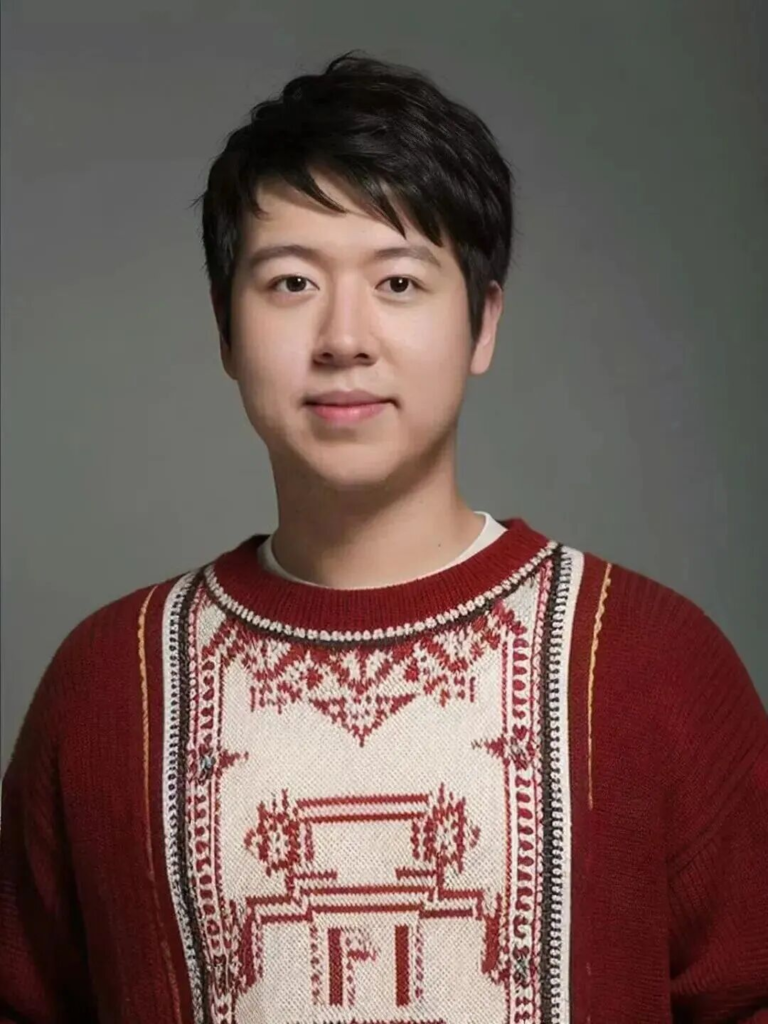
In February 2026, Huazhe Xu left Galaxea AI and subsequently founded PoKe (Beijing) Intelligent Technology Co., Ltd., shifting its focus to the consumer-facing home market and concentrating on embodied robots with a wheeled chassis and dual arms.
Notably, PoKe Robot completed its early-stage financing shortly after its founding, reaching a valuation of $400 million, and is currently pursuing a new round of financing with a target valuation of approximately $700 million. Meanwhile, Galaxea AI also participated as a seed round investor.
MagicLab: Changzheng Wu, the “Founder”, Departed and Chunyu Chen, the CTO, Took the Lead
MagicLab was founded in January 2024, incubated by Dreame Technology, focusing on embodied intelligence and developing general-purpose humanoid robots and bionic quadruped robots. The company gained widespread attention after its products were featured on the 2026 CCTV Spring Festival Gala.
In the founding stage, Changzheng Wu was one of the company’s core figures. He holds a master’s degree in mechanical design and theory from Shanghai Jiao Tong University. In 2018, he joined Pudu Technology as a senior algorithm engineer and head of the quadruped robot R&D team; in 2021, he joined Xiaomi as head of Xiaomi Robotics and core R&D leader. After co-founding MagicLab in 2024, he led the team in advancing the development of the humanoid robot “MagicBot” and the quadruped robot MagicDog.

Entering 2026, Changzheng Wu gradually withdrew from the company’s management. Between January and February, he successively resigned from his positions as legal representative and director. In fact, as early as December 2025, rumors circulated in the industry that Changzheng Wu had left the company and joined Shenzhen Moqi Intelligent, but these were quickly denied.
In March 2026, MagicLab officially confirmed that Changzheng Wu had left the company, stating that the core technology team remained stable. Chunyu Chen, the Co-founder, continued as CTO; Tao Zhang became the head of embodied models and VP of algorithms; Zhengfang Wu became the head of the embodied data platform; Chunchao Gao became the head of the joint module; Kedi Li was responsible for the developer ecosystem; Ke Yang and Yongzhou Tan became the heads of commercialization for the Chinese and international markets, respectively; and Xiang Li, a doctoral supervisor at Tsinghua University, was appointed as the chief scientist.
LimX Dynamics: Li Zhang, Co-founder and COO, Departed to Start an Embodied Model Business
LimX Dynamics was founded in January 2022, dedicated to developing general-purpose humanoid robots and embodied intelligent operating systems. Within four years of its founding, it completed seven rounds of financing, achieving a valuation exceeding $1 billion, and joining the ranks of unicorns in the embodied intelligence field.
Wei Zhang, the Founder, is a tenured professor at Southern University of Science and Technology, holds a bachelor’s degree from the University of Science and Technology of China and a PhD from Purdue University, and previously worked at Ohio State University. Over 80% of the team are R&D personnel, with members hailing from top universities such as UC Berkeley, Carnegie Mellon University , and Tsinghua University.
Li Zhang joined LimX Dynamics in November 2023 as Co-founder and COO. Previously, he served as COO of WeRide, with extensive experience in the autonomous driving industry. During his time at LimX Dynamics, Li Zhang was primarily responsible for global strategic planning, business development, and marketing, driving the company through multiple rounds of financing and participating in commercialization.
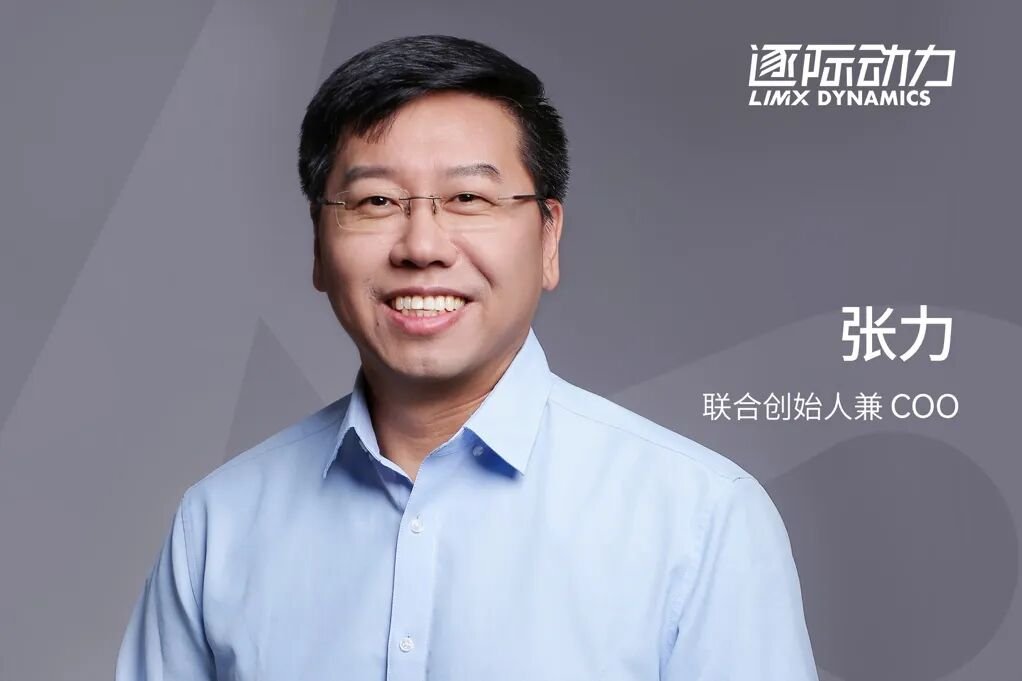
According to multiple sources, Li Zhang officially left the company in early 2026. Media reports indicate that his reason for leaving was to “return to Beijing to be with his family.” He plans to prepare for a new startup project focusing on embodied models (the “brains” of robots).
Huawei Cloud: Shunbo Zhou, Head of Embodied Intelligence, Left to Pursue Consumer-level Entrepreneurship
Huawei Cloud Physical Intelligence Innovation Lab (formerly Embodied Intelligence Innovation Lab), established in 2021, is a key team within Huawei Cloud dedicated to the R&D of embodied intelligence technology, responsible for the transformation from technology exploration to industrial application. The lab was led by Shunbo Zhou. As the only recipient of Huawei’s “Topminds” program in the field of intelligent robotics, Shunbo Zhou has long been deeply involved in the field of robotics, holding a PhD in Robotics from the Chinese University of Hong Kong, and has published over 30 papers in top journals and conferences such as IEEE RAL.
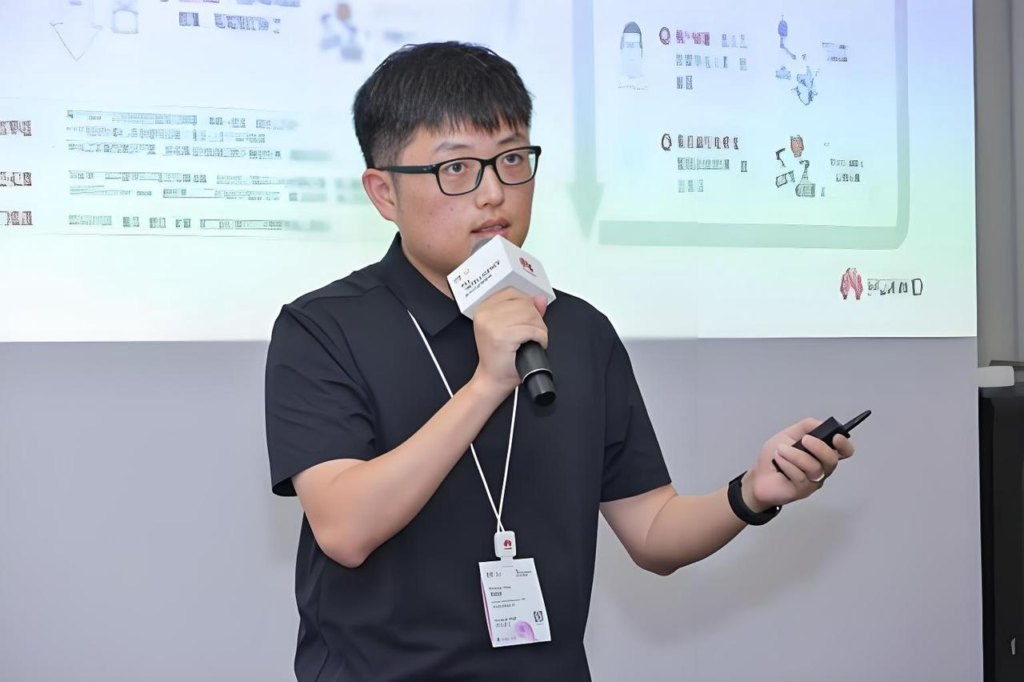
During his time at Huawei, Shunbo Zhou built the Huawei Cloud Embodied Intelligence team from scratch, leading the development of the CloudRobo platform and promoting the application of related technologies in high-end manufacturing, government affairs, and other scenarios, completing a closed loop from technology development to productization. Before leaving Huawei, he served as the head and chief technology expert of the Huawei Cloud Physical Intelligence Innovation Lab.
In early March 2026, Shunbo Zhou officially left Huawei and chose to start his own business, founding Ola Dimensions, focusing on the consumer-grade embodied intelligence sector.
Ant Group: Yi Wu, Chief Scientist of the Reinforcement Learning Lab, Resigned to Join Meta
Ant Group’s Reinforcement Learning Lab was established in 2024, led by Ant Group’s Chief Technology Officer Zhengyu He. It is a core R&D department established by Ant Group to advance its artificial intelligence strategy, focusing on the innovation and application of reinforcement learning technology. Yi Wu graduated with a bachelor’s degree from the Tsinghua Academy Computer Science Experimental Class at the Institute for Interdisciplinary Information Sciences, Tsinghua University, and a PhD from the University of California, Berkeley. He is a key figure in the field of Multi-Agent Reinforcement Learning (MARL), having proposed influential algorithms such as MADDPG and MAPPO.

From 2019 to 2020, he worked as a researcher at OpenAI, participating in the renowned “Hide and Seek” project. In 2020, he returned to China to teach at the Institute for Interdisciplinary Information Sciences, Tsinghua University, as an assistant professor and doctoral supervisor, and also served as the chief researcher at the Shanghai Qi Zhi Institute.
In 2023, Yi Wu founded OpenPsi, focusing on AI agent research and development. In November 2024, it was acquired by Ant Group, and Yi Wu joined Ant Group as the chief scientist of its reinforcement learning lab.
In April 2026, Yi Wu joined the Meta Superintelligence Labs (MSL) to participate in cutting-edge AI research. His faculty information was removed from the official website of the Institute for Interdisciplinary Information Sciences, Tsinghua University, indicating his official departure from Tsinghua.
- What is the “internal friction” of embodied intelligence?
On the surface, the recent executive turnover at embodied intelligence companies seems straightforward: some wanted to start their own businesses, some faced ideological differences, and others were poached by competitors with higher salaries.
However, examining these departures together reveals a common thread: the embodied intelligence industry is still in its early stages—a period of uncertainty, organizational instability, and a surge of opportunities. While frequent personnel changes appear to be individual choices, they reflect a lack of genuine consensus within companies and the industry.
Firstly, the industry’s direction is uncertain, making internal consensus difficult.
While embodied intelligence is a hot topic, a clear, unified path remains elusive: some believe its core is the “brain,” prioritizing the development of VLA and world models; others focus on control and system stability, arguing that without reliable movement capabilities, everything is meaningless; still others are fixated on cost, structure, and production speed, concerned only with selling the product.
For companies, these aren’t academic discussions, but rather questions of resource allocation, team building, and the company’s future narrative.
Once differing opinions arise within a company, disagreements can easily escalate from the technical level to the organizational level. This is especially true for senior executives, who control the team, budget, and direction. When disagreements become irreconcilable, the most common outcome is departure. Many departures, seemingly about personal choice, are actually outward manifestations of disagreements over strategic direction.
Secondly, the industry is still in its early stages, offering far more entrepreneurial opportunities than in mature industries.
In a well-established industry, most departing executives continue working for other established platforms. However, embodied intelligence is different. Its biggest characteristic is that it hasn’t yet reached a truly stable endgame. The product form, the application scenarios, and the business model are all undefined, meaning many believe they still have the opportunity to rebuild a team and forge a different path.
Therefore, some executives leave not because they are “out of the game,” but rather because they feel the window of opportunity is still open and they still have a reason to start their own businesses. This is especially true for those who have already accumulated technical, funding, or industry resources; leaving to start their own business is more attractive than continuing to coordinate and adapt within their existing organizations.
Thirdly, the scarcity of talent directly intensifies the industry’s talent poaching efforts.
Embodied intelligence companies are never competing for ordinary managers, but rather for a select few multi-skilled talents who understand robot technology, algorithm models, product implementation, and team management. These individuals are already few in number, and the industry has seen a rapid influx of new companies, funding, and projects, resulting in a supply shortage that outpaces demand, leading to increasingly fierce poaching.
When external companies are willing to offer higher salaries, more prestigious titles, or even the opportunity to lead a team or spearhead a new direction, the turnover rate of core executives accelerates significantly. For many companies, executive departures are not necessarily solely due to internal conflicts; they may simply be a result of intense external competition.
However, a deeper underlying factor truly exacerbates these problems: many embodied intelligence companies are growing rapidly, but their management systems are still immature.
This industry has a unique characteristic: a single company often operates under three separate logics: hardware development focuses on supply chain, cost, and mass production timing; algorithm teams emphasize trial and error, iteration, and data accumulation; and commercialization teams are primarily concerned with customer needs, project delivery, and revenue realization. These three logics inherently create tension. Once a company moves from technology validation to fundraising and expansion, and then to commercialization, internal friction increases rapidly.
Especially after a rapid increase in valuation, the company’s goals become more complex: it must continue to talk about technological breakthroughs while quickly proving its commercial capabilities; it must attract capital while maintaining team stability; it must make long-term investments while responding to short-term results. In this situation, senior management often feels the pressure first, as they must both meet capital expectations from above and coordinate disagreements within the team. Once this balance is disrupted, personnel changes become the first problem to surface.
Ultimately, the frequent personnel changes in embodied intelligence companies are not just due to “excessive internal strife” in the industry; more importantly, the industry itself has not yet entered a stable period.
The earlier an industry is established, the more opportunities it offers, the less clear the path becomes, and the more unstable the organization. Some leave because of differing opinions on the direction; some leave because they want to start their own businesses during the window of opportunity; some leave because the market is redistributing talent at higher prices. On the surface, it appears to be a turnover of senior executives, but in reality, the entire industry is still vying for dominance: who will define product direction, who will master core technologies, and who will secure their team and positions before the industry truly takes shape.
This is why the higher the hype surrounding embodied intelligence, the faster the turnover rate. Because for this industry, the real competition has only just begun.