In the morning of September 10, Unitree Robotics’ share price fell continuously, briefly dropping below 500 yuan, a new low since its listing, before staging a slight rebound. As of writing, the stock was trading at 499.94 yuan, down 2.72%, with total market capitalization of US$202.2 billion on the very day.

Since debuting on the STAR Market on August 19, Unitree Robotics has experienced significant stock price volatility. The company’s initial public offering (IPO) price was 150.80 yuan per share; on its first day of trading, the opening price hit 1,100 yuan, a 629.44% increase over the IPO price, pushing its total market capitalization to a peak of approximately 444.9 billion yuan. Subsequently, the share price steadily declined; on September 9, it hit an intraday low of 508.88 yuan and closed at 513.93 yuan, with a market capitalization of around 207.9 billion yuan.
This means that in just over ten trading days, Unitree Robotics’ market capitalization has shrunk by more than half from its peak on the first day of trading.
However, the current share price remains high relative to the IPO price. Therefore, rather than simply interpreting this correction as a sign that Unitree Robotics has “lost market confidence,” it is better viewed as a market repricing of the company’s valuation.
1. Unitree Robotics’ Share Price Falls Below 500 Yuan, and Market Enthusiasm Cools Rapidly
When Unitree Robotics first listed, it attracted immense attention from the capital markets.
On August 19, the company launched at 150.80 yuan per share; the opening price immediately hit 1,100 yuan, and it closed the day at 845 yuan. First-day trading volume reached 23.16 billion yuan with a turnover rate of 85.28%, indicating exceptionally active trading.
This extreme market activity reflected, on one hand, high market expectations for the “first humanoid robotics stock,” and on the other, the fact that significant expectations for future growth had already been priced into the stock.
However, the post-listing trend shifted quickly.
On September 2, Unitree’s share price fell below 550 yuan intraday for the first time—effectively halving from its first-day high of 1,100 yuan—and by September 10, it had dropped below 500 yuan.
It took Unitree Robotics less than a month for its price to drop from 1,100 yuan to below 500 yuan.
This rapid adjustment indicates that the valuation—initially driven by scarcity, the hype surrounding the robotics industry, and market sentiment—is gradually realigning with the company’s fundamentals and future profitability.
It is worth noting that the pullback from its peak does not imply a fundamental shift in Unitree’s business. On the contrary, the company remains a prominent player in the global robotics industry, distinguished by its strong capabilities in product commercialization.
What has truly changed is the price the market is willing to pay for such growth expectations.
2. From High Expectations to Valuation Pressure: The Market Re-evaluates Unitree
Unitree’s high valuation was not built merely on hype or concepts.
Founded in 2016, the company started with quadruped robots before expanding into the humanoid robotics sector, eventually establishing a product portfolio comprising quadruped robots, humanoid robots, and core components. Public data shows that Unitree’s cumulative sales of quadruped robots reached over 33,000 units between 2023 and 2025, while humanoid robot shipments exceeded 5,500 units in 2025.
At the same time, the company is actively expanding the commercial applications of its humanoid robot products.
Consequently, the capital market’s previous high valuation of Unitree reflected several expectations: rapid growth in the humanoid robot market, Unitree maintaining a competitive edge in complete robot systems, market expansion driven by falling product prices, and improved profitability following future mass production.
The challenge lies in the fact that these expectations take time to materialize.
Data disclosed by Unitree for the first half of 2026 shows revenue of 1.152 billion yuan—a year-on-year increase of 48.54%—and a net profit attributable to the parent company of 274 million yuan. However, net profit excluding non-recurring items stood at 244 million yuan, marking a year-on-year decline of 19.34%.
This indicates that while the company’s revenue continues to grow rapidly, its profits have not seen a commensurate rise.
This distinction is particularly critical for a robotics company.
As the robotics industry remains in a phase of rapid expansion, companies must demonstrate not only that their robots can sell, but also that large-scale sales can generate sustainable and replicable profits.
Once a company’s valuation reaches the hundreds of billions of yuan, the market naturally shifts its focus beyond mere product performance to metrics such as orders, shipment volumes, average selling prices, gross margins, R&D investment, and whether future profit growth can justify the current valuation.
In other words, the question facing Unitree is not “Is there a market for robots?” but rather:
Can the robotics market grow fast enough to support such a high valuation?
3. Unitree’s fundamentals remain unchanged, but commercialization is still the key
Looking solely at the stock price, one might easily conclude that the market lacks confidence in Unitree.
In reality, however, stock price fluctuations do not always move in lockstep with a company’s fundamentals.
Unitree retains strong capabilities in robotics products and significant brand influence; its quadruped robots have established a solid market foundation, while its humanoid robots continue to undergo product iteration and commercialization.
More importantly, the long-term trajectory of the humanoid robotics industry itself has not changed simply because Unitree’s stock price has fallen.
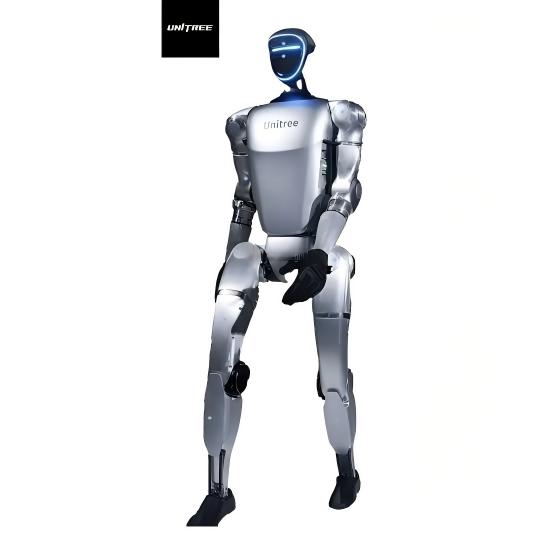
Over the past few years, humanoid robots have transitioned from laboratories and trade shows into sectors such as industrial manufacturing, logistics, commercial services, and academic research. As the costs of core components—including actuators, reducers, sensors, batteries, and computing platforms—have dropped, the price of the robots themselves has steadily declined.
Yet, the industry faces a more pragmatic question:
How much commercial value can these robots actually generate?
From the perspective of capital markets, the metrics used to evaluate humanoid robotics companies will likely shift from “technical demonstration capabilities” to more concrete indicators of commercialization.
For example, what is the actual shipment volume? How many units are purchased by genuine commercial clients? Do customers make repeat purchases? What is the manufacturing cost per unit? Is the average selling price steadily declining? Can gross margins be maintained? Can the company achieve scale in overseas markets? When will the company generate stable free cash flow?
While these questions may not have been the primary focus of capital markets in the past, their importance is rapidly increasing as more robotics companies enter the public markets.
Therefore, the adjustment in Unitree’s stock price does not signal the end of the robotics industry’s narrative; rather, it indicates that capital markets are beginning to demand evidence that this narrative is being realized.
4. Behind Unitree’s stock price volatility: The robotics industry is shifting from “storytelling” to “delivering results”
Viewed from a broader industry perspective, the significant volatility in Unitree’s stock price may carry implications that extend well beyond the company itself.
Over the past few years, humanoid robotics has been one of the hottest sectors in the global technology industry.
A multitude of companies—ranging from Figure AI, Tesla, and Agility Robotics to China’s Unitree Robotics, UBTECH, and AGIBOT—are accelerating their strategic deployments. Both public and private capital markets have steadily raised their expectations for the industry.
However, as an increasing number of robotics companies enter the mass production phase, the logic of industry competition is beginning to shift.
In the early stages, the race was about who could achieve the first technological breakthroughs; subsequently, it was about who could actually manufacture the robots. Now, as the industry enters the next phase, the competition will center on:
Who can produce robots at a lower cost while ensuring they generate sustained commercial value?
This signifies a transition in the robotics industry from a focus on “technological scarcity” to an emphasis on “commercialization capabilities.”
As one of the most representative companies in the robotics field, Unitree’s stock price movements offer valuable insights into the industry’s evolution.
If the initial trading-day price of 1,100 yuan reflected the capital market’s soaring imagination regarding the future potential of humanoid robots, the current price of 500 yuan suggests a search for a valuation anchor that aligns with the company’s actual operational data.
This does not mean the market has rejected humanoid robotics.
On the contrary, the capital market still recognizes the industry’s long-term growth potential; it has simply become more cautious about assigning a specific monetary value to that “future growth.”
For Unitree, the factors that will truly underpin its valuation in the next phase may no longer be product launches or technical demonstrations, but rather sustained shipment growth, large-scale orders, stable profitability, and broader commercial implementation.
For the robotics industry as a whole, this signals the arrival of a new era:
A shift from technological fervor to commercial pragmatism—moving from “who tells the best story about the future” to “who can actually deliver that future.”