
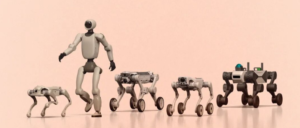
On September 8, 2026, Dynamic Creatures officially spun off from Boston Dynamics, announcing a strategic focus on sectors such as hospitality, entertainment, and theme parks. The company aims to develop robots capable of mobility, perception, and real-time interaction. By integrating robotic mobility, perception, adaptive behavior, and character design, the new company will explore applications specifically within the entertainment and hospitality industries. Notably, Dynamic Creatures has not completely severed ties with Boston Dynamics; instead, it continues to operate as a partner in the entertainment and hospitality sectors.

On the surface, this appears to be a standard business spin-off. However, when viewed alongside Hyundai Motor Group’s continued investment in Boston Dynamics and the fact that Atlas has entered a new phase of productization and large-scale commercial deployment, the move signals something more significant. The spin-off likely indicates a realignment of business boundaries: Boston Dynamics is concentrating resources on industrial robotics, Physical AI, and the commercialization of Atlas, while entrusting the exploration of vertical sectors like entertainment and hospitality to a more specialized team.
More importantly, this shift reflects a broader transformation within the humanoid robotics industry. Early competition centered on the robots’ inherent capabilities—focusing on metrics such as bipedal locomotion, dexterous manipulation, degrees of freedom, payload capacity, and general-purpose AI. As humanoid robots transition into the commercialization phase, the competitive focus is shifting from “how many tasks a robot can perform” to “in which scenarios a robot can create clear commercial value.” The industry is moving away from a race for general capabilities and toward scenario-specific specialization.
I. Why Did Boston Dynamics Choose This Moment to Spin Off Dynamic Creatures?
Although Dynamic Creatures and Boston Dynamics share a technological lineage, they target vastly different commercial markets. Atlas targets the manufacturing sector, focusing on tasks such as material handling, sorting, loading/unloading, and assembly in automotive plants; its core performance metrics are production efficiency, reliability, safety, and return on investment (ROI). In contrast, Dynamic Creatures targets sectors like hospitality, theme parks, retail, and entertainment, placing greater emphasis on human-robot interaction, character expression, behavioral performance, and user experience.
This distinction implies that while both business lines rely on foundational capabilities in mobility, perception, and AI, their business models differ significantly. Industrial robots require stable, closed-loop task execution integrated into production workflows, whereas entertainment robots must combine robotic capabilities with content, intellectual property (IP), and user experience. For a robotics company entering the stage of large-scale commercialization, separating these two types of business allows distinct teams to develop clearer product offerings and business models tailored to their respective markets.
The decision for Dynamic Creatures to spin off in 2026 is closely linked to the stage of development Boston Dynamics itself has reached. In recent years, Hyundai Motor Group has been continuously strengthening Boston Dynamics’ role within the Group’s robotics strategy. In early 2026, Hyundai announced its AI Robotics Strategy, integrating Boston Dynamics into the Group’s overall robotics industrial layout and planning to deploy the Atlas robot into manufacturing environments. Concurrently, Hyundai has tightened its control over Boston Dynamics and is planning robotics production capabilities in the United States. Plans indicate that Hyundai aims to establish an annual production capacity of 30,000 robots by 2028 and integrate Atlas into the U.S. manufacturing ecosystem.
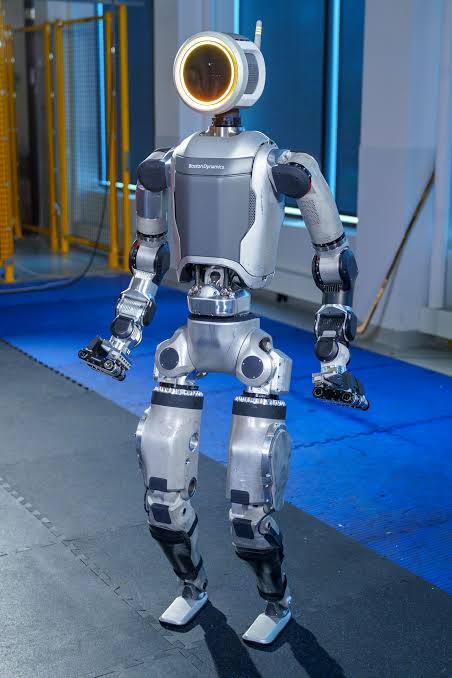
This signifies a pivotal shift in Boston Dynamics’ role. Previously, it was primarily known as a robotics company distinguished by advanced technology and R&D capabilities; now, it must shoulder the core task of industrializing robotics for Hyundai. The challenges facing Atlas have evolved beyond merely “executing complex movements” to encompass cost reduction, mass production, deployment in real-world factories, sustained operation, and ultimately, the generation of commercial returns.
Therefore, the spin-off of Dynamic Creatures can be viewed as a strategic focusing of Boston Dynamics’ efforts as Atlas enters a critical phase of industrialization. By retaining industrial humanoid robots within its core business while entrusting vertical applications—such as entertainment and hospitality—to an independent entity, and maintaining technological and commercial ties through partnerships, Boston Dynamics can concentrate more effectively on the development of industrial robots and Physical AI.
II. From Atlas to Dynamic Creatures: The Emergence of “Scenario-Based Differentiation” in Humanoid Robotics
Early technological competition in the humanoid robotics industry largely centered on “versatility.” Companies aimed to create robots capable of entering human work and living environments, utilizing human-designed tools, and performing the widest possible range of tasks. Consequently, a robot’s ability to walk, run, grasp objects, and execute complex maneuvers was often regarded as a key benchmark of technological prowess.
However, as commercialization progresses, end-user requirements are shifting. Automakers, for instance, do not necessarily demand high levels of versatility across all environments; instead, they prioritize robots that can reliably perform specific tasks at a cost lower than human labor or deliver significant gains in production efficiency. For businesses in sectors like hospitality and theme parks, the value of robots may lie in attracting visitors, enhancing interactive experiences, and creating novel forms of entertainment. Consequently, distinct product logics for humanoid robots are emerging based on specific use cases. The manufacturing sector prioritizes payload capacity, speed, reliability, safety, and ROI; the logistics industry focuses on the efficiency of material handling, picking, and sorting; the hospitality and entertainment sectors emphasize interaction capabilities, behavioral performance, and user experience; and home environments require robots with superior environmental understanding, dexterous manipulation, and the ability to operate autonomously for extended periods.
This market differentiation is already evident globally. Boston Dynamics is introducing Atlas to manufacturing; Agility Robotics is prioritizing Digit’s application in logistics; Apptronik is focusing on manufacturing and logistics; Figure views industrial application as a key commercialization pathway; while 1X concentrates on home and service environments. Meanwhile, Dynamic Creatures is extending robotic capabilities into the hospitality and entertainment sectors.
This suggests that the future humanoid robot industry is unlikely to adopt a market structure where a single “general-purpose robot” covers every scenario; instead, it will likely evolve into a landscape where different companies establish commercial footholds around specific use cases. While general-purpose capabilities remain important, commercial value will increasingly depend on a robot’s ability to integrate deeply with the workflows and requirements of specific industries.
III. Why might scenario specialization be a necessary stage for humanoid robot commercialization?
The greatest advantage of humanoid robots is their versatility, yet general-purpose capability alone does not equate to commercial value. For a business, a robot capable of performing dozens of tasks may still offer limited commercial value if it fails to execute any single task reliably or if the costs are prohibitive. Conversely, a robot that can consistently perform a specific task in a particular environment over the long term—thereby clearly reducing labor costs or boosting productivity—is far more likely to achieve a viable commercial model.
Therefore, scenario specialization may serve as a crucial pathway for humanoid robots to achieve large-scale commercialization. Take manufacturing, for instance: robots first enter relatively structured factory environments to handle tasks such as material transport, sorting, and machine loading/unloading. Companies can calculate operational efficiency, labor replacement costs, and the return on investment (ROI) based on these specific tasks. As the robots continue to operate, companies can gather vast amounts of real-world operational data to continuously refine the robots’ AI models and task-specific skills.
This creates a new data feedback loop: robots execute tasks, generate scenario-specific data, and optimize their models and skills, which in turn further improves task success rates and operational efficiency. As deployment scales up, robotics companies can accumulate increasing amounts of industry-specific data, thereby establishing new competitive barriers. Therefore, the core capabilities of future robotics companies may stem not only from mechanical structures and hardware performance but also from their understanding of specific industries, data accumulation, and the ability to develop scenario-specific skills.
The independence of Dynamic Creatures exemplifies this shift. In entertainment and hospitality settings, the challenge for robots is not merely “completing industrial tasks,” but interacting naturally with people, embodying distinct personas, and integrating seamlessly into specific commercial spaces. Consequently, the technological focus must expand beyond basic robotic mobility to encompass behavior generation, multimodal interaction, character design, and real-time responsiveness.
This implies a potential new competitive paradigm for humanoid robots: a general-purpose robotic chassis provides foundational capabilities, AI delivers general intelligence, while scenario-specific skills and data determine actual performance within a given industry. Specialization by scenario does not diminish a humanoid robot’s general-purpose capabilities; rather, it accelerates the conversion of those capabilities into commercial value through specialized applications.
IV. From “Scenario Specialization” to “General-Purpose Platformization”: How Will the Humanoid Robot Industry Evolve?
It is worth noting that scenario specialization does not mean humanoid robots will revert to being traditional, single-purpose robots. Instead, the industry is likely to adopt a model of “general-purpose chassis + general-purpose AI + specialized scenario skills.” The underlying hardware remains relatively standardized, while software, AI models, and skill modules are adapted to suit diverse environments such as manufacturing, logistics, hospitality, and the home.
Under this model, chassis manufacturers provide general capabilities for motion control, perception, and actuation; AI companies supply foundational models and intelligent capabilities; and industry-specific enterprises develop robot skills and solutions tailored to their sectors. Ultimately, the robot will evolve from a standalone product into a scalable platform adaptable to various scenarios.
The relationship between Dynamic Creatures and Boston Dynamics serves as an early example of this industrial division of labor. Boston Dynamics continues to advance robotic chassis, mobility, and industrial applications, while Dynamic Creatures focuses on developing scenario-specific products for the entertainment and hospitality sectors. Rather than severing ties due to their operational independence, the two have established a collaborative model combining “underlying technology platforms” with “vertical scenario applications.”
This model could well extend to other industries in the future. Chassis manufacturers need not enter every market segment directly; instead, they can rapidly expand their robots’ capabilities into new scenarios through open platforms, technical collaborations, or ecosystem partnerships. At the same time, companies focused on specific application scenarios need not develop a complete robot chassis from scratch; instead, they can leverage mature robotics platforms, allowing them to concentrate their resources on industry-specific requirements, software capabilities, and business models.
Therefore, the spin-off of Dynamic Creatures does not signal a “fragmentation” of the humanoid robot industry, but rather reflects its growing maturity. As humanoid robotics transitions from R&D to commercialization, the industry value chain is evolving from a focus on hardware competition alone toward a model defined by a division of labor across hardware, AI, skills, application scenarios, and ecosystems.
Looking ahead, the critical question for humanoid robot companies may no longer be simply “how many tasks can my robot perform,” but rather “in which scenario can my robot generate the greatest value, and how can that value be replicated at scale?” In this sense, the independence of Dynamic Creatures may be just the beginning—the humanoid robot industry is entering a new phase characterized by greater specialization, platform-based operations, and ecosystem integration.


1-300x168.png)