On May 8, NEOLIX, in collaboration with TELD and State Grid Qingdao Power Supply Company, officially launched the world’s first autonomous vehicle automatic charging and operation center, “TIDE-ISLAND No.1,” in Qingdao. The two sides also announced that TIDE-ISLANDs will be deployed in over 100 cities worldwide within three years. Supporting the charging network infrastructure, the center enables full-process automated operation and maintenance for hundreds of thousands of autonomous vehicles. The launch of TIDE-ISLAND represents a pivotal step for NEOLIX in completing its operational closed-loop system.
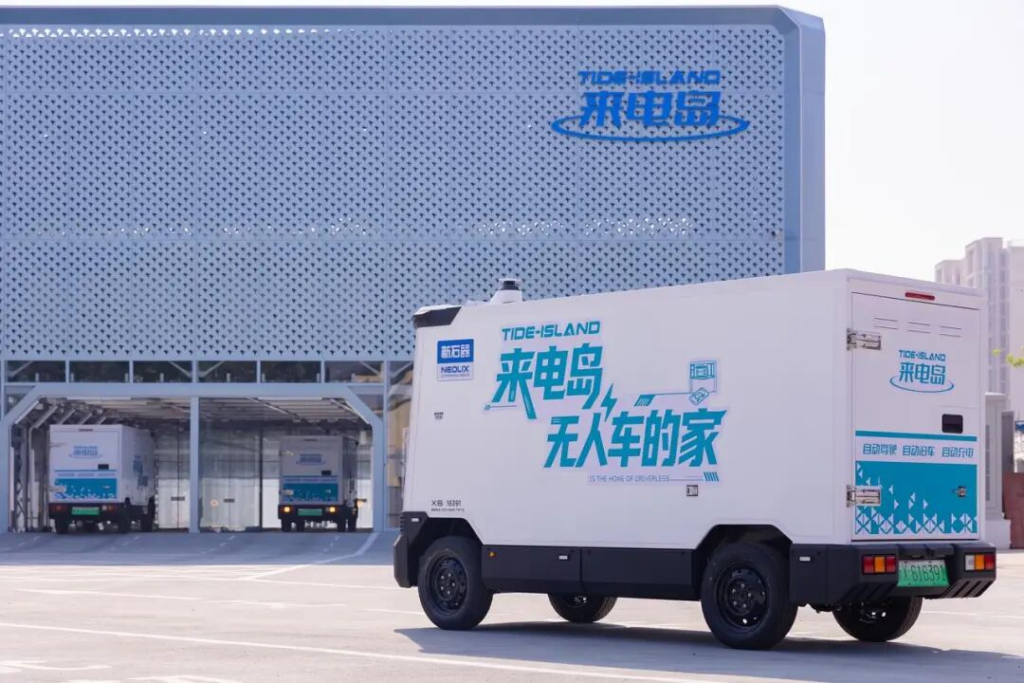
In addition to the NEOLIX, the New Strategy Low-speed Unmanned Media Platform also noted that as the industry transitions from the ‘technology validation phase’ to the ‘large-scale operation phase,’ leading domestic unmanned delivery vehicle players have been actively expanding their presence recently—making intensive moves in market penetration, capacity maintenance, vehicle production expansion, and infrastructure development.
I. The frenzied pursuit of “supply chain sovereignty”
The prerequisite for any celebration is having sufficient ingredients ready.
The timeline rewinds to March 13, 2026, when Zelos signed an exclusive contract with Hesai for 200,000 LiDAR units, while Seyond secured Zelos’ order for its primary forward radar on the same day. Subsequently, NEOLIX and RoboSense announced a deepened strategic partnership, locking in over 300,000 units. On March 16, Hesai further strengthened its collaboration with NEOLIX, while RoboSense promptly confirmed its continued deepening cooperation with Zelos. Within just four days, the two leading automakers and two major radar companies completed a series of strategic partnerships.
Behind this series of events lies the fierce competition among leading players for “supply chain sovereignty.”
As the industry enters a phase of large-scale operations, leading enterprises leverage exclusive partnerships and substantial locked-in orders to achieve dual objectives: first, they fortify their supply chain moat by transforming limited high-quality production capacity into “private resources,” thereby enhancing supply chain synergy; second, they exchange massive orders for significant cost reductions, continuously leveraging economies of scale to lower vehicle manufacturing costs.
A deeper consideration is that when NEOLIX, Zelos, and the radar giants form deep partnerships, the industry’s technological roadmap and cost benchmarks will solidify rapidly. For latecomers seeking entry, they must not only pursue technological leadership but also enhance production capacity and reduce costs—a challenge that grows exponentially.
II.The arms race in the production workshop
After addressing the ‘availability’ issue on the supply side, leading enterprises must also alleviate concerns about ‘insufficient capacity’ on the production side.
As orders surged from hundreds to thousands or even tens of thousands, industry leaders promptly launched an “arms race” within their production facilities.
The NEOLIX era continues to intensify its investments: Qingdao’s “Smart Driving Town” is taking shape, while Yangzhou’s production base with an annual capacity of 20,000 units is set to commence operations by the end of August, targeting the East China market. On April 26, Zelos’s Qufu production base officially commenced operations, marking a pivotal step in its smart equipment manufacturing strategy in southern Shandong. Meanwhile, Rino.ai has established a joint venture with SRM to create the world’s first RoboVan OEM, leveraging its mature commercial vehicle production line to rapidly bring automotive-grade autonomous vehicles to market.
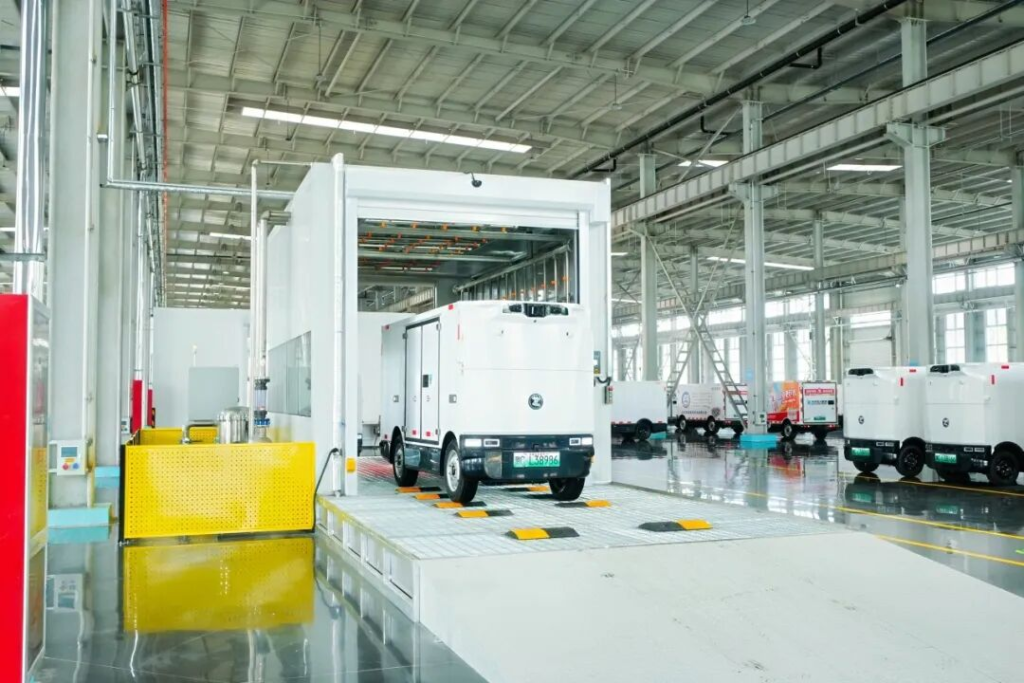
Zelos Qufu Production Base
It is clear that this is no longer merely an expansion of factory facilities, but rather a tangible demonstration by industry leaders investing substantial resources to confirm that ‘large-scale mass production’ has become the sole ticket to survival in the sector.
Notably, behind this wave of production expansion lies a deeper strategic rationale—the industry is fiercely competing for the automotive manufacturing expertise of original equipment manufacturers (OEMs).
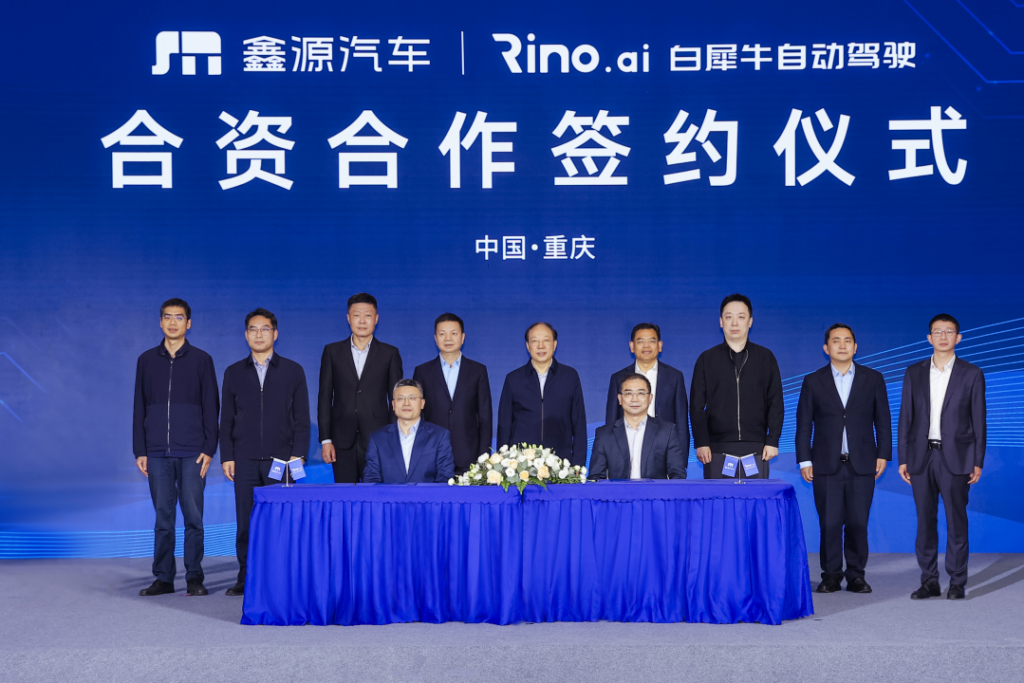
Rino.ai and SRM have established a joint venture company
Beyond the aforementioned case of Rino.ai partnering with SRM, other examples include NEOLIX collaborating with JAC and Zelos working with Dongfeng. These developments demonstrate that leading players are striving to adapt industrial-grade manufacturing standards to the logic of internet-based technologies. This convergence of “autonomous driving and vehicle manufacturing” serves not only to maximize production output but also to secure a strategic advantage in automotive-grade manufacturing, laying the groundwork for potential future “recovery of vehicle manufacturing rights.” Only by possessing automotive-grade production capabilities and compliance qualifications can manufacturers ensure that every vehicle produced meets rigorous standards during industry consolidation, thereby avoiding exclusion from market access.
III. The intense and stimulating process of “seizing territory”
The vehicle has been manufactured, and the roads are ready; now it’s time for the real battle to “seize territory.”
Recently, leading players have been making intensive moves in this sector: NEOLIX not only plans to deploy 10,000 vehicles in the UAE targeting the Middle East but has also obtained the first batch of road access licenses in Yiwu, with plans to deploy 2,000 autonomous vehicles citywide; almost simultaneously, Zelos secured 2,000 operational licenses in Hohhot in a single transaction, setting a national record for simultaneous issuance, with these vehicles covering the entire city; subsequently, according to Low-Speed Automated Driving Alliance (LSAD), NEOLIX and Rino.ai jointly won the bid for the “Low-Speed Connected Autonomous Freight Vehicle Procurement Project of Hui Zhi Xing Yuan (Shandong) Digital Intelligence Technology Co., Ltd.” which involves purchasing 2,000 medium-sized autonomous freight vehicles.
According to public information, the three companies—NEOLIX, Zelos, and Rino.ai—have collectively secured over 6,000 autonomous vehicle orders in a single month.
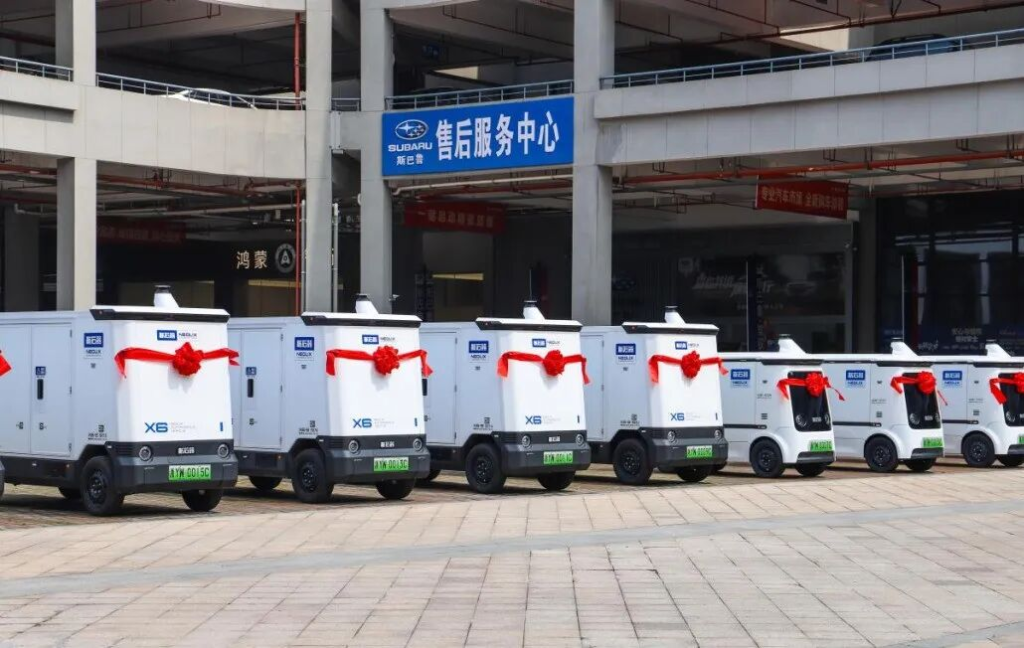
NEOLIX plans to deploy 2,000 autonomous vehicles across the entire Yiwu area
Why are they accelerating so aggressively in land acquisition? The answer is simple: unmanned delivery systems exhibit a powerful “network effect” —the first player to establish a robust network in a city gains significantly higher replacement costs and data barriers. Once a brand’s autonomous vehicles become part of a city’s logistics infrastructure, newcomers seeking to enter the same market will need to compete not only on technology but also on substantial commercial replacement costs and extended operational adaptation periods.
This strategy of “compensating production capacity for route rights and exchanging implementation for data” is rapidly raising the industry’s entry barriers, transforming initial scattered pilot projects into a pattern of metropolitan monopolies.
IV. A comprehensively expanded operational footprint
In the ensuing battle, those with vehicles but no place to operate them will grow increasingly anxious, while companies that possess operational sites and can afford to maintain their vehicles will emerge victorious.
A closer examination of the series of initiatives by leading enterprises reveals key insights: NEOLIX partnered with TELD to launch “TIDE-ISLAND No.1” and jointly established a specialized autonomous vehicle operation company, integrating automated charging, car washing, and maintenance into standardized operational infrastructure; Zelos underwent a deep restructuring with logistics giant Cainiao, leveraging its extensive business network and operational expertise to build new smart transportation infrastructure; Rino.ai not only collaborated with SRM on vehicle manufacturing but also established over 1,100 after-sales service and maintenance outlets nationwide, staffed with more than 7,500 professional technicians capable of providing round-the-clock fault diagnosis and maintenance services.
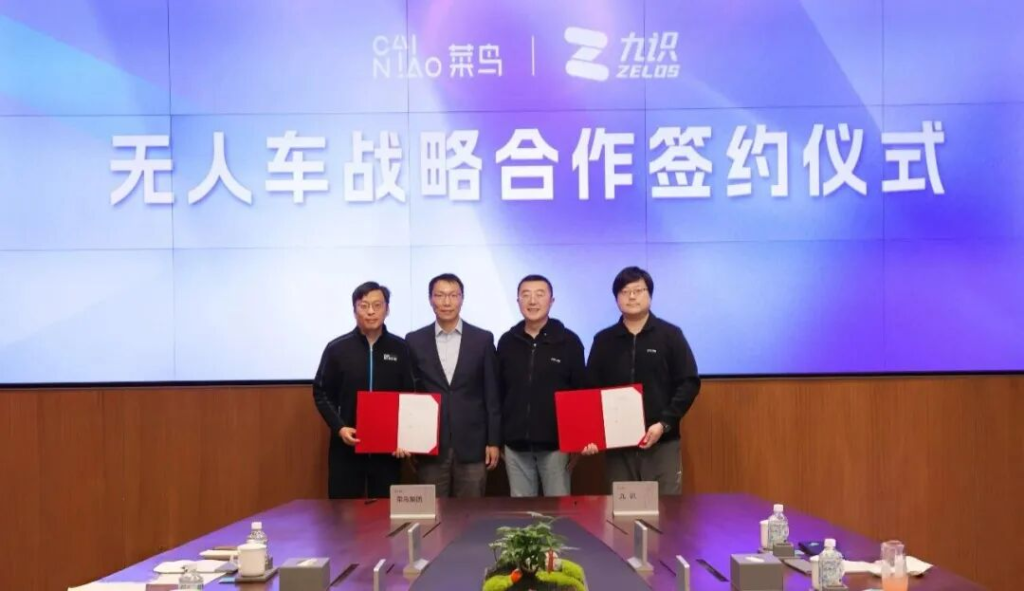
By the end of January 2026, Zelos and Cainiao had achieved deep integration
Today, the industry has entered a phase of large-scale deployment, where the most expensive component is no longer the vehicle itself, but the invisible ‘operational support’ behind it. In simple terms, technology determines whether autonomous vehicles can operate, while operational infrastructure determines their profitability.
Therefore, leading players are aggressively enhancing their operational service capabilities, essentially aiming to transform the originally labor-intensive and highly uncertain “dirty and tedious tasks” within operations into centralized, automated standard services. Whoever first establishes this low-cost operations and maintenance network holds the ultimate key to commercializing autonomous vehicles—after all, only by enabling vehicles to achieve full-process autonomous operations and maintenance can this business truly break free from the constraints of human labor and achieve exponential scale expansion.
Conclusion:
When we integrate these four dimensions, a clear picture of industry evolution emerges: from the covert battles in supply chains to the arms race in production workshops, from territorial encroachments on road rights to the comprehensive deployment of operational networks, unmanned delivery has long shed its initial phase of ‘technological novelty’ and has officially entered the deep waters of ‘systemic competition.’
While the three major players—NEOLIX, Zelos, and Rino.ai—currently lead in deployment scale, the ultimate outcome will never be a monopolistic dominance by a single entity, but rather a mutually beneficial ecosystem where each player leverages its strengths: some excel in vehicle manufacturing, others specialize in transportation capacity, some focus on energy supply, and still others are adept at urban governance. Thus, whoever possesses a more comprehensive ecosystem holds the “ballast stone” to navigate cyclical fluctuations.
In this context, how can we further break down scenario barriers and achieve genuine ecosystem integration?
From July 9 to 10, 2026, the 6th Low-Speed Autonomous Driving Scenario Ecosystem Collaboration and Expansion Conference 2026 will be held in Jinhua, Zhejiang. Industry stakeholders from across the supply chain will gather to engage in in-depth discussions on topics such as large-scale operations, ecosystem synergy, and cost reduction and efficiency improvement. Concurrent events include the Intelligent Sanitation: Technology Evaluation and Accreditation Competition of Municipal Cleaning Robots 2026, the 6th Low-Speed Autonomous Driving Industry G30 Summit 2026, and the 3rd High-Quality Low-Speed Autonomous Driving Supply Chain Exhibition (LSDS).
This is not merely a conference for analyzing industry trends, but also a practical platform for product testing, partner exploration, and collaborative development of a closed business ecosystem. In July, let us gather in Jinhua to witness how low-speed autonomous vehicles evolve from isolated advancements to coordinated fleet operations, collectively mapping out a trillion-dollar blueprint for low-speed autonomous driving.