In March 2026, a “blitzkrieg” of orders unfolded in the low-speed autonomous driving sector.
On March 13, Hesai announced an exclusive contract with Zelos for 200,000 LiDAR units, while Seyond also announced an exclusive order for Zelos’ forward-facing main LiDAR. On the same day, RoboSense announced a deepened strategic partnership with Neolix, securing orders for over 300,000 units. On March 16, Hesai again announced a deepened partnership with Neolix, while RoboSense announced a continued strengthening of its cooperation with Zelos.
In just four days, three major LiDAR giants and two leading autonomous vehicle manufacturers formed partnerships.
Behind these collaborations lies the preemptive positioning and securing of future market share by LiDAR giants on the eve of large-scale commercialization.
Furthermore, China Low-Speed Automated Driving Industry Alliance (LSAD) also observed that, as the low-speed autonomous driving industry enters a critical period of large-scale commercialization, in addition to accelerating the acquisition of market share, the supporting relationships between various parties in the industry chain are undergoing a fundamental restructuring: evolving from a traditional linear supply and demand model into a complex and interwoven “coopetition network.”
- Upstream Evolution: Mutually Beneficial Collaboration
As the industry moves towards large-scale application, upstream core components are the key to determining vehicle intelligence. Today, their meaning is evolving from “replaceable parts” to “deeply integrated organs” through deep collaboration among numerous companies.
Equity Investment Replaces “Purchase Contracts”
Here, the pure “supplier” role is disappearing.
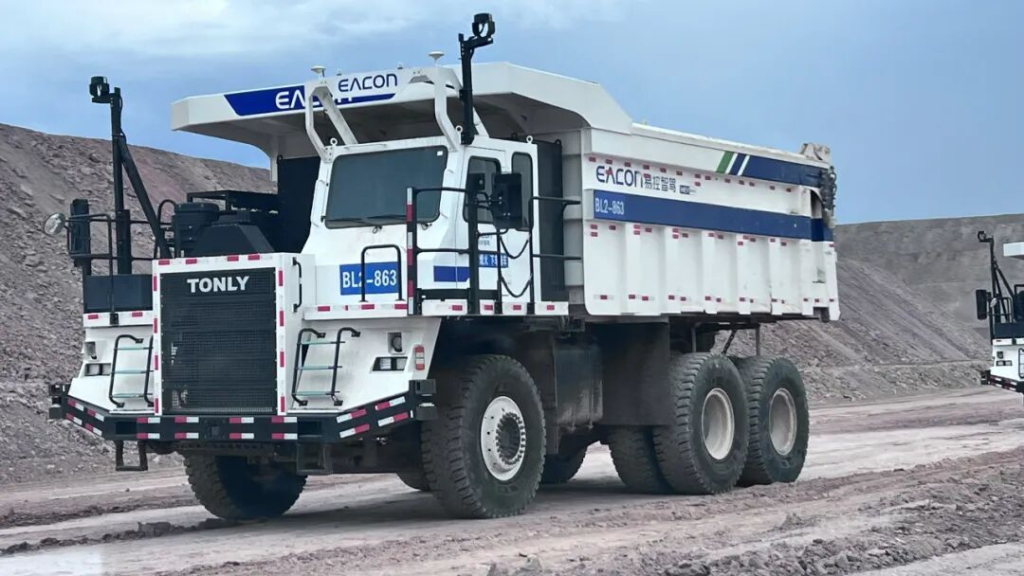
In June 2025, EACON completed a Series D financing round exceeding 400 million yuan, led by CATL Capital, with follow-on investments from FGVenture and other institutions. Subsequently, in October 2025, the two parties announced a joint development of next-generation dedicated batteries adapted to extreme conditions such as high altitude and cold weather, promoting the large-scale application of electric unmanned mining scenarios.
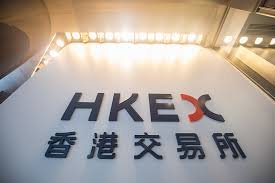
Similarly, in June 2025, Gotion and EVE simultaneously participated as cornerstone investors in the Hong Kong IPO of Geely’s ride-hailing platform, CaoCao, subscribing shares for HK$164 million and HK$100 million respectively. It is understood that Cao Cao Mobility has launched its autonomous driving platform and begun Robotaxi pilot programs, planning to launch L4 customized models by the end of 2026. This investment may be Gotion and EVE’s early positioning in the battery replacement and charging service market after the large-scale operation of Robotaxis.
“Joint technology research and development” is another way of binding partnerships. For example, BYD, through its subsidiary FinDreams Battery, collaborates with construction machinery giants and commercial vehicle giants such as XCMG, Sany, and FAW to directly develop dedicated batteries adapted to specific scenarios; the same applies in the chip industry, such as Horizon Robotics establishing joint laboratories with customers, deeply aligning its technology roadmap with customer needs.
“Packaged Solutions” Counter “Price Killers”
At the perception level, some LiDAR companies have chosen a different path: moving from the “openly priced” marketplace to the “value-bundled” world.
They not only sell LiDAR hardware to OEMs, but also collaborate deeply with algorithm companies, packaging high-performance LiDAR with perception algorithms trained on massive amounts of data to create a “ready-to-use” perception solution. For OEMs, this seemingly simplifies the supply chain, but in reality, it significantly increases replacement costs—replacing the LiDAR means the algorithm needs to be recalibrated, adapted, and verified, with hidden costs and time losses far exceeding the hardware price difference.
Overall, deep integration and alliances with upstream suppliers are not barriers, but rather an essential path for the industry to mature and services to stabilize. This deep collaboration can, to some extent, solve the problem of internal friction caused by low prices, thereby ensuring that components entering the market are optimally matched and verified, ultimately making the “basic foundation” of services more solid.
- Midstream Evolution: The “Catfish Effect” of “Dual Nature”
The role of midstream players is equally subtle. They are both “enablers” and potential “competitors.” However, for the industry, this “dual nature” has not torn the industry apart; instead, it has become a key catalyst driving rapid technology adoption and cost reduction.
Taking Desay SV as an example, its main business is as a top-tier automotive Tier 1 supplier, serving major global automakers for a long time, and it has a deep-rooted requirement for functional safety, reliability verification and mass production consistency.
When Desay SV applies this rigorous system to its own driverless vehicles and similarly empowers clients such as Neolix and Zelos, it is essentially setting a quantifiable quality benchmark for the entire unmanned delivery industry. This means that these standards, which were once strictly enforced only in high-end passenger vehicles, are becoming new entry permits in the field of low-speed autonomous driving through “hubs” like Desay SV.
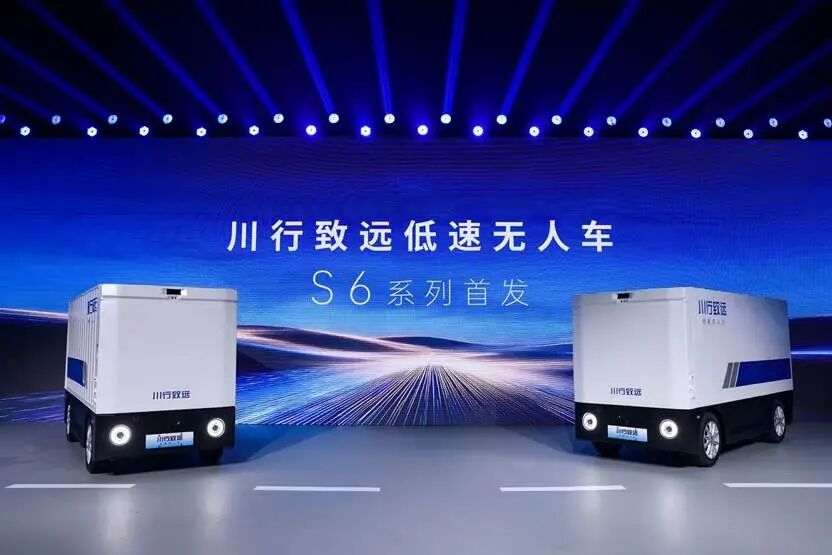
A similar example is MINIEYE. As a leading domestic provider of full-stack autonomous driving solutions, it provides turnkey solutions from perception and planning to control to multiple OEMs and autonomous vehicle brands. In September 2025, it also launched the “Bamboo” series of unmanned delivery vehicles.
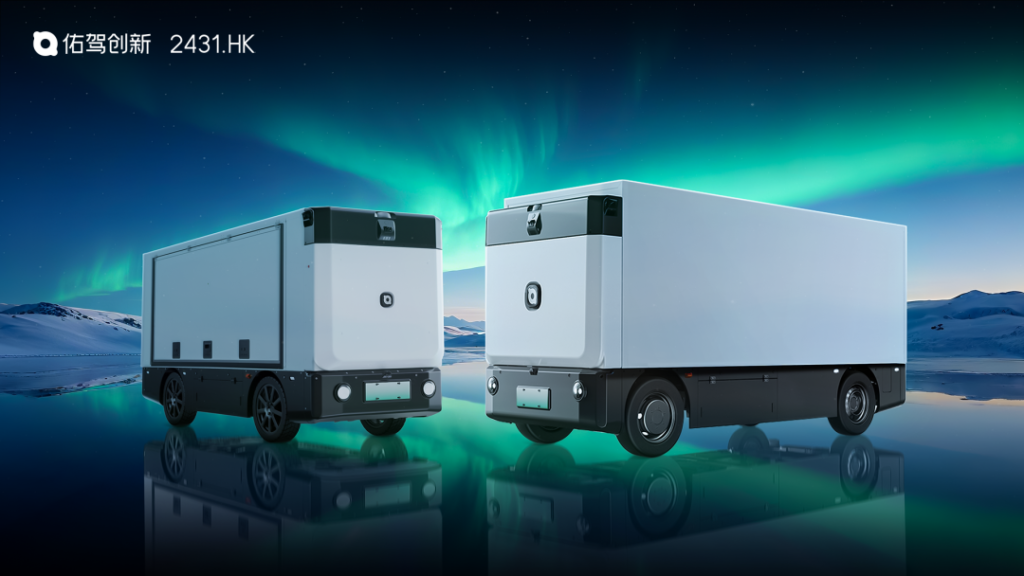
MINIEYE’s “self-validation and external empowerment” model will help accelerate technology iteration, shorten the break-in period for commercial deployment, and thus solve the “long tail problem.” At the same time, the massive amount of real operational data generated by its own fleet can be used to train more powerful perception models and planning algorithms. Through technology output, it indirectly improves the safety redundancy and scenario adaptability of the entire industry, reduces the trial and error costs of the entire industry, and thus promotes large-scale implementation.
It is foreseeable that as low-speed autonomous vehicles move beyond the initial period of rapid, unregulated growth and enter a critical juncture of large-scale commercialization, the entry of these “automotive-grade players” with deep automotive industry backgrounds will bring not only competition but also a “catfish effect” driving industry-wide upgrades. They integrate the “agile iteration” of consumer electronics with the “reliability first” of the automotive industry, providing the industry with scarce certainty.
- Downstream Integration: Completing the Service Loop by “Piecing Together” Capabilities
Downstream is the “last mile” for realizing the value of low-speed autonomous vehicles. Here, the paths of autonomous vehicle brands, traditional OEMs, and application giants are moving from diverging to converging, jointly drawing a complete “capability map.”
Autonomous vehicle brands like Neolix and Zelos have generally opted for a light-asset model of “core self-developed technology + OEM manufacturing.” They firmly control autonomous driving algorithms, vehicle control logic, and scenario data, building technological barriers, while outsourcing heavy-asset aspects such as chassis manufacturing and final assembly to established OEMs like Geely CV, Dongfeng Special Vehicles, and JAC, producing to order. The essence of this model lies in leveraging minimal capital expenditure to achieve the fastest possible large-scale deployment.
At the same time, in recent years, the upstream and downstream of the industrial chain have been undergoing a crucial “change of course”.
On one hand, traditional OEMs such as Xiamen King Long, Chery, and FAW Jiefang, leveraging their strong advantages in vehicle engineering, supply chain management, and large-scale production, have aggressively entered the unmanned delivery market. Their products often possess inherent advantages in reliability, consistency, and cost control. Their entry not only brings automotive-grade products to the industry but also a mature quality management system and cost control model, injecting crucial certainty into the industry’s large-scale implementation.
On the other hand, as the ultimate payers, scenario giants like JD.com, Meituan, and Cainiao are transforming from “users” to “definitive creators.” Through self-development, investment, or deep integration, they are deeply embedding autonomous vehicles into their own business ecosystems. JDL’ autonomous light trucks, Meituan’s “Magic Bag” series, and the integration of Cainiao with Zelos Intelligence all point to the same goal: to make vehicles no longer just externally purchased tools, but rather organic extensions and real-time data nodes of their own intelligent logistics networks. Using massive orders and complex scenarios as a whetstone, they are directly defining the operational efficiency, cost thresholds, and user requirements that vehicles must meet.
This seemingly divergent “lane change” is actually an industry on the eve of explosive growth, bringing together the most technically savvy, manufacturing-savvy, and scenario-savvy individuals to sit at the same table and jointly launch a “saturation-scale exploration” towards the same goal. Competition is no longer a race along a single path, but a symphony of the entire ecosystem.
Conclusion:
The competition and cooperation in the low-speed autonomous vehicle supply chain is a prelude to the evolution of all hard-tech industries in China. It heralds the end of the era of going it alone and the beginning of an era of ecological survival through strategic alliances and dynamic cooperation.
Therefore, for every player involved, the ultimate question is no longer “whether the technology is superior” or “whether there are enough orders,” but …
Are you building an empire, or sharpening a sword that even an empire needs?
Or are you merely an unnamed speck of dust on the path of empire expansion?
To further understand the development trends and competitive landscape of low-speed autonomous vehicle technology, the 4th Conference on the Promotion of the Commercial Application of Unmanned Cleaning & Sanitation Robots 2026 will be held by China Low-speed Automated Driving Industry Alliance (LSAD) at Shanghai New International Expo Center on April 1, 2026. Stay tuned!