
Recently, OpenClaw has become the hottest topic in the AI community.
The “lobster” referred to here is not the crayfish served on the dinner table, but rather the open-source AI agent OpenClaw. Because its icon resembles a red lobster, the process of deploying and debugging it has been aptly described by netizens as “lobster raising.”

In just a few months, this “lobster” has rapidly transformed from a niche toy for geeks and developers into a new tool eagerly sought after by ordinary people: some pay for installation services, others line up for free on-site installation, and even retirees and children have joined the installation queues.
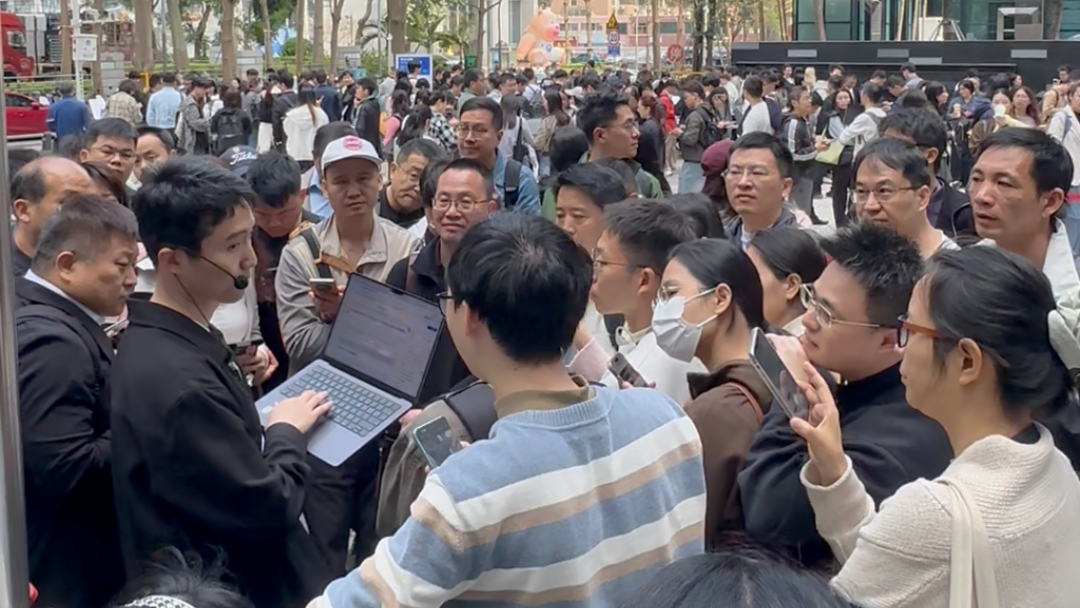
Image: Hundreds of people lined up outside Tencent Building in Shenzhen to install “lobster”
A number of contradictory phenomena have emerged in China on “lobster”:
On one hand, the Ministry of Industry and Information Technology and related monitoring platforms are warning that agents like OpenClaw, which possess execution permissions, pose privacy and system security risks.
On the other hand, cities like Longgang in Shenzhen, Wuxi, Hefei, and Suzhou are releasing support measures, proposing subsidies, computing power, and office space support, even incorporating the “OpenClaw ecosystem” and “one-person companies” into policy terminology.
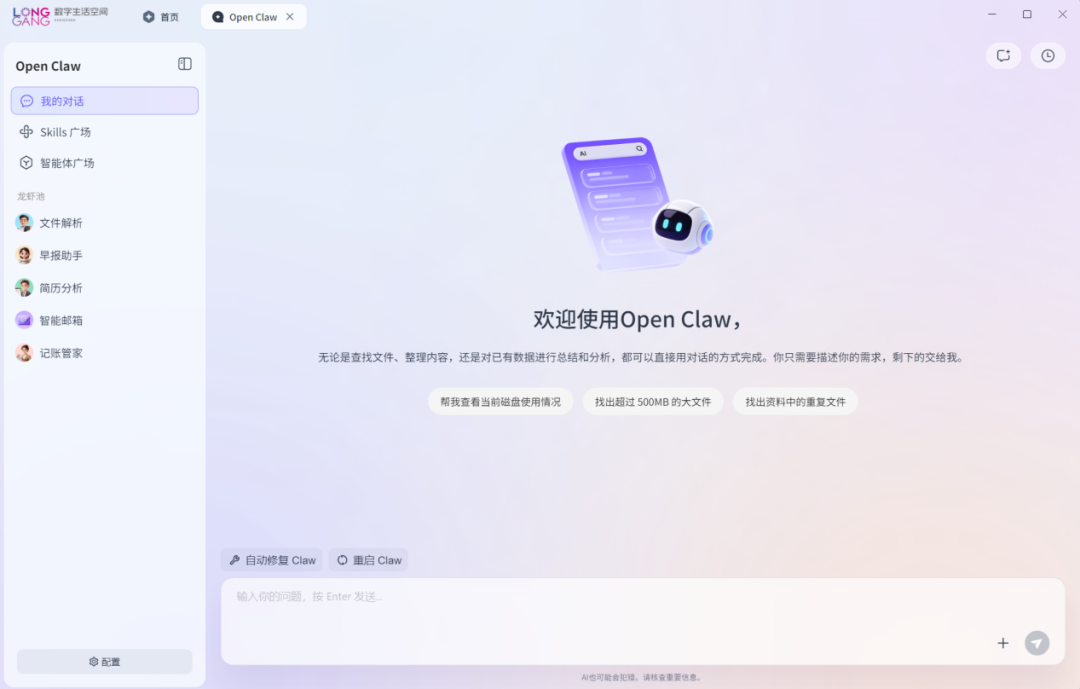
Image: Longgang District integrating OpenClaw’s core capabilities into local hardware
Meanwhile, platform companies like Tencent are rapidly following suit, attempting to integrate “lobster” into their ecosystems; numerous services have emerged in the market offering on-site “lobster installation,” remote installation, and hands-on “lobster-raising” tutorials; and some robotics companies and developers are also actively installing “lobster” into their machines.
This scene is reminiscent of DeepSeek in early 2025. They all followed a similar path: first becoming wildly popular among developers, then being propelled into a social issue by capital, government, platform companies, and entrepreneurs.
However, unlike DeepSeek, this time the focus isn’t on the model itself, but on a new technological form—AI Agent.
When Robots Start “Lobster Raising”
Some robotics companies and individual developers have begun chasing this trend, integrating OpenClaw into robot dogs, humanoid robots, and robotic arms, attempting to give this “digital lobster” a body. According to online information, a developer has already integrated OpenClaw into Unitree G1.
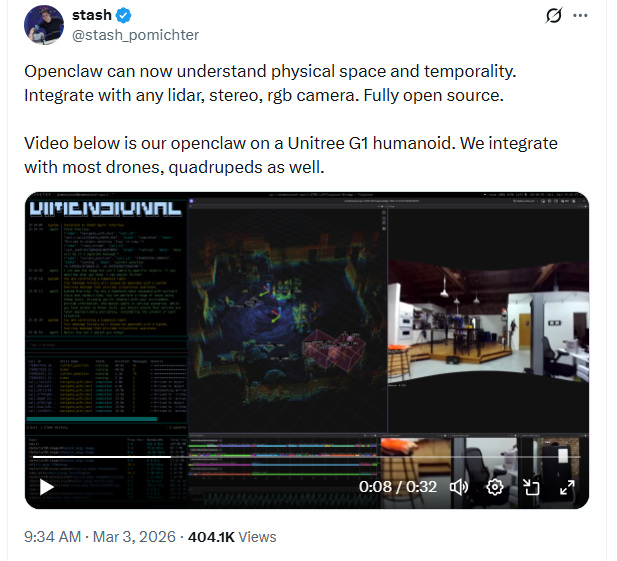
So, what’s the significance of integrating a “lobster” into a robot? There is significance, and it’s not insignificant.
The robotics industry has long suffered from a significant weakness: while hardware capabilities, motion control, and visual perception are improving, robots’ understanding of complex tasks and their ability to interact with natural language remain relatively limited. The vast majority of robots still rely on pre-set processes, fixed commands, and limited scenarios.
The value of agents like OpenClaw lies in providing robots with a layer of “universal task interface.” Humans can now speak to robots in more nuanced ways, such as “grab object A” or “patrol the living room” or “bring the cup from the left.”
An agent breaks down the natural language into task steps and then calls upon the robot’s body, vision system, and control interface. Once this structure is operational, the robot moves beyond being merely an “automated device” and becomes more like an “execution terminal that can be scheduled by natural language.”
From an industry perspective, the real value of this lies not in the eye-catching nature of the “lobster-controlled robot,” but in its revelation of an emerging technology stack: a large model handles understanding, an agent handles planning and scheduling, and the robot handles perception and execution.
Whoever can seamlessly integrate these three layers will have a greater chance of defining the gateway to the next generation of embodied intelligence systems.