Amidst the surge in the global chip industry driven by the artificial intelligence boom, and fueled by the soaring market capitalization of global memory giants Samsung Electronics and SK Hynix, the South Korean stock market has steadily climbed to $5.04 trillion, ranking as the world’s sixth-largest capital market. This recent surge in the South Korean stock market is not merely a speculative frenzy, but rather a reflection of the market’s anticipation of the large-scale development of its humanoid robot industry. Currently, the South Korean KOSPI index continues to rise, with the technology and humanoid robot sectors leading the market gains, directly driving up valuations across the industry chain, improving the financing environment, increasing R&D investment, and accelerating the implementation of application scenarios.
Leveraging its solid industrial foundation in semiconductors, automobiles, and high-end electronics manufacturing, coupled with the comprehensive collaborative strategies of the three major conglomerates—Samsung, Hyundai, and LG—South Korea has forged a unique development path of “precision manufacturing + internal closed-loop scenarios + full-chain supply chain integration,” rapidly emerging as the third major player in the global humanoid robot industry, outside of China and the US, and firmly establishing itself in the core of the global industry.
I. Stock Market Surge Reflects Capital’s Confirmation of the Humanoid Robot Industry Cycle
The core logic behind the recent surge in the South Korean stock market is global capital’s recognition of the long-term value of the humanoid intelligence sector. Currently, the global AI industry is gradually shifting its focus from computing hardware to end-user applications. Humanoid robots, as the core carriers for the implementation of physical AI, have become the core theme of intelligent manufacturing in the next decade, continuously increasing the certainty of industry development. The significant rise in the stock prices of LG Electronics, Hyundai Motor, and Samsung-affiliated companies, along with the continued rise in the entire robot industry chain, fully confirms the market’s consensus: humanoid robots have moved beyond the conceptual stage and entered a critical cycle of industrialization.
South Korea possesses unique industrial advantages for developing humanoid robots: it boasts a world-leading density of manufacturing robots, a mature automotive and electronics supply chain, stable and robust precision machining technology, and the closed-loop implementation scenarios inherent in its conglomerate system, constructing a unique industrial foundation. The stock market boom is merely an external manifestation; the core essence is that global capital has begun to recognize and invest in South Korea’s ability to industrialize humanoid robots.
The booming capital market has opened up efficient financing channels for South Korean robotics companies, propelling the industry from the laboratory R&D stage into the crucial stage of mass production preparation. Leading technology companies continue to receive capital injections, with primary market investment highly focused on humanoid robot systems, core components, and physical AI platforms.
The financing momentum of leading companies is particularly strong. Samsung Electronics has been continuously increasing its investment in the humanoid robot sector since 2023, investing 86.8 billion won that year to acquire a 14.7% stake in Rainbow Robotics; by the end of 2024, it had further invested 267 billion won, increasing its stake to 35% and becoming the largest shareholder, fully committing to the R&D of core humanoid robot technologies. WIRobotics‘ financing growth is a microcosm of the industry; after completing a 13 billion won Series A financing in March 2024, it completed a 95 billion won (approximately US$68 million) Series B financing in May 2026, a more than sevenfold increase in financing size.
Driven by leading companies, South Korean small and medium-sized robot enterprises with core technological barriers have significantly shortened their financing cycles, and the industry has fully entered a virtuous cycle of “sufficient investment in R&D and bold expansion of production capacity.” Capital investment is no longer limited to robot manufacturing, but is gradually penetrating upstream core links such as servo systems, reducers, high-precision sensors, robot data platforms, and embodied intelligent models, continuously improving the entire industry chain ecosystem.
In May 2026, Config, a South Korean robot data infrastructure company, secured $27 million in seed funding, receiving support from top industrial capital firms such as Samsung Ventures, ZER01NE Ventures under Hyundai Motor, and LG Tech Ventures, focusing on building a robot data acquisition and AI training platform. Since 2025, many korean companies focusing on precision motion control, intelligent sensors, and robot software have also successively received support from industrial capital and government funds, resulting in a complete upgrade of the industry’s investment logic.
Overall, the South Korean robot industry has completed an iteration of its investment logic, shifting from a traditional single focus on industrial robots and automation equipment to a three-dimensional ecosystem layout of “humanoid robot assembly + core components + physical AI + data platform.” A complete industrial innovation system is rapidly taking shape, significantly strengthening South Korea’s competitive advantage in the global humanoid robot market. Simultaneously, industry resources are rapidly concentrating on leading companies. Hyundai Motor acquired Boston Dynamics, addressing its shortcomings in bipedal motion control and industrial application algorithms; Samsung continued to increase its stake in Rainbow Robotics, integrating core technologies for robot joints and motion control. The scale and maturity of the industry are becoming increasingly apparent.
II. The Three Major Chaebols’ Differentiated Strategies Construct the Core Framework of South Korea’s Humanoid Robot Industry
South Korea’s humanoid robot industry, led by chaebols, has developed a distinctive characteristic of “scenario-first, mass-production-oriented, and internally collaborative,” differentiating itself from the development paths of the US and China. Samsung, Hyundai, and LG, the three giants, have strategically positioned themselves and each plays a specific role, building the complete framework of South Korea’s humanoid robot industry.
Hyundai Motor focuses on mass production and deployment, with a clear pace and well-defined goals. Leveraging its acquired Boston Dynamics Atlas platform, Hyundai is focusing on large-scale industrial applications, planning to deploy over 25,000 Atlas humanoid robots in Hyundai and Kia’s global manufacturing plants, covering core production processes such as parts sorting, assembly, and handling. Simultaneously, in collaboration with Hyundai Mobis, core components such as robot actuators and joints are provided to create a closed-loop ecosystem of “vehicle manufacturing + robot application + core supply chain”. Currently, delivery, security, and inspection robots at its Seoul headquarters have achieved routine operation, and their adaptability to various scenarios has been fully validated.
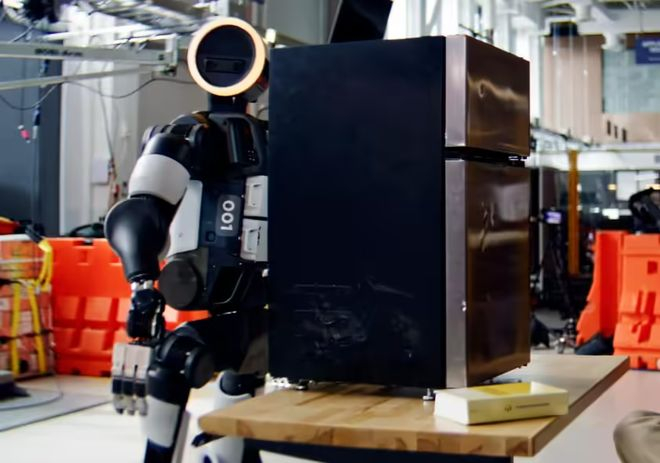
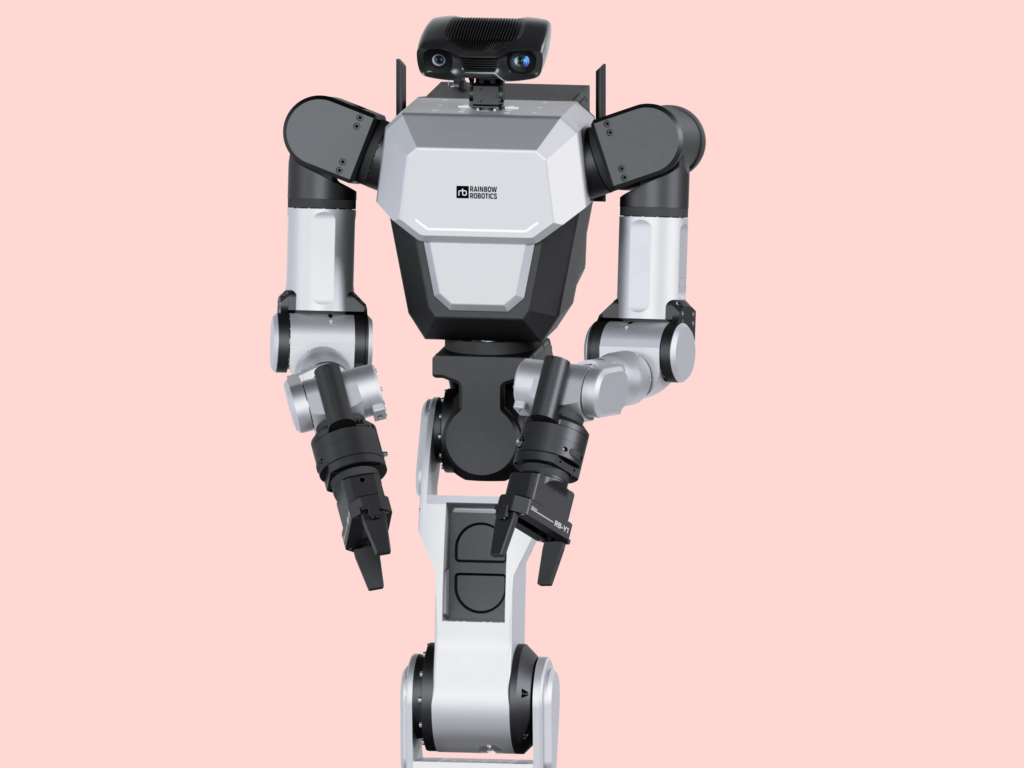
Samsung focuses on strengthening its technological and hardware foundation, deeply cultivating high-end industrial scenarios. Leveraging Rainbow Robotics, it is developing dual-arm and humanoid robot models, focusing on high-precision production line automation scenarios such as semiconductors and display panels. Capitalizing on its technological accumulation in chips, intelligent sensing, and storage, it follows a stable “hardware-based, scenario-driven” approach, prioritizing the stability, reliability, and mass production compatibility of its robot products, focusing on the high-end industrial manufacturing sector.
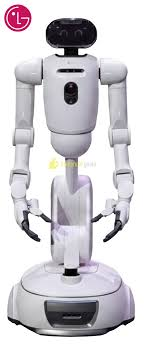
LG emphasizes scenario expansion, deeply cultivating the home and commercial service sectors, defining 2026 as the first year of its robots. Leveraging its self-developed and mass-produced AXIUM actuators, the company solidified its core component capabilities and launched the CLOiD wheeled humanoid service robot at CES 2026. Equipped with 7-DOF dual arms and a five-fingered dexterous hand, this product utilizes independently developed navigation technology to achieve autonomous indoor movement and complete a full range of household chores, including cooking and tidying. Simultaneously, it collaborates with LG Innotek sensors, LG new energy power batteries, and the ThinQ smart home system to achieve full-industry chain synergy. Building on years of experience in the home appliance industry, it has successfully expanded into the service robot field, rapidly deploying its technology in civilian applications.
In short, Hyundai focuses on mass production, Samsung solidifies its hardware technology foundation, and LG expands into civilian applications. These three conglomerates complement each other and work synergistically to build the core competitiveness of South Korea’s humanoid robot industry.
III. Breakthroughs in Core Components Lead to Continuous Restructuring of Industry Chain Value
From an industrialization perspective, in the early stages of humanoid robot deployment, core components are the first link to realize market value. South Korea has already established a mature domestic supply system in this field, giving it a significant advantage.
Currently, South Korea boasts leading companies in key core component areas such as robot actuators, servo motors, precision reducers, encoders, and torque sensors, achieving mass production and supply. LG AXIUM and Hyundai Mobis focus on the large-scale production of robot actuators; SPG precision reducers have successfully entered the humanoid robot supply chain; RS Automation has achieved domestic substitution for servo systems and encoders; and LG Innotek’s force control and tactile sensors have completed product iterations and been put into application.
These companies, originally deeply rooted in the automotive, industrial control, and consumer electronics sectors and possessing mature precision manufacturing capabilities, are now rapidly shifting towards customized R&D and production of humanoid robots. This signifies that South Korea’s humanoid robot industry has officially moved beyond the single-sample development stage and fully entered the stage of large-scale supply chain preparation. The maturity of core components has laid a crucial foundation for the large-scale mass production and deployment of humanoid robots.
IV. Pragmatic Acceleration of Commercialization, Shifting from Internal Closed-Loop to External Openness
Driven by continuous capital investment and technological iteration, the commercialization process of humanoid robots in South Korea is steadily accelerating, with a pragmatic, clear, and highly replicable implementation path.
Industrial manufacturing is its core application scenario. Hyundai’s automotive factories and Samsung’s semiconductor production lines have been among the first to deploy robots, fully validating the practicality and stability of humanoid robots in industrial scenarios such as assembly, inspection, and material handling. Simultaneously, applications in logistics warehousing, industrial parks, and commercial services are also progressing. Projects such as Hyundai’s Glovis smart warehousing and robot delivery at its Seoul headquarters have entered the testing and optimization phase. In the home service scenario, the focus is on small-scale pilot verification, continuously optimizing product safety and user experience, and steadily advancing the deployment pace.
Compared to the “technological showmanship” of the global market, the core advantage of South Korea’s humanoid robot industry lies in its strong deployment and large-scale replication capabilities. It emphasizes highly reliable and stable industrial-grade products, aligning with the actual pace of industrial commercialization, resulting in lower tolerance for error and less industrialization risk.
V. In the Context of Global Differentiated Competition, South Korea Is Building a Third Pole in the Industry
Currently, the global humanoid robot industry has formed a stable pattern of differentiated competition among China, the US, and South Korea. The US focuses on fundamental algorithms and cutting-edge technological innovation, leading the way in underlying technology research and development; China leverages its complete supply chain and cost advantages to rapidly achieve large-scale product mass production; while South Korea avoids simple technological competition and cost wars, focusing on its strengths, using precision manufacturing capabilities and conglomerate-based integration as core barriers to target high-value-added high-end industrial and commercial markets, occupying a unique global industrial ecosystem position.
However, South Korea’s humanoid robot industry still faces multiple real risks and challenges. The industry as a whole is still in the early stages of commercialization, with high product production costs, a mature profit model that has not yet been fully established, and large-scale adoption still requiring long-term development. At the same time, capital market valuations are somewhat premature, and the short-term volatility risks brought about by speculative hype cannot be ignored. Furthermore, Chinese companies are rapidly catching up in supply chain integration and mass production efficiency, while the US continues to lead in underlying AI technology research and development, leaving South Korea facing competitive pressure from both sides, and increasing the difficulty of technological iteration and application expansion.
Capital can accelerate the process of industrial development, but it cannot overturn the objective laws of industrial development. The technological maturity, cost reduction, application validation, and successful business model development of humanoid robots still require long-term technological accumulation and market refinement.
Conclusion
The recent surge in the South Korean stock market has injected strong capital momentum into the humanoid robot industry, comprehensively promoting industry R&D innovation, supply chain improvement, and accelerated application implementation. Relying on a solid foundation in precision manufacturing, a complete industrial chain, and the synergistic support of the three major conglomerates, South Korea has forged a pragmatic and stable industrialization path centered on mass production. In the future, with continuous technological iteration and the expansion of commercial applications, South Korea will continue to solidify its position as the third pole in the global humanoid robot industry, becoming an indispensable core force in the global arena.
On June 25, the “3rd Embodied Humanoid Robot Scenario Application Expansion Conference 2026” will be held in Hangzhou, bringing together hundreds of humanoid robot integrators and showcase more than 50 real-world application cases of humanoid robots, helping the industry quickly identify scenario needs and business opportunities, and promoting the transformation of the industry from technological exploration to practical application.
Whether you are a technology provider, integrator, or scenario demander, this conference will offer the most practical information and direct cooperation opportunities. You can gain a direct understanding of the latest industry application cases, grasp the trend of scenario expansion, and also communicate face-to-face with hundreds of integrators to find the best match between technology, business, and projects. The humanoid robot industry needs more than just technology demonstrations and theoretical sharing; it needs an integrator conference that can be implemented and promote cooperation. The 3rd Embodied Humanoid Robot Scenario Application Expansion Conference & the First 100-Person Meeting for Integrators 2026 will be a significant milestone for this industry.
For agenda and registration, please click https://luma.com/qgx5g1em.