Capital interest in the humanoid robot sector is spreading from complete robots to more specialized core components.
Over the past year, industry discourse has largely focused on the “brain,” the “body,” and “real-world application scenarios.” However, as humanoid robots transition from stage demonstrations to actual environments—such as factories, warehouses, and commercial service settings—the ability of a robot’s “hand” to perform stable grasping, precise manipulation, and sustained operation has become a critical factor in determining whether the robot can truly get the job done.
It is against this backdrop that the market for dexterous hands has rapidly heated up. Based on publicly available financing and valuation data, at least four unicorn companies have emerged in China within the broad field of dexterous hands and dexterous manipulation: Linkerbot, PaXini, BrainCo, and AGILINK.
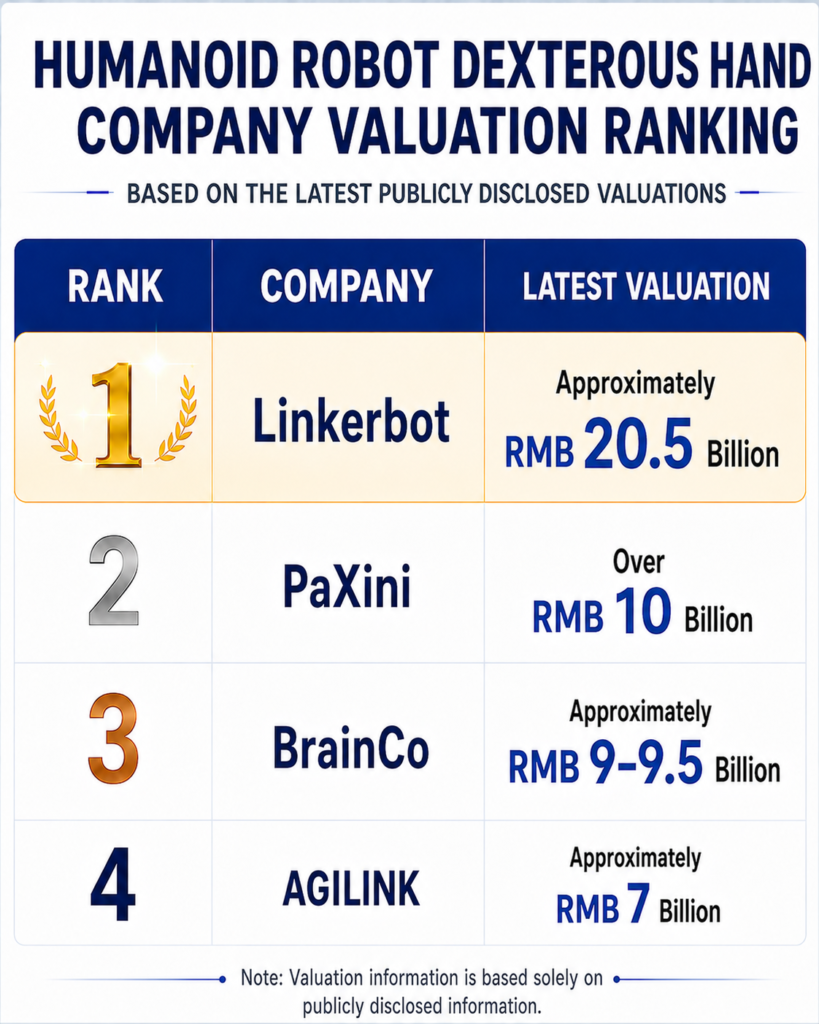
AI-generated image
Among them, Linkerbot currently commands the highest valuation and the most market attention. Public records indicate that its valuation following the B+ funding round reached approximately $3 billion (roughly RMB 20.5 billion), with plans to target a valuation of around $6 billion in the next round. As a company specializing in high-degree-of-freedom dexterous hands, Linkerbot’s narrative extends well beyond the hardware itself. On one hand, it is driving down costs through in-house development of core components and mass production; on the other, it aims to build a closed-loop ecosystem comprising “hardware, data, and skill services” based on real-world manipulation data, skill libraries, and model capabilities.
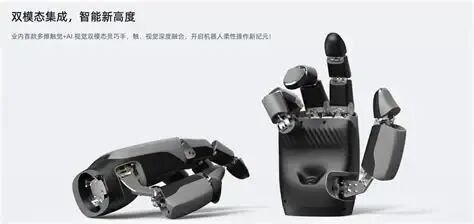
PaXini has taken a different approach, entering the market through tactile sensing technology. In March 2026, the company completed a Series B funding round exceeding RMB 1 billion, pushing its valuation past the RMB 10 billion mark. Compared to traditional dexterous hand manufacturers, PaXini is defined primarily by its focus on “tactile sensing.” To perform precise manipulation, a robot needs more than just visual recognition; it must also sense contact force, slippage, deformation, and feedback. Tactile sensors, tactile-enabled dexterous hands, embodied data acquisition equipment, and model capabilities form the core of PaXini’s potential for future growth.
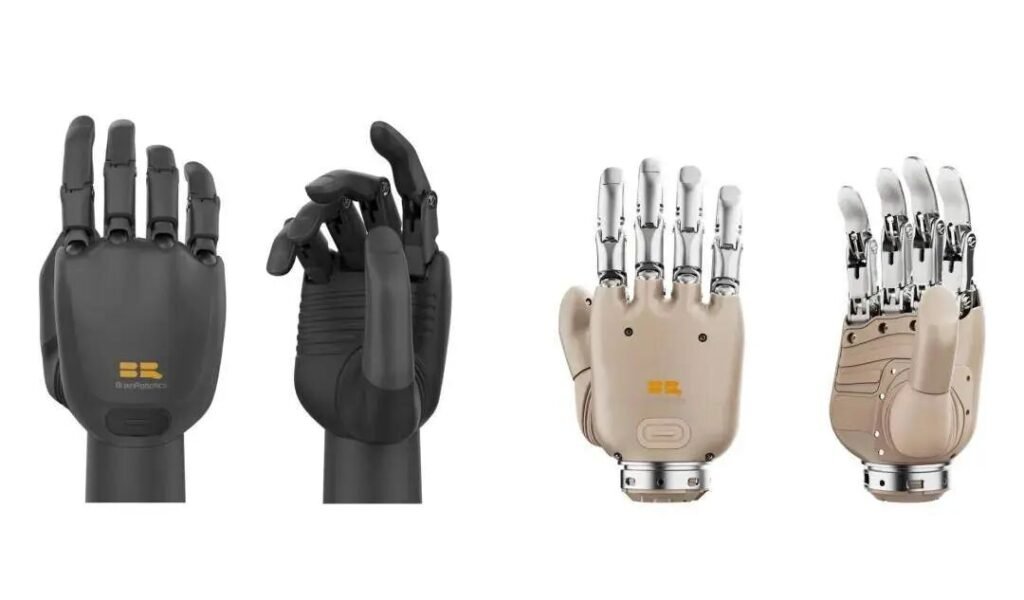
BrainCo has followed a more unique path. It started with non-invasive brain-computer interface (BCI) technology, with early products focused on areas such as intelligent bionic hands, rehabilitation equipment, and consumer-grade brain-computer interaction devices. In early 2026, BrainCo secured approximately RMB 2 billion in financing, achieving a post-money valuation exceeding $1.3 billion. Although not a typical supplier of dexterous hands for humanoid robots, the company’s expertise in bionic hands, neural signal decoding, human-machine interaction, and rehabilitation applications has established it as a key player in the broader field of dexterous manipulation.
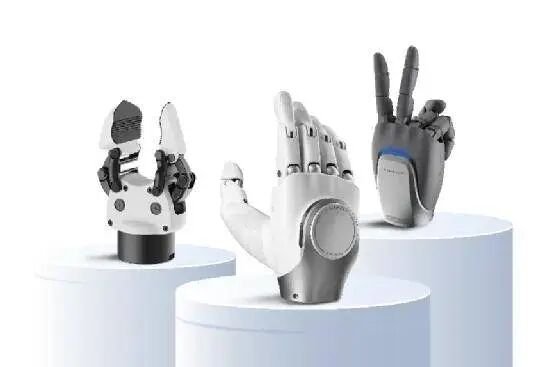
AGILINK stands out as the fastest-moving newcomer in the current wave of enthusiasm for dexterous hands. Spun off from AGIBOT and established in January 2026, the company closed a financing round worth RMB hundreds of millions by May, pushing its valuation past the $1 billion mark. For the industry, AGILINK’s emergence sends a clear signal: manufacturers of complete robots are re-evaluating the strategic value of dexterous hands. As dexterous hands evolve from mere components into entities capable of independent financing, valuation, and market engagement, the division of labor across the supply chain is shifting accordingly.
Why have dexterous hands suddenly become so valuable?
The answer lies primarily on the demand side. For humanoid robots to operate in real-world environments, they must perform tasks such as material handling, sorting, assembly, opening doors, driving screws, and manipulating soft objects. While these actions may appear simple, they rely on complex technologies including multi-degree-of-freedom control, micro-actuation, transmission mechanisms, tactile sensing, force control algorithms, and durability testing. Compared to locomotion or demonstration movements, manual manipulation represents the final, critical link in translating robotic capabilities into actual productivity.
Secondly, dexterous hands possess the characteristics of a distinct, independent supply chain. Manufacturers require end-effectors for a wide range of systems—including humanoid robots, wheeled robots, and dual-arm robots. Dexterous hands can be integrated into humanoid robots or paired with robotic arms, mobile platforms, and data acquisition equipment. Consequently, their market potential is not tied to a single manufacturer or limited to one specific type of robot.
More importantly, dexterous hands are evolving from pure hardware into systems that integrate “hand and brain.” Competition previously centered on metrics such as degrees of freedom, payload capacity, weight, cost, and lifespan; today, companies compete on data acquisition capabilities, teleoperation systems, tactile feedback, skill transfer, and model training. The ability to rapidly teach robots human-like manual skills is becoming the key to commanding a premium in the market.
Of course, this sector’s rapid heating up also brings significant uncertainty. The cost of dexterous hands remains high, and their lifespan and reliability have yet to be fully proven; meanwhile, most industrial tasks can currently be handled by two- or three-finger grippers. For many customers, stability, affordability, and ease of maintenance are what truly matter, rather than a blind pursuit of human-like form. To justify valuations in the tens of billions, companies developing dexterous hands must ultimately deliver volume shipments, genuine orders, and sustained revenue.