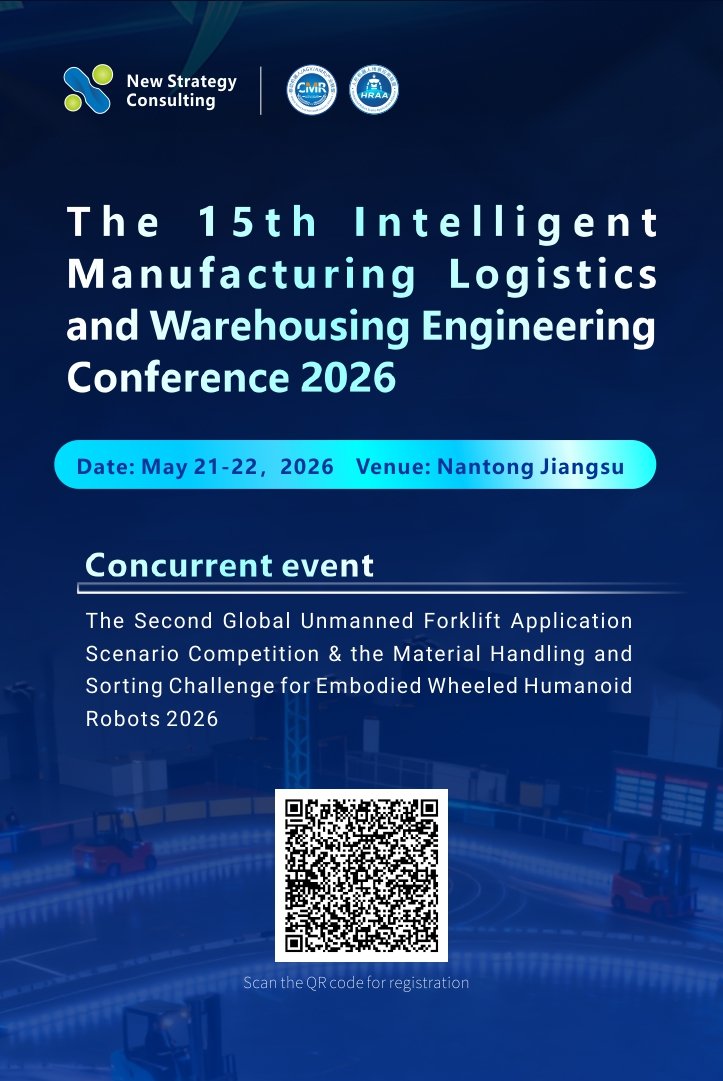
The Material Handling and Sorting Challenge for Embodied Wheeled Humanoid Robots 2026, a professional competition focusing on new forms of the robotics industry will take place in Haimen District, Nantong City, Jiangsu Province in May 2026.

This competition will primarily focus on two real-world industrial scenarios: material handling and sorting. The First Wheeled Humanoid Robot Scenario Application Development Forum will also be held concurrently, and the industry research findings—the Blue Book on the Development of the Wheeled Humanoid Robot Industry—will be officially released.
This is the first industry competition and conference with “wheeled humanoid robots” as its core theme.
Against the backdrop of “humanoid robots” becoming a global technological hotspot, this event will shift the focus from concepts and laboratories to a more practical question: What kind of humanoid robot is most likely to be the first to enter large-scale real-world applications?
Why do we focus on “wheeled humanoid robots”?
In recent years, humanoid robots have gradually become a focus of global technology and capital attention. Industrial giants, technology companies, and startups are all exploring the future possibilities of this form.
However, at the industrial application level, a practical problem is gradually emerging: the humanoid robots that can be deployed on a large scale first are not necessarily purely bipedal.
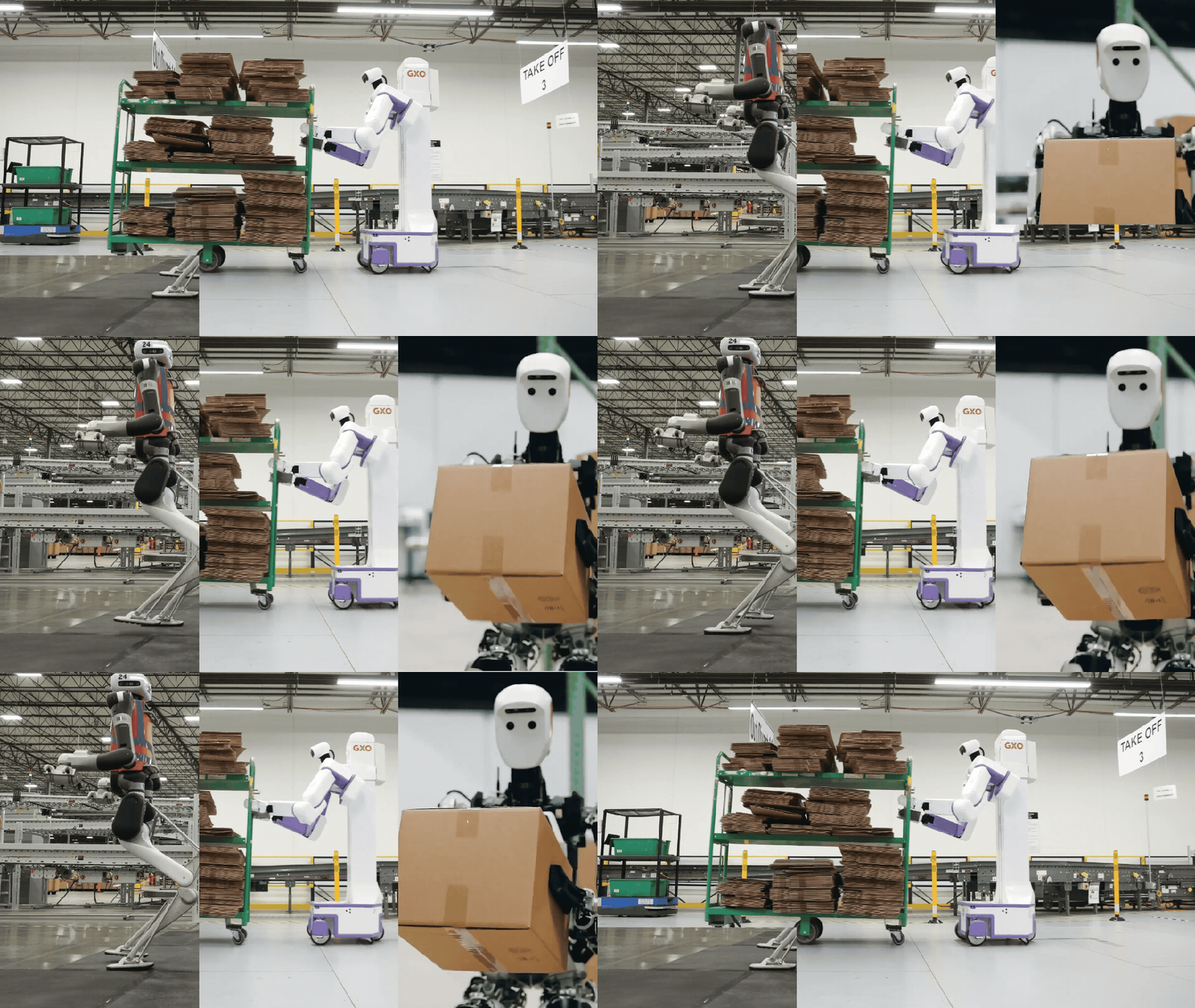
Compared to bipedal robots, wheeled humanoid robots show a clearer industrialization path at the current technological stage.
- Higher mobility
While bipedal walking is closer to human form, it still faces challenges in terms of efficiency and stability.
Wheeled chassis can achieve faster movement speeds, lower energy consumption, and more stable operation in most flat environments.
In typical industrial environments such as warehouses, factories, and logistics centers, ground conditions are usually relatively standardized, giving wheeled structures a significant advantage.
- Higher technological maturity
Wheeled mobile platforms have undergone years of industrial validation in the field of mobile robots, exhibiting high technological maturity and reliability.
When a wheeled chassis is combined with a humanoid upper body, the robot can maintain both flexible maneuverability and a stable foundation for movement.
This structure is currently considered by many teams as a more engineering-feasible “transitional form.”
- Closer to real-world applications
In many real-world scenarios, the tasks robots need to perform are not complex terrain traversal, but rather: moving items, sorting packages, loading and unloading materials, and retrieving items from shelves.
The core of these tasks lies in operational capability and efficiency, rather than complex gait.
Wheeled humanoid robots, through the combination of “wheeled movement + humanoid manipulation,” are better suited to these high-frequency needs.
- Greater commercial potential
In the early stages of industry development, the sustainability of the business model is particularly crucial.
Compared to highly complex bipedal systems, wheeled structures offer a more realistic solution in terms of cost, stability, and maintenance difficulty, and are also easier to deploy at scale in enterprise scenarios.
Therefore, more and more industry professionals believe that wheeled humanoid robots are likely to become one of the important paths for the humanoid robot industry to achieve large-scale application.
A Robot Challenge Targeting Real-World Scenarios
The Material Handling and Sorting Challenge for Embodied Wheeled Humanoid Robots 2026 will no longer be limited to technology demonstrations but will directly target industrial scenarios.
The competition will revolve around two core tasks:
- Handling Task: Robots need to complete the handling and transportation of items within a designated area.
- Sorting Tasks: Robots need to identify, grasp, and sort items.
These tasks closely resemble real-world logistics and manufacturing environments, and will more realistically test the robot system’s comprehensive performance in terms of mobility, operational capabilities, and system collaboration.
From Concept to Industry
In recent years, humanoid robots have frequently appeared on the technological stage. However, the industry’s real concern remains the same: When will robots truly enter the real world?
Perhaps the answer lies not in who is most human-like, but in who solves real problems first.
When robots begin to run on wheels, humanoid robots may be one step closer to large-scale application.
Let’s witness the first industrial-scale collective debut of wheeled humanoid robots in Haimen District, Nantong City, Jiangsu Province in May 2026.