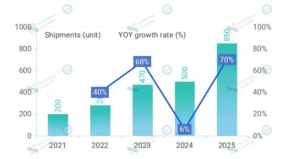
According to publicly available information and incomplete statistics compiled by New Strategy Low-Speed Automated Driving Industry Research Institute, as of September 15, since 2026, the disclosed order volume in the low-speed autonomous driving sector has exceeded 300,000 units (counting only complete-vehicle orders with publicly disclosed procurement volumes of 100 units or more and clearly identified partners), spanning multiple application scenarios including autonomous delivery, autonomous mining operations, autonomous port operations, and autonomous sanitation services. The transition from demonstration operations to bulk procurement, coupled with the growth in order data, unequivocally signals that the industry is advancing toward large-scale commercial deployment.
However, upon breaking down each line item of the order details, we can observe a significant discrepancy between the paper-based data and the actual deliveries.
Agreement on Cooperation ≠Delivery Obligations
Regarding the composition of industry orders in 2026, orders for over 300,000 complete vehicles are primarily comprised of three categories, the commercial certainty and delivery enforceability of which do not align at the same level.
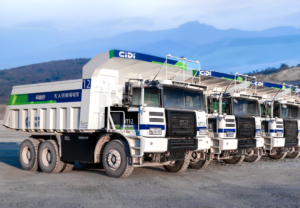
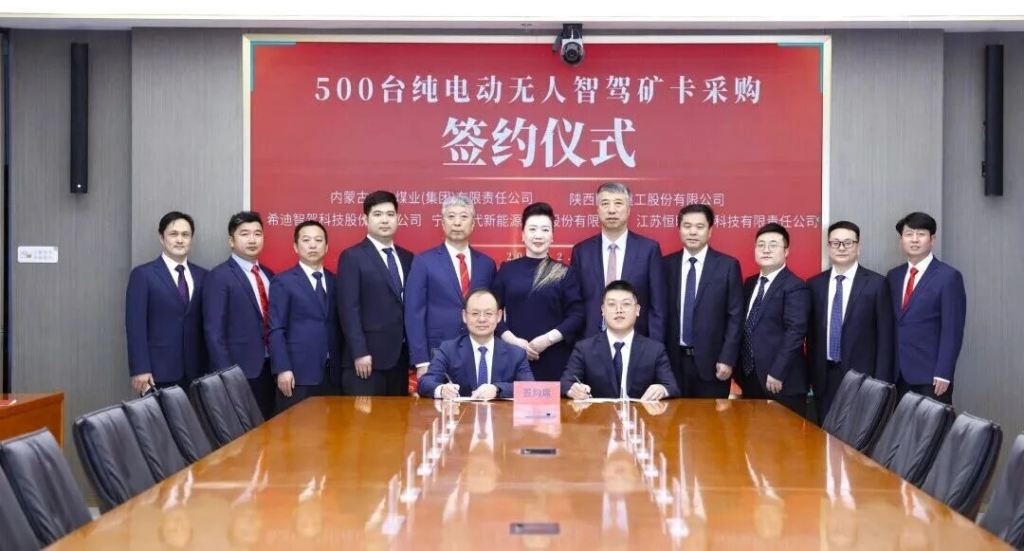
The first category comprises orders with clearly defined delivery milestones and explicit procurement directives. Examples include the procurement order for 500 unmanned mining trucks signed between CiDi and Guangna Group; the procurement of 1,600 MINIEYE Bamboo RoboVan by Ideas Group Pty Ltd; Kusa Tech’s acquisition of an order for 100 sanitation robots from Skywell; and ALLGRAND’s procurement of 100 Lico Charge robots. Such orders typically include the procuring entity, delivery batches, acceptance criteria, and service cycles, making them the segment within the statistical framework that most closely aligns with concrete implementation. However, their share of the total 300,000 units remains relatively limited; according to statistics from New Strategy Low-Speed Automated Driving Industry Research Institute, the proportion of such orders with explicit procurement directives accounts for less than 10% of the total.
The second category comprises long-term framework agreements or strategic cooperation intent orders. These orders constitute the primary driver of inflated paper-based metrics, accounting for over 40% of such orders according to statistics. For example, Maple-Leaf Car has agreed with MTCIT to deploy 30,000 to 50,000 unmanned logistics vehicles and unmanned buses in Oman within five years; similarly, Clean Pro has reached an agreement with WeRide to procure 300 autonomous street-sweeping robots S3 within the same five-year period.

Maple-Leaf Car and MTCIT have officially signed a comprehensive cooperation agreement for the next phase of development in the autonomous driving sector.
The essence of most framework agreements is an indicative agreement rather than a one-off procurement mandate. They are typically used to clarify the direction of cooperation between the parties, establish priority supply relationships, and set phased delivery targets, thereby providing a foundation for subsequent batch procurements and capacity scheduling; however, they do not directly confer binding legal force. Furthermore, the procurement strategy of B2B clients generally involves conducting small-batch trials before progressively increasing procurement volumes. This means that even if a framework agreement specifies an overall volume target, the actual pace of volume release still depends on the operational performance, maintenance costs, and cost-reduction outcomes of the initial batch of vehicles; if the pilot phase fails to meet expected targets, subsequent orders may be reduced or terminated at any time.
The third category comprises collaborative orders targeting overseas markets. The fulfillment chain for such orders is relatively longer. In certain regions—such as the Middle East and Oman—project execution involves multiple variables, including the establishment of local operating entities, obtaining local road access approvals, coordinating cross-border supply chains, and managing exchange rate risks; consequently, both the duration and uncertainty from contract signing to actual delivery are significantly higher than for domestic projects.
In summary, among over 300,000 orders, fewer than 10% of procurement orders carry explicit delivery constraints; long-term framework agreements have contributed the majority of incremental growth, while orders from overseas markets have experienced extended fulfillment cycles due to localization requirements. The combination of these three types of orders has resulted in a significant structural gap between the nominal volume of signed contracts and the actual deliverable transport capacity.
Order inventory ≠ delivery capacity
Even if the framework agreement were ultimately converted into formal procurement orders, the practical implementation conditions would still make it difficult to ensure that all such orders could be fulfilled simultaneously.
Based on current industry practices, at least three hard constraints stand between “contract signing” and “delivery.”
First, regional disparities in road access approvals constrain the large-scale deployment of open-road scenarios. Taking unmanned delivery projects which account for the largest share of the order portfolio as an example, RoboVans in China still operate under a localized management framework; consequently, testing permits, commercial pilot qualifications, permitted areas, and permitted time slots vary across different cities. Even if a particular vehicle model has already secured road access in one city, replicating this success in other cities still requires completing the respective access approval processes individually, making simple portability impossible. This means that for nationwide framework orders, the actual deployment pace will be constrained by the progress of road access approvals in individual cities, making it difficult to deploy them at a linear pace.
Secondly, the compatibility between operational scenarios and technologies impacts order fulfillment efficiency. Taking unmanned delivery as an example, this service encompasses diverse sub-scenarios including closed-loop operations within industrial parks, micro-circulation within residential communities, and long-distance delivery from county-level to township-level areas—each exhibiting markedly different requirements regarding battery life, loading/unloading modes, and the frequency of remote takeover operations. In certain long-tail scenarios, the per-order average cost under current technological solutions makes it difficult to achieve break-even, thereby forcing a contraction of the actual delivery coverage area after an order is secured.
Furthermore, supply chain production capacity and cash flow constraints impose rigid upper limits. Orders for over 300,000 complete vehicles correspond to the demand for hundreds of thousands of LiDAR sensors, steer-by-wire chassis, and computing platforms, placing extremely high demands on the supply chain’s mass delivery capabilities and product consistency. At the same time, most L4 autonomous driving companies have yet to achieve scalable profitability; mass delivery consequently entails greater working capital requirements and increased pressure to advance payments. In particular, large-scale orders, while boosting revenue expectations, may also amplify cash flow risks for these companies. The increasing volume of orders elevates the demands on supply chain management and capital turnover, which could instead become a bottleneck for some enterprises in fulfilling their delivery commitments.
Therefore, to assess the gap between “contract signing” and “delivery” within an industry, it is necessary to conduct a granular analysis by examining order types, performance conditions, and implementation constraints.
Conclusion:
Overall, the release of over 300,000 vehicle orders in the low-speed autonomous driving sector by 2026 represents both the convergence of technological maturity and commercial demand, as well as a critical juncture for the industry to transition from “demonstration and validation” to “large-scale commercialization.” However, the stratified characteristics of the order structure clearly indicate that large-scale commercialization is not a linear, overnight process; rather, hard constraints such as road access rights, technological capabilities, and funding mean that the realization of this goal will inevitably unfold in phased, region-specific, and scenario-based increments.
For enterprises, rather than merely pursuing order growth, it is preferable to focus on enhancing delivery quality, operational efficiency, and the refinement of a commercial closed-loop. By leveraging robust operational data to drive customer repurchases, companies can transform “pilot validation” into “replicable models,” thereby continuously establishing sustainable competitive advantages amidst industry differentiation.
For investors and industry observers, as the sector transitions from a contract-signing race to a delivery race, it is essential to focus on verifiable operational metrics such as quarterly actual delivery volumes, per-vehicle online rates, and per-city profit-and-loss models to rigorously assess the actual delivery performance of companies and avoid misalignment between allocated resources and expected outcomes.