Over the past few years, garden robots have been a mature product category in the European and American household consumer market. With the growing demand for outdoor automation in homes, garden scenarios such as lawn mowing, cleaning, and snow removal are becoming new growth directions for service robots.
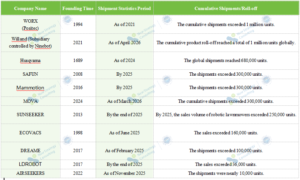
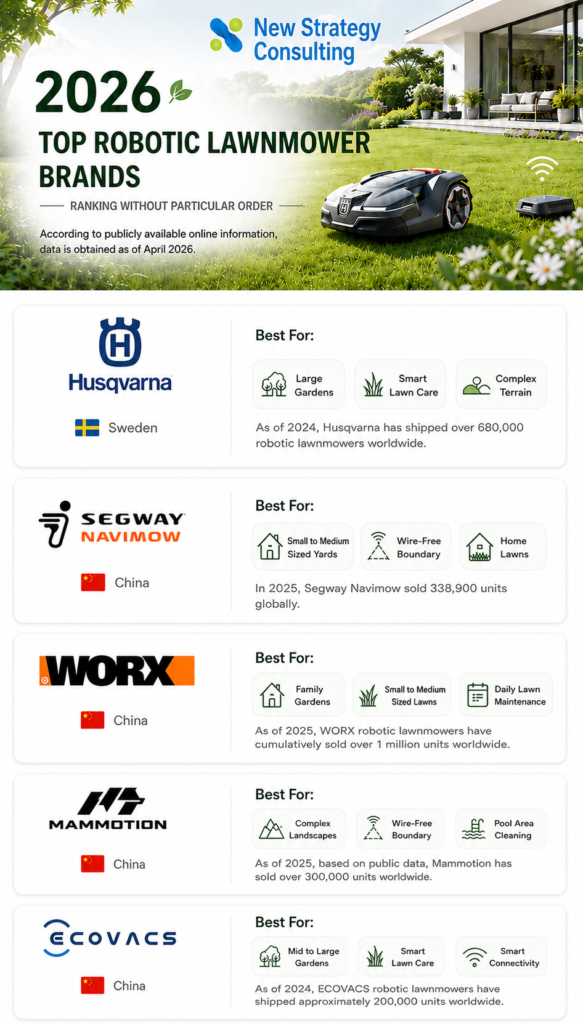
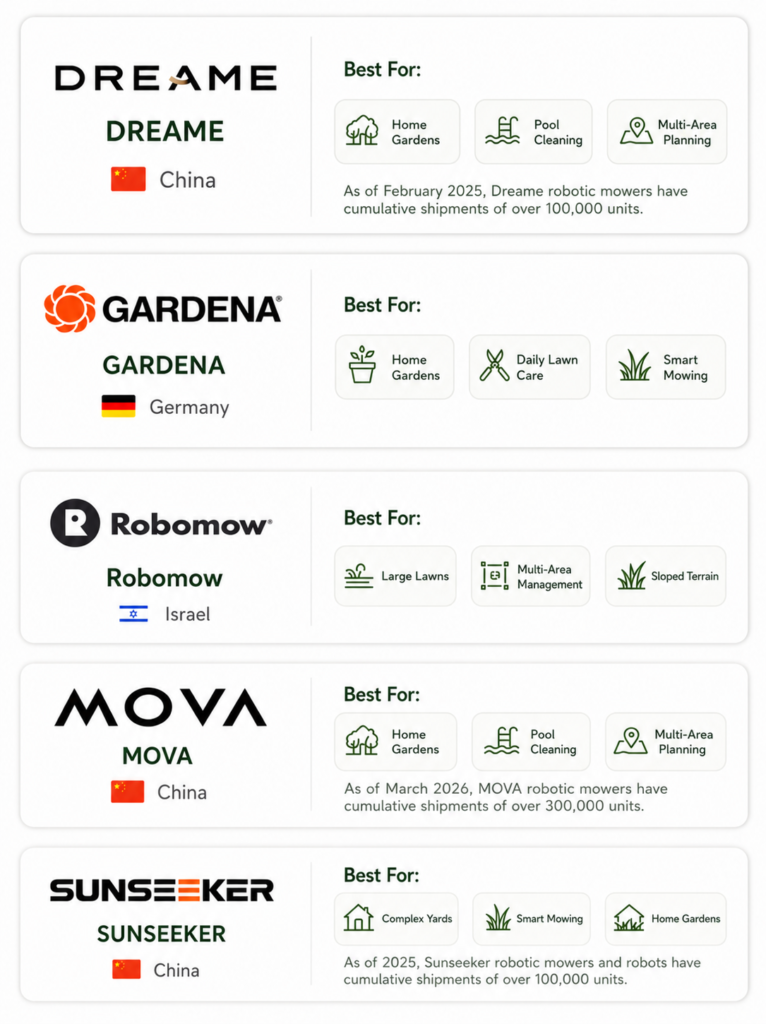
Based on market research and brand influence data from 2026, the following are the top ten well-known brands in the garden robot field:
From “Mechanical Tools” to “Intelligent Robots”
Early garden robots were essentially more like automated garden tools. Represented by European brands such as Husqvarna and Gardena (a subsidiary of the Husqvarna AB), the industry has long relied on the traditional solution of “buried boundary wires”: users need to lay boundary wires in advance, and the robot works along a fixed area. This type of solution has high stability but is complex to deploy and has limited flexibility, making it more suitable for regular yards.
Today, the industry’s technological roadmap is rapidly shifting.
RTK, visual perception, LiDAR, and multi-sensor fusion are becoming mainstream, and “borderless” is becoming an industry consensus.
New-generation products, represented by Chinese manufacturers such as Segway Navimow, Mammotion, Dreame, and Ecovacs, have begun to adopt “RTK + visual fusion” solutions on a large scale, and some high-end products are even incorporating LiDAR, multi-camera perception, and AI semantic recognition capabilities.
The core of this change lies in the inherent complexity of the yard environment.
Compared to indoor robotic vacuum cleaners, garden robots need to contend with slopes, trees, gravel, mud, pets, nighttime conditions, and complex weather, placing higher demands on their positioning capabilities, environmental understanding, and motion control.
Therefore, the focus of industry competition has shifted from “whether they can work automatically” to “whether they can truly understand the yard environment.”
Chinese brands are beginning to take technological dominance
A clear trend in 2026 is the rapidly increasing presence of Chinese manufacturers in the garden robot field.
Previously, this market was dominated by European brands at the high end. Companies like Husqvarna, Gardena, and Robomow have extensive industry experience and significant advantages in mechanical structure, horticultural ecology, and distribution channels.
However, in this new round of competition, the advantages of Chinese companies are beginning to emerge.
The first one is the capability of the consumer electronics and smart hardware supply chain.
Whether it’s Segway Navimow, Dreame, Ecovacs, Positec, or Mammotion, these companies mostly possess mature smart hardware R&D capabilities and are more familiar with visual algorithms, LiDAR, IoT connectivity, battery systems, and AI interaction.
The second one is supply chain efficiency.
Garden robots are essentially a fusion of “robotics + consumer electronics.” Chinese companies possess a complete industrial chain advantage in motors, batteries, sensors, chips, and manufacturing, enabling them to accelerate product iteration and reduce costs.
In recent years, robotic lawnmowers in the European and American markets have been expensive, with high-end products even approaching the price of small cars. However, the entry of Chinese brands has restructured the industry’s pricing system.
Furthermore, Chinese companies are becoming more aggressive in their product definitions.
For example, some manufacturers have begun promoting the concept of “multi-functional garden robots.” Yarbo’s modular solution allows for switching between snow sweeping, lawn mowing, and leaf blowing functions, signifying that garden robots are evolving from “single devices” to “home outdoor robot platforms.”
This is very similar to the early development path of the robotic vacuum cleaner industry.
Garden robots are entering a stage of intelligent upgrading
From an industry trend perspective, the garden robot market is still in a rapid growth phase.
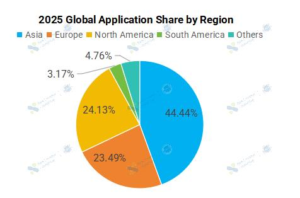
Europe and America remain the core consumer markets.
The reason is simple: high rates of detached housing, expensive manual gardening, and high user acceptance of automated tools. Therefore, both robotic lawnmowers and pool robots essentially possess strong “manual replacement” value.
At the same time, several clear directions are emerging in the industry.
- Product premiumization.
Users are demanding increasingly sophisticated capabilities from robots; basic lawn mowing is no longer sufficient. Capabilities such as adaptability to complex terrain, precise obstacle avoidance, quiet operation, nighttime operation, remote management, and multi-area collaboration are becoming key selling points for high-end products.
- Artificial intelligence.
More and more companies are emphasizing capabilities such as visual recognition, autonomous path planning, and environmental understanding. In the future, garden robots are likely to integrate with large-scale models and smart home systems, becoming part of the home AI ecosystem.
- Multi-category integration.
While garden robots were previously focused on lawn mowing, demand for functions like pool cleaning, snow removal, and leaf blowing is rapidly increasing. The industry may see the emergence of products resembling “general-purpose garden robots.”
To some extent, this industry is no longer just a garden equipment market.
It is gradually transforming into a new arena that integrates robotics, AI, smart hardware, and home automation.
And Chinese brands are rapidly gaining a more important position in this transformation.