Robotics Logistics IPO Frenzy: A Vote on “Profitability”
Geek+ and Galaxis both went public on the Stock Exchange of Hong Kong (HKEX), with their stock prices surging significantly. This marks not only a triumph for individual companies but also a landmark turning point for the entire mobile robotics industry.

The capital market is reshaping its perception of this sector: investors are no longer solely chasing ‘technical concepts,’ but are actively embracing ‘business practitioners’ who can translate technology into tangible orders and ultimately achieve sustainable profitability.
Listing Performance: Capital Votes with Real Money
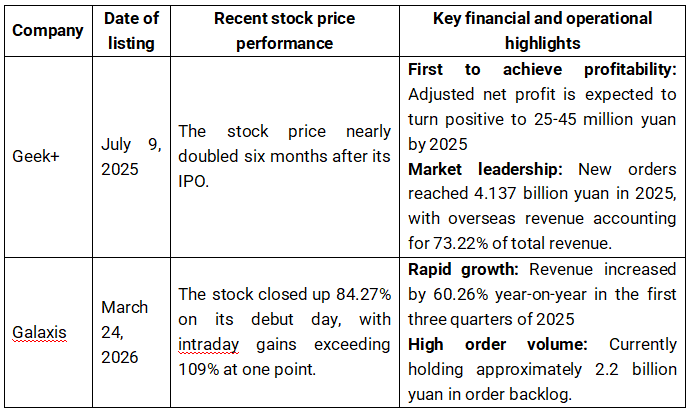
On its first trading day on March 24,2026, Galaxis’ stock price surged over 109% at one point, ultimately closing with an 84.27% increase. The public offering segment achieved an oversubscription ratio of 2,153.26 times, with more than 107,000 valid applications and frozen funds exceeding HKD 160 billion.
The overwhelming subscription response reflects the market’s unprecedented confidence in the logistics robotics sector.
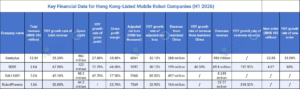
The key data comparison between the two core enterprises is as follows:
Three Key Drivers Behind the Price Surge
01 From “Money Burning” to “Self-Sustaining”: The Profit Turning Point Has Arrived
Historically, the market has prioritized robotics companies ‘technological sophistication and revenue growth rates, yet the fundamental question of’ how to generate profits’ has remained a persistent challenge.
In 2025, Geek+ became the first industry pioneer to achieve profitability, with shareholders’ losses shrinking by 96%-99% and adjusted net profits turning positive. This sends a crucial signal to the market: the mobile robotics business model is viable, and leading companies have developed self-sustaining capabilities. This also serves as the core driver behind the current value revaluation cycle.
02 Dual Confirmation of Funds and Orders
Galaxis achieved over 2,000 times the public subscription without introducing cornerstone investors, demonstrating that substantial market funds invested with real capital as a vote of confidence.
Meanwhile, both companies are holding substantial confirmed orders: Geek+ secured new orders exceeding 4.1 billion yuan in 2025, while Galaxis has approximately 2.2 billion yuan in outstanding orders. Their client base includes industry leaders such as SF Express, CATL, and BYD, providing solid assurance for performance growth over the next 1-2 years.
03 Macroeconomic Demand Resonates with Policy Dividends
From the global perspective, the expansion of e-commerce logistics and the shortage of warehouse labor have become long-term trends. According to data from China Mobile Robot Industry Alliance (CMRA), the global AMR market is projected to reach $13.35 billion by 2030, with a compound annual growth rate as high as 18.2%.
From Chinese perspective, the policy orientation of “building a new form of intelligent economy” positions smart warehousing and intelligent manufacturing as “critical infrastructure.” Meanwhile, mobile robots are experiencing accelerated demand release due to their lower energy consumption, driven by the dual control policy on carbon emissions.
Three Major Trends Pointing to the Future of Industries
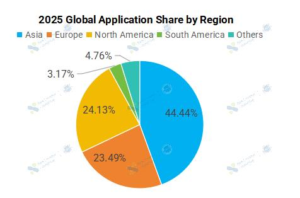
The development path of the global mobile robotics industry is becoming increasingly clear, which can be summarized as: rapid market growth, Asia-Pacific leading the landscape, AI-driven intelligent upgrading, accelerated service-oriented transformation, and China’s strength leading the way.
Three clear directions can be distilled from this wave of IPOs:
- Change in competitive logic
The focus of industry competition has shifted from “technical specification contests” to “commercialization and profitability comparisons.” Those who can better control costs, improve gross margins, and serve global customers will prevail in the competition.
- Restructuring of Valuation Logic
Markets are no longer simplistically categorizing leading companies as mere “robot hardware manufacturers,” but are revaluing them within the framework of “smart economic infrastructure providers.” Enterprises with large-scale commercial deployments and stable profitability will command higher market premiums. While concepts like “humanoid robots” continue to attract attention, the ability to achieve commercialization has become the new decisive factor.
- Clear development path
“Globalization” has become the only way for leading enterprises to achieve profitability. High-margin overseas operations are key to expanding profit margins. The fact that Geek+’s overseas revenue accounts for as high as 73% demonstrates that China’s mobile robotics companies, leveraging their technological and cost-performance advantages, are fully capable of competing on the global stage with international brands.
Conclusion: The Capital Feast Has Just Begun
The successful listings of Geek+ and Galaxis on the HKEX are a concentrated manifestation of global trends in the China market. They demonstrate that companies capable of being the first to complete the “technology implementation-scenario validation-profit closure loop” will not only receive revaluation from capital markets but also occupy a dominant position in the global industry reshuffle.
With the full-scale launch of the intelligent economy era, mobile robots, as a critical force in the ‘vascular system’ of the real economy, will see their strategic and commercial value continue to expand.
Subsequently, companies such as iRAYPLE, Hai Robotics, and YOUIBOT also plan to list on the HKEX in 2026. The capital feast in this sector has only just begun. The ultimate winners will undoubtedly be those companies that can both “look up at the stars” for technological innovation and “keep their feet on the ground” to achieve commercialization.

The Second Global Unmanned Forklift Application Scenario Competition & the Material Handling and Sorting Challenge for Embodied Wheeled Humanoid Robots 2026 will be held by CMRA in Nantong Jiangsu from May 21-22, 2026. Building upon the existing unmanned forklift category, this event will introduce a wheeled humanoid robot track for the first time, addressing the industry’s practical needs for embodied intelligence implementation scenarios and further bridging technological innovation with industrial applications.