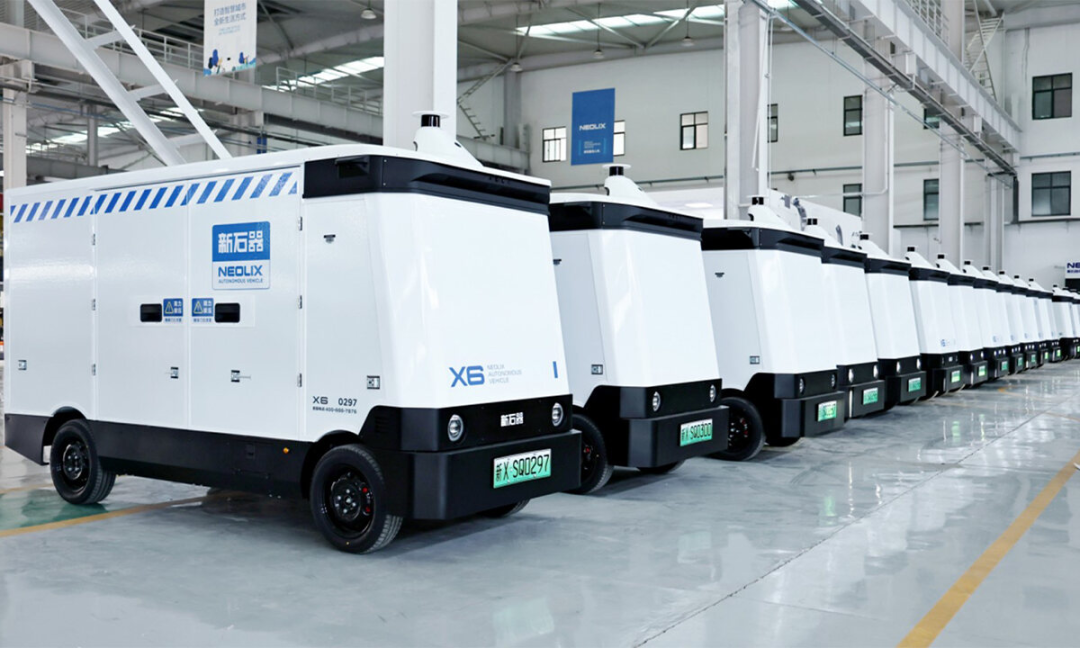
According to New Strategy Low-Speed Automated Driving Industry Research Institute and New Strategy Low-Speed Automated Driving All Media, Neolix’s autonomous vehicle operation network currently covers 15 countries and over 300 cities worldwide. It is projected that by the end of 2025, Neolix’s cumulative deliveries of autonomous vehicles will exceed 15,000 units, continuously breaking global records for L4 autonomous fleets.
Founded in 2018, Neolix is among the earliest companies to enter the autonomous driving industry. As the world’s largest provider of L4 autonomous urban delivery (RoboVan) solutions, its independently developed L4 autonomous vehicles possess autonomous driving capabilities up to 60 km/h in urban public road scenarios and are currently widely used in various logistics scenarios such as express delivery and urban distribution. Neolix possesses full-stack technical capabilities, including self-developed software and hardware, vehicle manufacturing, and intelligent scheduling. It has applied for over 1,500 patents and has been certified as the “Autonomous Driving Technology R&D Center of State Post Bureau” by the State Post Bureau, making it a national-level specialized, refined, differential and innovative “Little Giant” enterprise.
With the deep integration of smart logistics and autonomous driving technology, autonomous delivery is rapidly moving from proof-of-concept to large-scale commercial deployment. Companies worldwide are vying for dominance, viewing “operation at tens of thousands of units” as a key indicator of the industry’s scaling-up.
For example, Starship Technologies, a globally renowned delivery robot company, already has an operational network of over 2,700 robots. It plans to expand into several European countries in 2026 and focus on the US market in 2027. The company anticipates expanding its delivery robot fleet to over 12,000 units by 2027, achieving a significant leap in service coverage.
Another example is Coco Robotics, which secured $80 million in funding in June 2025, specifically for robot technology upgrades and fleet expansion. The company aims to achieve an operational scale of at least 10,000 robots by the end of 2026.
These plans highlight the industry consensus: reaching the tens of thousands of units level is a crucial threshold for validating the sustainability of a business model and realizing network effects and cost advantages. However, this milestone, marking a turning point towards large-scale operations, has already been achieved by Neolix, a leading Chinese autonomous delivery company, and its overseas markets are now facing full-scale penetration from Chinese competitors.
Previously, Neolix’s 10,000th autonomous vehicle rolled off the production line at the end of September, with product delivery accelerating.
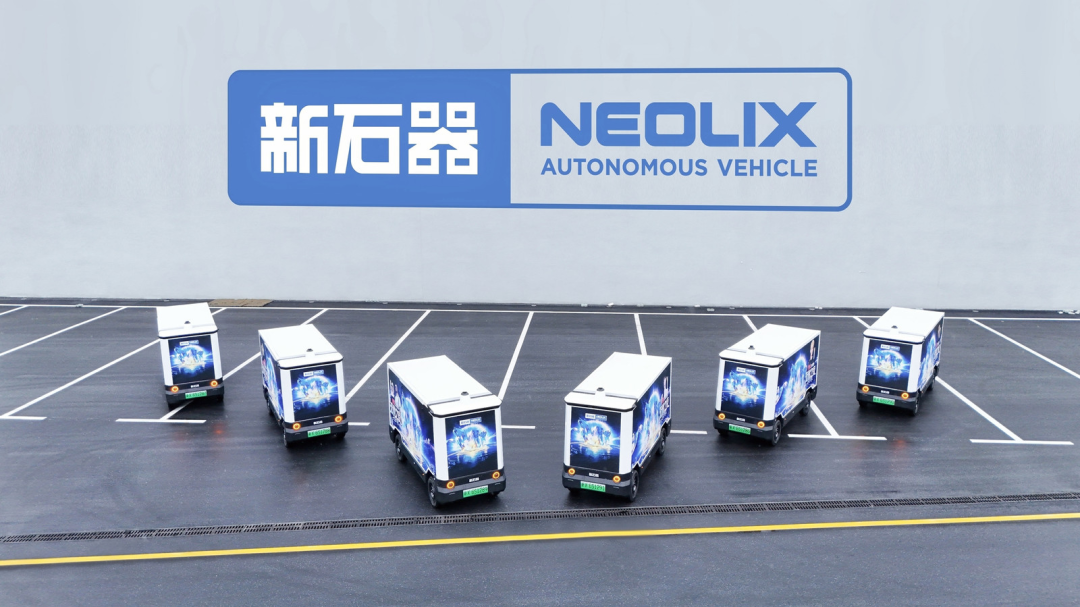
In overseas markets, Neolix’s autonomous vehicles began their overseas expansion in 2019, and their delivery vehicles are now deployed in 15 countries and regions worldwide.
In the Middle East, Neolix, in collaboration with AutoGo, a subsidiary of the UAE’s K2 Group, obtained the UAE’s first license for autonomous vehicles, granting permission for autonomous vehicles to operate on public roads. The two companies are jointly building the world’s second national-level RoboVan localized large-scale deployment and operation system outside of China. In South Korea, it signed an agreement with the Incheon Municipal Government, marking the country’s first-ever introduction of autonomous vehicles. In Japan, it joined “Autoware,” the country’s largest autonomous driving technology alliance, achieving deep integration of its technical standards.
It is reported that Neolix plans to accelerate the deployment of its autonomous vehicles in Asian and European countries such as South Korea, Japan, Singapore, Belgium, and France, adhering to the vision of “making autonomous vehicles popular globally” and promoting the benefits of Chinese intelligent manufacturing and smart logistics to the world.
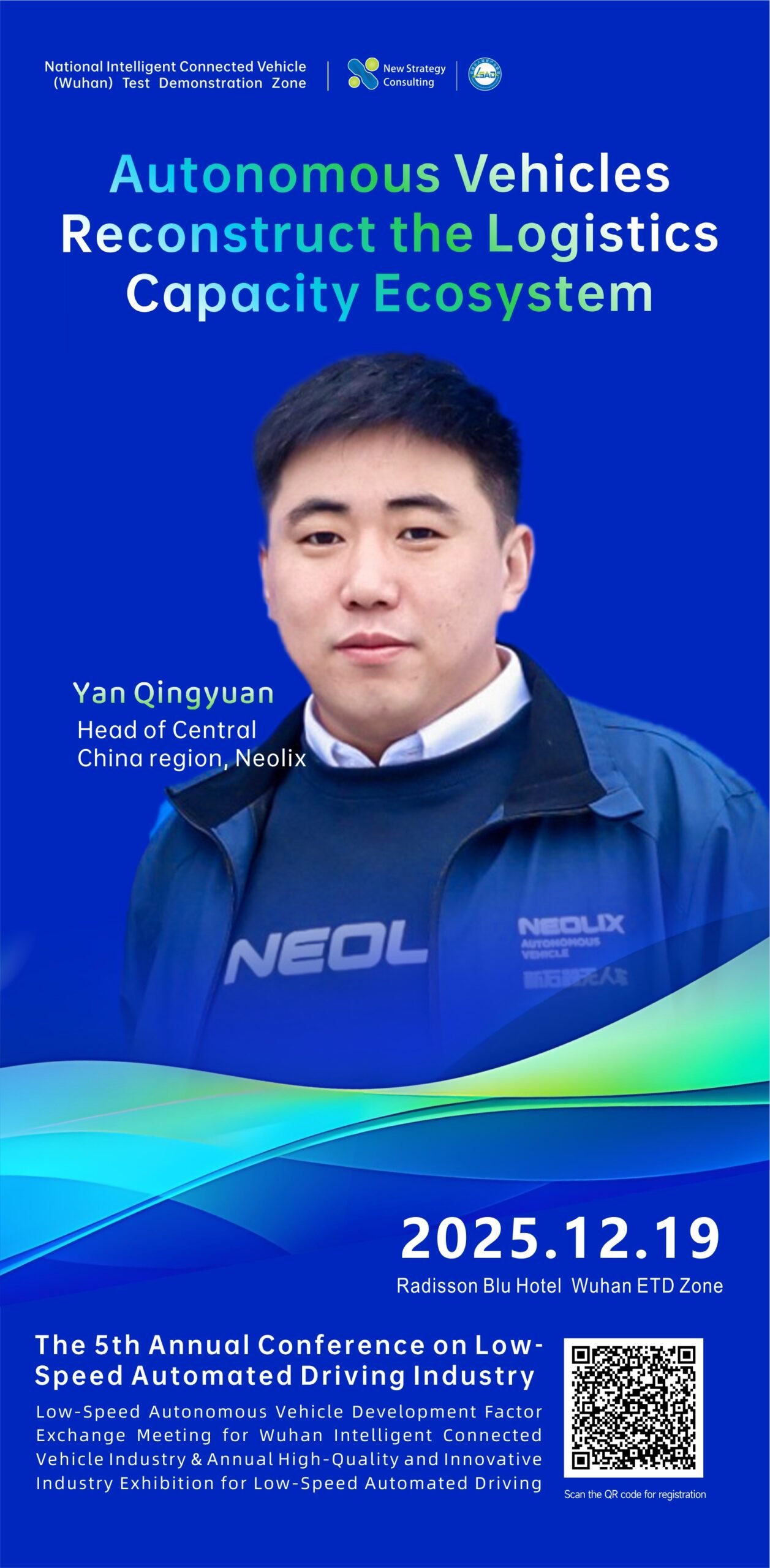
At the “5th Annual Conference on Low-Speed Automated Driving Industry” held on December 19, 2025, Yan Qingyuan, Head of Central China region, Neolix, will deliver a keynote speech entitled “Autonomous Vehicles Reconstruct the Logistics Capacity Ecosystem.” He will share in-depth insights based on rich practical cases on how autonomous driving technology can be truly implemented and profoundly influence and even reshape the future logistics capacity system.
In addition, 2025-2026 Bluebook on the Application and Trends of Autonomous Vehicle Technology, edited by China Low-Speed Automated Driving Industry Alliance (LSAD) and New Strategy Low-Speed Automated Driving Industry Research Institute, with the participation of companies like Neolix, will be released. Stay tuned!