The global humanoid robot industry faces a shared, critical bottleneck. Most models remain limited to lab demonstrations and short-term showcases, with large-scale industrial and commercial deployment still out of reach. The core barrier is not insufficient hardware performance, but two pressing challenges: data scarcity and data silos.
A shortage of real-robot field data, inconsistent data standards across organizations, and fragmented resources have slowed intelligent model iteration. The industry has fallen into a stalemate where hardware advances rapidly, while cognitive intelligence lags far behind. This is a universal pain point across the global sector, not one limited to a single region or company.

Core Pain Points: Three Gaps in Industry Data Supply
First, severe shortage of real-robot data. Most R&D today relies heavily on simulated data, lacking long-term, real-world operational data from physical robots. Models trained this way struggle to adapt to complex working conditions, resulting in low fault tolerance and poor practicality in real deployments.
Second, entrenched data barriers. Enterprises and research institutions operate in closed data loops, with incompatible standards and formats that prevent collaboration. Vast amounts of valuable data sit idle and wasted, never converted into meaningful momentum for industrial progress.
Third, inadequate industrialization support. Dispersed, unstructured data cannot sustain large-scale algorithm iteration, keeping R&D costs prohibitively high. As a result, humanoid robots remain trapped in labs, unable to enter mass production and commercial use.
China’s Approach: Collaborative Multi-Party Data Hub Development
To address this global challenge, a national-level initiative backed by the Open Atom Foundation is underway. Led by Leju Robotics, the program unites hardware manufacturers, AI algorithm developers, leading academic institutions, and compliance governance bodies to form a full-industry collaborative ecosystem focused on building a dedicated embodied intelligence data hub.

The initiative is grounded in practical implementation, not theoretical planning. It prioritizes large-scale real-robot data collection, unified data standardization, and streamlined data circulation. The goal is to establish a reproducible, shareable, and sustainable data supply system that fills the industry’s critical data gap. To date, the project has achieved mass-scale collection of high-quality real-robot data, forming standardized, production-ready datasets ready for external supply and collaborative development.
Objective Value for the Global Industry
Delivers large-scale real-robot data support. It fills the global shortage of physical robot data, providing high-quality training data for research teams and enterprises worldwide. This reduces the cost of independent data collection and accelerates algorithm and model iteration.
Explores a replicable model for ecological data collaboration. The full-industry synergy approach proves that breaking down data silos and pooling resources can drive tangible industrial progress, offering a practical reference for global peers.
Promotes unified global industry standards. By standardizing data collection, processing, and circulation workflows, it helps establish common industry norms, cuts down on redundant R&D, and speeds up the commercialization of humanoid robots worldwide.
Industrial Shift: The Era of Data Supply Chains
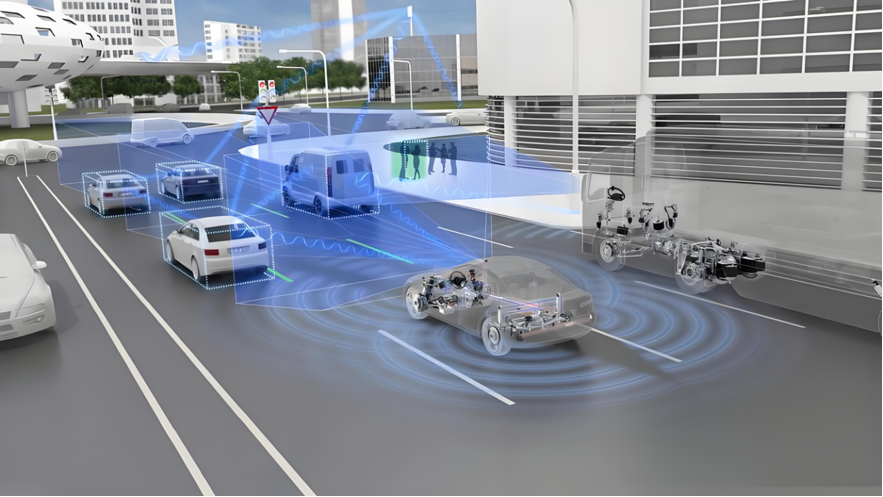
The core competition in humanoid robotics has shifted from standalone hardware or algorithm superiority to comprehensive competition in data supply chains. Scale, quality, and circulation efficiency of data will directly define the upper limit of industrial development.
Building an open, interconnected, and efficient data ecosystem is a shared priority for the global robotics community. China’s embodied intelligence data hub represents a targeted industrial practice designed to solve universal challenges. It aims to drive global progress and help humanoid robot technology move beyond labs and into large-scale commercial deployment.