According to statistics from China Humanoid Robot Scene Application Alliance (HRAA), over 14 new humanoid robots were released globally in November 2025, continuing the high-frequency pace of one new product launched every two days on average. China contributed over 9 of these, continuing to lead the world.
Notably, November saw some new players in the humanoid robot field. Russia officially entered the global humanoid robot race, releasing two new models.
Currently, humanoid robots are considered a focal point of the technological competition between China and the United States, with both countries leading the world in investment at the technology, industry, and capital levels. However, in recent months, South Korea and Japan have also been making significant efforts in the humanoid robot field, establishing national-level industry alliances. With Russia joining the fray, humanoid robots have become the “space race” of the new era.
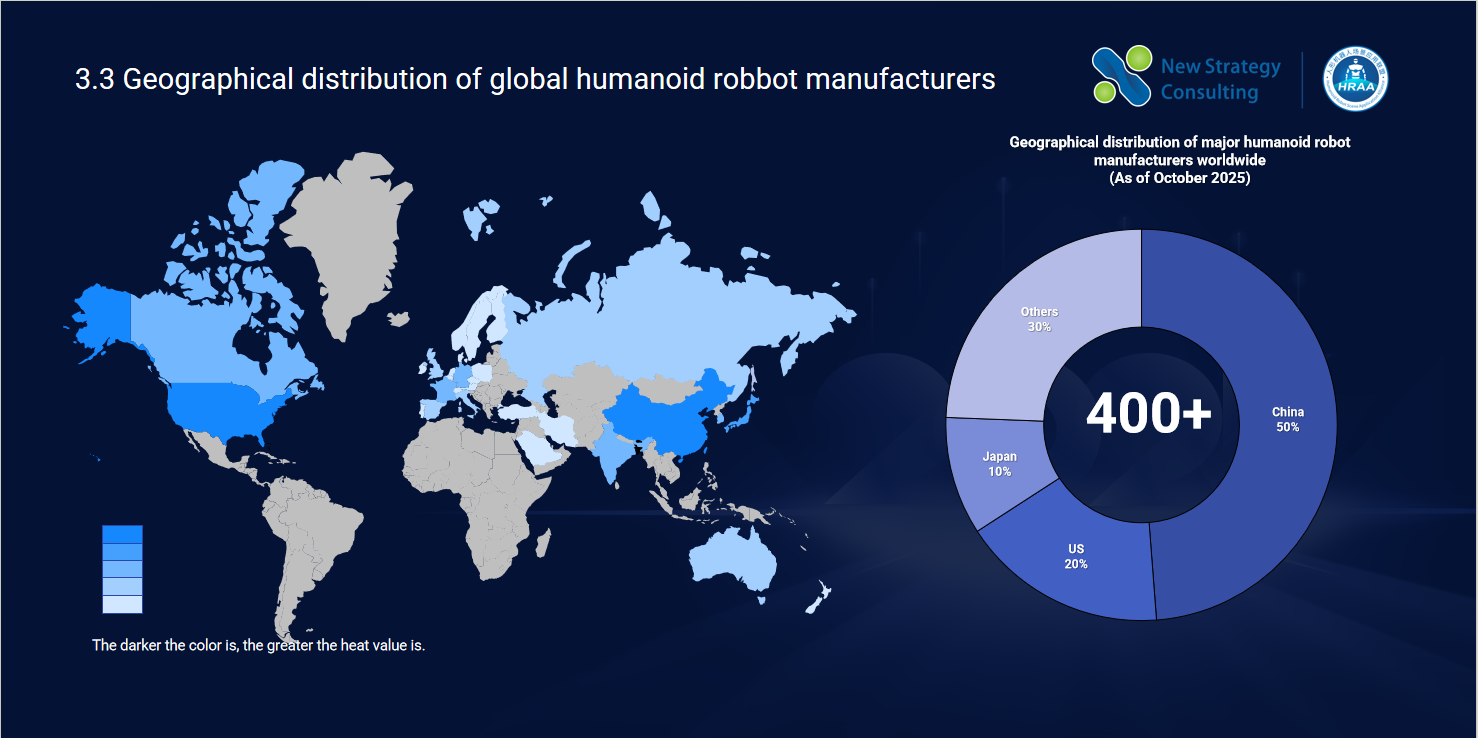
Humanoid Robot Industry Heat Map
Humanoid robot new product catalog in November is as below.
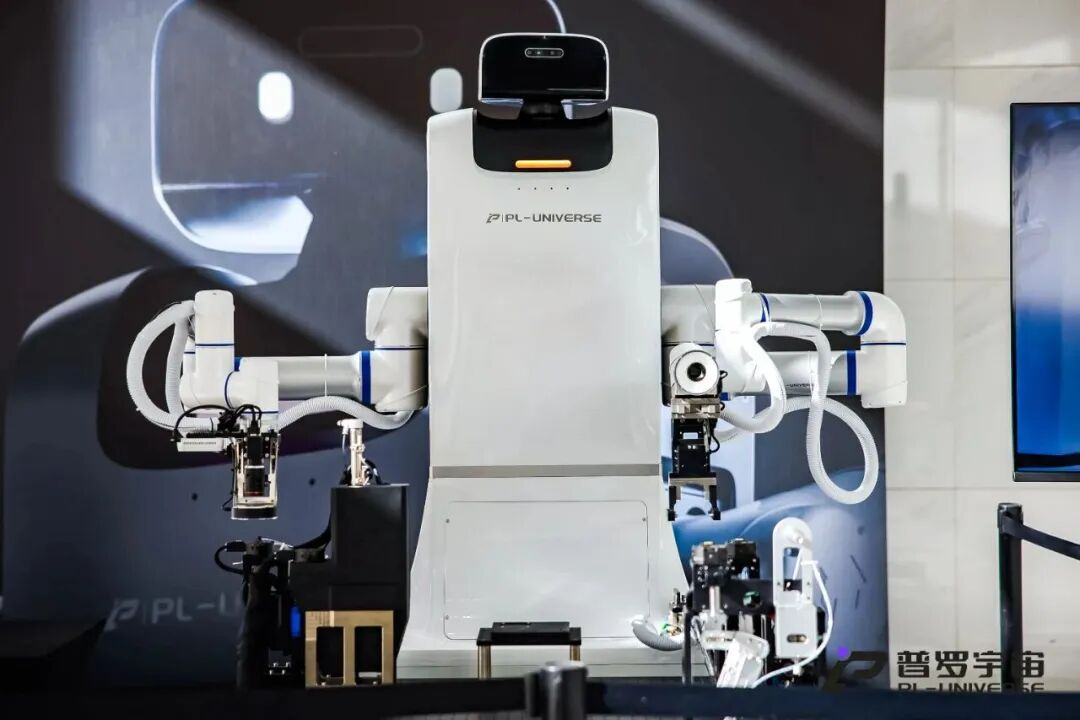
PL-Universe – ProWhite Robot 2.0
On November 1, PL-Universe launched the industrial-grade wheeled embodied robot PL-Universe ProWhite Robot 2.0, four standardized end effectors, and the world’s first industrial-grade hybrid-driven dexterous hand, “PL-WitHand.” According to reports, ProWhite Robot 2.0 has been comprehensively upgraded in over 300 performance points, possessing three major advantages: ultra-high precision, strong adaptability, and process value enhancement. The four end effectors are compatible with various robots, covering nearly 40% of core manufacturing processes. PL-WitHand combines flexible operation and precise control, autonomously adapting to complex tasks and being the first to solve industrial scene needs such as cable management.
XPENG – New Generation of Humanoid Robot IRON
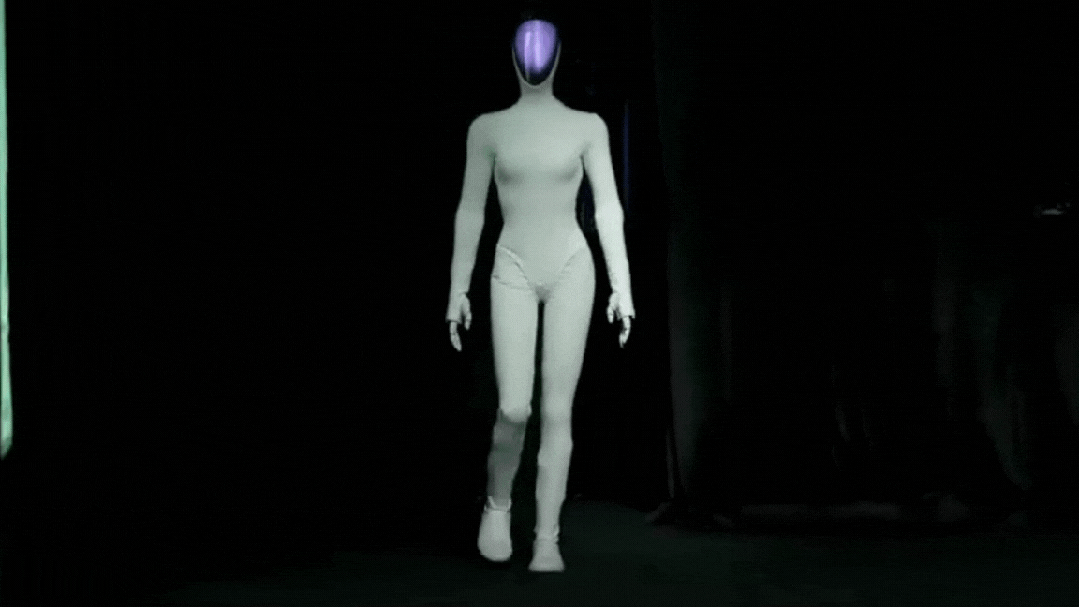
On November 5, at the 2025 AI Day, XPENG showcased its new generation IRON humanoid robot. At the event, the robot walked with a “catwalk,” its natural and fluid movements and highly realistic human posture drawing cheers from the audience. According to reports, this generation of IRON is the final pre-production research version, and the mass-produced version will have a height of no more than 170cm. IRON is the first to be equipped with a solid-state battery and features 3 Turing AI chips and a self-developed physical world large model system, with a comprehensive computing power of 2,250 TOPS. IRON features a biomimetic “skeleton-muscle-skin” structure: equipped with a human-like spine, biomimetic muscles, fully covered flexible skin, a 3D curved display head, flexible shoulders, and dexterous hands with 22 degrees of freedom, capable of performing diverse movements and interactions.
Russian “New Technology Alliance” – Aidol
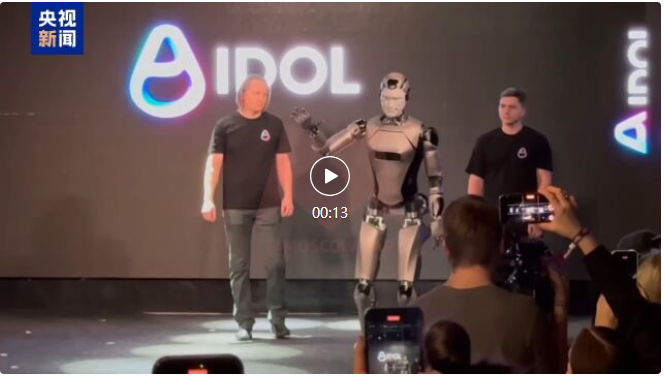
On November 5, Russia released and demonstrated its first domestically produced artificial intelligence humanoid robot – “Aidol”. However, videos released by multiple media outlets showed Aidol unexpectedly falling during its on-stage demonstration, attracting attention from netizens; the developers referred to this incident as “real-time training”. Vladimir Vitukhin, CEO of the company, stated that the robot had been tested under various conditions, and the fall may have been caused by insufficient lighting or a system malfunction.
Zhejiang Humanoid Robot Innovation Center – NAVIAI-I3
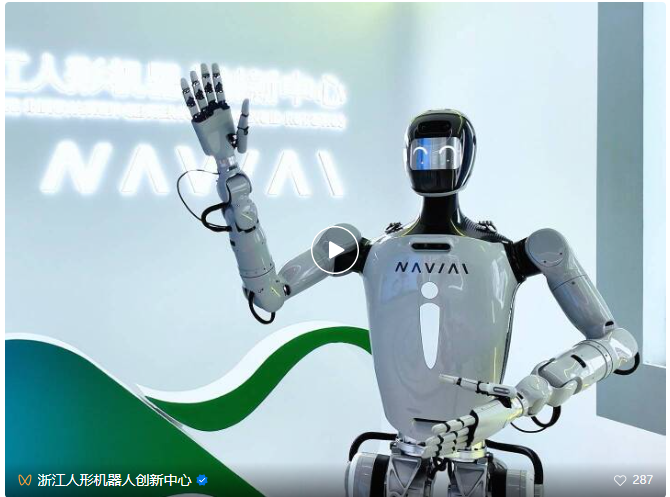
On November 12, Zhejiang Humanoid Robot Innovation Center released its latest product – NAVIAI-I3. Currently, the innovation center is accelerating relevant work to ensure that the new product can be mass-produced as soon as possible. This robot, 1.8 meters tall and weighing 80 kilograms, can perform daily patrols and interact with people by greeting them. Compared to common bipedal humanoid robots on the market, NAVIAI-I3 has more powerful lower limb performance, with greater torque, resulting in larger strides, more stable walking, and stronger support capabilities. Its design allows for large strides and running, with a maximum running speed of 9 kilometers per hour. NAVIAI-I3 also possesses capabilities such as bending and squatting, and can walk steadily on complex terrains such as gravel roads and slopes. NAVIAI-I3 can be applied in fields such as security, inspection, bodyguard services, and security guards.
Unitree –The First Wheeled Humanoid Robot G1-D
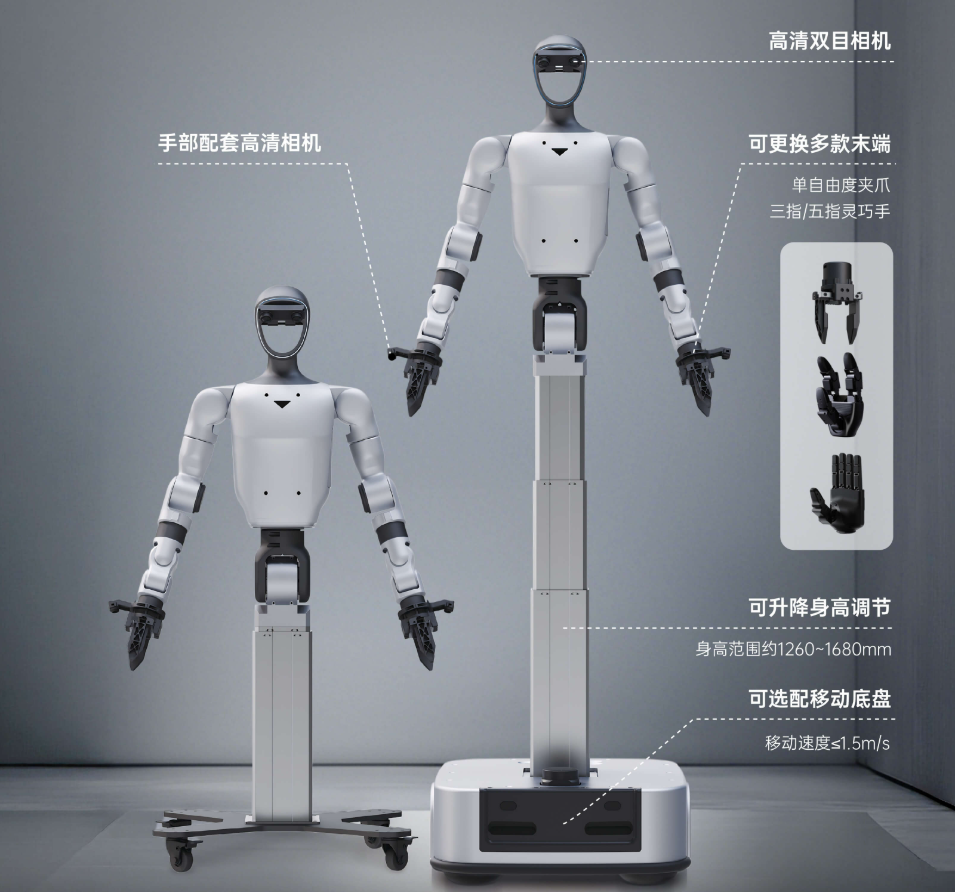
On November 13, Hangzhou Unitree Technology Co., Ltd. officially launched its first wheeled humanoid robot, the G1-D, and simultaneously launched a full-stack data acquisition and training solution based on this robot. The G1-D, launched this time, is the first wheeled robot of Unitree. The entire machine has 19 degrees of freedom excluding the end effector, with 7 degrees of freedom in each arm, 2 degrees of freedom in the waist, 1 degree of freedom in the column, and 2 degrees of freedom in the chassis. In addition, the robot’s head is equipped with a high-definition binocular camera, and the wrist is equipped with a high-definition camera. A mobile chassis is also optional: the standard version does not have a mobile chassis, while the flagship version has a mobile chassis with a speed of 1.5 m/s and supports 360° rotation in place; the standard version has a battery life of approximately 2 hours, and the flagship version approximately 6 hours.
Sber – Bipedal Robot Green
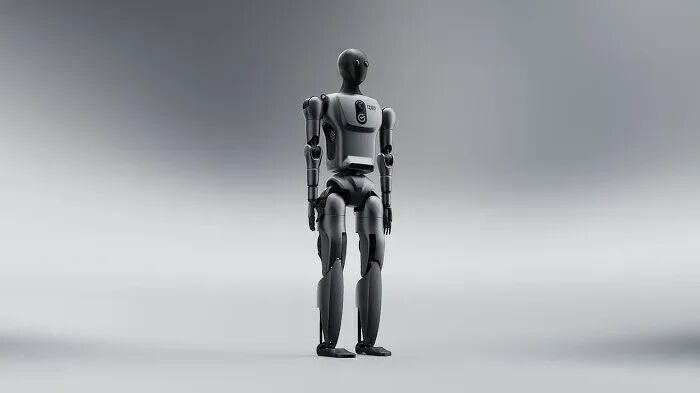
On November 13, Sber, Russia’s largest bank and technology group, officially entered the humanoid robot race, launching “Green,” a bipedal robot powered by the company’s proprietary large language model, GigaChat. The robot was showcased at the AI Journey 2025 in Moscow, marking a new stage in Sber’s development of “physical artificial intelligence.” The company claims that Green is already capable of autonomous navigation and interaction with physical objects, particularly highlighting its ability to sort and package items in unstructured environments.
Cyborg – Wheeled Robot Cyborg-W01
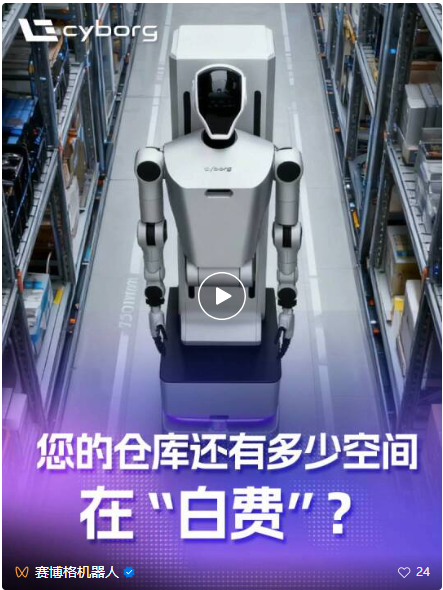
On November 14, Shenzhen Cyborg Robotics Technology Co., Ltd. unveiled two new products at China High-Tech Fair: the wheeled humanoid bionic robot Cyborg-W01 and the upgraded humanoid bionic dexterous hand Cyborg-H02. The Cyborg-W01, with its unique wheeled chassis design and high-degree-of-freedom operating system, reshapes factory logistics and collaboration models. The robot uses a wheeled chassis that can rotate in place, with a maximum movement speed of 1 m/s and a navigation accuracy of ±1 cm, allowing it to navigate flexibly even in narrow passages of 0.75 meters.
RobotPhoenix – Humanoid Robot “Hongjun”
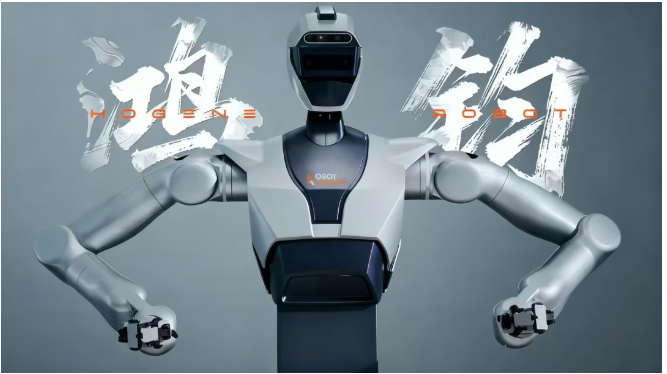
On November 17, RobotPhoenix, a domestic industrial robot company, released its first humanoid robot, “Hongjun.” According to official sources, Hongjun boasts three major innovations: a self-developed YiBrain “super brain” based on multimodal large model technology, capable of handling unpredictable changes without lengthy programming; a lifting + wheeled composite control architecture, supporting high-speed movement at 2m/s and 360° flexible steering, with the ability to navigate narrow spaces of 62cm; and a flexible collaborative bionic robotic arm with 7 degrees of freedom and a spherical joint configuration at the wrist, with a peak load of 5kg and an end-effector repeatability accuracy of ≤0.05mm. Hongjun focuses on core component assembly scenarios, expanding the capabilities of the industrial automation industry.
Tangible Robots – Home Wheeled Humanoid Robot Eggie
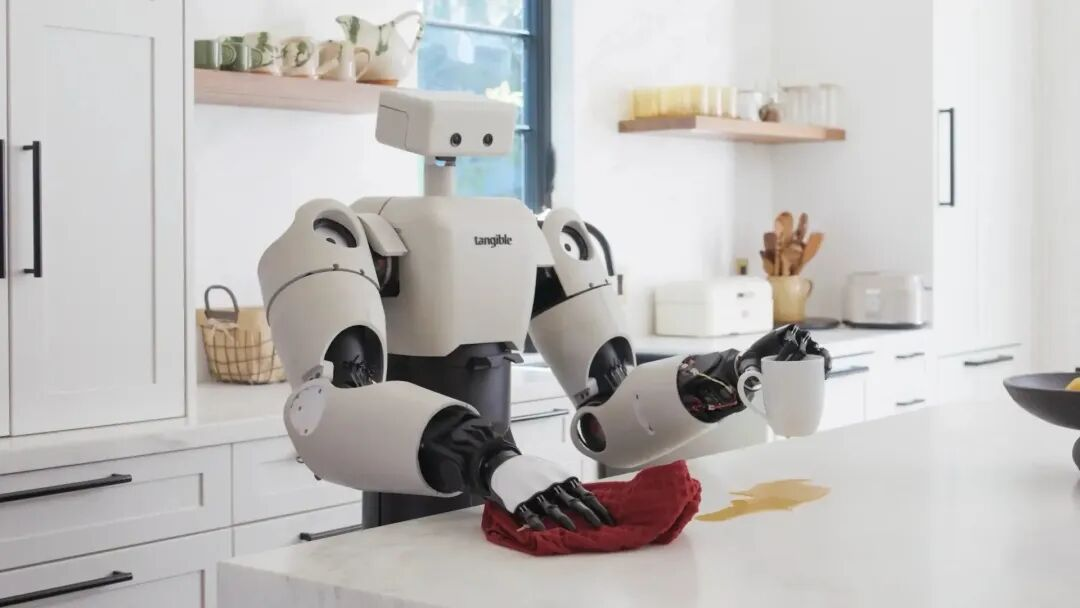
On November 18, Tangible Robots, a US-based humanoid robot startup, launched its new home humanoid robot, Eggie. Its three pillars are dexterity, compliance, and full-body control. It features five-fingered bionic hands and a wheeled mobility design, enabling complex human-robot interaction and precise manipulation in daily life scenarios. The demonstration video highlighted tasks such as cleaning up spilled drinks and removing lint from clothes. The hardware and software of the machine were independently developed by the team, emphasizing a lightweight, manufacturable, and scalable intelligent system design.
Sunday Robotics – Home Service Robot Memo
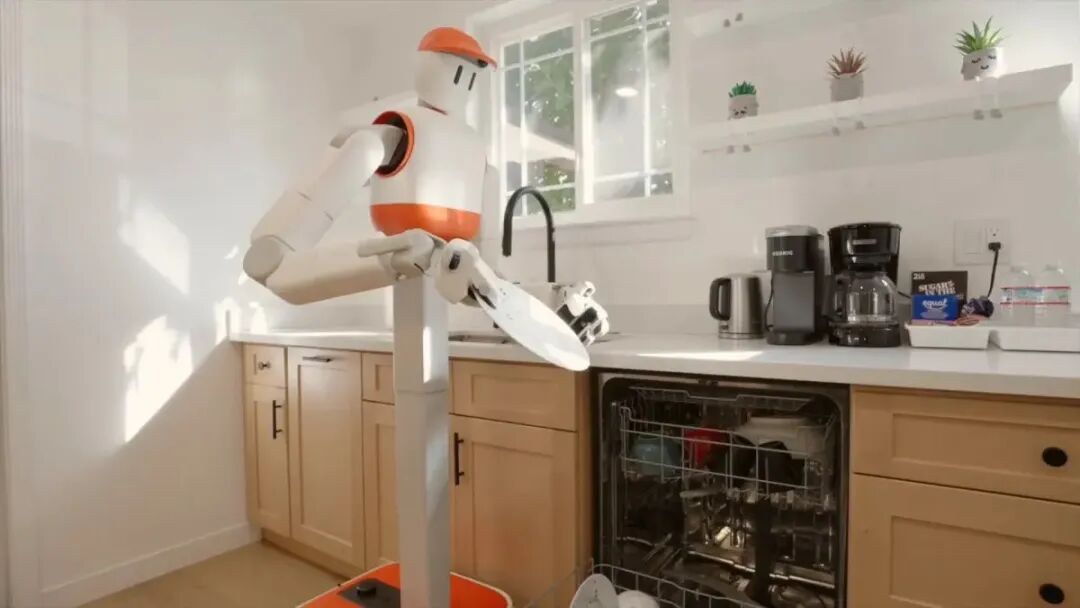
On November 19, Sunday Robotics, an embodied AI startup co-founded by Tony Zhao and Cheng Chi, released its first home service robot, Memo. According to Humanoids Daily, Memo is 1.7 meters tall and features a wheeled lifting and dual gripper design. Its retractable Z-shaped spine allows it to pick up items from the floor to high cabinets; equipped with the zero-data training model ACT-1, it can generalize to unfamiliar Airbnb layouts and autonomously perform long-range tasks such as cleaning tables and loading dishwashers. Sunday collects real-world training data using $200 skill-capturing gloves.
Agile Robots – Industrial Humanoid Robot Agile ONE
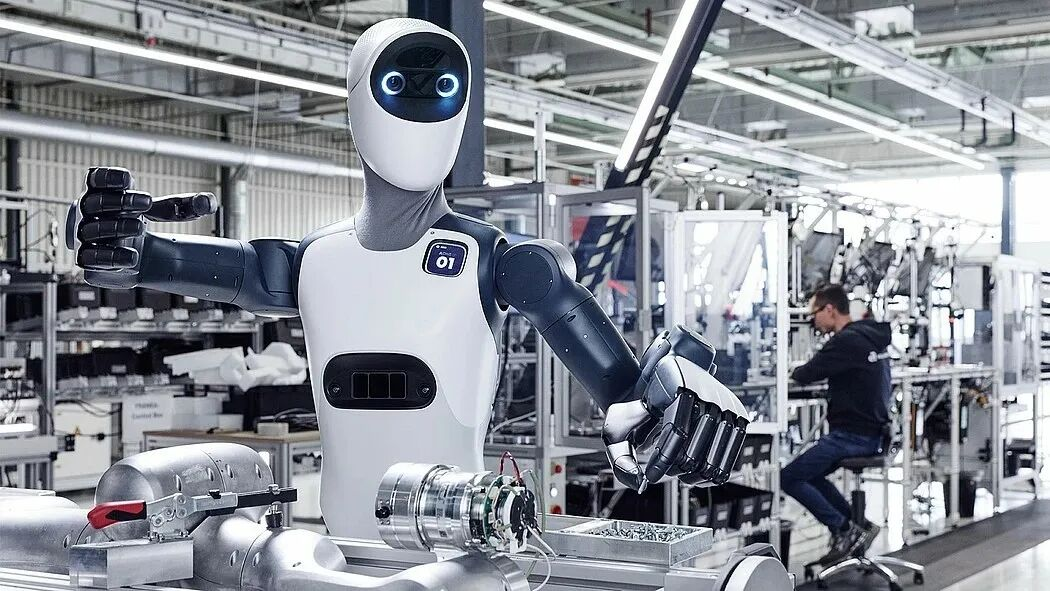
On November 19, Agile Robots, a German robotics company, launched its first industrial humanoid robot, Agile ONE. The robot is 174cm tall and weighs 69kg, with a walking speed of up to 2.0m/s and a load capacity of 20kg. Thanks to its modular fingers, 21 joints, and integrated force and tactile sensors, it can interact naturally with various objects with human-like dexterity, performing industrial tasks such as material collection and transportation, sorting, mechanical maintenance, and tool use.
CETC 21st Research Institute – Humanoid Robot “Explorer D1”
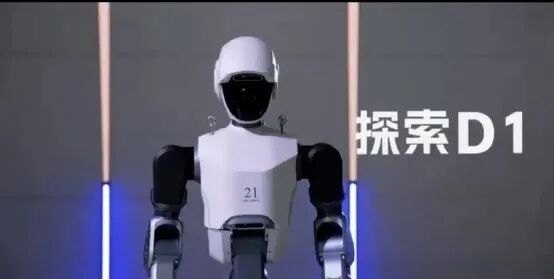
On November 25, the new generation humanoid robot “Explorer D1,” jointly developed by the 21st Research Institute of China Electronics Technology Group Corporation (CETC) and China
Electronic Technology Robot Co., Ltd., was officially unveiled. The robot is 170 centimeters tall and weighs approximately 70 kilograms. “Explorer D1” adopts a model-driven technology route based on physical laws, with a maximum movement speed of 10 km/h, capable of jumping 0.5 meters horizontally and 20 centimeters vertically, and adapting to walking on 20-centimeter steps and 20-degree slopes.
GigaAI – Humanoid Robot Maker H01
On November 26, GigaAI released the Maker H01, a wheeled humanoid robot positioned as a “physical AGI native entity.” It is 1.62 meters tall, weighs 88 kg, has 28 degrees of freedom, a single-arm rated load of 3 kg, and a maximum load of 5 kg. It is equipped with a rich sensor system, including multiple RGBD cameras and RGB cameras on the head, chest, and hands, as well as chassis LiDAR and ultrasonic sensors.
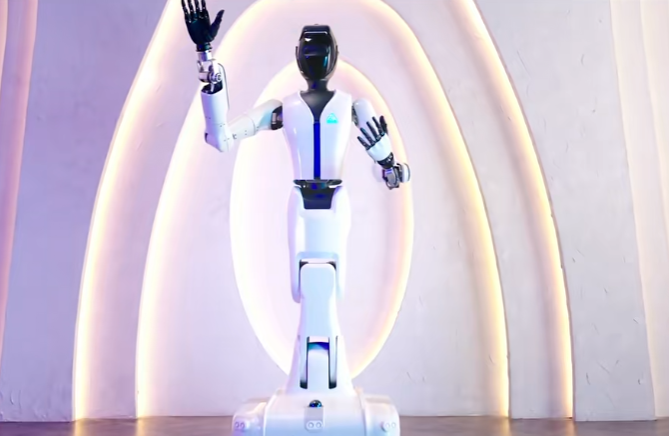
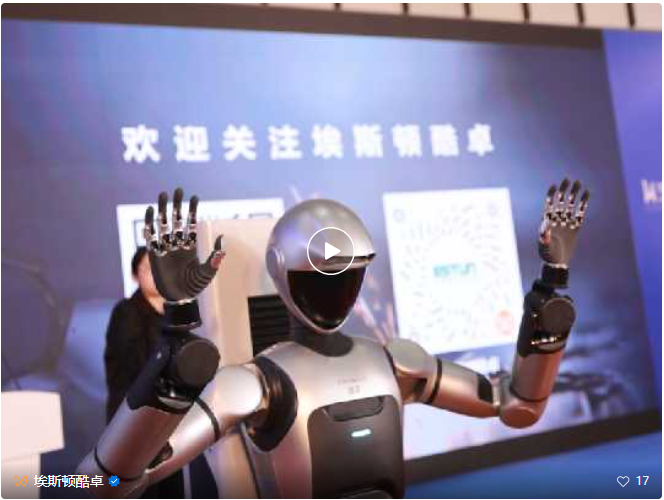
Estun Codroid – C05-L
On November 28, Estun Codroid Technology Co., Ltd. (hereinafter referred to as “Estun Codroid”) officially launched its new humanoid robot “C05-L” at the World Intelligent Manufacturing Conference. According to the press conference, “C05-L” is a high-performance wheeled embodied intelligent robot for industrial scenarios. Its height can be dynamically adjusted between 138 cm and 168 cm, balancing lightweight design with high-strength operation requirements. The robot has a single-arm rated load of 5 kg, suitable for light material handling, precision assembly assistance, and other tasks, demonstrating strong practicality and adaptability in industrial scenarios.