ByteDance’s Seed Model team recently updated dozens of robot roles, covering body design, dexterous hands, reducer control, simulation and data algorithms. Hardware, software and data are moving forward together.
The signal is clear: ByteDance is moving from building only the “brain” to building the “body.” A company known for models and traffic is now hiring reducer-control and body-structure engineers. That deserves a closer look.
1. ByteDance’s timeline: from “using a body” to “understanding a body”
Since 2023, ByteDance has released GR-1 and GR-2 robot manipulation models, migrating internet video knowledge to robot tasks.

GR-2 used 38 million video clips and 50 billion tokens; average desktop task success reached 97.7%; bin picking rose from 33.3% to 79.0%.
In 2025, Seed released GR-3 and the self-developed dual-arm mobile robot ByteMini. GR-RL achieved real-machine reinforcement learning for shoe-tying.
Models iterated fast, but the body was not self-built.
Wheeled logistics robots reached over 1,000 units, serving Douyin E-commerce, BYD and SF Express. This was scene validation and data collection, not body manufacturing.
On investment, ByteDance backed IPLUSMOBOT and VisionNav Robotics in 2021, and joined X Square Robot’s RMB 1 billion A++ round in January 2026. Its capital reach is broad, but it was not deeply tied to one hardware route.
This hiring round is different: ByteDance is pulling the “body” into its own iteration loop. Hardware roles stress mass-production experience, reliability, cost and manufacturability. Self-developed reducers and dexterous hands aim to make hardware fit the data system.
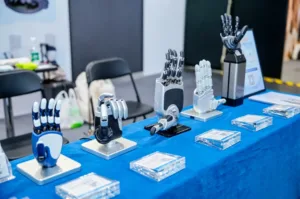
Human-like dexterous hands can reduce the loss when human VR data is transferred to robots. Self-developed actuators fit learning-based control, unlike the rigid positioning logic of traditional industrial reducers.
Analysts say ByteDance’s self-built bodies will likely first serve internal data collection, while keeping a dual-track strategy: Seed builds bodies; Volcano Engine exports embodied algorithm solutions.
This is not routine talent stocking. It means ByteDance is moving from “validating models on others’ bodies” to “customizing a body that the model can understand.”
2. Big Tech without bodies: each has its own card
Tencent, Alibaba, Baidu and Huawei all invest heavily in embodied AI. But none currently prioritizes building a body that can run and grasp.
Their shared point: they do not pay the organizational cost of body manufacturing.
Tencent: platform + brain, no hardware.
Tairos launched in 2025 and was upgraded at WAIC 2026 into a full system covering the model layer, agent framework and cloud base. Hy-Embodied models plus TairosAgent lower full-chain barriers. Zhang Zhengyou(Chief Scientist, Tencent) has said Tencent prefers platform and brain, opening capabilities to vendors.
Alibaba: capital + model interfaces, dispersed.
Ant Group’s Robbyant, founded in December 2024, focuses on a general embodied brain and LingBot models. It partners with Leju Robot on a “body + data + model” showcase. Alibaba invests in multiple body companies without deep binding to one route.
Baidu: cloud and infrastructure.
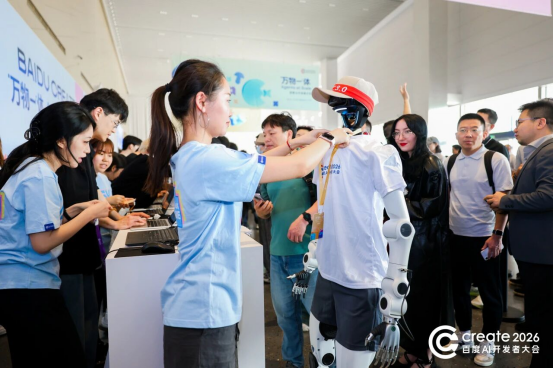
Baidu AI Cloud serves 50+ industry players including AgiBot, StarTree and Galaxea AI, offering training/inference acceleration, data services and full-stack AI cloud. It ranks first in AI cloud share in embodied AI. Shen Dou says body, data and model remain bottlenecks; Baidu supports them with cloud and models, not body building.
Huawei: the deepest infrastructure layer.
CloudRobo, launched in June 2026, covers data production, model training and real-machine reinforcement, based on Pangu and Ascend. It explicitly does not build robot bodies; it gives brains and platforms to partners. Huawei sells compute, development platforms and cloud-edge collaboration.
The common logic: each charges where it is strong and leaves the fixed cost of physical bodies to others.
3. Two routes race on the same timeline
The core debate: first stabilize hardware, run real scenes and collect data, then add models; or first build world models and simulation data foundations, then define hardware backward?
- Hardware-native, bottom-up: Unitree, AgiBot.
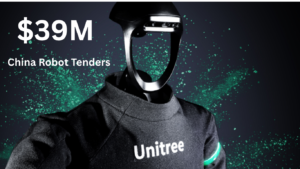
Unitree shipped over 5,500humanoids in 2025, with revenue of RMB 1.699 billion, non-GAAP net profit of RMB 590 million, and an IPO valuation of about RMB 42 billion. AgiBot’s 2025 revenue exceeded RMB 1.05 billion; by March 2026 cumulative output topped 10,000 units, and it has started a Hong Kong IPO. Both built a “sell hardware” loop through shipments and cost control. - Long-term brain value: Galbot, X Square Robot.
Galbot uses simulation-generated data and tens of billions of synthetic datato cut real-data collection costs. X Square completed three funding rounds in two months and is the only embodied AI firm led separately by Meituan, Xiaomi ecosystem, Alibaba and ByteDance. Its shipments remain in the hundreds, but capital bets on model and data barriers.
4. ByteDance stands at the crossroads
ByteDance does not start from selling hardware like Unitree or AgiBot. It also does not avoid bodies like Tencent or Huawei.
It chooses to use model capability to define hardware backward, then use custom hardware to produce model-fit data.
The organizational cost is much higher than a pure platform route. But Seed’s expertise in video pretraining and world models gives ByteDance a chance to put model iteration and body design in one loop, rather than finishing the model first and adapting hardware later.
Conclusion: the real race is the loop
The race is no longer just about building a walking, grasping humanoid prototype.
Long-term advantage depends on who can run a low-cost, sustainable, self-reinforcing data loop: simulation, real machines, labeling, feedback and iteration.
ByteDance’s job list says hardware roles. But what it is really building is the loop from the physical world back to the model, and from the model back to the physical world.
Whether this loop works matters more than any single model leaderboard score.
2026 The 9th Annual Conference on Mobile Robot Industry Development and the 4th Annual Conference on Scenario Applicationsof Wheeled Humanoid Robot will be held on December 9–10 at the Parallel World Hotel in Hangzhou.
The conference will focus on industrial embodied intelligence deployment, motion control, chassis technology, manufacturing applications, and data collection and annotation, promoting the industry’s shift from product exploration to deep scenario deployment.