Tesla has launched a new round of production audits of Chinese suppliers as it accelerates preparations for the mass production of its Optimus humanoid robot.
Tesla’s robotics team reportedly arrived in Ningbo, Zhejiang, on September 16 and began visiting suppliers the following day. The latest round of audits is focused on production readiness, including manufacturing consistency, equipment commissioning and the ability of suppliers to support scaled production.
Industry sources said Tesla has also begun placing orders with suppliers as part of the preparation process. The company is reportedly working with suppliers in several Chinese manufacturing hubs, including Ningbo, Shanghai, Hangzhou and Xiamen.
The latest development follows an earlier round of supplier audits that began in China in 2025. Companies reportedly involved included Tuopu, Sanhua, Glory Mica, Xinquan and Joyson, many of which already supply Tesla’s automotive business.
According to Chinese industry reports, the previous audits covered components and manufacturing capabilities for humanoid robots, including joint actuators, precision components, motors, controllers, encoders, planetary roller screws and dexterous-hand components.
Tesla’s latest effort appears to place greater emphasis on the transition from prototype development to manufacturing readiness. The company is reportedly evaluating suppliers on production consistency, equipment capabilities and supply-chain coordination as it prepares to scale Optimus production.
Tesla has set ambitious targets for Optimus. Chinese media reports indicate that the company plans to produce around 50,000 Optimus robots in 2026, primarily for deployment at Tesla facilities rather than for general consumer sales.
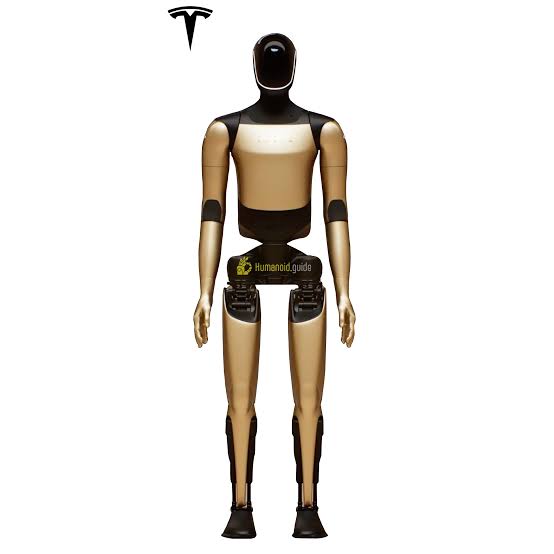
Tesla has not publicly confirmed the latest supplier audit activities. Tesla China also said in April that there were no specific plans at that time to mass-produce humanoid robots at its Shanghai Gigafactory, following reports that robots could soon be produced there.
Nevertheless, China is becoming increasingly important to Tesla’s robotics manufacturing strategy. Hao Wang, Tesla President for China said in April that the company’s Shanghai manufacturing operations could play an important role in solving the challenges associated with scaling humanoid robot production.
Tesla’s latest quarterly filing also said the company was making preparations and investments for the large-scale production of Optimus, while noting that establishing and ramping new manufacturing operations involves significant uncertainty.
For China’s robotics supply chain, Tesla’s push toward mass production could create new opportunities for companies capable of meeting automotive-grade requirements for precision components, actuators, motors, sensors and robot assemblies.
The latest supplier audits therefore represent a potentially important step in Tesla’s broader effort to move Optimus from development and pilot production toward a scalable manufacturing system.