While the Chinese autonomous driving sector has shifted from enthusiasm to rationality, even falling into the quagmire of a price war, another group of China players has quietly turned their course toward the deep blue.
At the docks of Abu Dhabi in the UAE, unmanned heavy trucks made in China tirelessly transport containers; in the vast iron mines of Western Australia, rigid mining trucks equipped with China-developed algorithms have just achieved the historic milestone of “driverless transition”; on the streets of Tokyo, Japan, and at Singapore’s Sentosa tourist area, sci-fi-inspired China-made unmanned minibuses shuttle tourists between destinations; along Singapore’s tree-lined avenues, RoboVans systematically deliver goods to customers.
This is not a trailer for a science fiction film, but a genuine snapshot of China’s autonomous vehicle “Age of Exploration”.
Unlike passenger Robotaxis, which face complex regulatory challenges in urban environments, low-speed autonomous vehicles driven by clear return-on-investment prospects and strong market demand are rapidly scaling up deployment overseas. Yet each operational route presents unique challenges.
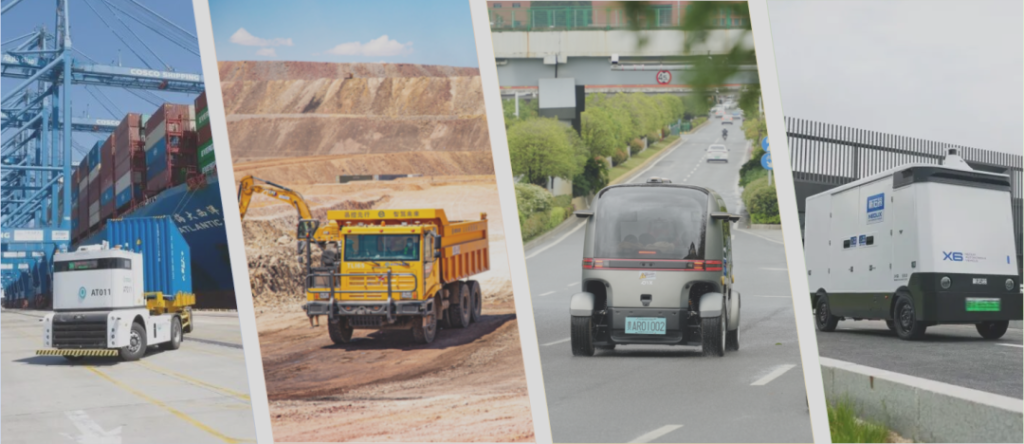
This article delves into four core commercial unmanned vehicle sectors, including unmanned ports, unmanned mining, unmanned shuttle, and unmanned delivery, engaging with leading players in each segment to analyze this sweeping global battle for transportation capacity restructuring.
The Unmanned Shuttle: From “Building Cars” to “Creating Spaces”
When autonomous vehicles transition from laboratories to urban public roads, road rights and societal perception become new variables.
The shuttle operation must not only contend with the complex road conditions on open highways, but also address the cautious stance of regulatory authorities worldwide regarding driverless vehicles, as well as public skepticism.
“Overseas customers aren’t concerned with chassis specifications; instead, they repeatedly ask: Can it navigate corners? Will it startle pedestrians? Does it align with our city’s aesthetic standards?” This observation by Yuteng Cao, Co-founder and COO of PIX Moving, highlights the first major hurdle for autonomous minibuses entering international markets.
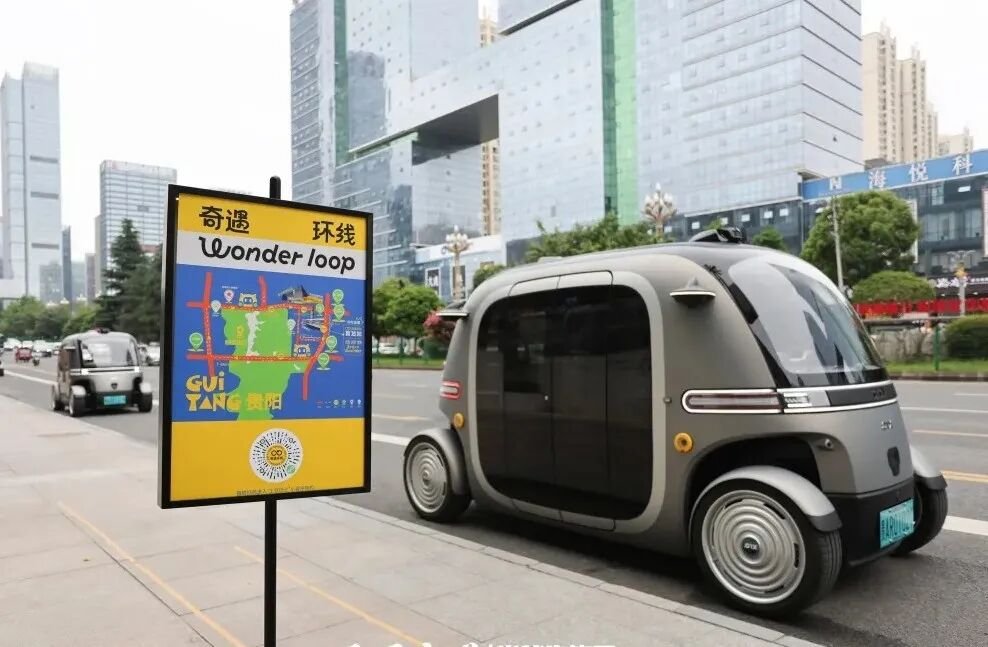
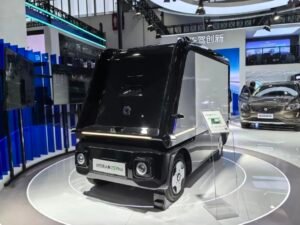
In Guiyang, PIX has turned the world’s first commercial autonomous driving mobility corridor, the Wonder Loop, into a technological landmark. Since its launch on April 20 this year, the route has attracted nearly 400 daily visitors during holidays. The capsule-style unmanned buses operated by PIX, affectionately dubbed the “Robo Bus” for their rounded, full-shaped design, have become a highly recognizable internet-famous landmark in the city and have received endorsement from Ning Mao, the Spokesperson of the Ministry of Foreign Affairs as well as official recognition from Germany’s iF Design Award.
The PIX Moving RoboBus features no steering wheel, no cockpit, and no front or rear panels; its capsule-shaped body is equipped with a panoramic glass cabin that supports bidirectional travel. The six-seat configuration and expansive view allow passengers to feel as if they are inside a mobile “transparent capsule.”
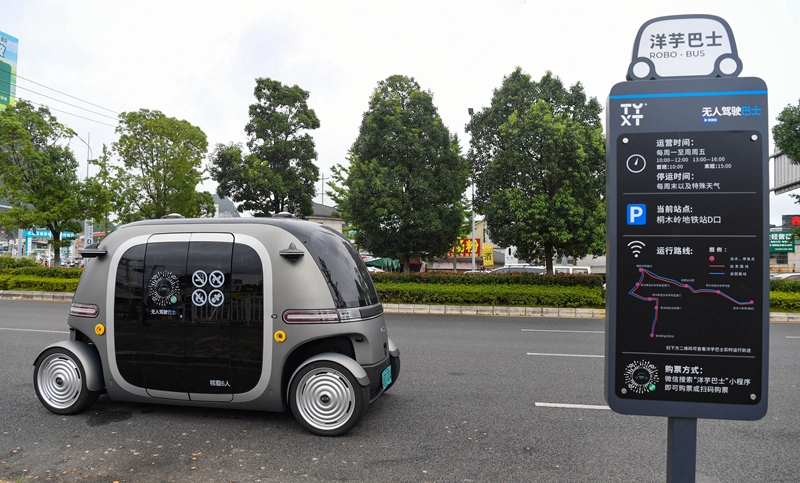
This “de-carization” design philosophy stems from PIX’s redefinition of urban mobility spaces. From its inception, PIX has abandoned traditional automotive manufacturing approaches, adopting a modular skateboard chassis architecture that reduces vehicle components by approximately 70% and lowers mold costs by about 90%, enabling rapid development across diverse scenarios.
Yuteng Cao emphasized, “Traditional vehicles first have a chassis before being fitted with a body; we start by developing a standardized intelligent chassis and then assemble the vehicle according to specific scenarios, much like building with Lego.” The popularity of the nickname “Robo Bus” exemplifies the success of this flexible manufacturing approach. It bridges the gap between cutting-edge technologies and infuses advanced tech with human-centric warmth.
However, this sci-fi-inspired product still faced distinct challenges across different markets due to varying regulatory requirements, cultural differences, and operational conditions during its initial global rollout.
Japan must comply with welfare vehicle standards and narrow road conditions; the Middle East requires consideration of religious customs and temperatures as high as 50°C; while Europe demands rigorous CE certification…
To address these differences, PIX adopted a strategy of deep localization rather than simple export. In Japan, the company established a joint venture with TIS and built overseas robot factories, obtaining L4 autonomous driving licenses to tackle the severe aging driver population; in Europe and the Middle East, it promoted compliance through demonstration operations and smart city projects.

Residents of Davos, Switzerland queue up to experience the PIX Moving “Robo Bus.”
Yuteng Cao categorizes global markets into three types: those with established deep localized partnerships, those advancing compliance and pilot operations, and those in the demand-building phase. This tiered approach enables PIX to not merely export products but progressively build global delivery, compliance, and operational capabilities across different markets.
In his view, although market conditions vary across regions, all face structural challenges such as population aging, driver shortages, rising public transportation costs, and growing demands for improved urban service efficiency. These issues are driving the autonomous driving industry from the technical validation phase toward the commercialization phase.
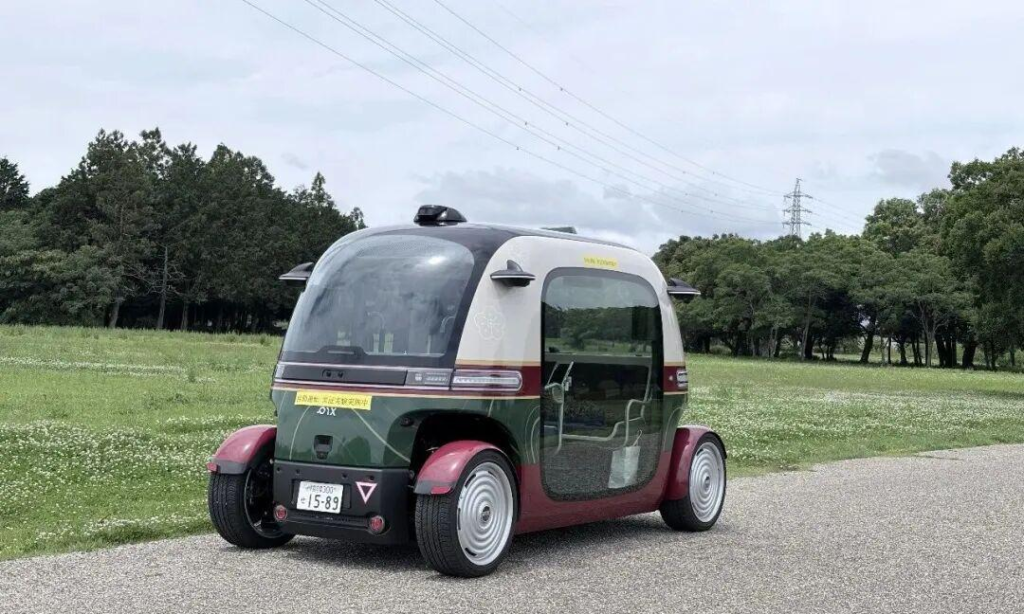
PIX Moving’s “Robo Bus” service has launched in Akihabara-cho, Japan.
Under this trend, PIX sees an opportunity not merely in replacing human workers with robots, but in enhancing existing urban service systems through autonomous mobility networks, enabling cities to deliver public services more cost-effectively and efficiently.
It was within this market context that PIX established its distinctive competitive positioning. “Our competitive moat does not stem from any single technology, but rather from a systemic advantage comprising platform-based hardware, a digital manufacturing ecosystem, continuous RaaS services, and a closed-loop operational data system.”
Currently, PIX products are available in over 30 countries and regions worldwide. However, compared to market size, Yuteng Cao places greater emphasis on market depth, specifically, the ability to establish a long-term, sustainable urban robotics service network overseas.
“From its inception, PIX has adopted a global strategy of ‘first overseas, then domestic.’ For us, going global means more than simply selling products abroad, it involves assessing demand for autonomous mobility solutions across different countries and regions, building localized capabilities, and progressively establishing a comprehensive global delivery and operational framework.”
As PIX explores the new paradigm of “mobile space,” traditional bus manufacturers and autonomous driving companies are also accelerating their deployment in urban shuttle services.
Mogo.ai’s autonomous buses continue expanding into more countries and regions across Southeast Asia, Europe, and the Middle East. WeRide has deployed its L4 full-stack algorithm to achieve commercial Robobus operations on public roads in Abu Dhabi and Singapore. Traditional bus manufacturers such as YUTONG and Xiamen King Long have also introduced their autonomous shuttle solutions to the Japanese and European markets.
In the context of multiple stakeholders competing for overseas markets, technology implementation is no longer a task undertaken in isolation by individual companies but rather a systemic challenge requiring industry-wide collaboration. Road rights, cultural adaptation, and public acceptance have become essential prerequisites for deploying autonomous shuttle services in urban environments.
As Yuteng Cao aptly put it, “When a product becomes integrated into citizens’ daily lives, users will naturally create the most compelling narratives about it.” Only when technology stops feeling cold can cities truly embrace these mobile spaces.
The Unmanned Port: Establish a solid foundation first
Ports serve as the lifeline of global trade and represent one of the most advanced scenarios for unmanned commercial operations.
The working environment here is relatively enclosed, the routes are well-defined, and there is an extreme focus on transportation efficiency, making it an ideal environment for deploying autonomous driving systems.
“True globalization isn’t about simply relocating domestic products abroad; it’s about establishing a solid foundation there,” WestWell summarized its overseas expansion strategy in an interview with New Strategy Low-Speed Automated Driving Media.
Founded in May 2015, WestWell specializes in the industrial application of “AI + New Energy,” dedicated to delivering integrated solutions, including intelligent execution, operational coordination, and decision-making support for major logistics scenarios such as seaports, land ports, airports, smart factories, and multimodal transportation systems, leveraging artificial intelligence and autonomous driving technologies.
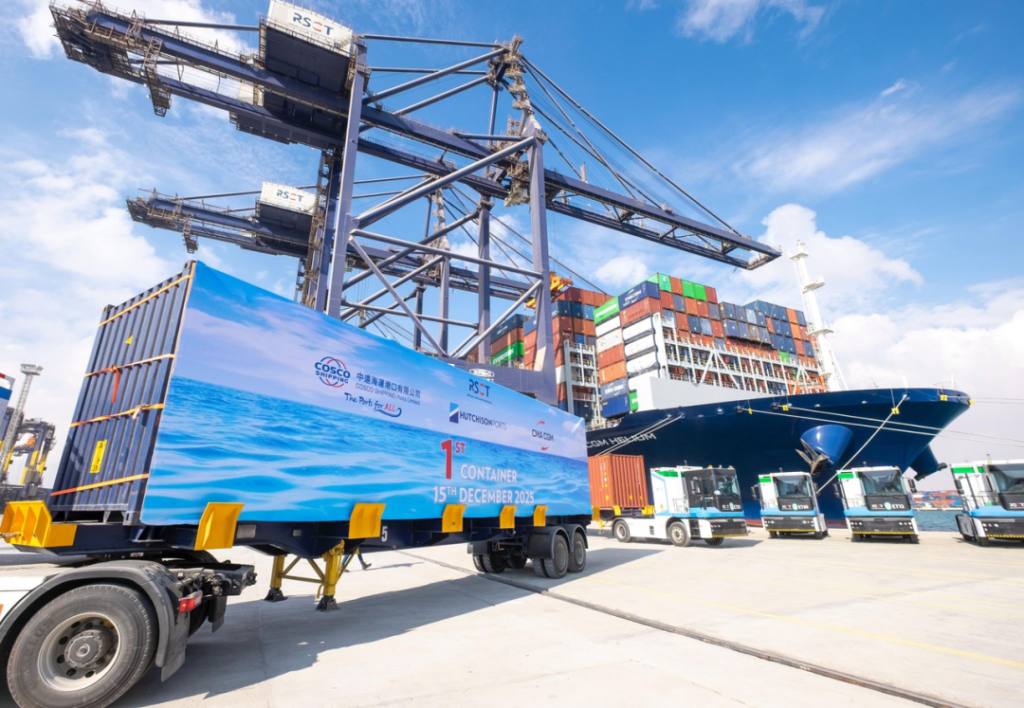
The WestWell E-Truck delivered the first shipment to the Red Sea Container Terminal at Sokona Port in Egypt, marking the port’s official opening.
As one of the earliest companies to launch autonomous vehicle projects overseas, WestWell has adopted a pragmatic approach focused on extensive delivery and thorough customization.
“We deeply recognize that professional delivery, comprehensive services, and a thorough understanding and respect for diverse regional cultures and operational practices are the true keys for China enterprises to step onto the international stage.”
In response to overseas clients’ stringent demands for data security and system compatibility, WestWell consistently prioritizes localization as its core principle. By establishing local teams and developing a localized operational framework characterized by precise demand alignment, efficient project implementation, and attentive post-sales support, the company has integrated technology seamlessly into regional development.
Today, WestWell‘s Q-Truck has achieved the world’s first regular mixed-mode operation at the Port of Laem Chabang, Thailand, secured a batch order of 100 units at the Port of Felixstowe, UK, serves over 30 countries worldwide, and operates more than 1,000 autonomous vehicles online.
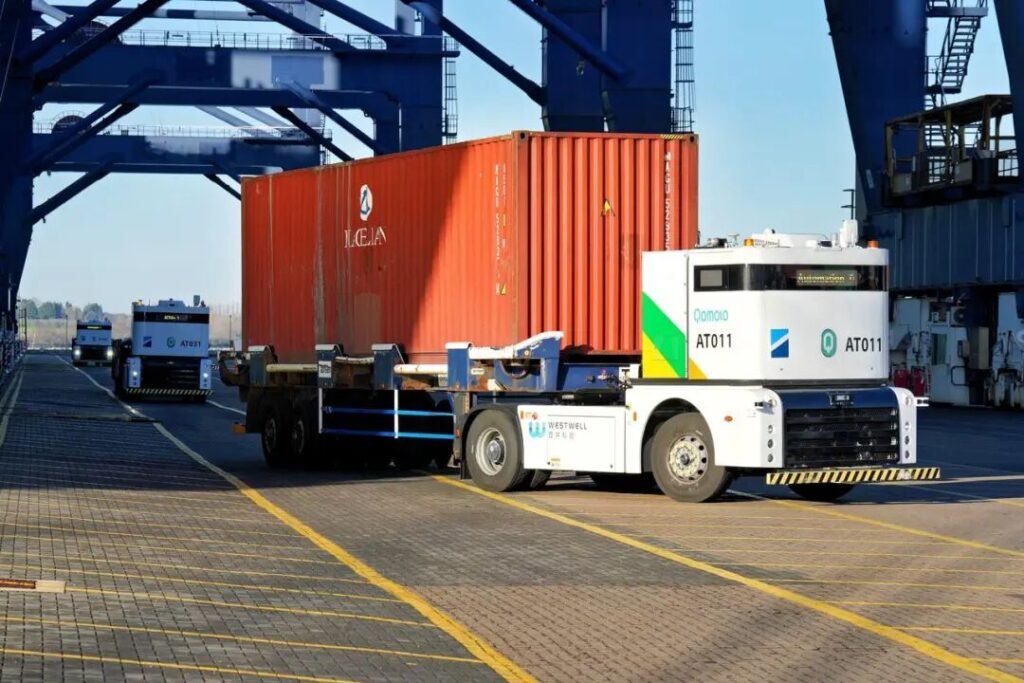
The Q-Truck ATT fleet operated by WestWell is stationed at the Port of Felixstowe, UK.
In the field of port automation, besides WestWell, other companies have also chosen to make breakthroughs simultaneously in both technological architecture and business models.
Fabu.ai implemented an “integrated vehicle-cloud solution” to deploy ATTs and trailers at the Port of Napier, New Zealand, while establishing a fleet of intelligent guided flatbed transport vehicles at Tuas Port, Singapore and securing a contract for a fleet dispatching system; SENIOR adopted a “capital-intensive operation coupled with software/hardware provision” model to expand its presence in railway ports and logistics parks across Southeast Asia, Western Europe, and the Middle East, with all collaborations now entering substantive implementation phases. Additionally, TITAN DRIVERLESS, UTOPILOT, and UISEE have accelerated their global expansion efforts, with their products and solutions available in key markets including the Middle East, Europe, North America, and Southeast Asia.
The delivery system and localization services are critical challenges that ports must address for deploying autonomous vessels at sea.
As Westwell stated, “We do not chase fleeting trends but instead focus on deepening and refining our efforts in proven sectors. What we deliver to our customers is not just a vehicle, but sustainable efficiency improvements.” This long-term perspective is precisely the most scarce quality in China’s high-end manufacturing exports.
Unmanned Mining: Safety and Compliance as the Key
When the operational environment shifts from a relatively enclosed port to a more complex mining setting, the technical and regulatory requirements become significantly more stringent.
The mining environment is harsh, with extremely high demands for heavy loads, and the global market has long been monopolized by international giants such as Caterpillar and Komatsu, making it a formidable challenge that China’s autonomous vehicles must overcome when expanding overseas.
Founded in 2018, EACON is a provider of intelligent driving solutions for mining transportation, specializing in autonomous driving systems and operational dispatch platforms for mining vehicles. The company has independently developed algorithms for perception, decision-making, planning, and control to significantly enhance the reliability and safety of mining operations. To date, its cumulative operational mileage has exceeded 100 million kilometers, with over 2,580 unmanned mining trucks deployed worldwide, maintaining a six-year streak of accident-free operations.
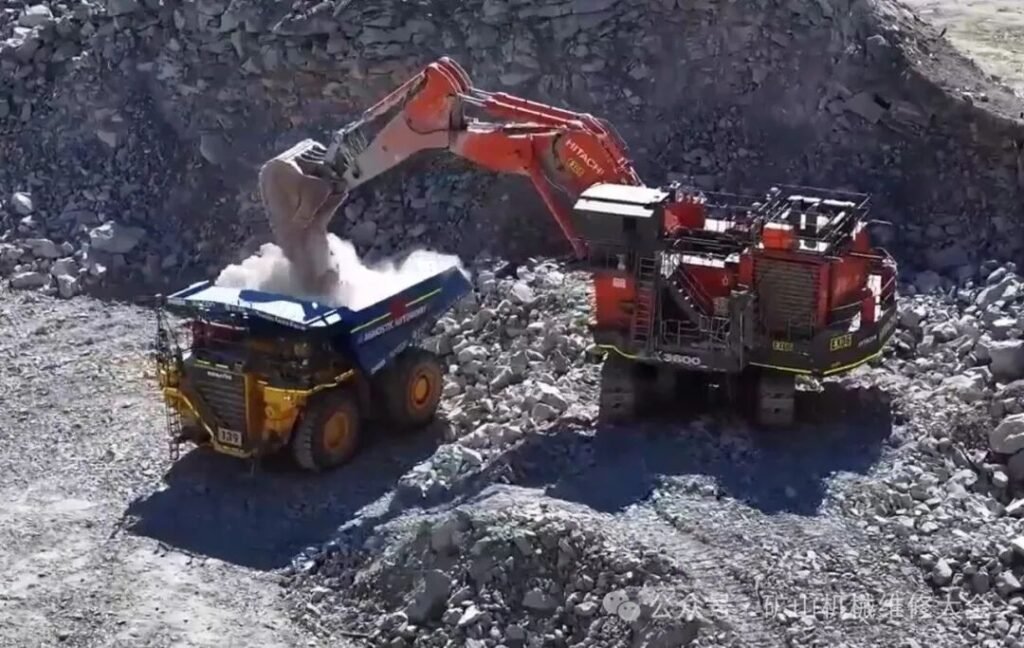
Driven by a deep respect for this high-standard market environment, EACON chose Australia, the country with the most stringent mining regulations worldwide, as its first destination for global expansion.
“Australia imposes stringent requirements in terms of safety awareness, management, standards, and compliance. The successful commercialization of the product there alone serves as compelling evidence that its standards, safety protocols, and operational delivery specifications have reached globally leading levels,” stated EACON.
On December 18, 2025, at the Norton Gold Fields in western Australia, EACON, in collaboration with Zijin Mining and global mining services provider Thiess, successfully conducted the first-ever “driverless transition” test.
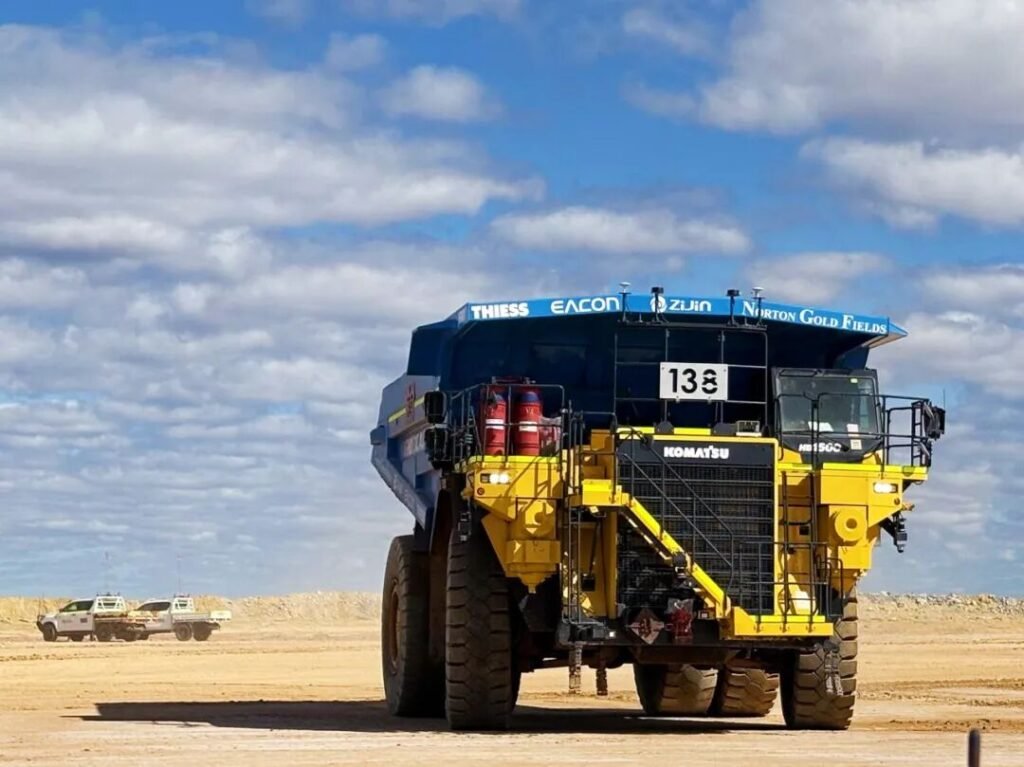
EACON successfully completed the “driverless transition” test for the first time at the Norton Gold Fields in Australia.
EACON stated, “Over the past eight years, our product design has consistently been grounded in safety principles and incorporates extensive safety measures, laying a solid foundation for EACON’s entry into the Australian market.”
Furthermore, EACON has established a local product management team in Australia with over 20 years of mining experience and more than a decade of autonomous driving expertise. The company has spearheaded the development of a comprehensive, transparent verification mechanism featuring real-time synchronization among three parties, adopting a step-by-step, cautious approach to gradually build trust with mining operators.
In terms of technical innovation, EACON leveraged its extensive engineering expertise in vehicle understanding and electronic control system modifications to successfully retrofit mainstream rigid mining trucks in Australia. Capitalizing on its unique distributed architecture resilience and a cross-brand “Independent Intelligent Layer,” the company broke through overseas regulatory barriers, laying a solid foundation for entering the core mining industry.
Building on these experiences and foundations, EACON announced a new breakthrough in the Australian market this June. Six Komatsu HD1500 rigid mining trucks equipped with EACON autonomous system officially commenced unmanned transportation operations in the real production environment of Havana Open Pit, Norton Gold Fields in Kalgoorlie, Western Australia. This achievement further demonstrates EACON’s capability to implement its solutions in overseas mining environments and provides a practical reference for the intelligent transformation of global open-pit metal mines.
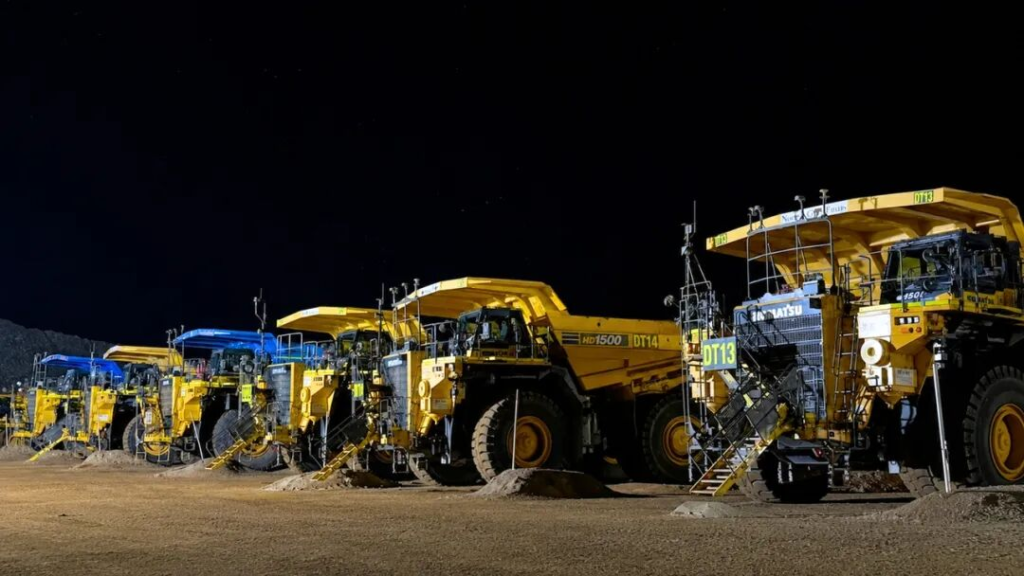
Six unmanned mining trucks equipped with the EACON autonomous system have been deployed on Australia’s production line.
While EACON has chosen Australia, the market with the highest global standards, as its entry point, other companies are also pursuing differentiated overseas strategies tailored to their strengths. For instance, CiDi has forged deep partnerships with automakers to expand globally, making significant investments in copper-rich regions across the Middle East and Africa; Boonray and Infinite Mining have focused on Southeast Asia and Mongolia, leveraging exceptional cost-effectiveness and rapid response capabilities to capture growing market share.
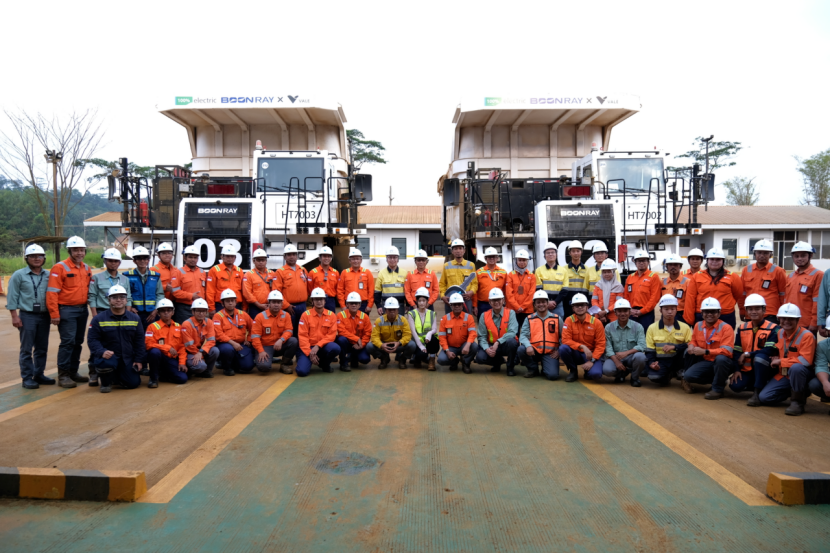
Boonray and PT Vale Indonesia Tbk have officially signed a strategic cooperation agreement.
Overall, regardless of the chosen route, safety compliance and adaptation to extreme environments are critical hurdles that China’s unmanned mining trucks must overcome during their international deployment.
Unmanned Delivery: The Critical Challenge of Localizing the “Last Mile”
As the application of autonomous vehicles shifts from heavy-duty mining operations to urban service scenarios, their operational focus has accordingly expanded toward city-based applications.
The rapid growth of e-commerce and instant retail has made unmanned delivery the sector closest to commercial profitability and also the most fiercely competitive one.
“China’s RoboVans have virtually no direct competitors overseas, maintaining a leading position with a significant gap. However, the challenges of expanding internationally are twofold: first, there are no relevant regulations to refer to, forcing companies to navigate the path through trial and error; second, there are local compliance issues, including data management.” Enyuan Yu, Founder and CEO of Neolix, described the current landscape of overseas expansion in this manner during a public interview.
Currently, Neolix has designated the Middle East as its first overseas destination and has obtained the world’s first public road unmanned delivery vehicle license in the UAE. Using the UAE as a bridgehead, the company plans to deploy 5,000 unmanned vehicles locally by the end of 2026, with subsequent expansion along the Belt and Road route and other regions.
Building on this foundation, Neolix plans to successively establish demonstration models in Northeast Asia, Southeast Asia, Europe, and Hong Kong, China, aiming to expand its presence beyond the Middle East market by achieving deployment at the scale of hundreds of units in two or three additional countries or regions. The company also targets overseas annual sales of 5,000 to 10,000 units by 2027.
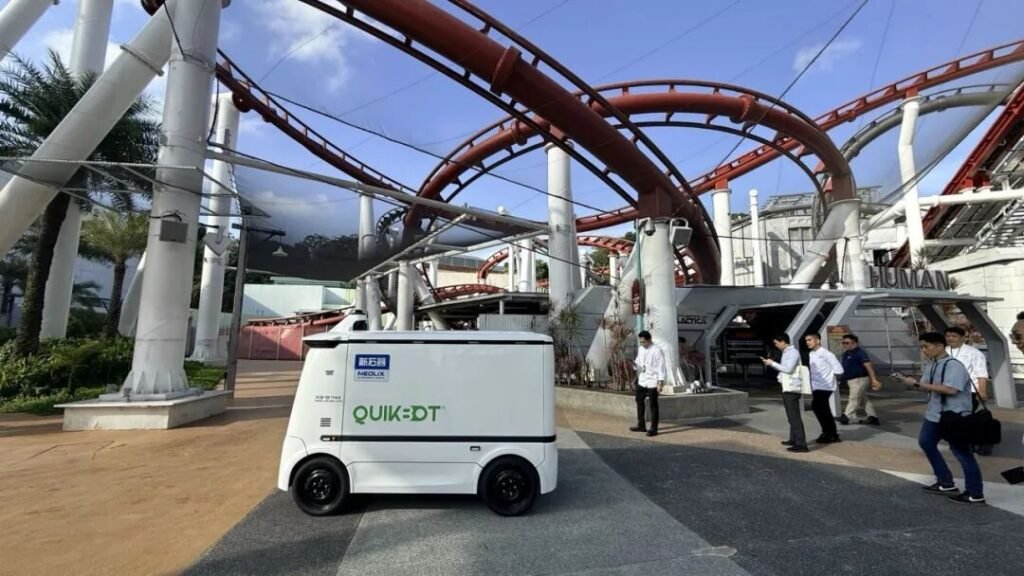
Neolix has obtained the first certification for testing RoboVans in Malaysia.
While the Neolix platform is expanding its large-scale deployment, some companies are opting to focus on lightweight operations and localized services, adopting a flexible approach to earn market trust.
Qing Zhou, Co-founder of Zelos, has publicly stated, “While replicating China’s mature urban delivery model overseas faces challenges, the overall picture presents’ more opportunities than obstacles.‘” He believes that the experience and scale accumulated domestically provide a solid foundation for international expansion, while developed countries abroad often have a more pressing demand for unmanned delivery services.
In expanding its overseas markets, Zelos’s core strategy is localization, particularly in logistics services. In late January 2026, Zelos completed a strategic integration with Cainiao. Following the merger, Zelos can leverage Cainiao’s global logistics network and service infrastructure to reduce on-site deployment costs and enhance service response speeds.
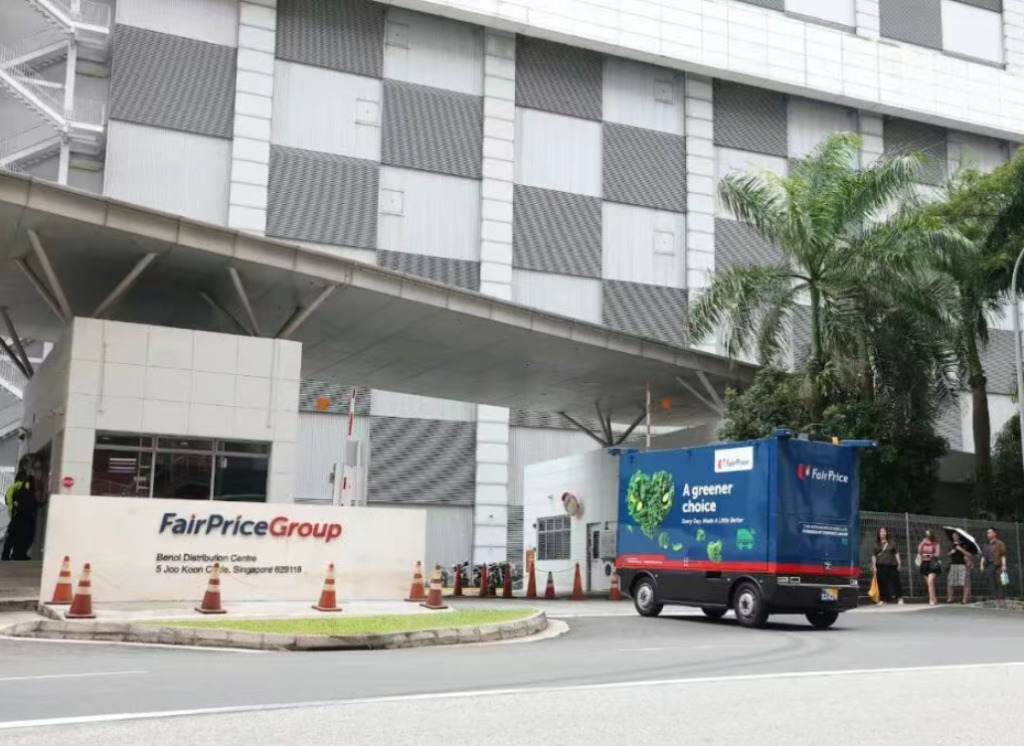
Currently, Zelos has extensive overseas implementation experience: in Singapore, Zelos was the first company to obtain a license for RoboVans, serves as a member of the Steering Committee on Autonomous Vehicles, Singapore, and participated in revising the TR-68 national standard for autonomous driving. These achievements not only demonstrate its technical compliance but also establish a standardized foundation for subsequent adoption in more developed countries.
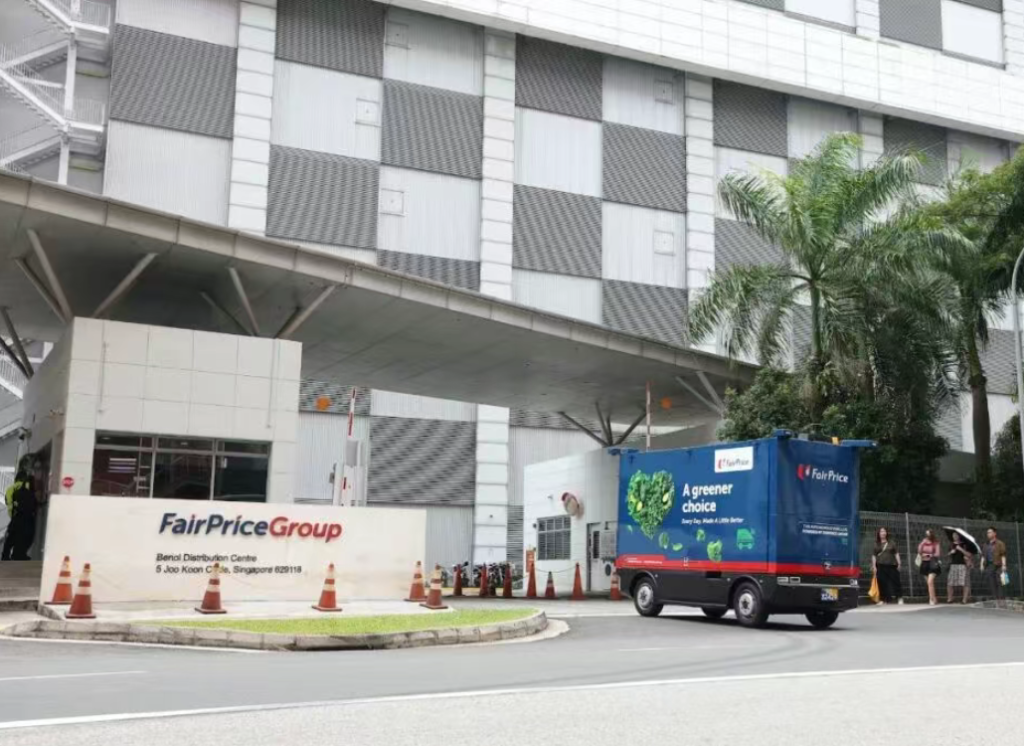
Zelos has obtained the first commercial operating license for unmanned freight transportation services in Singapore.
Unlike the approaches adopted by Neolix and Zelos, Rino.ai has pursued a more cautious “using existing resources” strategy. Its core approach involves avoiding direct engagement with end-users and instead leveraging local enterprises as partners, requiring alignment with local government administrative procedures and road right applications as prerequisites. In practice, Rino.ai collaborates with major domestic clients such as SF Express to expand its presence in Southeast Asia while actively engaging international clients and Chinese community resources, thereby sharing compliance and operational risks through deep partnerships.
To address the prolonged approval cycles and low institutional efficiency in overseas road right-of-way approvals, Rino.ai has explicitly identified “low-speed limit scenarios” as its primary focus at this stage, actively avoiding expressway areas to reduce costs associated with algorithm architecture adjustments and validation. By conducting road right-of-way optimization and data accumulation under relatively controlled operating conditions, the solution has already undergone preliminary deployment and validation in Southeast Asia and markets with significant Chinese population presence, establishing compliant operational experience and scenario-specific data for future expansion into regions with high labor costs such as Europe and America.
Unlike the approaches of the aforementioned companies, Go Further.ai focuses more on delivering end-to-end solutions encompassing technology, standards, and operations.
As an early entrant in the unmanned delivery sector, Go Further.ai initiated its overseas strategic layout as early as 2021. After two years of technological refinement and scenario validation, the company achieved mass exports of L4 autonomous vehicles in 2023. In terms of implementation strategy, Go Further.ai adheres to a “tailored approach,” adopting a composite business model of “deployment + manufacturing + operation” to fully adapt to regulatory requirements and operational characteristics across different countries and regions. To date, its autonomous vehicles have successfully entered markets in Europe, Japan, South Korea, Vietnam, Thailand, and other locations, serving as a key example of how China’s autonomous driving solutions integrate into the global smart logistics ecosystem.
Go Further.ai RoboVan has launched its first end-point delivery service in villa areas of Vietnam.
Overall, localized operation and maintenance as well as adaptation to long-tail scenarios are fundamental prerequisites for unmanned delivery services to transition from pilot projects to large-scale deployment. Only by establishing a comprehensive localized ecosystem can China’s RoboVans move from “going global” to “gaining a foothold in the market.”
Conclusion:
From WestWell and Fabu.ai weaving networks at ports to EACON, Boonray, and CiDi drilling through rock in mines; from PIX redefining urban spaces on streets to Neolix and Zelos navigating city streets and communities, China’s autonomous vehicle companies are each venturing into uncharted territories in their own ways, while also facing challenges such as delivery services, safety compliance, road rights culture, and localized operations. Although their paths differ, they share a common direction: China’s autonomous vehicles are accelerating their transition from “product globalization” to “ecosystem globalization.”
Behind Australia’s mining trucks, UK’s ATTs, Tokyo’s minibuses, and Singapore’s delivery robots lies the same intelligent heart originating from China.
This “great voyage” of the autonomous vehicle is underway with strong winds and fully deployed sails.
The 6th Low-Speed Autonomous Driving Scenario Ecosystem Co-construction and Expansion Conference 2026, hosted by the Low-Speed Automated Driving Industry Alliance (LSAD) and organized by Jinglv Environment, will take place in Hefei from July 23 to 24.
The conference aims to establish a platform for in-depth dialogue between the capital and industrial sectors. By dissecting the commercial logic of mining applications and seeking the “greatest common denominator” for multi-scenario deployment, the event seeks to provide key insights for the high-quality development of the low-speed autonomous driving industry in the post-IPO era.