Three giants in the unmanned delivery sector secured new funding this month.
According to incomplete statistics from the New Strategy Low-Speed Autonomous Driving Industry Research Institute, the domestic and international autonomous driving sectors witnessed 6 major financing events in October 2026, with a total disclosed amount exceeding 15.3 billion yuan (converted at an exchange rate of 1 USD ≈ 6.88 RMB). The funding spans key areas including unmanned delivery, autonomous mining trucks, and drive-by-wire chassis.
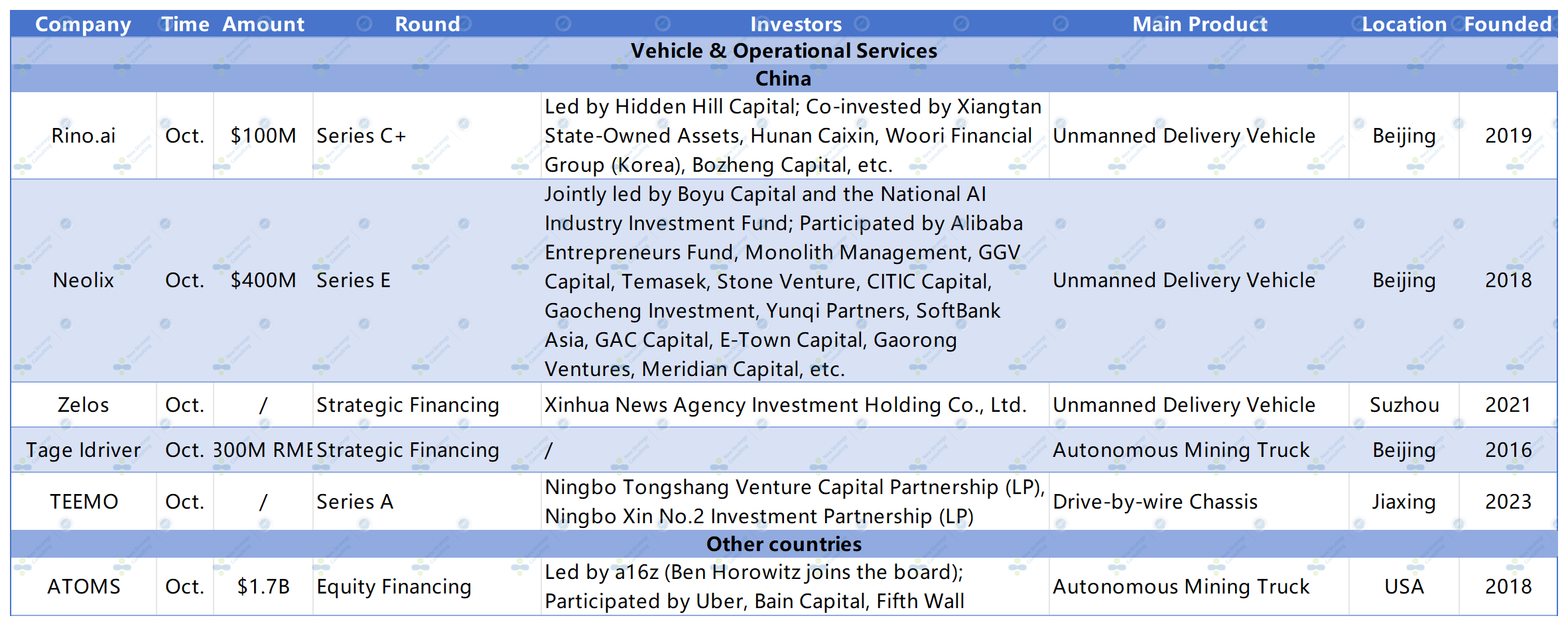
October 2026 Autonomous Driving Financing Overview Table
Domestic vs. International Breakdown
Domestically, there were 5 financing events, with a cumulative disclosed amount exceeding 3.7 billion yuan. Internationally, there was 1 major event, raising over 11.56 billion yuan.
In terms of scale, the single massive international equity financing significantly boosted the total market volume. However, domestic single-deal averages remained relatively low. Neolix led the domestic market with a nearly $400 million Series E round, closely followed by White Rhino’s C+ round. The overall landscape demonstrates a “head players attract capital, mid-tier players supplement” characteristic.
Key Investment Sectors: Unmanned Delivery and Hard Tech
From a sectoral perspective, unmanned delivery remains the largest fundamental base. Neolix, Zelos, and White Rhino all secured funding this month, validating the commercial model of delivery-as-a-service. Meanwhile, autonomous mining company Tage Idriver and international physical AI company ATOMS secured hundred-million-level financing, doubling down on closed-scenario mining operations. Furthermore, drive-by-wire chassis provider Shangyuan Zhixing filled a crucial upstream hardware gap. Capital is consistently accelerating a dual-track layout of “scenario operations + underlying hardware.”
Investor Trends: Industrial Capital and State-Owned Funds
A prominent signal this month was the entry of industrial capital and national-level funds. Neolix received joint lead investment from Boyu Capital and the National AI Industry Investment Fund, with participation from Alibaba and Temasek. White Rhino introduced Hidden Hill Capital and local state-owned capital, while Zelos gained strategic support from Xinhua Investment Holdings. Beyond financial investment, the integration of state-owned and industrial capital is becoming the mainstream configuration in the autonomous driving sector.
Market Outlook: From “Broad Concept Bets” to Commercial Viability
Overall, following a peak in September, October’s autonomous driving investment and financing saw a structural correction. However, the “gold content” of individual deals actually increased, with financing returning to industrial fundamentals. Capital is flowing more concentratedly toward unmanned delivery, closed-scenario mining, and hard tech segments like drive-by-wire chassis and smart driving chips—sectors that have already proven their commercial models.
In short, the total volume pullback does not equal a cooling of interest. Instead, it marks a strategic shift from “broad concept bets” to “careful selection.” As large-scale applications advance, capital deployment will continue to concentrate on industry leaders, seek certainty within the supply chain, and fund companies capable of self-sustaining (self-generating cash flow).
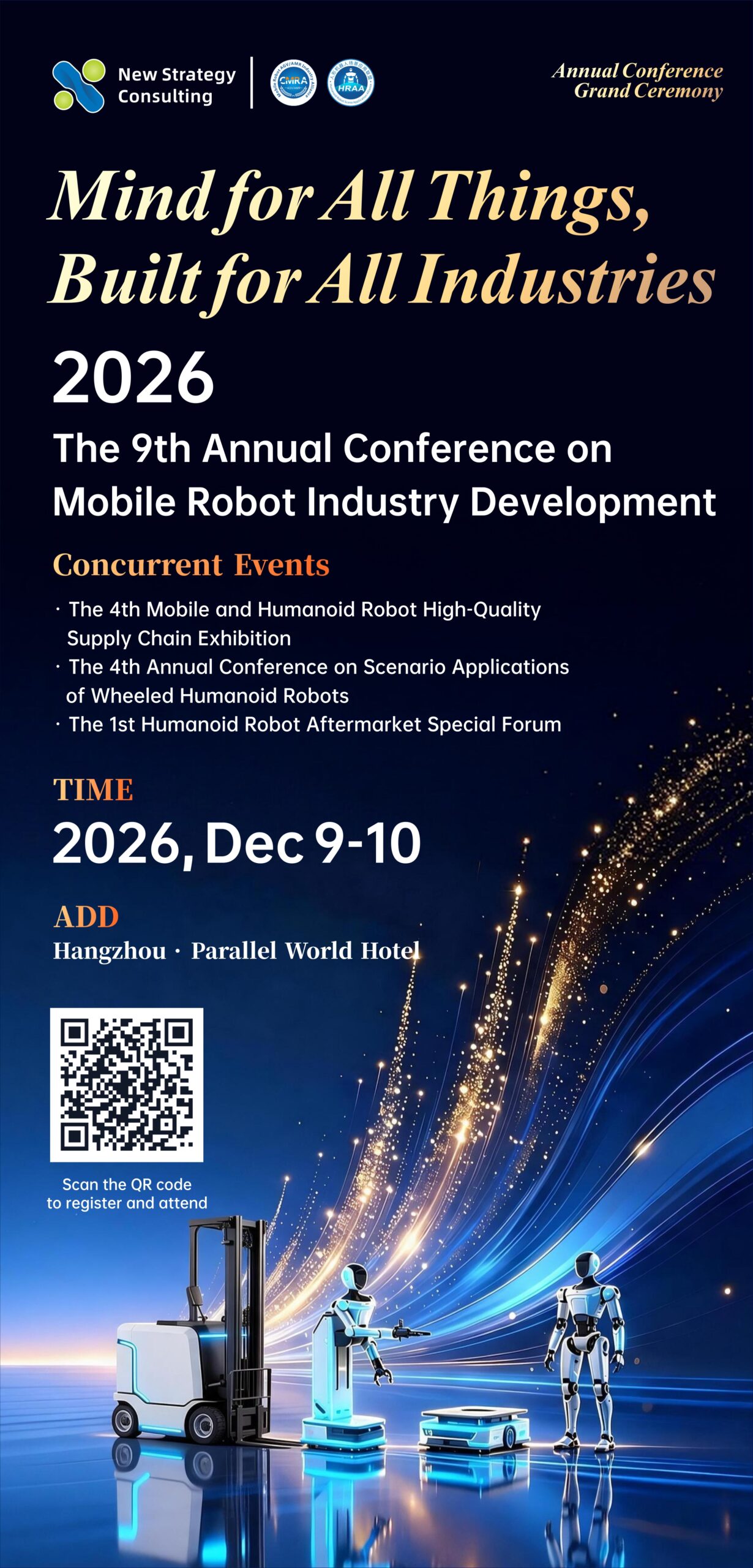
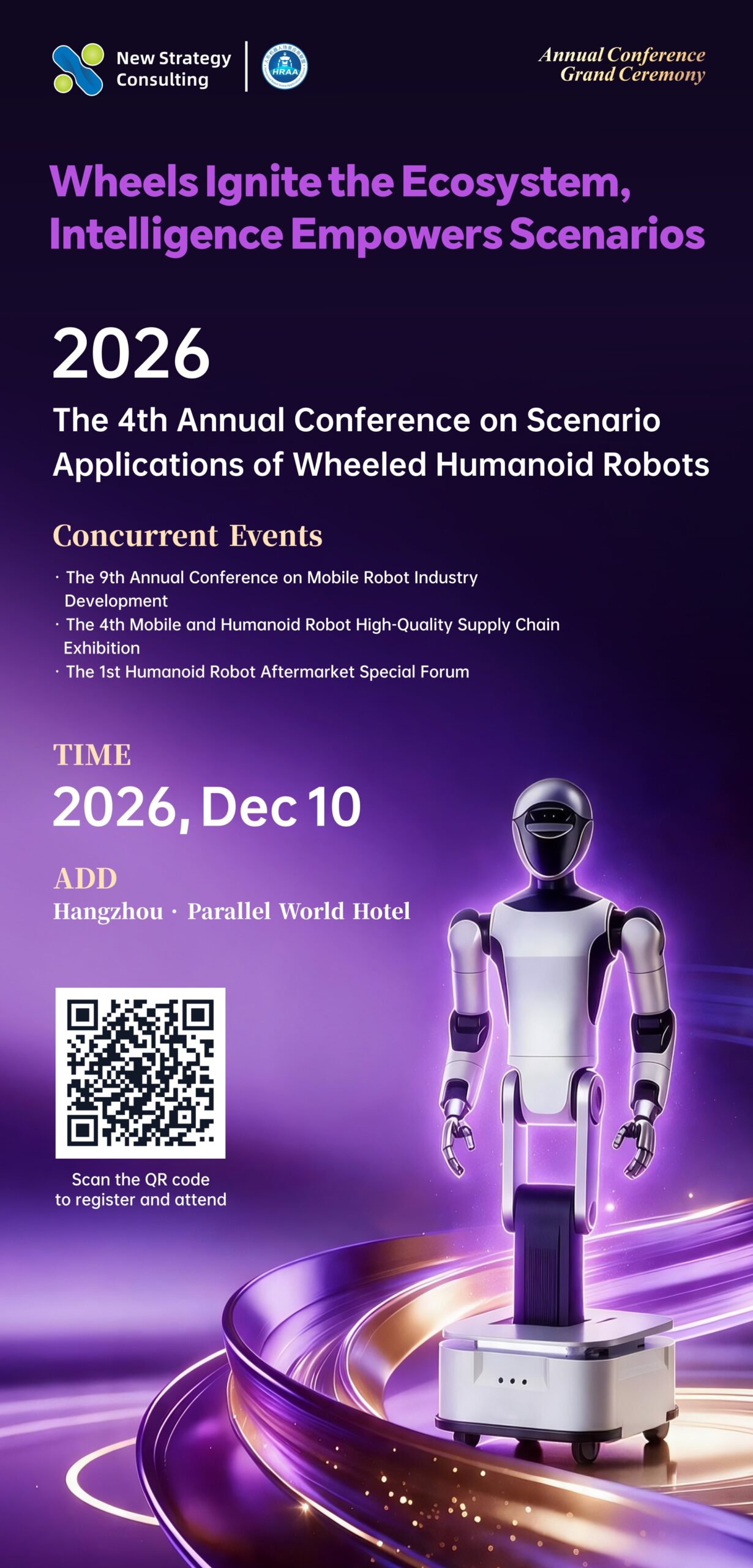
2026 The 9th Annual Conference on Mobile Robot Industry Development and the 4th Annual Conference on Scenario Applicationsof Wheeled Humanoid Robot will be held on December 9–10 at the Parallel World Hotel in Hangzhou.
The conference will focus on industrial embodied intelligence deployment, motion control, chassis technology, manufacturing applications, and data collection and annotation, promoting the industry’s shift from product exploration to deep scenario deployment.