Embodied intelligence is emerging as one of the most important technological directions in the global robotics industry. The combination of “mobility + manipulation” naturally aligns with the production needs of factories, warehouses, and logistics centers. New Strategy Consulting is releasing the “2026 Global Top 10 Industrial Embodied Intelligence Mobile Manipulation Robots,” identifying representative enterprises that are truly integrating embodied intelligence with real-world industrial environments.
Why this List?
This Top 10 is not merely a ranking of “embodied intelligence technological advancement,” nor is it a ranking based on company scale, revenue, or fundraising capability.
What we are looking for are:
Robotics enterprises that possess both a certain degree of embodied intelligence capability and complete mobility and manipulation capabilities, and that have already begun to undergo real-world industrial site validation.
How Do We Define “Industrial Embodied Intelligence Mobile Manipulation Robot”?
This list explicitly limits its research scope to wheeled mobile manipulation robots.
Bipedal humanoids are not included in this evaluation; ordinary AGVs/AMRs that only have navigation and transport capabilities but lack active physical manipulation capabilities are also not the primary evaluation targets of this list.
At the same time, we do not automatically equate “an AMR simply equipped with a robotic arm” with an embodied intelligence robot. Robots need to form a certain degree of intelligent closed loop across perception, understanding, decision-making, planning, and execution, and enterprises need to have sustained investment in embodied models, intelligent control, robot operating systems, multimodal perception, VLA, world models, or related technology systems.
This screening is primarily based on four core dimensions:
- Industrial application capability.Products must first target industrial scenarios such as manufacturing, semiconductors, new energy, automotive, 3C, industrial logistics, and warehousing, and have already achieved real applications or project validation, rather than remaining solely at the laboratory, exhibition, or conceptual stage.
- Embodied intelligence capability.Robots should possess a certain degree of environmental perception, task understanding, autonomous decision-making, motion planning, or task generalization capabilities; enterprises themselves need to have clear R&D investment in embodied intelligence systems, robot models, VLA, world models, brain-cerebellum architectures, or related intelligent systems.
- Wheeled autonomous mobility capability.Products need to have a wheeled autonomous mobile platform capable of positioning, navigation, obstacle avoidance, and cross-station movement in real operating spaces. Bipedal humanoid robots are not within the scope of this research.
- Physical manipulation capability.Mobility and manipulation are equally important. The manipulation mechanism can be single/dual robotic arms, grippers, forks, lifting and picking mechanisms, or other specialized actuators designed for industrial scenarios. The core requirement is that the robot can actively change the position or state of objects, rather than simply completing transport.
On this basis, combined with publicly available information, enterprise disclosures, end-user cases, and product industrialization progress, we have formed the inaugural Global Top 10 Industrial Embodied Intelligence Mobile Manipulation Robots.
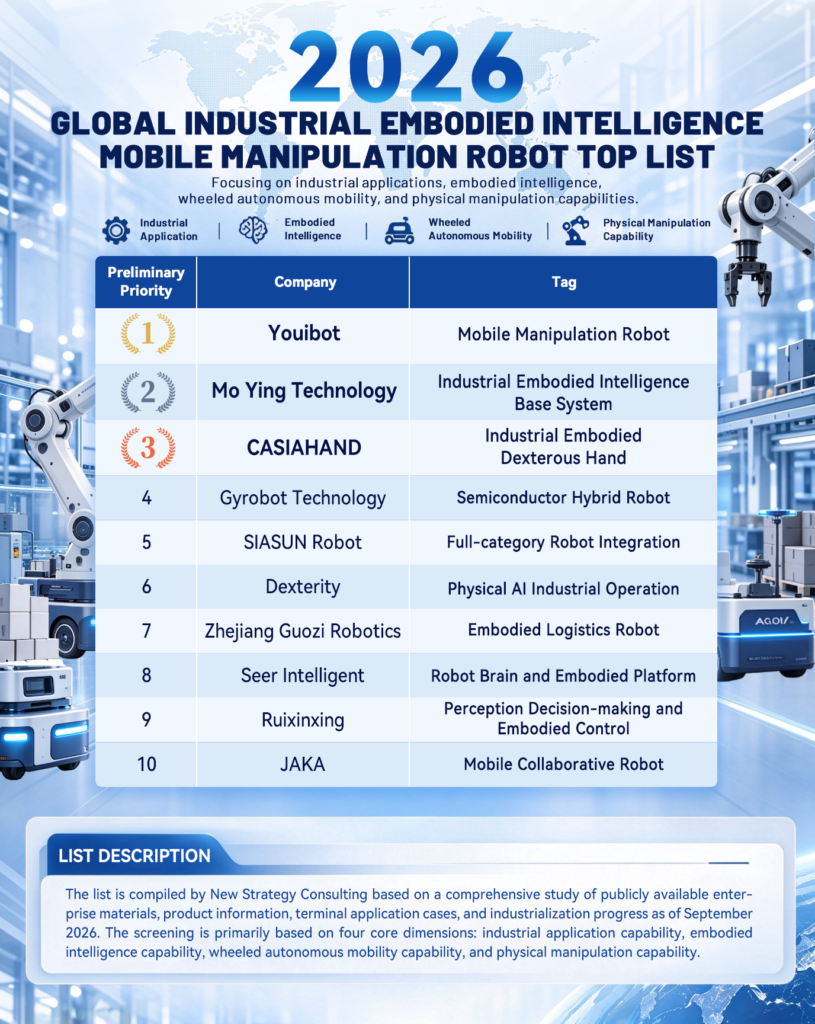
Why These 10?
As mentioned, this Top 10 is not screened solely based on robot body performance, fundraising scale, or the technological advancement of large models. Rather than asking “whose robot looks more human” or “whose model has more parameters,” we focus more on a practical question: whether embodied intelligence can truly integrate with industrial production and form stable mobility and manipulation capabilities.
Consequently, the enterprises that ultimately made it into the Top 10 share a relatively obvious common trait: they have achieved varying degrees of integration across real industrial scenarios, wheeled mobile platforms, and physical manipulation capabilities. Meanwhile, these 10 enterprises also represent several representative industrialization pathways for current industrial embodied intelligence mobile manipulation robots.
YOUIBOT, Moying Robotics, and Gyrobot technology are typical “mobile manipulation native” enterprises. These three companies combined mobility with mechanical manipulation at an early stage, rather than simply stacking a robotic arm onto an AMR after the concept of embodied intelligence emerged.
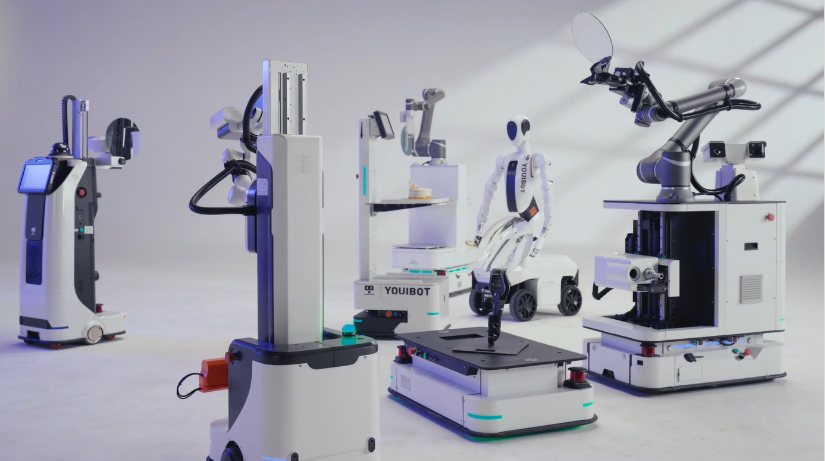
YOUIBOT has currently built a “one brain, multiple embodiments” architecture, with OW series, ATS series, ARIS series, and other multi-form mobile manipulation robots achieving scaled deployment in industrial logistics and inspection and maintenance scenarios. According to company disclosures, YOUIBOT has accumulated over 800 industrial embodied intelligence scenario deployment projects across semiconductors, energy and chemicals, and lithium batteries, serving more than 400 customers, and has entered more than ten domestic and international wafer fabs, creating multiple benchmark projects.
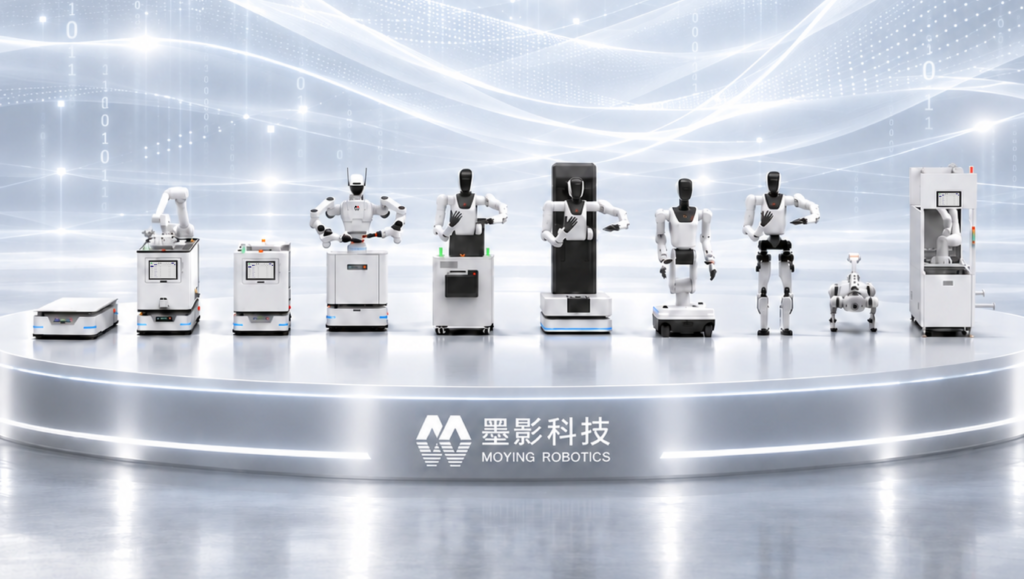
Moying Robotics focuses on industrial embodied intelligence base systems, using an Android-like open base to break down software barriers across multi-brand, multi-configuration equipment and address industry pain points of “difficult development and slow deployment.” Currently, Moying’s solutions have been deployed in 3C, semiconductors, new energy, CNC precision machining, AI servers, optical communication modules, and other industries both domestically and internationally, achieving a leap from automation to embodied intelligence. According to public information, its solutions can shorten deployment cycles by 70% and improve efficiency by 3-5 times; a typical case achieved rapid delivery in 45 days, creating a benchmark “lights-out factory” with 500+ machine tools; a semiconductor firing furnace production line operates fully unmanned, running stably 7×24 hours.
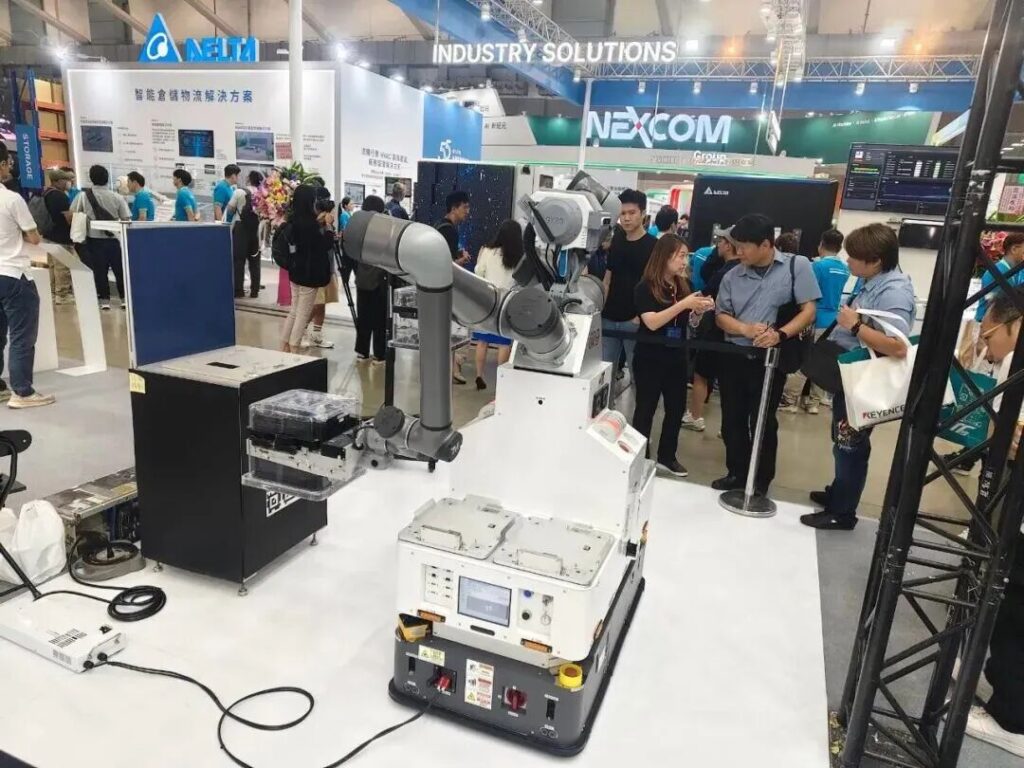
Gyrobot technology takes a more vertical industrial route. It has long focused on semiconductor manufacturing, deeply integrating wheeled mobility, robotic arms, wafer carrier gripping, tool docking, and scheduling systems. It does not pursue “one robot that can do everything,” but rather solves the high-reliability transport and manipulation of FOUP, Wafer Cassette, and other materials in cleanroom environments. Its characteristic can be summarized as: defining robots in reverse from high-barrier industrial scenarios, rather than finding application scenarios from general-purpose robots.
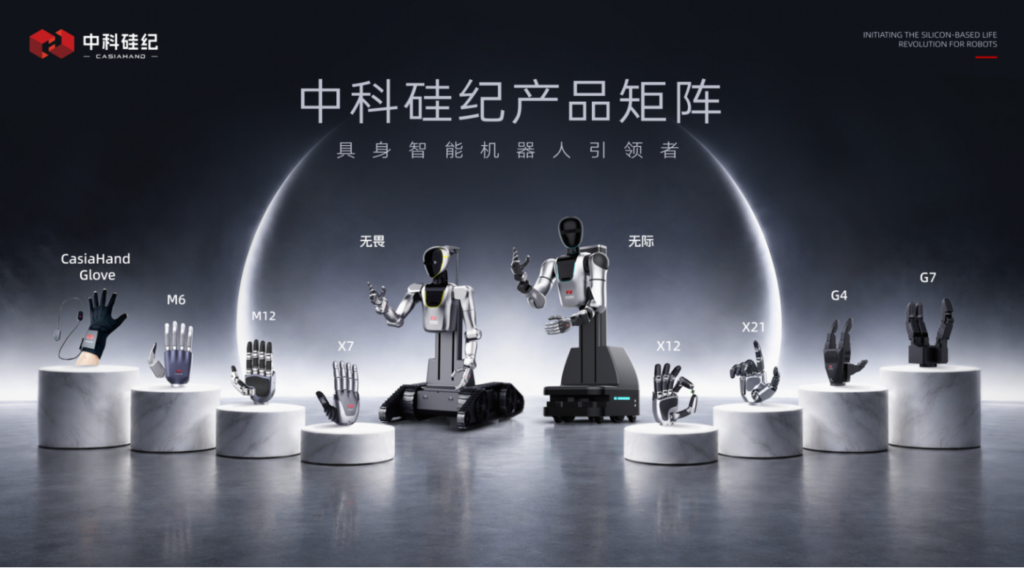
CasiaHand Robotics belongs to the route of entering from “dexterous manipulation.” Relying on the Institute of Automation, Chinese Academy of Sciences, it takes CasiaHand dexterous hands and humanoid dexterous manipulation embodied brain-cerebellum models as its core, first solving manipulation challenges such as grasping, loading, unloading, and sorting, then extending to mobile platforms and complete robots. Its characteristic is “from hand to robot,” using high-reliability manipulation capability to define industrial embodied intelligence in reverse, rather than building a general-purpose body first and then finding scenarios.
SIASUN Robot and JAKA represent the route of recombining mature robotics capabilities toward embodied intelligence. SIASUN Robot simultaneously possesses multi-category accumulation in industrial robots, mobile robots, and other areas; its embodied intelligence mobile manipulation robot is essentially a further integration of SIASUN’s existing mobile chassis, dual-arm manipulation, and intelligent decision-making. JAKA’s starting point is collaborative robots; through products such as Kargo, it enables robotic arms to gain mobility from fixed workstations, and further layers on the EVO industrial embodied intelligence platform.
Zhejiang Guozi Robotics represents the continuous evolution from traditional industrial vehicles to embodied intelligence logistics robots. Its pathway has extended from “traditional forklift-unmanned forklift or forklift robot” to embodied intelligence forklifts and wheeled humanoid robots. In addition to the LogiMind industrial embodied intelligence large model and various forklift robots, Zhejiang Guozi Robotics has also launched the X1 series logistics humanoid robots.
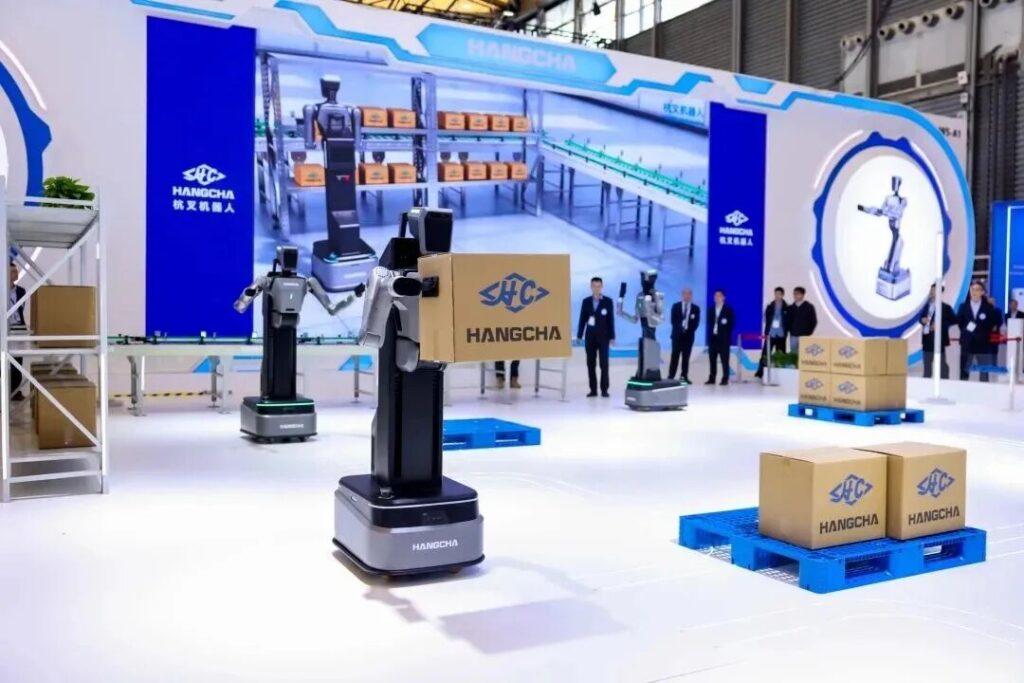
SEER Robotics and Ruixinxing have core capabilities concentrated in SLAM, navigation, motion control, perception, and decision-making. The advantage of such enterprises lies in their deep accumulation in robot underlying control and perception decision-making; embodied intelligence is a natural extension of their control systems toward higher-level cognitive capabilities.
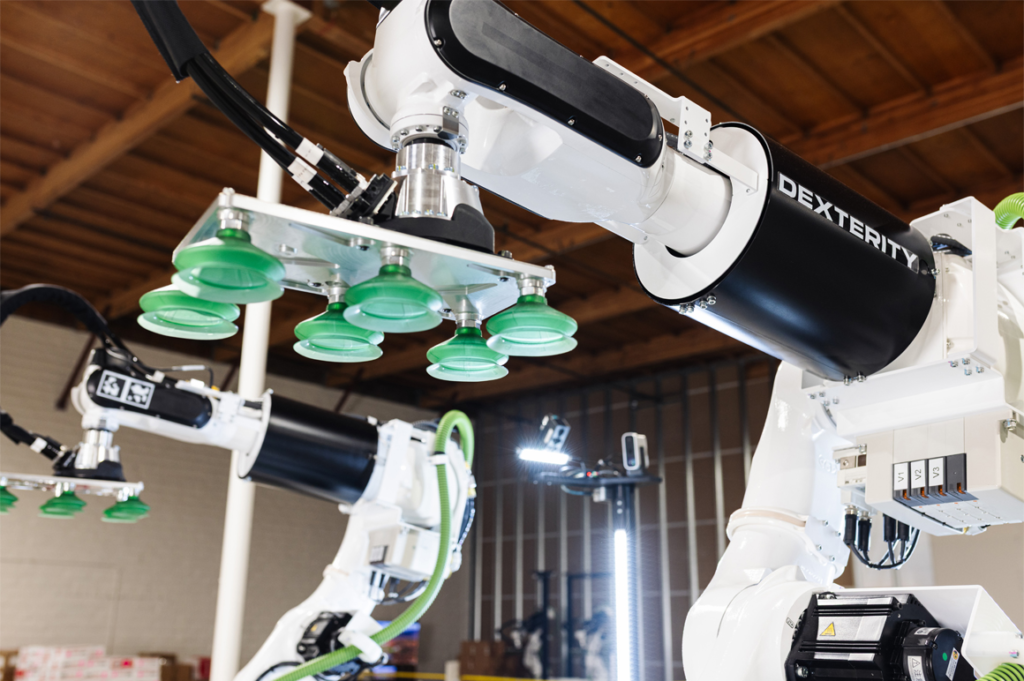
Dexterity represents the overseas Physical AI route. Its Mech does not emphasize humanoid appearance, but instead adopts a wheeled Rover chassis and dual robotic arms, designing the robot body around logistics tasks such as loading/unloading, palletizing, and depalletizing, and then improving its ability to handle unstructured materials and environments through the Foresight world model.
Overall, although these enterprises come from different backgrounds, their evolutionary directions are highly consistent: traditional mobile robots are gaining manipulation capabilities, robotic arms are gaining mobility capabilities, controller companies are extending toward complete robots, and native mobile manipulation companies are beginning to use large models to further enhance generalization capabilities.
This is also the most noteworthy change in industrial embodied intelligence today — Different robot forms are gradually evolving from single-function devices of the past into industrial intelligent agents capable of perceiving their environment, autonomously moving, understanding tasks, and completing physical manipulation.

1-300x168.png)