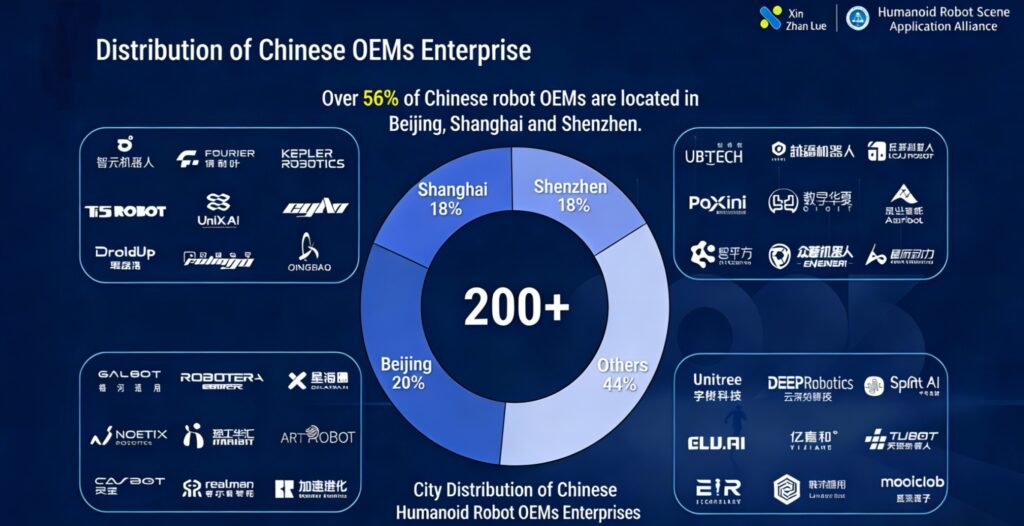
China’s humanoid robot industry is booming in 2026, with more than 200 OEMs forming the world’s most dynamic robotics ecosystem. Over 56% of these enterprises are concentrated in Beijing, Shanghai, and Shenzhen, while Hangzhou is emerging as a key regional force—each city building unique strengths to drive technological innovation and commercial deployment.
Beijing: The Academic and Technical Cradle
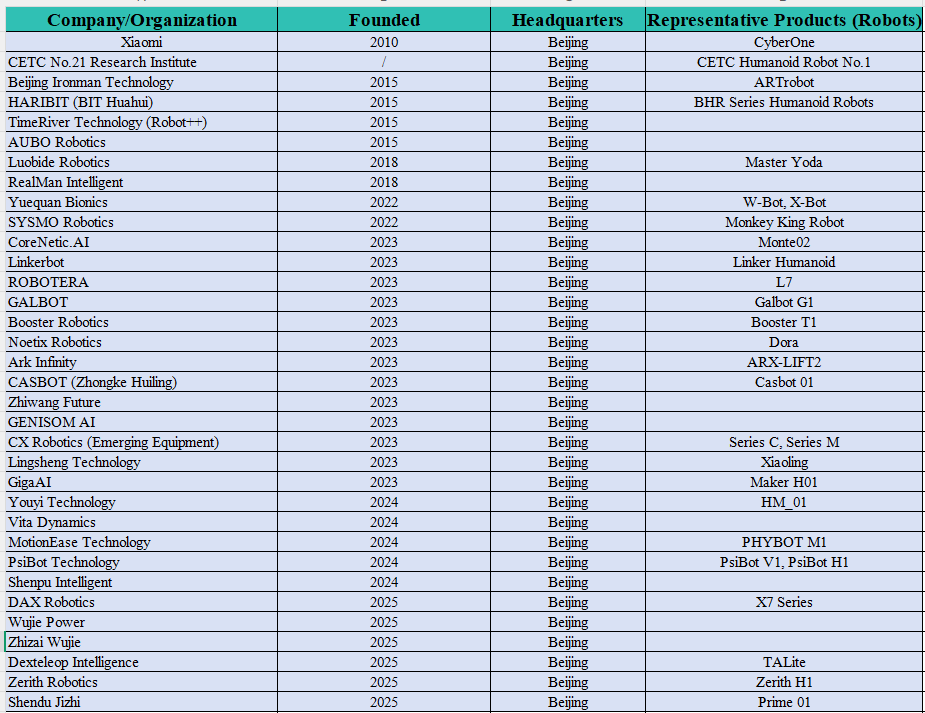
Beijing Humanoid Robot Related Enterprises
As China’s core hub for research and innovation, Beijing benefits from top universities, research institutions, and strong policy support. Home to leading players including Xiaomi (CyberOne), GALBOT, and ROBOTERA, the city excels in core technologies such as advanced algorithms, motion control, and key component development. Many of its startups focus on lightweight bipedal designs and industrial applications, cementing Beijing’s role as the source of foundational breakthroughs in the sector.
Shanghai: The Industrial Coordinator and Platform City
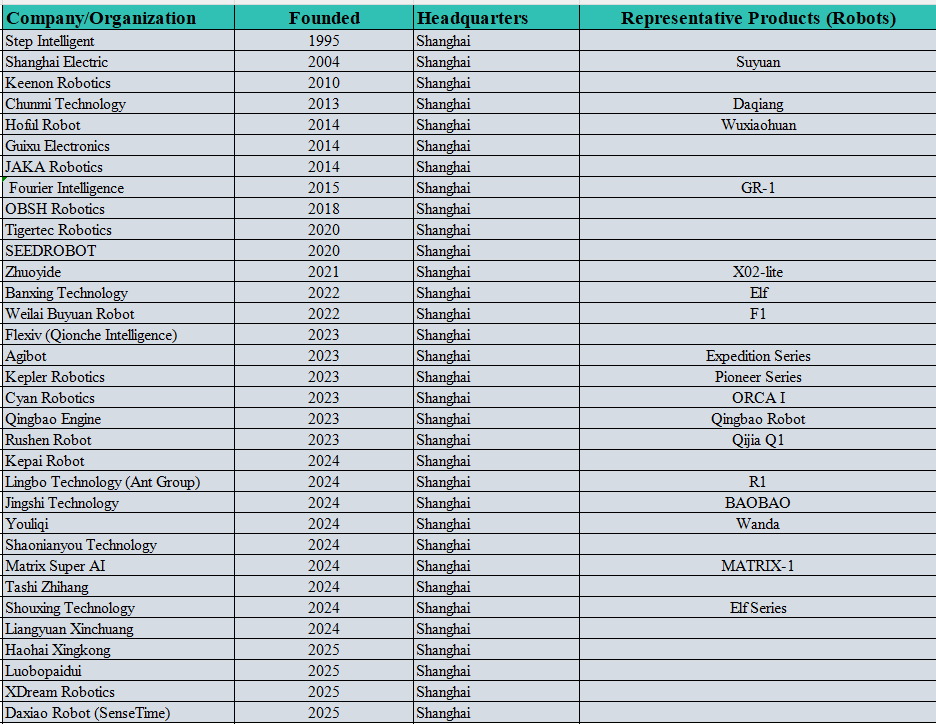
Shanghai Humanoid Robot Related Enterprises
Shanghai stands as a pivotal industrial organizer and platform-oriented city, backed by a complete industrial chain and high-caliber innovation platforms. With strategic access to the Yangtze River Delta’s advanced manufacturing ecosystem, Shanghai hosts key players like Fourier Intelligence (GR-1), ZhiYuan Robotics, and JAKA Robotics, which prioritize scalable, market-ready solutions for industrial collaboration and medical rehabilitation. Its ability to integrate upstream component suppliers, midstream system integrators, and downstream application scenarios makes Shanghai the engine for translating lab innovations into commercial products.
Shenzhen: Consumer Hardware and Rapid Innovation Hub
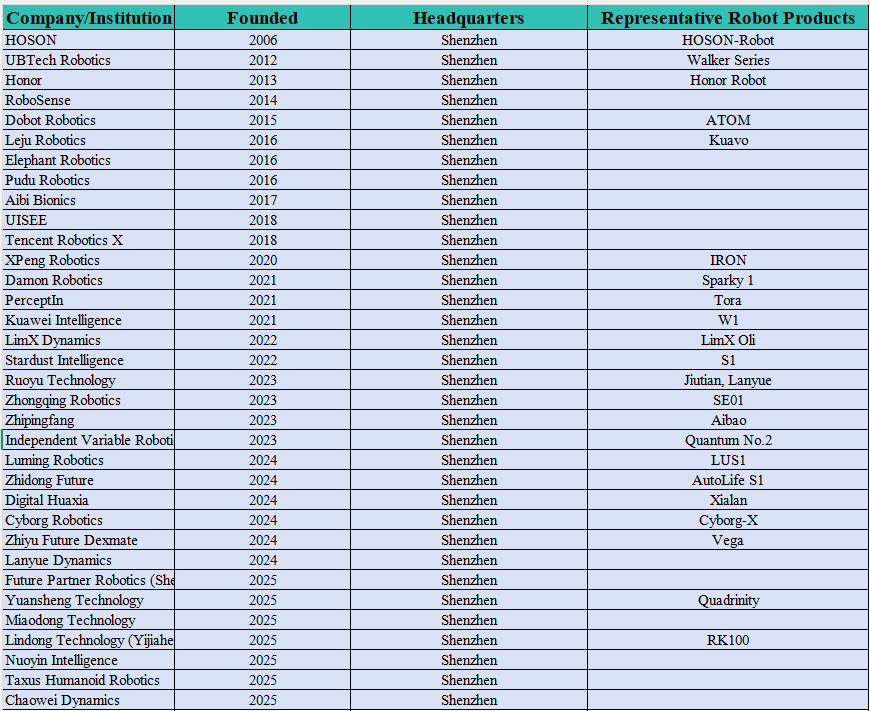
Shenzhen Humanoid Robot Related Enterprises
Leveraging its global leadership in consumer electronics and hardware supply chains, Shenzhen dominates in consumer-grade and agile robotics innovation. While Unitree Robotics and Deep Robotics are not headquartered in Shenzhen, they are deeply integrated into Shenzhen’s supply chain ecosystem and engage in collaborative innovation with local enterprises. Leading companies including UBTECH, Unitree Robotics, and Deep Robotics have expanded from quadruped platforms to bipedal humanoids, targeting home, inspection, and entertainment scenarios. Its unmatched speed in iteration, production, and cost control makes Shenzhen indispensable for mass-market robotics.
Hangzhou: The Rising Innovation Ecosystem Hub
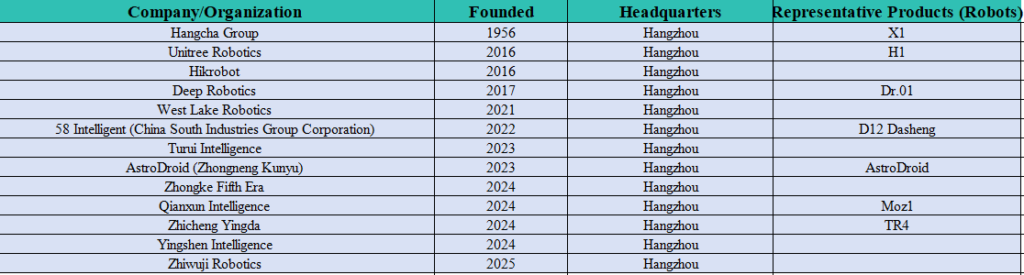 Hangzhou Humanoid Robot Related Enterprises
Hangzhou has gained increasing recognition for its vibrant innovation ecosystem, star enterprises, and rapid growth trajectory. Anchored by standout players like Unitree Robotics and Deep Robotics, the city focuses on quadruped robots and outdoor mobility applications, carving out a distinct niche in agile, scenario-driven robotics. Its close ties to e-commerce, digital technology, and venture capital networks enable fast iteration and market validation, positioning Hangzhou as a key challenger in the national humanoid robot landscape.
Looking Ahead to 2026 and Beyond
When evaluating the humanoid robot landscape among Beijing, Shanghai, Shenzhen and Hangzhou, each city demonstrates unique strengths rather than an undisputed leader. Beijing excels as the national research and policy hub; Shanghai as a key industrial coordinator with a complete supply chain; Shenzhen leads in market vitality and hardware manufacturing; and Hangzhou gains recognition for its innovation ecosystem and fast growth. Thus, there is no universally agreed “top city” in this field.
The competition has shifted to a test of comprehensive strength, focusing on the integration of technology, manufacturing, capital, scenarios and industrial ecology. The city that first builds a fully closed-loop ecosystem will be best positioned to lead China’s humanoid robot industry.