In the embodied intelligence industry, data is becoming the new “oil.”
Unlike large language models that rely on textual data, humanoid robots require physical interaction data from the real world—grasping, carrying, organizing objects, and moving and manipulating in complex environments. This type of data is difficult to generate on a large scale through simulation systems and relies more on repeated training and accumulation by robots in real-world environments.
Therefore, a new type of infrastructure is emerging: robot data acquisition centers.
Typically, an embodied intelligence data acquisition center needs to possess several elements: deploying multiple robots for long-term training, constructing real-world task scenarios such as homes or industries, continuously collecting multimodal data including visual, motion trajectory, and force sensing data, and forming datasets that can be used for model training.
As the embodied intelligence sector continues to heat up, various regions are accelerating the deployment of this type of infrastructure. According to incomplete statistics from China Humanoid Robot Scene Application Alliance (HRAA), more than 50 humanoid robot data acquisition centers have been built or are under construction nationwide, with many more projects in the planning or proposed construction stages.
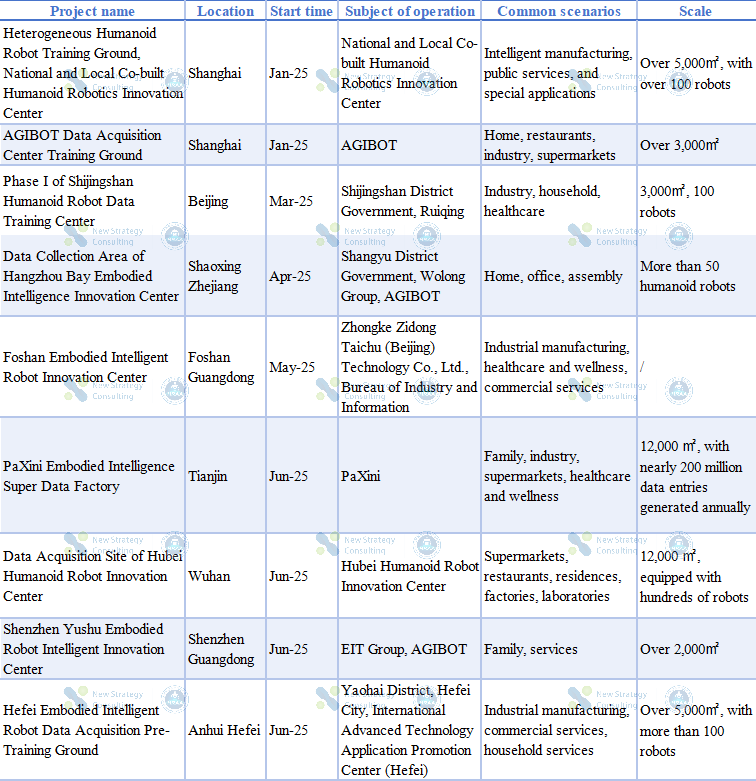
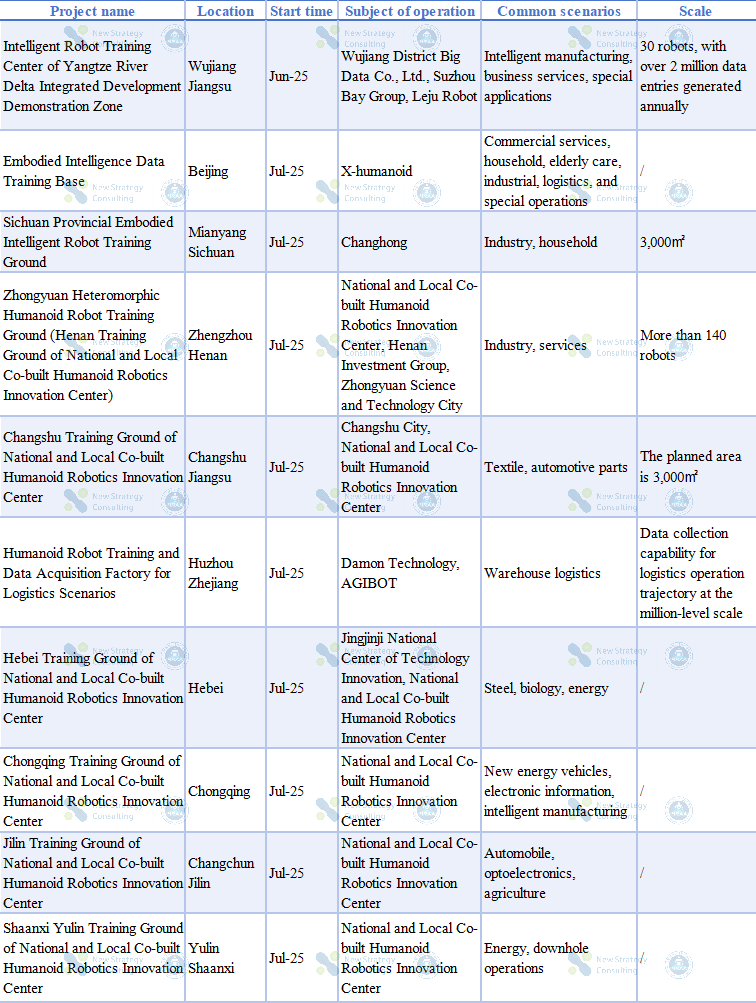
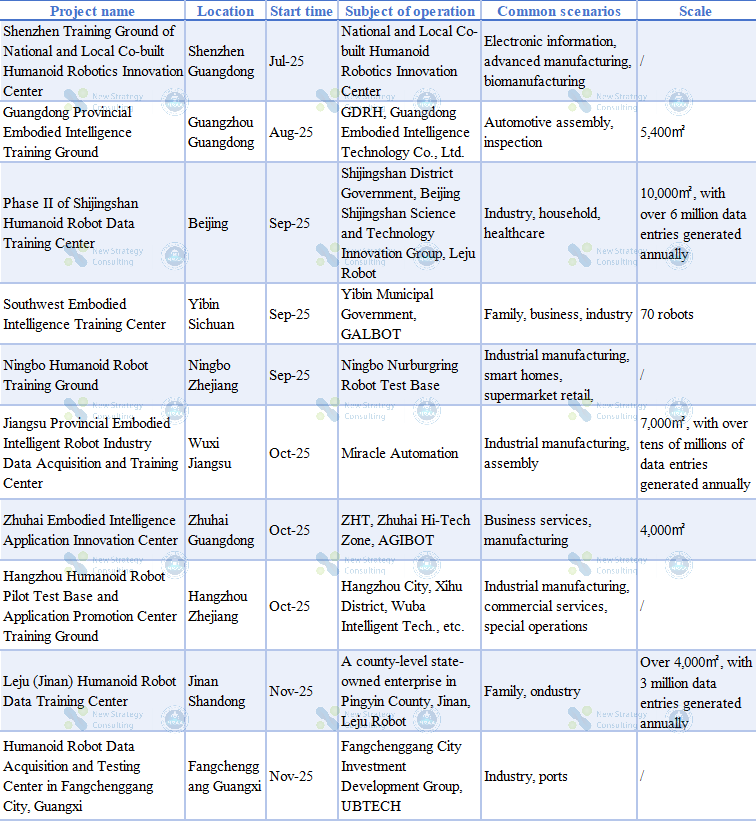
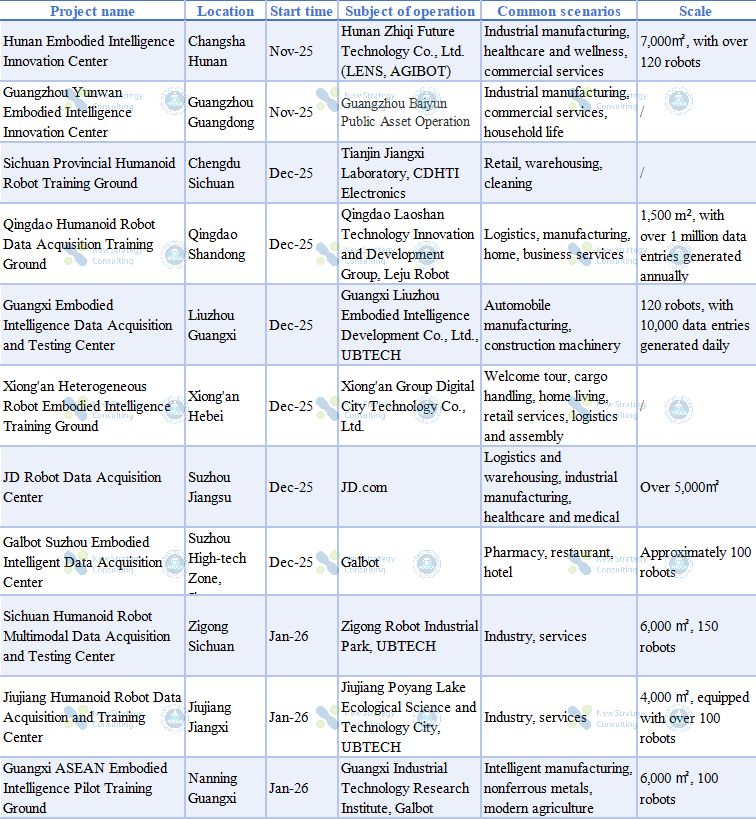

Chart: A Review of Embodied Intelligence Data Acquisition Centers Nationwide (Compiled from publicly available online information; if there are any omissions, please make a correction).
From the perspective of the construction entities, data acquisition centers in China can be roughly divided into three categories:
- Government + Enterprise Co-construction: Led by local governments or industrial parks, opening training resources to robotics companies;
- Enterprise Self-construction: Includes data training bases built by both robot manufacturers and end-application companies;
- University/Vocational College Type:Some vocational colleges and research institutions have also begun building robot data acquisition centers for practical training and industry cooperation.
With embodied intelligence considered an important direction for next-generation artificial intelligence, these “robot training grounds” are rapidly emerging across China.